


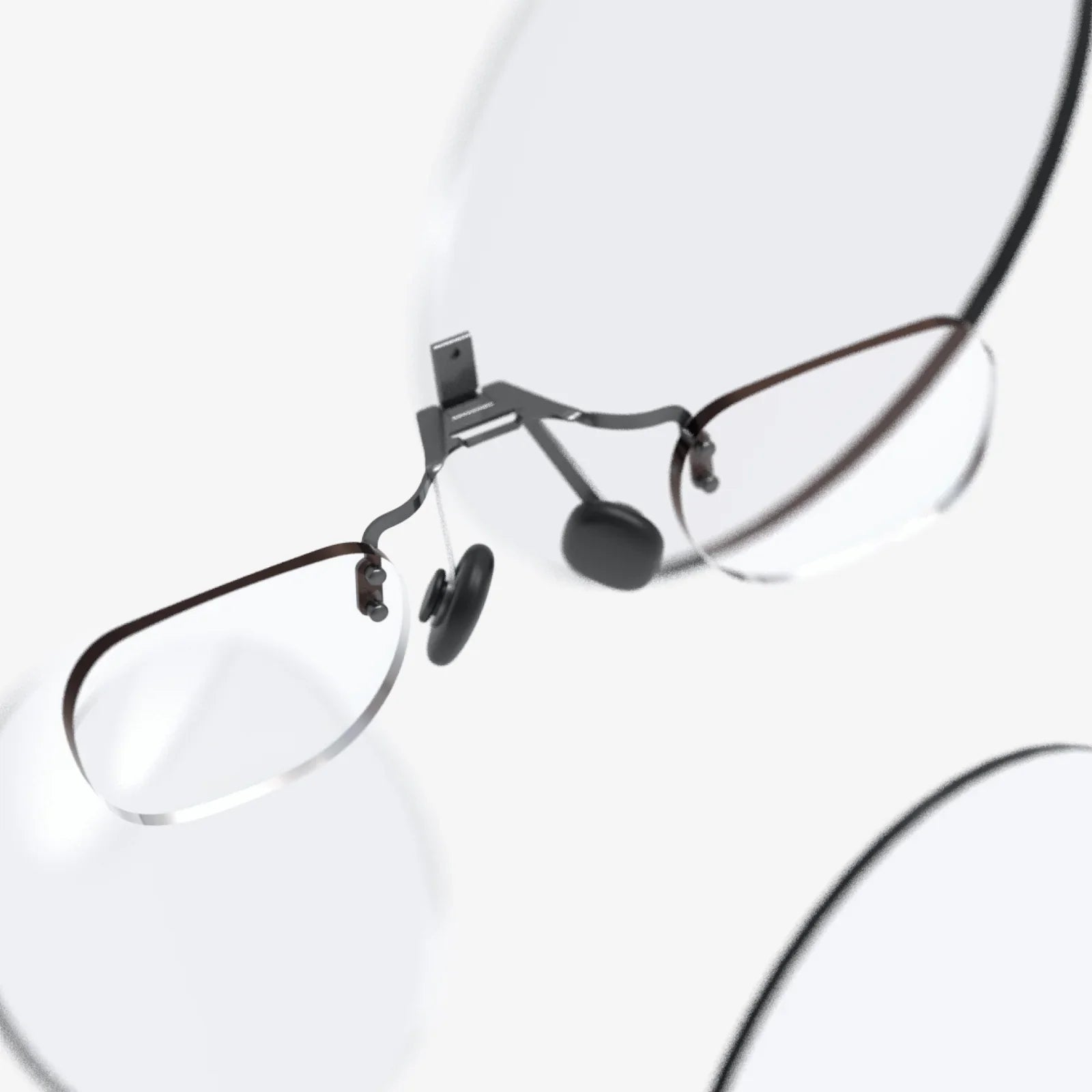
You slip them on, and the world transforms. Data floats beside your morning coffee, directions are painted onto the street, and a virtual screen hangs in your living room. Augmented Reality glasses promise a revolution, merging the digital and physical into a seamless experience. But as you marvel at the possibilities, a nagging question flickers in the back of your mind, a concern as persistent as the pixels now overlaying your reality: is this incredible technology secretly damaging my eyes? The fear is understandable. We’ve been warned about sitting too close to the television and staring at smartphones for hours. Now, we’re strapping screens even closer to our faces. The answer, however, is not a simple yes or no. It’s a complex interplay of technology, human biology, usage habits, and emerging research. The true impact of AR on your eyes is a story still being written, but we can already read the crucial first chapters.
The Anatomy of Seeing: How We Perceive the World and How AR Changes It
To understand the potential effects of AR glasses, we must first understand how vision works. Our eyes are not simple cameras. They are dynamic organs that constantly adjust. The cornea and lens focus light onto the retina, a layer of light-sensitive cells at the back of the eye. The brain then interprets these signals into the image we perceive. This process involves several key mechanisms:
- Accommodation: The process where the eye's lens changes shape to focus on objects at different distances. Looking at something far away relaxes the lens, while focusing up close makes it contract.
- Vergence: The coordinated movement of both eyes inward (convergence) to focus on a nearby object or outward (divergence) for distant objects.
- Pupillary Response: The dilation or constriction of the pupil to control the amount of light entering the eye.
Traditional screens disrupt this natural rhythm. We stare at a fixed-distance flat panel, causing our focusing system to lock into a sustained, stressful state. AR technology aims to be different. Instead of a screen you look at, it’s an image projected into your field of view. Advanced optics and waveguides project digital content that appears to exist at various depths in the real world. The fundamental challenge, known as the Vergence-Accommodation Conflict (VAC), is at the heart of the eye strain debate.
The Vergence-Accommodation Conflict: The Root of Digital Discomfort
This technical-sounding term describes a very simple, yet profound, problem. In the natural world, when you look at a nearby object, your eyes converge (turn inward) and your lenses accommodate (focus) at the same distance. This is a hardwired link. AR glasses break this link. The digital hologram of a text message might appear to be floating two meters in front of you, tricking your eyes into converging for a two-meter distance. However, the physical source of that image is a micro-display mere millimeters from your cornea. Your eyes must therefore accommodate (focus) on something extremely close while trying to converge on something much farther away.
This sensory mismatch forces your brain and ocular muscles to work overtime to resolve the conflicting signals. It’s an unnatural state that early virtual and augmented reality headsets were notorious for, causing significant eye strain, headaches, and visual fatigue after even short periods of use. This is the single biggest physiological challenge AR designers face. The good news is that technological solutions are rapidly evolving. Varifocal and light field displays are being developed to dynamically adjust the focal plane of the digital content, significantly reducing or even eliminating VAC. The question of eye strain is increasingly becoming a question of the quality and generation of the AR hardware in question.
Beyond VAC: Other Potential Ocular Concerns
While VAC is the headline issue, other factors contribute to the overall discussion on ocular health.
Blue Light Exposure: Separating Hype from Harm
The topic of blue light has been a source of significant anxiety and marketing. High-energy visible (HEV) blue light is emitted by the sun, but also by LEDs, smartphones, and AR displays. The concerns revolve around two areas: digital eye strain and potential retinal damage. There is evidence that blue light can contribute to visual fatigue and discomfort, as it scatters more easily than other light, reducing contrast and forcing the eyes to work harder. Many AR lenses now incorporate blue light filtering coatings to mitigate this effect. The more serious claim—that blue light from screens causes permanent retinal damage—is heavily debated. The intensity of blue light from AR glasses is a tiny fraction of that from natural daylight. The scientific consensus is that while chronic, extreme exposure to any bright light can be harmful, the dose from consumer tech is currently not considered a major threat to retinal health. The greater proven risk from blue light is its impact on circadian rhythms, suppressing melatonin production and disrupting sleep, especially if used late at night.
Digital Eye Strain and Dry Eyes
This is perhaps the most immediate and common issue users will face. Known medically as Computer Vision Syndrome, its symptoms are familiar to anyone who has spent a long day at a computer: sore, tired, burning, or itchy eyes; blurred vision; and headaches. AR glasses can exacerbate this for a simple reason: the reduction of the blink rate. Studies show people blink far less frequently—up to 66% less—when using digital devices. Each blink rewets the surface of the eye, and without this natural lubrication, eyes become dry, irritated, and more susceptible to strain. The focused nature of AR content can lead to even more intense concentration and less blinking. Furthermore, if a user is looking through a clear optical lens at the world, but focusing on a fixed digital overlay, their eyes are still performing a version of the sustained near-work that causes strain with traditional monitors.
The Myopia Epidemic and Children's Use
A truly long-term concern is the potential link between near-work and the rising global epidemic of myopia (nearsightedness). While the exact mechanisms are not fully understood, a wealth of epidemiological data shows a strong correlation between the amount of time children spend focusing on close objects (like books and screens) and the development and progression of myopia. The hypothesis is that a lack of time spent looking at distant horizons prevents the eye from developing properly. While research on AR-specific use is in its infancy, the fundamental activity—prolonged ocular engagement with content in the near-to-intermediate field—is similar. This makes the potential use of AR glasses by children, whose eyes are still developing, a significant area for caution and future study. Most manufacturers rightly advise against children using such devices.
Mitigating the Risks: How to Protect Your Vision in the AR Age
The potential for eye strain is real, but it is not a foregone conclusion. Responsible use and smart technology can dramatically reduce risks.
- The 20-20-20 Rule: This golden rule of screen use is perfectly applicable to AR. Every 20 minutes, look at something at least 20 feet away for at least 20 seconds. This gives your focusing system a crucial break.
- Conscious Blinking: Make a conscious effort to blink fully and frequently when using AR glasses to keep your eyes lubricated.
- Ergonomics and Fit: Ensure the device is properly fitted. A misaligned display can cause prismatic effects and force unnecessary muscular effort.
- Adjust Brightness: Set the brightness of the digital overlay to a comfortable level that matches your environment—not too dim to force strain, and not blindingly bright in a dark room.
- Limit Session Length: Especially when first starting out, limit your continuous use of AR glasses. Gradually increase duration as your eyes adapt.
- Regular Eye Exams: This is more important than ever. Regular check-ups with an eye care professional can catch any vision changes early and allow for personalized advice.
The Future is Focused: Technological Solutions on the Horizon
The industry is not blind to these challenges. In fact, a massive amount of research and development is dedicated to solving them. Next-generation displays are being engineered specifically for visual comfort. Varifocal systems use eye-tracking to measure where you are looking and then mechanically or electronically adjust the focal plane of the digital content to match the real world, directly solving VAC. Even more advanced concepts, like holographic and light field displays, aim to project light in a way that perfectly mimics natural vision, creating images that allow the eye to focus naturally without any conflict. These technologies are moving from lab prototypes to commercial products, promising a future where AR feels as visually comfortable as looking at the real world.
So, are AR glasses bad for your eyes? The technology itself is not an inherent enemy of ocular health. The real culprits are the same as with any digital device: prolonged, uninterrupted use, poor ergonomics, and outdated display technology that creates a conflict with our biology. The early iterations likely will cause eye strain for many, a predictable side effect of any groundbreaking technology. But the trajectory is clear. As the hardware evolves to better accommodate the intricate workings of the human eye, and as users adopt healthier habits, the risks will diminish. The promise of AR is not to shackle us to screens, but to set information free into our world. The challenge, and the opportunity, is to build that future in a way that respects and protects our most valuable lens—the one nature gave us. The ultimate impact on our vision may depend less on the glasses themselves and more on how wisely we choose to look through them.
Share:
Clip On AR Glasses: The Ultimate Guide to Effortless Augmented Reality
What Is the Best AI Application? A Deep Dive into the Digital Revolution