


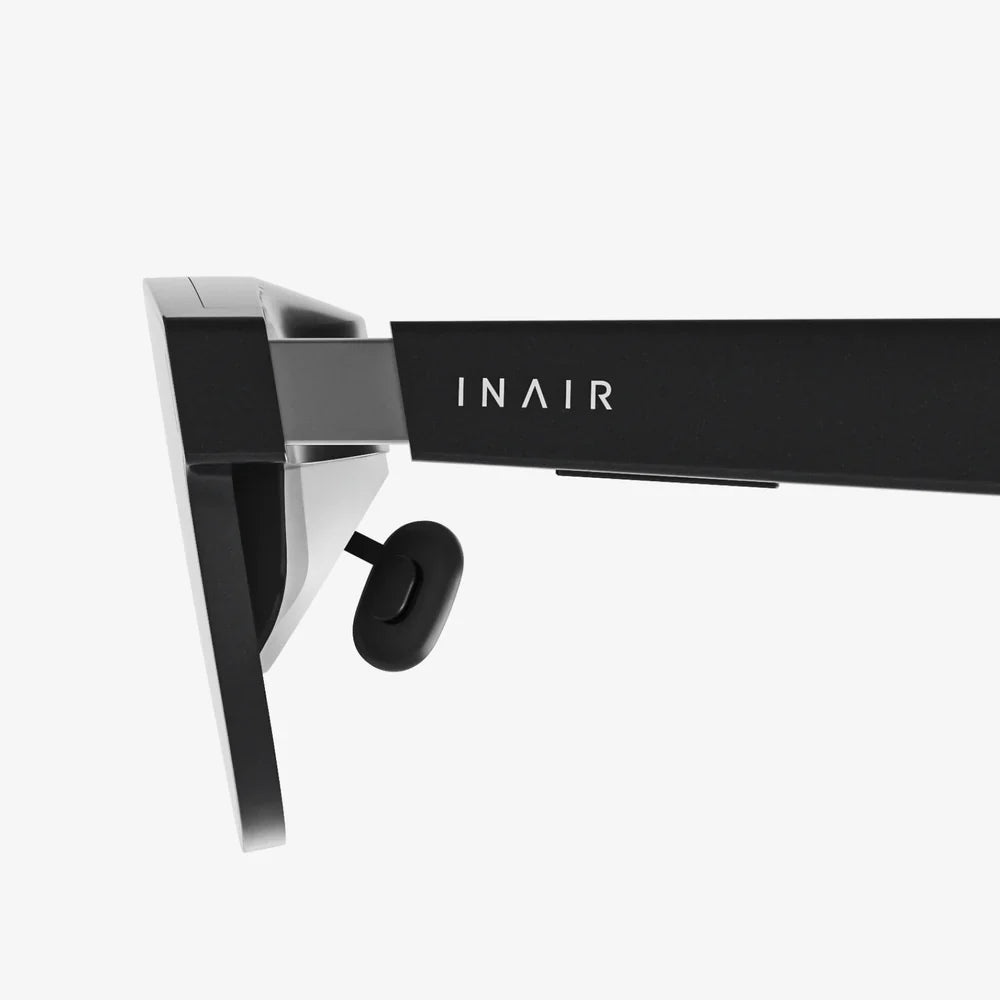
Imagine a world where digital information doesn’t live on a screen in your hand but is seamlessly woven into the fabric of your reality. Where directions float on the street ahead of you, translations appear instantly over foreign text, and a colleague’s schematics are projected onto the machinery you’re repairing. This is the promise of smartglasses, a technology poised to redefine our relationship with computing. But with a burgeoning market offering a dizzying array of options, from simple audio companions to full-fledged augmented reality experiences, navigating the landscape can be daunting. This definitive comparison of smartglasses cuts through the complexity, providing you with the framework to understand the critical differences and identify which type aligns with your needs, budget, and vision for the future.
Defining the Spectrum: From Assisted Reality to True Augmented Reality
The term "smartglasses" is a broad umbrella that covers a wide technological spectrum. A crucial starting point for any comparison is understanding the fundamental categories they fall into, primarily defined by their display technology and interactive capabilities.
Audio-Focused Smartglasses
Occupying one end of the spectrum are devices that prioritize auditory augmentation over visual. These models often resemble standard eyeglasses or sunglasses and feature open-ear audio technology. They project sound directly toward the user's ear canal, allowing them to listen to music, take calls, or interact with a voice assistant while remaining aware of their ambient environment. Their visual capabilities are typically limited to simple LED notifications or a tiny, monochrome display for basic information like step count or caller ID. The primary value proposition here is convenience and situational awareness, making them ideal for all-day wear, fitness activities, and professionals who need to stay connected without the isolation of headphones.
Monocular Display Smartglasses
A step further in visual integration, monocular smartglasses feature a small display in front of one eye, usually the periphery of the right lens. This design provides a persistent, heads-up display (HUD) for information like navigation, messages, or basic data readouts. The key advantage is that it overlays information onto the real world without completely obstructing the user's natural vision. This makes them excellent for specific professional applications—such as logistics, where a warehouse worker can see order details without looking down at a device—or for cyclists who want speed and route guidance visible at a glance. The experience is more about information glanceability than immersive augmentation.
Binocular Augmented Reality (AR) Smartglasses
This category represents the cutting edge and the full realization of the smartglasses promise. Binocular AR glasses feature a display for each eye, capable of projecting high-resolution, stereoscopic 3D imagery that can convincingly interact with the physical world. This enables complex digital overlays, from virtual screens that feel solid in your space to interactive 3D models and immersive gaming elements. The technology required for this—including advanced waveguides, spatial tracking cameras, and powerful processors—is significant, often resulting in a larger form factor and higher power consumption. These are the devices aimed at developers, enterprise solutions for complex design and training, and early adopters seeking the most futuristic experience.
Key Factors for Comparison: Beyond the Hype
When conducting a serious comparison of smartglasses, several technical and practical factors move to the forefront. Evaluating devices across these dimensions provides a clear picture of their capabilities and limitations.
Display Technology: The Window to Digital Worlds
The display is the heart of the visual experience. Different technologies offer trade-offs between brightness, field of view (FOV), and power efficiency.
- Field of View (FOV): Often measured diagonally in degrees, the FOV determines how much of your vision the digital image occupies. A narrow FOV (e.g., 15 degrees) feels like a small floating screen, while a wide FOV (e.g., 50+ degrees) offers a more immersive, cinematic experience. A wider FOV is generally desired but is technologically challenging and costly to achieve.
- Waveguides vs. Micro-OLED: Many high-end AR glasses use optical waveguides—thin, transparent glass or plastic elements that pipe light from a projector on the temple to the eye. These allow for a sleek design. Others use micro-OLED displays, which offer incredible contrast and color but are not transparent, requiring a switchable "digital shutter" or camera-based video passthrough to blend the real and digital worlds.
- Brightness and Readability: Measured in nits, brightness is critical for outdoor use. A dim display will be completely washed out in sunlight. A comparison must consider whether the device is suitable for indoor use only or can function effectively anywhere.
Processing Power: On-Device vs. Tethered
How do the glasses compute? There are two primary architectures:
- Standalone: The glasses contain their own processor, battery, and operating system, functioning as an independent computer. This offers maximum freedom and mobility but often results in a heavier, hotter device with limited battery life constrained by size and thermals.
- Tethered/Smartphone-Dependent: These glasses act as a peripheral display, leveraging the processing power of a connected smartphone or a dedicated computing pack worn on the body. This allows for a much lighter, cooler, and more affordable glasses design but sacrifices some freedom and introduces a dependency on another device.
Battery Life and Form Factor
These two factors are intrinsically linked. Battery life is one of the most significant practical constraints, varying wildly from 2-3 hours for powerful standalone AR glasses to multi-day life for simple audio-focused models. The quest for longer battery life often conflicts with the desire for a small, lightweight, and socially acceptable form factor that people will actually want to wear all day. A comparison must weigh the intended use case—short, intensive sessions versus all-day productivity—against the device's endurance and comfort.
Input Modalities: How You Interact
Interacting with a floating interface requires novel input methods. The most common include:
- Voice Control: Hands-free interaction via built-in microphones and AI assistants.
- Touchpad: A small touch-sensitive surface on the temple of the glasses for swiping and tapping.
- Hand Tracking: Cameras on the glasses track the user's fingers, allowing them to manipulate virtual objects with gestures in mid-air.
- Companion Controller: A separate handheld device, like a smartphone or a dedicated clicker, for more precise input.
The Ecosystem and Software: Where the Magic Happens
A pair of smartglasses is only as useful as its software. The operating system and available applications are paramount. Some platforms are open, encouraging a vast developer community to create diverse apps for entertainment, productivity, and utilities. Others are closed, focused on specific enterprise verticals like remote assistance, medical training, or guided assembly. When comparing options, investigating the health of the developer ecosystem and the quality of the key apps you intend to use is as important as comparing hardware specs.
Use Case Deep Dive: Finding Your Perfect Match
The ideal smartglasses are not determined by having the highest specs, but by being the best tool for a specific job. Here’s how the comparison breaks down across different scenarios:
The Productivity Power User
For someone seeking to replace monitors and create a portable workspace, binocular AR glasses with a wide FOV and high resolution are essential. The ability to pin multiple virtual screens in space is the killer app. Battery life remains a challenge, often requiring a tethered battery pack. Comfort for long sessions and excellent pass-through video quality (if applicable) are critical for reducing eye strain.
The Fitness and Outdoor Enthusiast
For runners, cyclists, and hikers, situational awareness is non-negotiable. Audio-focused smartglasses or monocular displays are often the perfect fit. They provide metrics, navigation, and audio feedback without blocking the user's view of the trail or road. Durability, weather resistance, and a secure, comfortable fit are key hardware differentiators here.
The Enterprise and Industrial Professional
In fields like manufacturing, field service, and logistics, the value proposition is immense. Technicians can see instructions overlaid on equipment, warehouse pickers can see optimal routes and item locations, and remote experts can see what a on-site worker sees and annotate their field of view. For these uses, ruggedness, hands-free operation (via voice and gesture), and specialized enterprise software are far more important than a consumer-friendly design or entertainment apps.
The Everyday Consumer
For general use—staying connected, capturing photos and videos, getting notifications—the bar for social acceptance is highest. The device must look as close to regular glasses as possible. Audio-focused models currently lead here, offering subtle functionality without a "cyborg" aesthetic. Battery life must last a full day, and the price point must be accessible.
Privacy, Security, and the Social Contract
No comparison of smartglasses is complete without addressing the elephant in the room: the camera. Devices with recording capabilities inherently raise concerns about privacy and consent. The most successful products will be those that build trust through clear physical indicators (like recording lights), transparent data policies, and features designed to respect others, such as disabling recording in certain locations. For enterprise use, data security and encryption are paramount to protect sensitive operational information.
The Road Ahead: The Future of Seeing
The technology behind smartglasses is advancing at a breathtaking pace. We are moving toward improvements in key limiting factors: smaller and more efficient components will enable lighter designs, battery technology will improve, and displays will become brighter with wider fields of view. The ultimate goal is a device that is indistinguishable from regular glasses yet capable of delivering rich, contextual augmented experiences. The convergence of AI and AR will be particularly transformative, with ambient intelligence systems analyzing what you see and hear to provide proactive, real-time information and assistance.
The journey to find the right smartglasses is a personal one, a balance of technological aspiration and practical necessity. It’s about asking not which pair has the most impressive spec sheet, but which one disappears—not from your face, but into your life, enhancing your reality without interrupting it. By understanding the spectrum of devices, the trade-offs in technology, and the alignment with your own world, you can move beyond the hype and make a choice that truly brings your future into view.
Share:
Now AR VR Headset Operating Systems Are Redefining Our Digital Reality
Now AR VR Headset Operating Systems Are Redefining Our Digital Reality