


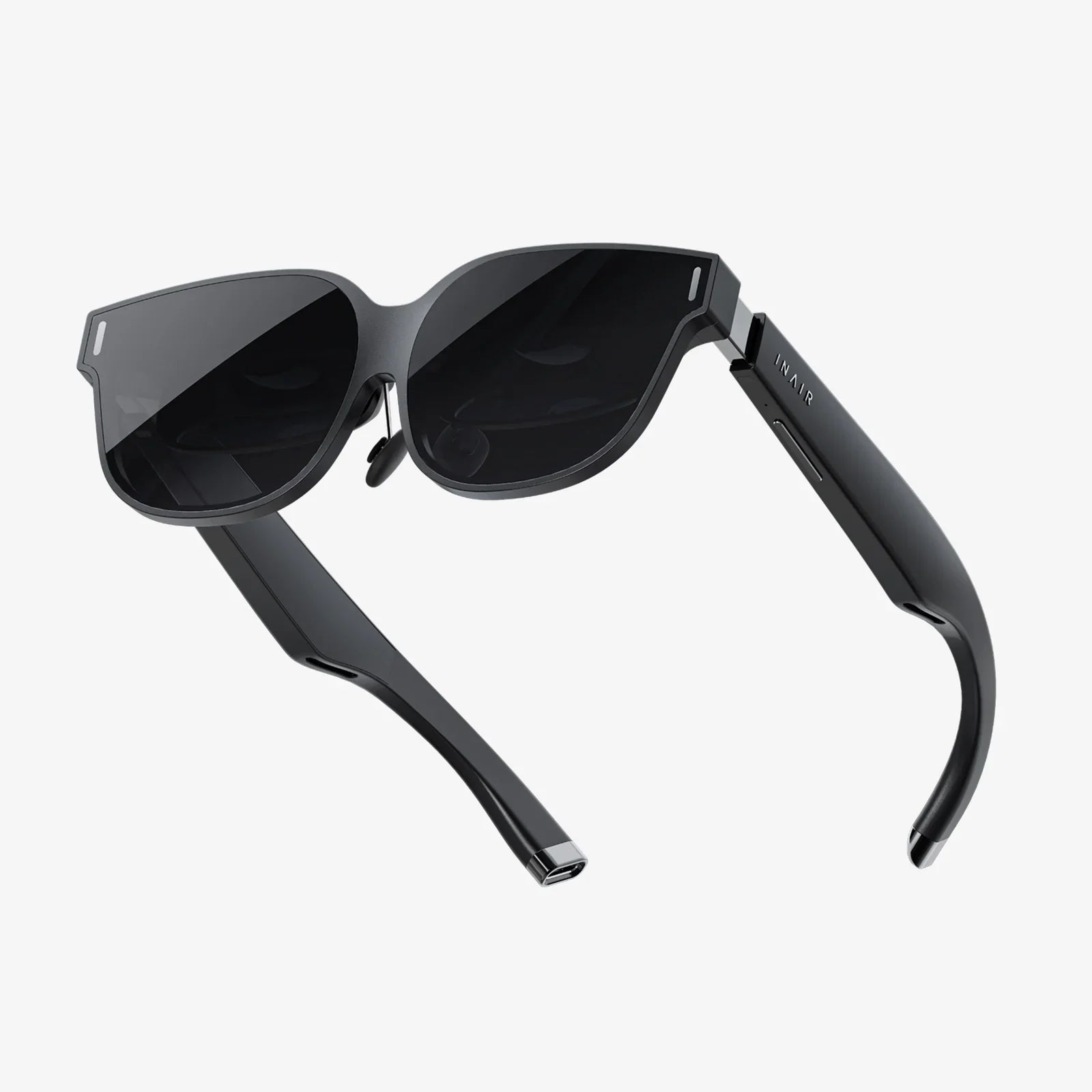
Imagine a world where the digital and physical seamlessly intertwine, where information floats before your eyes and virtual meetings feel as tangible as face-to-face conversations. This isn't a distant sci-fi fantasy; it's the frontier being built today, not by the sleek hardware alone, but by the sophisticated, invisible engines powering them: the operating systems for augmented and virtual reality headsets. The race to define how we interact with this new layer of reality is happening now, and the stakes couldn't be higher.
The Bedrock of Immersion: More Than Just Pixels
At its core, an operating system (OS) is the fundamental software that manages a device's hardware and software resources, providing common services for computer programs. It's the intermediary between the user and the machine. But in the context of AR and VR headsets, this definition expands exponentially. A headset OS isn't just managing memory and CPU cycles; it's orchestrating a symphony of sensors, tracking the precise movement of your head and hands in real-time, rendering complex 3D worlds with zero perceptible lag, and understanding the physical space around you to anchor digital objects convincingly. This is the domain of spatial computing, and the OS is its brain.
The primary challenge these operating systems must overcome is the perception of reality. Any stutter, misalignment, or delay—known as latency—breaks the immersive spell and can cause user discomfort or nausea. Therefore, the core functions of a headset OS are ruthlessly optimized for performance and precision:
- Low-Latency Tracking: Using a combination of cameras, gyroscopes, accelerometers, and LiDAR sensors, the OS must construct a millisecond-accurate understanding of the user's position and orientation (head pose) and their hand movements (controller or hand-tracking).
- Inside-Out Positional Tracking: Modern systems have moved away from external sensors, relying entirely on onboard cameras to map the environment and locate the user within it, a complex task handled by the OS.
- Environment Understanding: The OS processes sensor data to identify floors, walls, ceilings, tables, and other surfaces. This allows virtual objects to be occluded by real ones and for users to interact with the blend of real and digital naturally.
- Passthrough Technology: For AR and mixed reality (MR) experiences, the OS manages video passthrough from headset cameras to the displays, overlaying digital content on top. This requires incredibly fast processing to align the virtual and real worlds perfectly.
- Power and Thermal Management: These are computationally intensive tasks, often running on mobile chipsets. The OS must balance breathtaking visuals with battery life and device temperature to ensure a comfortable experience.
A Fork in the Road: The Open vs. Closed Ecosystem Debate
Much like the early days of personal computing and smartphones, a philosophical battle is raging over the best path forward for headset operating systems. This centers on the classic dichotomy of open versus closed ecosystems.
The Walled Garden Approach: This model offers a tightly integrated, curated experience. The OS, hardware, and primary application store are all developed and controlled by a single entity. The advantages are significant: a seamless user experience, guaranteed performance and stability, streamlined security and privacy controls, and a cohesive design language. For the average consumer, this reduces friction and complexity, making the technology more accessible. It ensures that applications are optimized for the specific hardware, providing a high-quality baseline for all experiences. This approach prioritizes a controlled, reliable, and user-friendly environment above all else.
The Open Platform Approach: This model seeks to create a universal operating system that can run on hardware from multiple manufacturers. The goal is to foster widespread adoption and rapid innovation by democratizing access. Developers can write an application once and have it run on a multitude of devices, vastly expanding their potential audience. This mirrors the strategy that allowed a certain mobile OS to become the most widely used in the world. It encourages competition on hardware specs and price, potentially driving down costs for consumers. However, the challenges are fragmentation and variable quality. An app might run flawlessly on one headset but poorly on another, leading to a inconsistent user experience. Security can also be more complex to manage across a fragmented hardware landscape.
Both models have their merits and are likely to coexist, serving different segments of the market. The closed model may dominate the premium consumer and enterprise space initially, while open platforms could power more affordable and specialized hardware.
Beyond the Screen: The New Language of Interaction
We are moving beyond the mouse, keyboard, and even the touchscreen. Headset operating systems are pioneering entirely new paradigms of human-computer interaction (HCI). The graphical user interface (GUI) is giving way to the spatial user interface (SUI).
An effective SUI, managed by the OS, must feel intuitive and natural. Key interaction models include:
- Gaze and Commitment: Simply looking at an interface element can select it, often coupled with a secondary signal like a blink, a dwell time, or a controller button press to activate.
- Hand Tracking and Gestures: The OS interprets pinches, points, grabs, and swipes in the air, allowing users to manipulate virtual objects as if they were physical. This provides a profound sense of agency and presence.
- Voice Commands: Integrated natural language processing allows users to launch apps, search, and control settings simply by speaking, a truly hands-free interface.
- Adaptive Interfaces: Windows and menus in these operating systems are not fixed to a screen but can be pinned to physical walls, float in space, or scale to immense sizes. They exist in the user's environment, not confined to a rectangle.
This shift requires the OS to be context-aware. It needs to understand when a user is in a busy office versus a quiet living room and adjust notifications or suggested interactions accordingly. The ultimate goal is an invisible interface—one where the technology fades into the background, and the user focuses solely on their task or content.
The Invisible Hand: AI and the Cloud's Role
The immense computational demands of spatial computing mean that headset operating systems cannot operate in isolation. They are increasingly reliant on artificial intelligence and cloud computing to offload heavy processing tasks.
AI algorithms, often running on dedicated neural processing units (NPUs) within the headset or offloaded to the cloud, are crucial for:
- Scene Reconstruction: Transforming raw sensor data into a coherent, understood 3D mesh of the environment.
- Object Recognition: Identifying a chair as a chair, a screen as a screen, so the OS can intelligently interact with it (e.g., casting a video to a recognized television).
- Gesture Prediction: Anticipating user movements to reduce latency and make interactions feel more fluid.
- Foveated Rendering: Using eye-tracking to render only the area where the user is looking in high resolution, while the periphery is rendered in lower detail. This dramatically reduces the GPU load without the user noticing, a task managed at the OS level.
The cloud acts as an infinite compute reservoir. Complex simulations, vast social worlds, and detailed asset streaming can be handled remotely, with the results beamed to the headset. This suggests the future headset OS will be a hybrid system, seamlessly blending on-device processing for latency-critical tasks with cloud-based power for everything else.
Navigating the Uncharted: Privacy, Security, and Ethics
The power of these operating systems comes with profound responsibility. A headset with always-on cameras and microphones, mapping the intimate details of your home and office, is a privacy and security nightmare if not managed correctly. The OS is the first and most important line of defense.
Key concerns that OS developers must address include:
- Data Collection: What environmental data is collected? Is it processed on the device or sent to the cloud? Is it anonymized or tied to a user identity?
- User Control: Users must have transparent and granular control over permissions. They should be able to easily disable sensors, clear environment data, and understand which apps have access to their surroundings.
- Security: Protecting this incredibly personal data stream from hackers is paramount. The OS must ensure that malicious applications cannot access sensor feeds or environment maps without explicit consent.
- Ethical Design: How does the OS handle recording in mixed reality? What prevents someone from secretly mapping a private space? These are societal questions that must be answered with built-in ethical constraints at the OS level.
The trust of users is the most valuable currency in this new market. An operating system that prioritizes privacy and security by design, with clear and user-centric policies, will have a significant long-term advantage.
The Horizon: What Comes Next for Headset Operating Systems
The evolution of these platforms is moving at a breakneck pace. Several key trends will define their next chapter:
- Hyper-Connectivity: The OS will evolve to be the central hub for a user's constellation of devices—seamlessly interacting with your phone, laptop, smartwatch, and smart home, projecting your digital life into the space around you.
- The Metaverse's Foundation: While the term is often overhyped, the vision of a persistent, interconnected network of virtual spaces is fundamentally a software challenge. The OS will need to develop standardized protocols for identity, avatars, asset portability, and real-time communication between different platforms and experiences.
- Specialization for Enterprise: We will see OS forks specifically tailored for industrial use—supporting digital twins for manufacturing, advanced medical visualization, and remote assistance with ultra-high-fidelity data overlays.
- The Rise of the Killer App: Just as the spreadsheet drove the PC revolution and social media drove smartphones, a killer application will emerge that defines the primary use case for these devices, and the OS will evolve to serve it perfectly.
The operating systems running on today's AR and VR headsets are doing more than just managing resources; they are quietly, diligently writing the rules for the next era of human-technology interaction. They are the unsung heroes transforming clunky prototypes into portals to new worlds and powerful tools for enhancing our own. The hardware will continue to get smaller, lighter, and more powerful, but it is the software within that will ultimately determine whether this technology integrates gracefully into our lives or remains a fascinating niche. The blueprint for our mixed reality future is being coded line by line, and the door to that new world is already beginning to open.
Share:
Comparison Smartglasses: A Detailed Guide to Navigating the Next Wave of Wearable Tech
Comparison Smartglasses: A Detailed Guide to Navigating the Next Wave of Wearable Tech