


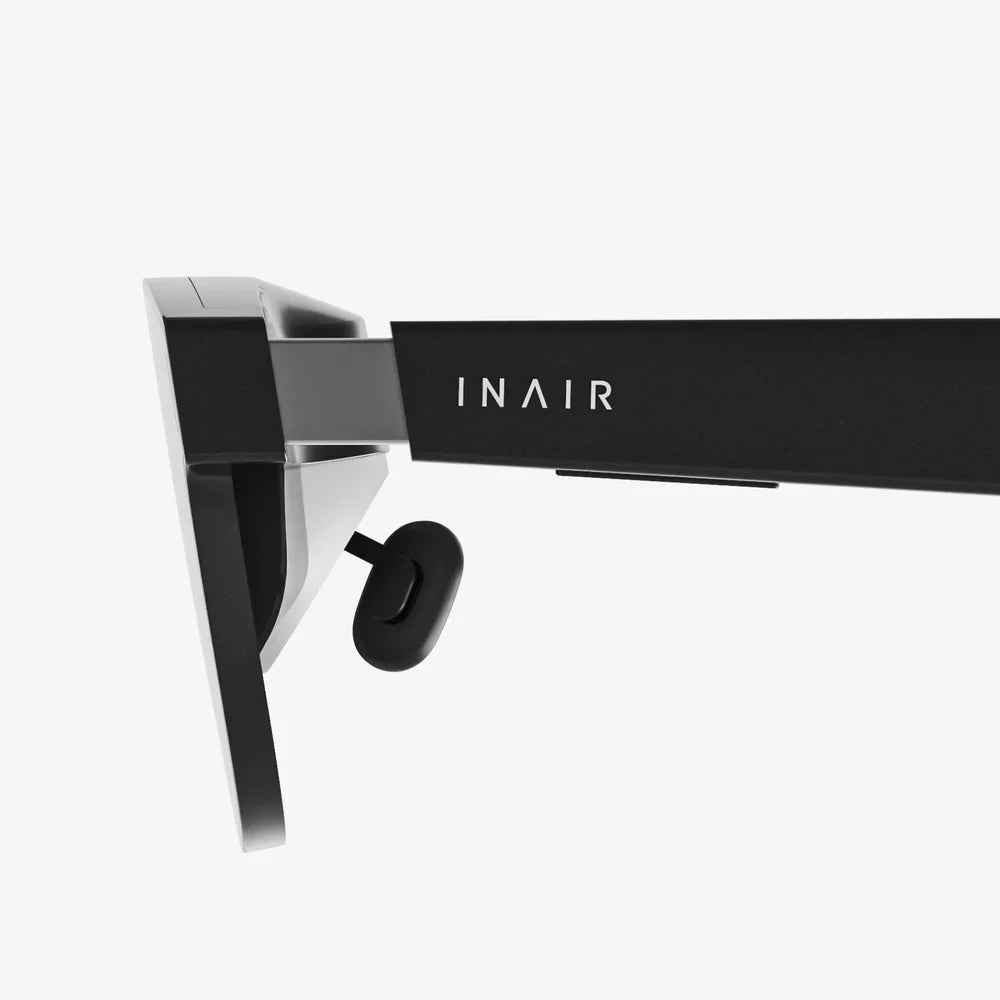
Imagine a world where your clothing monitors your health, your glasses overlay digital information onto the real world, and your watch anticipates your needs before you even articulate them. This isn't science fiction; it's the present and future being built on the backbone of wearable computing. The seamless, almost magical experience of these devices belies an incredibly complex symphony of miniaturized technology working in perfect harmony. To truly appreciate the revolution happening on our wrists, heads, and bodies, we must peel back the layers and examine the fundamental components of wearable computing—the tiny technological marvels that make it all possible.
The Central Nervous System: Processing and Memory
At the heart of every wearable device lies its brain: the central processing unit (CPU) or, more commonly in this context, a System-on-a-Chip (SoC). This isn't the sprawling silicon of a desktop computer; it's a monument to miniaturization and efficiency.
Microprocessors and SoCs: Wearable processors are designed with a singular, critical constraint in mind: extreme power efficiency. They often feature an advanced microprocessor architecture that can dynamically scale its performance up for demanding tasks and down to a near-dormant state for passive monitoring. This is managed through a design philosophy that incorporates big.LITTLE or similar heterogeneous computing architectures, pairing powerful cores with extremely efficient ones. The SoC integrates not just the CPU, but also the graphics processing unit (GPU) for rendering visuals, the memory controllers, and various other subsystems onto a single piece of silicon. This integration is crucial for saving space and reducing power consumption, as signals don't have to travel far between components.
Memory (RAM and Storage): Flanking the processor is memory. Random Access Memory (RAM) provides the workspace for active applications and the operating system. In wearables, RAM is typically low-power volatile memory, just enough to ensure smooth operation without draining the battery. Non-volatile flash storage, akin to a tiny solid-state drive, houses the device's operating system, firmware, and user data. The capacity is often limited compared to smartphones, prioritizing speed and reliability over sheer volume, as most user data is typically synced to a companion device or the cloud.
The Sensory Organs: A Suite of Sensors
If the processor is the brain, then the sensors are the device's senses, its window onto the user and their environment. This is where wearables truly differentiate themselves from other mobile technology, transforming from simple computers into intimate companions.
Inertial Measurement Units (IMUs): This is arguably the most common and versatile sensor cluster. An IMU typically combines a 3-axis accelerometer, a 3-axis gyroscope, and sometimes a magnetometer. The accelerometer measures linear acceleration, allowing the device to track movement, count steps, and understand orientation. The gyroscope measures angular velocity, providing precise data on rotation and twist. Together, they enable advanced activity tracking, gesture recognition, and navigation. The magnetometer acts as a digital compass, detecting magnetic fields to determine heading.
Biometric Sensors: This category is the cornerstone of health and wellness wearables. Key components include:
- Optical Photoplethysmogram (PPG) Sensors: This is the technology behind heart rate monitoring. By shining green (and sometimes red and infrared) LED light onto the skin and measuring the amount of light reflected back, the sensor can detect subtle changes in blood volume with each heartbeat. Advanced PPG systems can also attempt to measure blood oxygen saturation (SpO2).
- Electrocardiogram (ECG or EKG) Sensors: Providing a more clinical-grade reading, ECG sensors measure the electrical activity of the heart. They require the user to complete a circuit, typically by touching a dedicated electrode on the device's frame, to get a reading comparable to a single-lead ECG.
- Bioimpedance Sensors: These sensors send a tiny, imperceptible electrical current through the body and measure the opposition to that current (impedance). This data can be used to estimate body composition metrics like body fat percentage and, more recently, to enable novel input methods like recognizing hand gestures through muscle electrical signals.
- Galvanic Skin Response (GSR) Sensors: These measure the electrical conductivity of the skin, which changes with sweat activity. This can be a proxy for stress or emotional arousal.
- Temperature Sensors: Advanced wearables now incorporate skin temperature sensors to track circadian rhythms, detect the onset of illness, or even support women's health tracking by identifying ovulation-related temperature shifts.
Environmental Sensors: To understand the world around the user, wearables may include:
- Microphones: Used for voice commands, phone calls, and, with advanced processing, for analyzing ambient noise levels or even detecting snoring or sleep apnea events.
- Ambient Light Sensors (ALS): These automatically adjust screen brightness for optimal visibility and power savings.
- Barometers: By measuring air pressure, these sensors can calculate altitude changes, adding precision to step counting (e.g., counting floors climbed) and outdoor activity tracking.
- Global Navigation Satellite System (GNSS) Receivers: GPS, GLONASS, Galileo, and BeiDou modules allow for independent location tracking without relying on a connected smartphone. This is a significant power drain, so its use is carefully managed.
The Power Plant: Batteries and Energy Management
Power is the lifeblood of any portable device, and for wearables, it is the single greatest engineering challenge. The ideal wearable must last for days on a single charge despite its constant sensing and computing, all while being small and light enough to wear comfortably.
Battery Technology: The vast majority of wearables use lithium-polymer (Li-Po) batteries due to their high energy density, flexibility in form factor, and relatively good safety profile. These batteries are designed to be incredibly thin and are often shaped to fit the unique contours of the device's casing. Research into solid-state batteries, graphene-based batteries, and other advanced chemistries promises future gains in capacity, charging speed, and safety.
Power Management Integrated Circuits (PMICs): This unsung hero is as critical as the battery itself. The PMIC is a sophisticated chip that acts as the power traffic controller. It efficiently regulates voltage from the battery to the different components (each requiring different power levels), manages charging processes (including trickle and fast charging), and implements deep sleep states to minimize power draw when the device is inactive. Its efficiency directly translates to battery life.
Energy Harvesting: To extend longevity, some devices are exploring ways to harvest ambient energy. The most common form is solar charging through photovoltaic cells, often integrated into the watch face. More experimental approaches include kinetic energy harvesting (converting movement into electricity, as in some automatic watches) and thermoelectric generators (converting body heat into a small electrical current). While these methods rarely provide primary power, they can significantly supplement the main battery.
The Window to the User: Displays and Outputs
How the device communicates information to the user is a critical component of the wearable experience. The choice of display technology is a constant trade-off between readability, color fidelity, interactivity, and power consumption.
Display Technologies:
- Always-On Displays (AOD): Typically based on low-power memory-in-pixel (MIP) LCD or OLED technology, these displays show basic information like the time without needing to wake the full screen, consuming minimal power.
- Active Matrix OLED (AMOLED): Favored for their vibrant colors, high contrast ratios (true blacks, as pixels can be turned off individually), and faster response times. They are more power-efficient than LCDs when showing mostly black interfaces.
- Low-Temperature Polycrystalline Oxide (LTPO): An advanced backplane technology for OLED displays that allows for a dynamically variable refresh rate. The screen can ramp up to 60Hz or higher for smooth animations and drop down to 1Hz for static always-on displays, providing massive power savings.
- Transflective LCDs: Common in sports and outdoor watches, these displays use ambient light to enhance readability in direct sunlight, often at the expense of color vibrancy.
- Micro-LED: An emerging technology that promises the best of all worlds: the brightness and durability of LCD with the contrast and per-pixel lighting of OLED, all at lower power consumption. It is currently limited by high manufacturing costs.
Haptic Feedback Engines: Often overlooked, the tiny linear resonant actuator (LRA) that provides haptic feedback is vital for discreet, glance-free notifications. Advanced haptic systems can simulate the feeling of a button click or even provide nuanced alerts that the user can distinguish without looking.
Audio Components: Miniature speakers and amplifiers allow for alarms, phone calls, and voice assistant responses. Bone conduction technology, which transmits sound through vibrations to the inner ear, is also used in some devices, leaving the ear canal open to ambient sounds.
The Connective Tissue: Wireless Communication Modules
A wearable is rarely an island. Its power is often derived from its connection to other devices and the cloud. Integrating these radios into a small form factor without causing interference or excessive power drain is a major feat of antenna design and engineering.
- Bluetooth Low Energy (BLE): The absolute cornerstone of wearable connectivity. BLE enables a constant, low-power link to a smartphone for relaying notifications, syncing data, and offloading more complex processing tasks, saving the wearable's battery.
- Wi-Fi: Used for faster data transfers, such as streaming music or downloading firmware updates directly to the wearable, bypassing the phone.
- Cellular Connectivity (LTE/5G): High-end wearables include their own cellular modem, allowing them to make calls, send messages, and stream data independently of a smartphone. This feature comes with a significant cost to size, complexity, and battery life.
- Near-Field Communication (NFC): This enables contactless payments, turning the wearable into a digital wallet.
- Dedicated Antennas: For GNSS and cellular, specialized antenna designs are required. These are often ingeniously integrated into the device's frame or bezel to maximize signal reception in a small package.
The Physical Vessel: Materials and Form Factor
The enclosure is far more than a simple shell; it is a critical functional component. It must be durable, comfortable for 24/7 wear, biocompatible (to prevent skin irritation), and aesthetically pleasing. Materials range from aerospace-grade aluminum and stainless steel to advanced polymers, ceramics, and sapphire crystal for scratch-resistant lenses. The design must also account for the crucial interface between the user's skin and the biometric sensors, ensuring consistent contact without discomfort.
The Unseen Intelligence: Software and Algorithms
Hardware is nothing without the software that brings it to life. The operating system (a lightweight, often real-time OS) manages all the components. However, the true magic lies in the sophisticated algorithms that fuse data from multiple sensors. Raw accelerometer and gyroscope data is processed through machine learning models to classify activities like running, swimming, or sleeping. PPG data is filtered and analyzed to filter out motion noise and provide a clean heart rate reading. This sensor fusion and contextual intelligence are what transform raw data into actionable, meaningful insights for the user.
The next time you glance at your wrist for a notification or check your sleep score, remember the incredible orchestration happening beneath the surface. From the efficient pulse of its miniature processor to the silent watchfulness of its sensors, each component of wearable computing represents a triumph of innovation, all converging to create a seamless extension of you. This invisible engine of technology is not just on your body; it's increasingly becoming a part of your life, reshaping how we interact with the digital world and understand ourselves.
Share:
Best Electronic Wearables: The Ultimate Guide to Enhancing Your Life
Projection Mapping vs AR: A Definitive Guide to the Future of Visual Storytelling