


Imagine a world where your entire digital existence—your work, your creative projects, your connection to everyone you know—fits in your backpack or even your pocket. This isn't science fiction; it's the reality forged by the relentless evolution of computer portable computing devices, a technological revolution that has fundamentally altered the fabric of society, business, and personal life. The journey from room-filling mainframes to the sleek, powerful machines we carry today is a story of audacious engineering, visionary ideas, and a relentless drive to set computing free.
The Dawn of Mobility: From Luggables to the First True Portables
The dream of portable computing was born almost as soon as computers themselves. The initial so-called "portable" devices of the late 1970s and early 1980s were often sarcastically dubbed "luggables." These machines, while a step away from the immovable mainframe, were monstrously heavy, often weighing over 20 pounds, and featured tiny, low-resolution cathode-ray tube (CRT) displays. They were portable in name only, requiring a significant sacrifice in power, display quality, and comfort for the privilege of moving them from one desk-powered outlet to another. They were, however, a crucial proof of concept. They demonstrated a growing market desire for computing beyond the fixed terminal, planting the seed for what was to come.
The true genesis of the modern portable computing era can be traced to the development of the clamshell design, a form factor that would become synonymous with mobility. This design, featuring a screen hinged to a keyboard base, protected the components during transit and provided a familiar, efficient user interface when open. Coupled with pivotal advancements in display technology—specifically the move to lighter, thinner, and more energy-efficient liquid-crystal displays (LCDs)—the foundation was laid. The 1980s witnessed the arrival of the first machines that could legitimately be called laptops, though they remained prohibitively expensive for most, seen primarily as tools for high-flying executives and specialized field technicians.
The Laptop Era: Democratizing Portable Power
The 1990s and early 2000s marked the era when computer portable computing devices truly came of age and entered the mainstream. This democratization was driven by a powerful combination of factors. The relentless pace of Moore's Law dramatically increased processing power while simultaneously shrinking the size and reducing the power consumption of components. Lithium-ion battery technology emerged as a game-changer, offering a significantly higher energy density than its predecessors, which translated directly into longer unplugged usage times.
Furthermore, the standardization of internal architecture and operating systems created a competitive market that drove prices down and innovation up. This period saw the diversification of the laptop form factor itself. The market segmented into distinct categories:
- The Desktop Replacement: Powerful, larger machines designed to be a user's primary computer, often sacrificing some portability for performance and screen size.
- The Ultraportable: A class defined by its focus on thinness, light weight, and extended battery life, appealing to business travelers and those constantly on the move.
- The Netbook: A brief but impactful trend towards extremely low-cost, small-screen devices focused primarily on web browsing and basic tasks, highlighting the mass market's desire for affordable connectivity.
Wireless connectivity was the final, crucial piece of the puzzle. The integration of Wi-Fi and later mobile broadband chipsets (3G, 4G LTE) was the act of cutting the cord. It transformed these devices from merely portable computers to truly mobile hubs of communication and information access. The internet, once a stationary experience, could now be accessed from a park bench, a coffee shop, an airport lounge, or a train carriage. This untethering sparked profound changes in corporate culture, giving rise to remote work and the "digital nomad," and reshaped everything from education to entertainment.
The Paradigm Shift: Tablets, Hybrids, and the Post-PC World
Just as the laptop market seemed to mature, a seismic shift occurred with the introduction and mass adoption of the tablet computer. Driven by intuitive multi-touch interfaces and purpose-built mobile operating systems, tablets offered a new paradigm of computing: consumption-first, instant-on, and incredibly accessible. They proved that for a vast range of tasks—browsing the web, consuming media, reading, and light communication—a traditional keyboard-and-trackpad interface was not always necessary.
This disruption forced the laptop market to innovate once again, leading to the rise of the hybrid or 2-in-1 device. These ingenious computer portable computing devices blurred the lines between categories, featuring detachable keyboards or 360-degree hinges that allowed them to function as both a traditional laptop and a standalone tablet. This flexibility answered the user's need for a single device that could handle both content creation and content consumption, proving that the future of portability was not about one form factor dominating, but about adaptability.
The Engine Room: Key Technologies That Made It All Possible
The sleek exterior of a modern portable device belies a breathtakingly complex interior where numerous technological miracles converge. The progress in this field is a story of parallel advancements across multiple disciplines.
- System-on-a-Chip (SoC) Architecture: Perhaps the most critical innovation, SoCs integrate the central processing unit (CPU), graphics processing unit (GPU), memory, and other core components onto a single sliver of silicon. This dramatically reduces physical size, minimizes power consumption by limiting the distance electrons must travel, and simplifies motherboard design, allowing for thinner and lighter devices.
- Solid-State Drives (SSDs): Replacing spinning hard disk drives (HDDs) with flash memory-based SSDs was a monumental leap. SSDs are faster, more reliable (as they have no moving parts), lighter, and more power-efficient. They contribute significantly to a device's instant-on capability and overall snappy responsiveness.
- Advanced Materials Science: The pursuit of lightness and strength led manufacturers away from heavy plastics towards advanced alloys of aluminum and magnesium, and even into the realm of carbon fiber. These materials allow for incredibly rigid and durable chassis that can withstand the rigors of travel without adding unnecessary weight.
- Display Revolution: Screens have evolved from dim, low-resolution panels to stunning, high-density, color-accurate displays. Technologies like IPS (In-Plane Switching) offer wide viewing angles, while OLED (Organic Light-Emitting Diode) technology provides perfect blacks, high contrast ratios, and more efficient power usage. High refresh rates have also become common, making scrolling and animation incredibly smooth.
The Modern Landscape: A Device for Every Purpose
Today, the market for computer portable computing devices is more diverse and specialized than ever before. Consumers and professionals are no longer forced to choose a one-size-fits-all machine but can select a device tailored to their specific needs and lifestyle.
- The Productivity Powerhouse: Modern ultrabooks and business laptops prioritize all-day battery life, sleek designs, and features like enhanced security (e.g., fingerprint readers, facial recognition) and superior keyboards for long typing sessions.
- The Creative Workstation: For photographers, videographers, and designers, powerful mobile workstations offer desktop-class processors, professional-grade GPUs, and incredibly accurate, high-resolution displays that cover wide color gamuts essential for professional work.
- The Gaming Rig: A once-niche category, gaming laptops now represent a huge segment of the market, featuring high-refresh-rate displays, dedicated graphics cards that rival their desktop counterparts, and sophisticated cooling systems to manage the immense thermal output.
- The Connected Companion: Tablets and foldable devices continue to thrive, serving as secondary screens, digital notebooks, media consumption devices, and perfect tools for light, on-the-go tasks, often controlled by a stylus for precise input.
Gazing into the Crystal Ball: The Future of Portable Computing
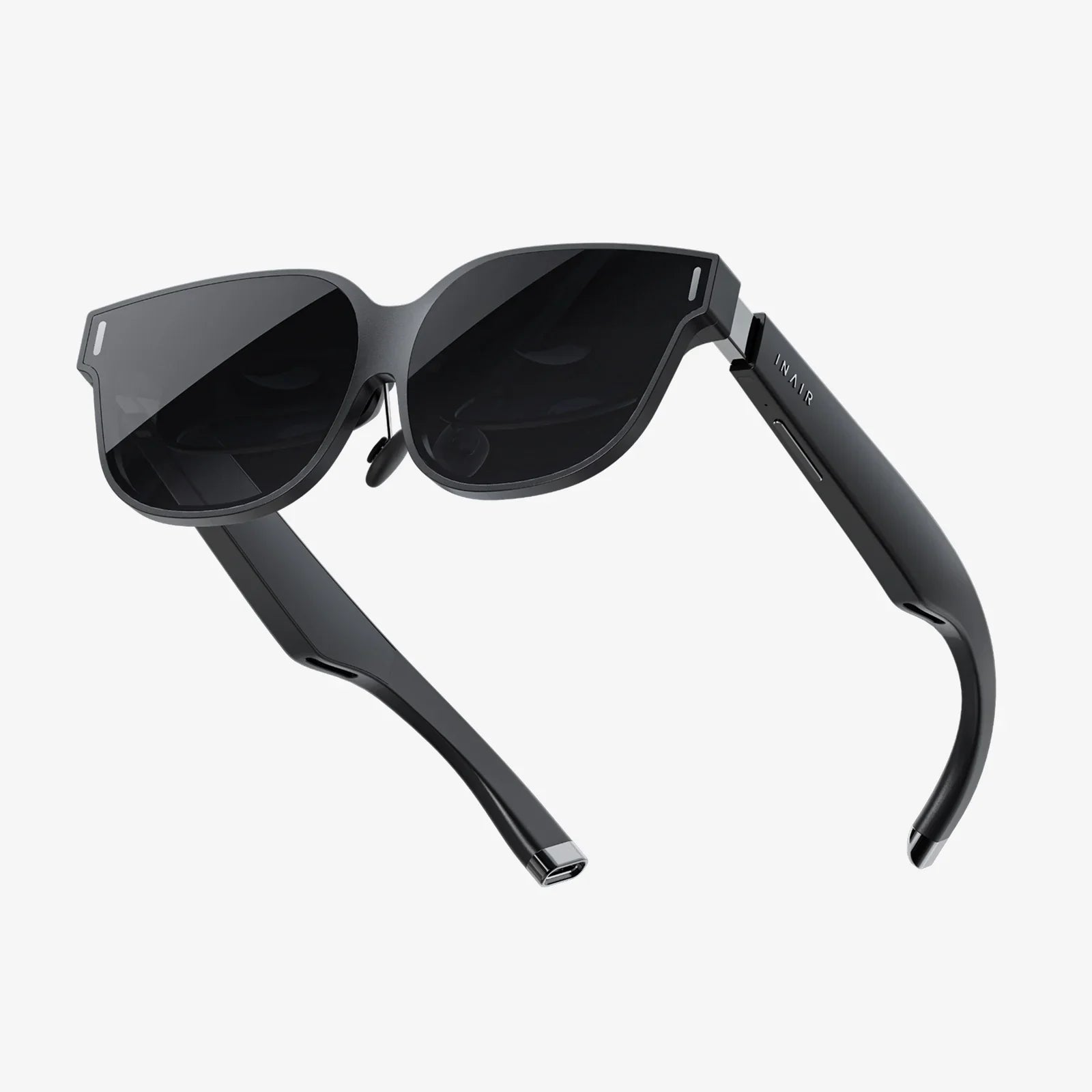
The evolution of computer portable computing devices is far from over. Several emerging technologies promise to redefine the concept of mobility once again. The development of foldable and rollable displays points to a future where screen size is no longer tied to device footprint, allowing for expansive displays that can be folded down to pocketable sizes. Advances in augmented reality (AR) and virtual reality (VR) suggest that the ultimate portable computer may not be a device we carry, but one we wear, overlaying digital information onto our physical world or immersing us in entirely virtual ones.
Furthermore, the integration of artificial intelligence (AI) and machine learning directly into hardware will lead to devices that are more contextually aware, proactively managing power, performance, and security based on user behavior and environment. We can also anticipate continued breakthroughs in battery technology, perhaps moving beyond lithium-ion to solid-state or other novel chemistries that could finally deliver weeks, not hours, of battery life. The goal remains the same as it was at the dawn of the luggable era: to make powerful, intuitive computing available anytime, anywhere, with as few compromises as possible.
The trajectory is clear—we are moving towards a world of ambient computing, where intelligence is seamlessly embedded into our environment and accessed through a multitude of form factors. The device itself may become increasingly invisible, but the computing power it provides will be more pervasive and integral to our daily lives than ever before. The age of being tied to a desk is a fading memory, replaced by an era of limitless digital mobility, all thanks to the incredible journey of the portable computer.
From the first heavy luggables to the powerful, sleek machines of today, computer portable computing devices have undergone a metamorphosis that has reshaped human existence. They have dismantled the traditional office, redefined global communication, and put the sum of human knowledge in our pockets. This relentless march of innovation shows no signs of slowing, promising a future where our interaction with technology becomes even more seamless, intuitive, and integrated into the very fabric of our daily reality. The next chapter in portable computing is already being written, and it promises to be even more revolutionary than the last.
Share:
Intelligence Artificielle 3D: The Next Frontier in Digital Creation and Simulation
Smart Work Technology: The Definitive Guide to a More Productive Future