


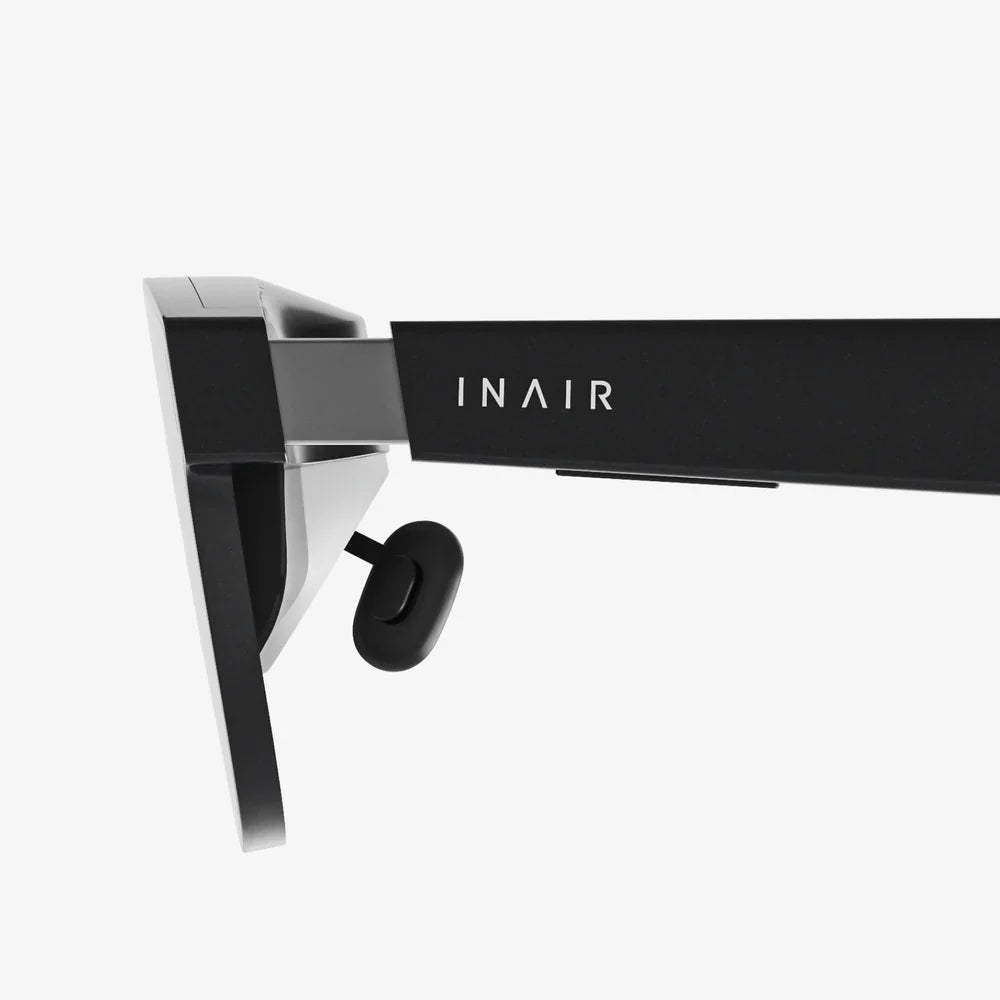
Imagine a world where a subtle glance adjusts the thermostat, a whispered command sends a text, and complex data is overlaid onto your field of vision, accessible without ever lifting a finger. This is not a scene from a science fiction film; it is the imminent reality being ushered in by the rapid development of control glasses. This groundbreaking category of wearable technology promises to seamlessly blend our digital and physical lives, moving beyond the screen to integrate information and interaction directly into our perception of the world. The potential to redefine accessibility, productivity, and entertainment is staggering, making control glasses one of the most anticipated and discussed technological frontiers of our time.
Beyond Augmented Reality: Defining the Core Technology
While often grouped with augmented reality (AR) smart glasses, control glasses represent a distinct and more advanced evolution. The fundamental differentiator is interaction. Where traditional AR glasses primarily display information, control glasses are designed for two-way communication, allowing the user to manipulate and command the digital layer through intuitive, often invisible, inputs.
The magic of control glasses lies in a sophisticated fusion of several core technologies working in concert:
- Advanced Optical Systems: At the heart of the experience are micro-displays, such as Liquid Crystal on Silicon (LCoS) or MicroLED, and waveguides or holographic optical elements that project crisp, bright images onto the user's retina. These systems are engineered to be minimally obstructive, allowing for a large, immersive digital canvas that coexists with the natural environment.
- Sensing and Tracking Suites: A constellation of sensors acts as the eyes and ears of the device. High-resolution cameras, inertial measurement units (IMUs), time-of-flight sensors, and microphones continuously gather data about the user's environment, head position, and orientation. This constant stream of information is crucial for stable AR overlays and contextual awareness.
- The Brain: Onboard Processing and Connectivity: Raw sensor data is meaningless without interpretation. A dedicated processing unit, often a System-on-a-Chip (SoC), runs complex algorithms for simultaneous localization and mapping (SLAM), computer vision, and voice recognition. This onboard intelligence, coupled with robust wireless connectivity like 5G and Wi-Fi 6, enables real-time processing and cloud-based computing, ensuring a responsive and powerful user experience.
The Language of Control: How We Interact
The true genius of control glasses is their move away from traditional input methods like keyboards and touchscreens. Instead, they leverage a more natural and human-centric set of interaction paradigms, creating a seamless flow between intention and action.
Voice Command: The First Frontier
Voice assistants have paved the way for hands-free control. Integrated beamforming microphones can isolate the user's voice from ambient noise, allowing for discreet and reliable voice commands to launch apps, search for information, or control smart home devices. This mode of interaction is powerful but not always socially appropriate or precise enough for every task.
Gesture Recognition: The Power of a Touch
Taking a cue from the interfaces of sci-fi, gesture control allows users to manipulate virtual objects and navigate menus with finger and hand movements. Cameras track specific motions—a pinching gesture to select, a swipe in the air to scroll—translating them into commands. This method offers a more tactile and engaging way to interact with the digital world, feeling like a natural extension of the body.
Eye Tracking: The Most Intuitive Input
Perhaps the most revolutionary input method is eye tracking. Using miniature infrared cameras to monitor pupil position and corneal reflection, the glasses can determine exactly where the user is looking with astonishing accuracy. This enables a host of capabilities:
- Dwell Selection: Simply looking at a virtual button or icon for a moment can activate it.
- Contextual Menus: Options can appear based on what you're looking at, streamlining workflows.
- Foveated Rendering: A graphics processing technique that renders the area of the screen you are directly looking at in high detail while subtly reducing the quality in your peripheral vision. This dramatically reduces the processing power required, saving battery life without the user perceiving any drop in quality.
- Biometric Analysis: Pupillary response can provide insights into cognitive load, focus, and even emotional state, opening doors for adaptive interfaces and health monitoring.
Neural Interfaces: The Final Frontier
On the bleeding edge of research are interfaces that read neural signals directly. Electroencephalography (EEG) sensors embedded in the frame could detect faint electrical patterns from the brain associated with specific intentions, such as the desire to take a photo or play music. While still in early stages, this technology promises the ultimate goal: control through thought alone.
A World Transformed: Applications Across Industries
The implications of control glasses extend far beyond consumer gadgetry. They are poised to become powerful tools that transform professional workflows and enhance human capability.
Revolutionizing Healthcare and Surgery
In the medical field, the hands-free, information-rich nature of control glasses is a perfect fit. Surgeons could access a patient's vital signs, MRI scans, or surgical plans overlaid directly on their field of view without breaking sterility to look at a monitor. A junior doctor performing a procedure could be guided in real-time by a remote expert who sees what they see and can annotate the live view. This technology can democratize expertise and improve patient outcomes.
Supercharging Industrial and Field Work
For engineers, technicians, and field service workers, control glasses can be a game-changer. A mechanic working on a complex engine could see torque specifications and step-by-step repair instructions superimposed on the components themselves. An architect could walk through a 3D model of a building at the construction site, making real-time adjustments. This instant access to contextual information drastically reduces errors, improves training, and boosts efficiency.
Redefining Accessibility
For individuals with disabilities, control glasses can serve as powerful assistive technologies. Real-time captioning of conversations for the hearing impaired, object recognition and navigation assistance for the visually impaired, and environmental control for those with limited mobility are just a few possibilities. By interpreting the world and enabling control through alternative inputs, these devices can foster greater independence and inclusion.
The Future of Entertainment and Social Connection
The entertainment potential is boundless. Imagine watching a football game with live stats floating above each player, or playing a video game where the virtual world is mapped onto your living room. Socially, control glasses could enable more immersive telepresence, where holographic avatars of friends and family can interact in your space, making remote connection feel palpably real.
Navigating the Obstacle Course: Challenges to Overcome
For all their promise, the path to ubiquitous control glasses is fraught with significant technical and social hurdles that must be addressed.
The Form Factor Conundrum
The ultimate goal is a device that is indistinguishable from regular eyewear—lightweight, stylish, and with all-day battery life. Current prototypes often struggle with bulk, limited battery capacity, and processor heat dissipation. Achieving the necessary performance in a socially acceptable package remains the primary engineering challenge.
The Privacy Paradox
This is arguably the most significant barrier to adoption. Glasses with always-on cameras and microphones represent a profound shift in surveillance capability. The potential for unauthorized recording, facial recognition, and data harvesting is a legitimate societal concern. Robust, transparent, and user-centric privacy frameworks are non-negotiable. Features like physical camera shutters, clear recording indicators, and on-device data processing will be essential to building public trust.
The Social Acceptance Hurdle
Technology is adopted not just because it works, but because it is socially acceptable. The "glasshole" stigma associated with early attempts at smart glasses highlights this challenge. People may feel uncomfortable conversing with someone who is wearing a recording device on their face. Normalizing this technology will require demonstrable utility, discreet design, and clear social etiquette around their use.
The Road Ahead: A Blended Future of Vision and Control
The journey of control glasses is just beginning. In the near term, we will see incremental improvements in battery life, display brightness, and processing power, making them more viable for niche professional applications. As the technology matures, the focus will shift to developing a robust ecosystem of applications and establishing the crucial privacy and security standards that will allow them to enter the mainstream.
The long-term vision is a move towards complete contextual awareness and ambient computing. The glasses will fade into the background, acting as an intelligent mediator between us and our environment. They will anticipate our needs, provide information before we even ask, and allow us to manipulate our digital world as effortlessly as we interact with the physical one. The line between user and device will blur, creating a symbiotic relationship where technology enhances human intuition and capability without demanding constant conscious attention.
We stand at the precipice of a new era of human-computer interaction, one defined not by devices we hold, but by what we see and how we choose to command it. The future is not on a screen; it's right in front of our eyes, waiting for a signal to come to life.
Share:
4K VR: The Ultimate Immersion and the Future of Experience
Eyeglass Computer Monitor: The Future of Personal Computing is on Your Face