


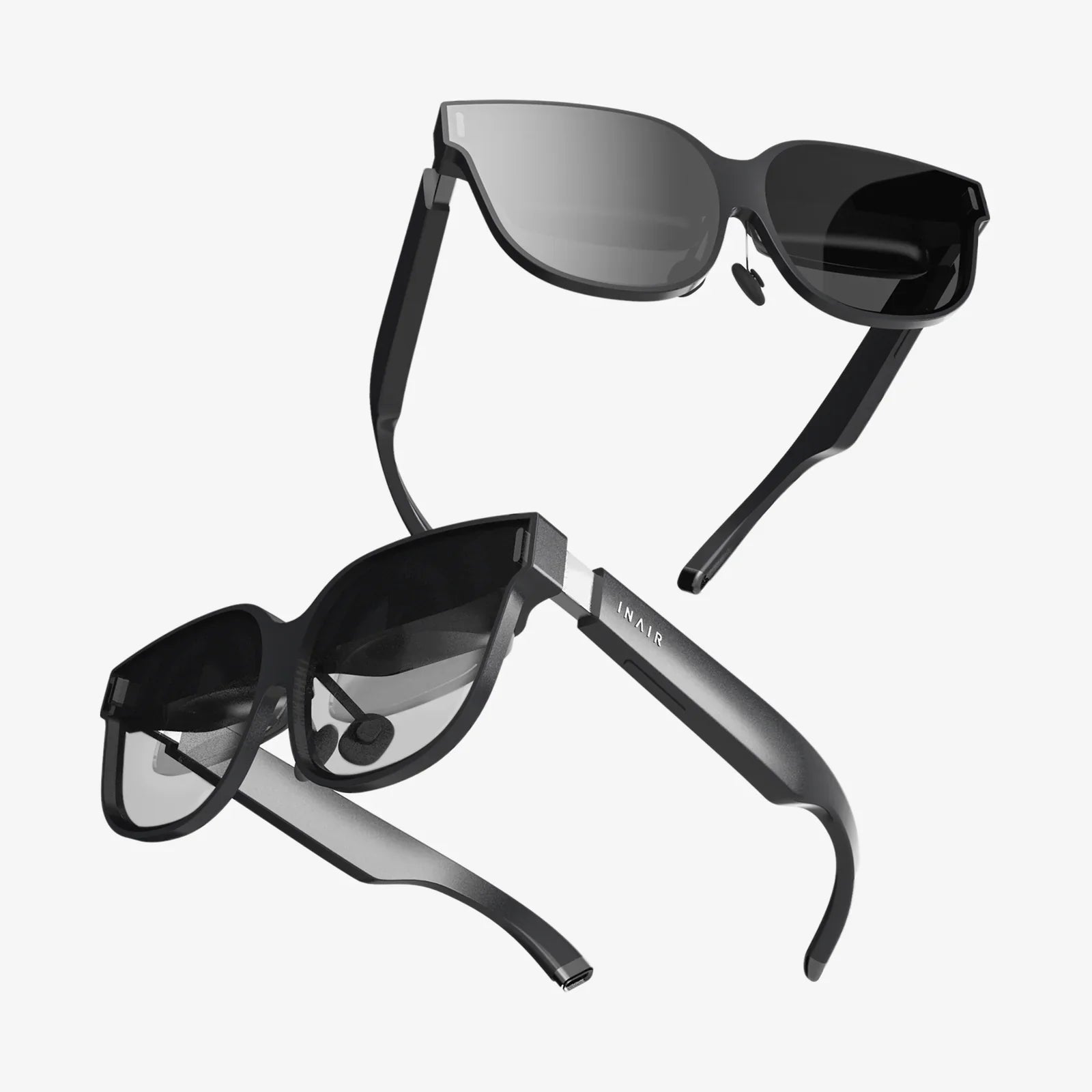
Imagine stepping into a painting, not as a passive observer before a flat canvas, but as an active participant within a fractured, multi-faceted world where up and down are mere suggestions and every angle reveals a new truth. This is not just the promise of a cutting-edge virtual reality experience; it is the very essence of the artistic revolution Pablo Picasso and Georges Braque ignited over a century ago. The seemingly disparate worlds of early 20th-century Cubism and 21st-century Virtual Reality are engaged in a silent, profound dialogue, both relentlessly challenging the singular, fixed viewpoint that had dominated human perception for centuries. One did it with brush and canvas, deconstructing form; the other does it with headset and code, constructing entirely new forms of being. This is the story of how two radical movements, separated by time and technology, converge on the same fundamental quest: to shatter the monolith of a single reality and explore the beautiful, complex truth of simultaneity.
The Cubist Revolution: Shattering the Singular Perspective
To understand the connection, we must first travel back to a Parisian art world dominated by the Renaissance tradition of linear perspective. This system, perfected by artists centuries prior, created the illusion of depth on a flat surface by having all lines converge on a single, fixed vanishing point. The viewer was a god-like observer, outside the scene, seeing everything from one perfect, immutable angle. The subject was presented as a complete, unified whole.
Cubism, emerging around 1907, was a direct and violent assault on this convention. Picasso’s seminal work, Les Demoiselles d'Avignon, was the first cannon shot. The figures are not rendered with soft, realistic curves but with sharp, fractured planes. Their faces are seen simultaneously from the front and in profile. There is no single “correct” way to look at them. Braque and Picasso, in their analytic phase, took this further, breaking down objects like guitars, bottles, and human figures into a kaleidoscope of geometric facets. They analyzed their subjects from every conceivable angle—above, below, the side—and then fused these competing viewpoints onto the two-dimensional plane of the canvas.
The key innovation was simultaneity. A Cubist painting does not capture a fleeting moment in time, like an Impressionist work might capture light on water. Instead, it compresses time and space. It presents the totality of an object’s existence—its front, its back, its volume, its essence—all at once. The viewer is no longer a passive outsider but an active participant, forced to navigate the canvas, to piece together the fragments, to engage in the reconstruction of reality. The painting becomes a record of a process of seeing, a cognitive map of an object rather than a mere visual representation.
This was more than an artistic style; it was a philosophical statement. It echoed the scientific upheavals of the era—Einstein’s theory of relativity, which challenged absolute notions of space and time—and reflected a new, modern consciousness that understood truth to be multifaceted, relative, and deeply dependent on one’s point of view.
The Virtual Reality Revolution: Constructing the Immersive Perspective
Fast forward a hundred years. A new technology emerges that promises not to represent reality on a flat surface, but to simulate it in an all-encompassing, immersive environment. Virtual Reality, at its most ambitious, seeks to create a convincing digital world that the user can inhabit and interact with. Like the Renaissance painters, its initial goal was often verisimilitude—to create a perfect, believable illusion.
However, the very mechanics of VR inherently align it more with the Cubist project than the Renaissance one. The core technological principle of VR is head-tracking. The virtual world is rendered in real-time from the exact perspective of the user’s head. There is no fixed frame. The “canvas” is a 360-degree sphere that surrounds the user. To see what is behind them, they must physically turn their head. The viewpoint is dynamic, fluid, and entirely individual.
This is the technological realization of the Cubist multiple perspective. In a VR experience, there is no single “correct” view of the scene. Every user will have a slightly different experience based on where they look, when they look, and how they move. The narrative or environment is not framed for them; they must discover it through their own agency. Reality is not presented as a whole but is constructed through the user’s active exploration and perception—a direct parallel to the viewer’s cognitive reassembly of a Cubist painting.
Furthermore, VR has the unique capacity to literally show multiple perspectives simultaneously or sequentially in a way that feels intuitive. An educational VR experience about the solar system might allow a user to first view the planets from a sun-centric view, then instantly teleport to the surface of Mars, then shift to a view from a satellite’s perspective. This compression of spatial scales and viewpoints is a digital form of Cubist simultaneity, presenting the totality of a system by letting the user occupy every point within it.
Convergence on the Plane of Perception: Form, Space, and Time
The deepest connection between Cubism and VR lies in their shared manipulation of the fundamental building blocks of perception: form, space, and time.
The Deconstruction and Reconstruction of Form
Cubism deconstructed familiar forms into abstract geometric shapes, challenging the viewer to recognize the subject within the fragmentation. VR, in many creative applications, does the same. Artists and developers working within VR often use its capabilities not for realism but for abstract expression. They can create impossible geometries, shapes that morph based on user interaction, and environments that defy Euclidean physics. A user can pick up a virtual object and see through it, around it, and inside it all at once, experiencing a form in its totality much like a Cubist painter intended.
The Reimagining of Space
Both movements reject the idea of passive, framed space. The Cubist canvas is an active field where space is ambiguous and overlapping. Similarly, VR space is navigable and experiential. There is no “edge” to the frame. More profoundly, VR can create non-Euclidean spaces—rooms that are bigger on the inside than the outside, portals that instantly transport users across vast distances, and structures that logically cannot exist in the physical world. This is a direct continuation of the Cubist project to break the rules of classical space and propose new, more fluid and complex spatial models.
The Compression of Time
Cubist simultaneity was a compression of temporal viewpoints. VR can manipulate time with similar flexibility. A user can pause, rewind, and fast-forward through a virtual narrative, experiencing events out of sequence. They can witness a scene from multiple characters’ points of view, gaining an omniscient, fragmented understanding of an event that no single character possesses. This ability to fracture and reassemble narrative time is a powerful storytelling tool that finds its philosophical precursor in the Cubist canvas.
Beyond the Canvas: The Human Experience of Fractured Reality
The impact of both movements extends beyond technical innovation into the realm of human consciousness and empathy.
Cubism forced a new way of seeing. It demanded intellectual engagement and a acceptance of ambiguity. It taught that truth is not simple, singular, or easily framed. In doing so, it mirrored the complexities and fractures of the modern world.
VR has the potential to do the same, but through empathy rather than abstraction. The most powerful VR experiences are often those that use its perspectival power to foster empathy. By literally placing you in someone else’s shoes—seeing the world from the perspective of a refugee, a person with a disability, or someone from a completely different culture—VR can break down the singular perspective of the self. It performs a kind of perspectival empathy that is the emotional counterpart to Cubism’s intellectual fracturing. It shows that your viewpoint is not the only one, and that reality is constructed from a multitude of individual, lived experiences.
This is where the “vs” in “Cubism vs Virtual Reality” dissolves into a symbiotic relationship. Cubism provided the conceptual framework for understanding a multi-perspective reality. VR provides the technological toolset to not just represent it, but to have us live inside it. One is the theory, the other the practice. One is the prophecy, the other the fulfillment.
Challenges and the Future of Perception
Of course, the comparison is not perfect. Cubism was a deliberate, often difficult, abstraction intended to challenge and provoke. Much of mainstream VR development is focused on seamless immersion and realistic simulation, goals that seem at odds with Cubist fragmentation. The danger for VR is that it becomes a perfected Renaissance perspective—an all-consuming illusion that asks for passive belief rather than active, critical engagement.
The true potential, however, lies in VR’s ability to embrace its inherent Cubist nature. The future of this medium may not lie in perfectly simulating our reality, but in creating entirely new ones that obey different rules of form, space, and time. The next great VR artists will be those who, like Picasso and Braque, are not afraid to deconstruct, to challenge, and to present reality not as it is, but as it can be perceived—complex, simultaneous, and breathtakingly multi-faceted.
We stand at the precipice of a new way of seeing, one where the lessons of a Parisian studio a century ago are more relevant than ever. The headset is simply the latest canvas, and the digital world our newest medium for the eternal human quest to understand our place in a universe of infinite perspectives. The next time you don a VR headset and glance over your shoulder to see a world that continues seamlessly behind you, remember the fractured figures on a canvas who first dared to suggest that there is always more than one side to the story.
Share:
How Does AR Differ From Virtual Reality: A Deep Dive Into Our Digital Future
Is Virtual Reality Beneficial? An In-Depth Exploration of Its Impact on Society