Imagine a world where digital information seamlessly overlays your physical surroundings, offering real-time guidance, hidden insights, and interactive experiences—or a universe where you can step entirely away from the constraints of reality to explore, learn, and play in limitless virtual landscapes. This is no longer the realm of science fiction; it's the burgeoning present, powered by two distinct yet often confused technologies: Augmented Reality (AR) and Virtual Reality (VR). While both are revolutionizing industries and redefining human-computer interaction, they are not the same. Understanding the chasm that separates them is crucial to grasping the future of technology itself.

The Core Philosophical Divide: Enhancement vs. Immersion

At its heart, the difference between AR and VR is a difference in intent and philosophy.

Augmented Reality (AR) is fundamentally an additive technology. Its primary goal is to enhance your perception of the real world by superimposing computer-generated information—be it images, text, data, or 3D models—onto your view of your immediate environment. AR does not seek to replace reality but to augment it, making it more informative, interactive, and engaging. You remain present in your world; the technology simply adds a digital layer on top of it.

Virtual Reality (VR), in stark contrast, is a substitutive technology. Its objective is total immersion, completely replacing your real-world environment with a simulated, digital one. VR transports your senses, primarily sight and sound, into a computer-generated universe, effectively blocking out the physical world. The goal is presence—the convincing feeling of being somewhere else, whether that's on the surface of Mars, inside a human cell, or on the front lines of a historical battle.

Hardware and the User Experience: Headsets, Glasses, and Phones

This philosophical divide directly dictates the hardware required for each experience, which is one of the most tangible ways the two technologies differ.

Virtual Reality Hardware

VR requires dedicated hardware designed for immersion and isolation. This typically comes in two forms:

  • Tethered Headsets: These are high-powered devices connected to a powerful external computer or console. They offer the highest fidelity experiences with advanced graphics, precise tracking, and often include sophisticated hand-held controllers for interaction within the virtual world. The user wears a headset that completely covers their field of vision.
  • Standalone Headsets: These all-in-one devices have the computing power, display, and tracking systems built directly into the headset. They are less powerful than tethered systems but offer greater freedom of movement and accessibility, untethered by cables.

Both types rely on a technique called head-tracking, which uses sensors like gyroscopes and accelerometers to map the user's head movements onto the virtual environment, creating a natural and responsive experience. The defining feature is the complete visual occlusion of the real world.

Augmented Reality Hardware

AR hardware is more diverse and, in many cases, more accessible, reflecting its goal of blending with reality.

  • Smartphones and Tablets: The most common gateway to AR. Using the device's camera, screen, and sensors, applications can overlay digital content onto a live video feed of the real world. This makes AR instantly available to billions of users without requiring specialized equipment.
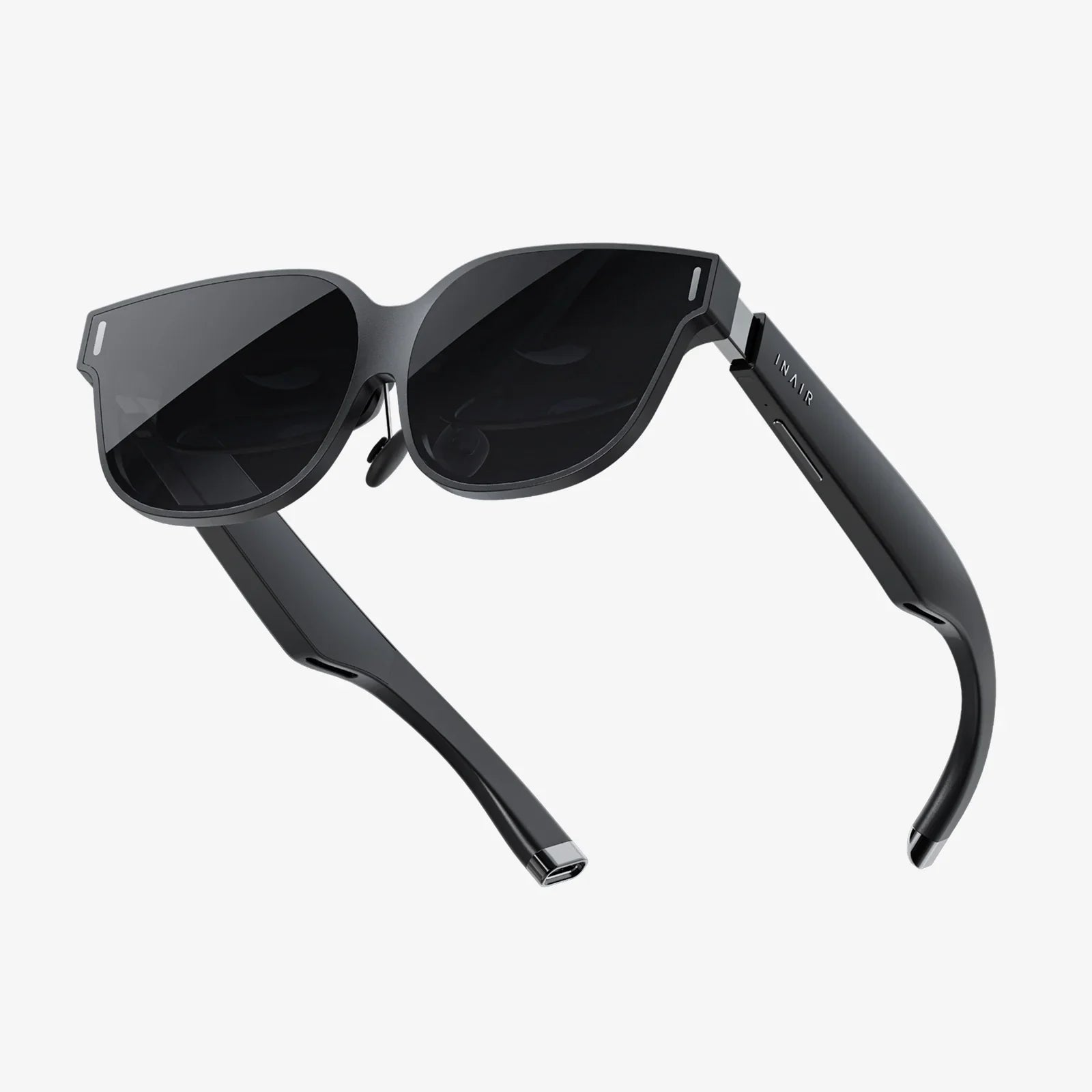
  • Smart Glasses: These are the idealized form factor for AR—eyewear that projects digital imagery onto transparent lenses, allowing the user to see their environment normally while also perceiving digital overlays. These range from simpler versions that display basic notifications to advanced pairs with full-color, wide-field-of-view displays and spatial mapping capabilities.
  • Heads-Up Displays (HUDs): Long used in fighter jet cockpits and now increasingly in automotive windshields, these systems project critical information like speed or navigation directions into the user's line of sight, allowing them to keep their focus on the real world.

The key technological challenge for AR is registration—ensuring digital objects are perfectly aligned and anchored to the real world, even as the user moves their head or device.

Under the Hood: The Technology Powering the Illusions

While both AR and VR leverage overlapping technologies like computer graphics and motion sensing, their technical demands differ significantly.

Virtual Reality's Technical Demands

VR is a computationally intensive endeavor. Its success hinges on:

  • High Refresh Rates & Low Latency: To prevent motion sickness and maintain immersion, the virtual world must update incredibly quickly (90 frames per second or higher) with imperceptible delay between a user's movement and the corresponding change on the screen.
  • Advanced Graphics Rendering: Creating a believable, entirely synthetic world requires immense graphical processing power for detailed textures, lighting, and shadows.
  • Precise positional tracking: Systems often use external sensors or internal cameras (inside-out tracking) to map the user's physical position in a room, allowing them to walk around and interact with the virtual space.

VR is primarily about generating a consistent and convincing reality from scratch.

Augmented Reality's Technical Demands

AR's complexity lies in its need to understand and interact with the real world in real-time. Critical technologies include:

  • Computer Vision: This is the cornerstone of AR. Algorithms must be able to identify surfaces, planes (floors, tables), objects, and spatial features through a camera feed to know where to place digital content accurately.
  • Simultaneous Localization and Mapping (SLAM): This advanced technology allows a device to simultaneously map an unknown environment while tracking its own location within that environment. This is essential for digital objects to stay locked in place.
  • Depth Sensing: Using technologies like structured light or time-of-flight sensors, AR devices measure the distance to objects, enabling occlusion (where a real object can pass in front of a digital one) and more realistic interactions.

AR is less about generating pristine graphics and more about contextual awareness and seamless integration.

A World of Applications: How AR and VR Are Used Today

The practical applications of AR and VR are as different as the technologies themselves, each playing to its unique strengths.

Virtual Reality Applications

VR excels in situations where complete control over the environment is needed or where physical presence is dangerous, expensive, or impossible.

  • Gaming and Entertainment: This is the most well-known application. VR games offer unparalleled immersion, placing the player directly inside the game world. It's also used for virtual concerts, movies, and social experiences.
  • Training and Simulation: From training surgeons for complex procedures and pilots for emergency scenarios to preparing soldiers for combat missions, VR provides a safe, repeatable, and cost-effective training ground.
  • Architecture and Design: Architects and clients can “walk through” a building long before the foundation is poured, allowing for design changes and a true sense of scale and space.
  • Therapy and Rehabilitation: VR is used to treat phobias (like fear of heights or flying) through controlled exposure therapy. It also aids in physical rehabilitation by making exercises more engaging.

Augmented Reality Applications

AR thrives in applications that require contextual information and interaction with the real world.

  • Industrial and Field Service: Technicians can see schematics overlaid on machinery they are repairing, receive step-by-step instructions, and remotely collaborate with experts who can annotate their real-world view.
  • Retail and E-commerce: Customers can “try on” clothes, glasses, or see how furniture would look in their living room before making a purchase, drastically reducing uncertainty.
  • Education: Textbooks come to life with 3D models of the human heart or historical artifacts. Students can interact with complex concepts directly in their classroom.
  • Navigation: AR can project arrows and directions onto the real world through a smartphone or car windshield, creating an intuitive guidance system superior to traditional 2D maps.
  • Healthcare: Surgeons can use AR overlays to visualize patient data, such as MRI scans, directly on the patient during an operation, improving precision.

The Blurring Lines and The Convergent Future

While the distinctions are clear, the line between AR and VR is beginning to blur with the emergence of Mixed Reality (MR). MR represents a spectrum between the purely physical and the entirely digital environment. It aims to combine the best of both: the interactive digital objects of VR with the real-world context of AR, allowing them to coexist and interact in real-time.

Advanced headsets are now capable of “passthrough VR,” using cameras to show the real world inside the headset and then augmenting it with digital content. This effectively turns a VR device into an AR one, hinting at a future where a single device might be capable of delivering the full spectrum of experiences, from full immersion to subtle augmentation.

Choosing the Right Tool for the Task

The question is not which technology is better, but which is appropriate for the task at hand. Ask yourself:

  • Do I need the user to be completely isolated from their environment? Choose VR.
  • Do I need the user to interact with and receive information about their real environment? Choose AR.
  • Is the experience about escaping reality or enhancing it?
  • Does the application require high-fidelity graphics or high-fidelity context?

These questions guide developers and businesses toward the technology that will deliver the most effective and meaningful experience.

The journey into our digital future is not a single path but a branching tree of possibilities. Augmented Reality seeks to make our reality richer, layering it with data and magic, while Virtual Reality offers the ultimate escape, building entirely new worlds for us to explore. One connects us more deeply to the world we have, and the other liberates us from its constraints. As both technologies continue to evolve and converge, they promise to fundamentally reshape how we work, learn, play, and connect, forever changing our perception of what is real and what is possible.

Latest Stories

This section doesn’t currently include any content. Add content to this section using the sidebar.