


- by wangfred
Current Augmented Reality Technology: Bridging the Digital and Physical Worlds
- by wangfred
The world around you is about to become a canvas. Imagine information layered seamlessly over your morning commute, your workspace transformed into a dynamic command center, and historical figures seemingly stepping out from the pages of a textbook to tell their stories. This is the promise and the rapidly evolving reality of current augmented reality technology, a field that is moving beyond novelty to become a fundamental tool for how we work, learn, and interact. The line between our physical environment and the digital universe is not just blurring; it's being systematically and intelligently erased.
At its core, augmented reality (AR) is a technology that superimposes a computer-generated image, video, or 3D model onto a user's view of the real world. Unlike Virtual Reality (VR), which creates a completely immersive, digital environment, AR enhances the real world by adding digital elements to it. This creates a composite view that exists part in reality and part in a synthetic space. The goal is to make these digital additions interactive in real-time and registered accurately in three dimensions, making them appear as if they are a natural part of the environment.
The magic of seeing a digital dinosaur roam your living room is made possible by a sophisticated fusion of hardware and software. Current augmented reality technology rests on several critical pillars that work in concert to create a convincing and useful experience.
For an AR system to understand and interact with the world, it must first perceive it. This is achieved through a suite of sensors. High-resolution cameras capture the live video feed that forms the base layer of the AR experience. Depth sensors, often using LiDAR (Light Detection and Ranging) or structured light, project thousands of invisible points into a room to create a precise 3D depth map. This allows the device to understand the geometry of the space—the distance to walls, the height of tables, and the shape of objects. Inertial Measurement Units (IMUs), including accelerometers and gyroscopes, track the device's movement and orientation in space with extreme precision, ensuring the digital content stays locked in place even as you move your head or device.
The raw data from the sensors is meaningless without immense computational power. This is where the real-time processing happens. Simultaneous Localization and Mapping (SLAM) algorithms are the cornerstone of this process. SLAM allows the device to both map an unknown environment and simultaneously track its own position within that map. It identifies unique features in the environment—corners, edges, patterns—and uses them as anchor points to understand its own movement and place digital objects persistently. This complex mathematical problem, solved in milliseconds, is what prevents a virtual coffee cup from sliding off a real table when you walk around it.
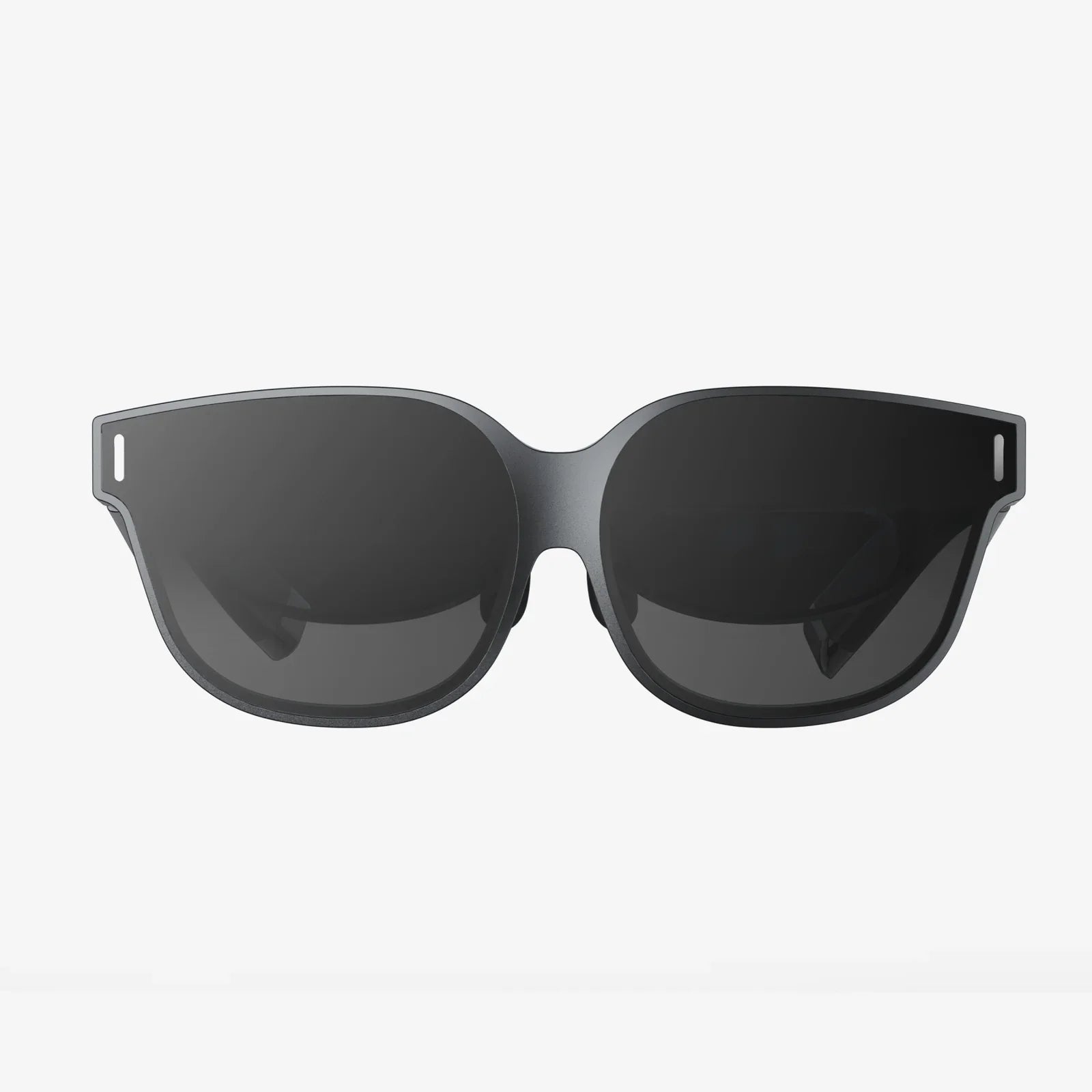
How the digital image is presented to the user is the final, crucial step. Current augmented reality technology employs several display methods. Smartphone and Tablet Displays: The most accessible form of AR, using the device's screen as a viewport into an augmented world. The camera captures the real environment, the processor augments it, and the screen displays the final composite. Smart Glasses and Headsets: These wearable devices project images directly onto the user's retina or through transparent lenses. Waveguide technology uses microscopic gratings to bend light from a projector on the temple of the glasses into the eye, overlaying crisp digital images onto the clear view of the real world. This is the form factor widely seen as the future of ubiquitous computing.
Interacting with a screen that is also a window to the real world requires new methods. Current systems are pioneering intuitive control schemes. Hand Tracking and Gesture Recognition: Cameras track the user's hands, allowing them to pinch, grab, push, and swipe digital objects as if they were physical. This creates a deeply natural and immersive feeling of manipulation. Voice Commands: Using natural language processing, users can summon information, control interfaces, or manipulate objects simply by speaking. Eye Tracking: By knowing precisely where a user is looking, systems can create interfaces that respond to gaze, making selection faster and reducing the need for large, sweeping gestures. This also enables dynamic focus, where digital elements can appear sharp or blurry based on where the user's eyes are focused, enhancing the realism.
The power of current augmented reality technology is not in the technology itself, but in its profound applications across nearly every sector of society.
Perhaps the most significant impact of AR today is in the industrial sector. Remote Assistance and Expert Guidance: A field technician repairing a complex piece of machinery can wear AR glasses that allow an expert thousands of miles away to see their field of view. The expert can then draw arrows, highlight components, and display manuals directly into the technician's line of sight, enabling faster, more accurate repairs without travel. Complex Assembly and Manufacturing: In factories, AR can project digital wiring diagrams, assembly instructions, or torque specifications directly onto the physical workpiece, reducing errors and drastically cutting down training time for new employees. Logistics and Warehousing: AR can visually guide warehouse pickers to the exact shelf and bin location for an item, displaying the most efficient route and verifying the correct item is picked, supercharging efficiency.
AR is turning abstract concepts into tangible, interactive experiences. Medical students can practice surgeries on detailed, virtual holograms of human anatomy, making mistakes without consequence. History students can walk through a digitally reconstructed ancient Roman forum, seeing it teem with virtual life. Mechanics-in-training can see an exploded view of an engine layered over the real thing, understanding the relationship between parts intuitively. This learning-by-doing in a simulated, yet real, environment dramatically improves knowledge retention and comprehension.
The "try before you buy" problem is being solved by AR. Furniture retailers allow customers to see how a sofa will look and fit in their actual living room, scaled to perfect size. Cosmetic companies offer apps that let users try on different shades of lipstick or eyeshadow in real-time through their phone's camera. Fashion brands are enabling virtual fitting rooms. This not only improves customer confidence and reduces returns but also creates a novel and engaging shopping experience.
Beyond training, AR is assisting in live patient care. Surgeons can use head-mounted displays to see critical patient information, like heart rate or a 3D model of a tumor from a recent MRI scan, superimposed on their field of view during an operation, keeping their focus on the patient. It can also aid in difficult procedures like venipuncture, by projecting a map of a patient's veins onto their skin. For patients, AR can provide interactive, visual explanations of their conditions and treatments, leading to better understanding and adherence.
For all its promise, the widespread adoption of current augmented reality technology faces significant hurdles that must be addressed.
Hardware Limitations: For AR to become an all-day wearable, the form factor must evolve. Current glasses can be bulky, have limited battery life, and suffer from fields of view that are too narrow. Achieving a sleek, socially acceptable form factor that rivals ordinary eyeglasses, while packing in immense computing power, is the paramount engineering challenge. Social and Ethical Considerations: The constant recording of one's environment raises serious privacy concerns. Who has access to the video and data collected by these always-on devices? Furthermore, the concept of "attention theft"—where digital notifications constantly pull focus from the real world and real human interactions—is a societal challenge we are only beginning to grapple with. Digital Divide and Accessibility: As with any advanced technology, there is a risk that AR could exacerbate existing inequalities. Ensuring the benefits are accessible and affordable to all, not just a privileged few, will be crucial for its healthy integration into society.
The journey of current augmented reality technology is far from over; in many ways, it's just beginning. The next frontier involves the integration of Artificial Intelligence. AI will move AR from being a passive display of information to an active, contextual, and intelligent partner. Imagine glasses that not only translate a foreign street sign but also explain the cultural significance of the building behind it. Or a system that can listen to a complex business meeting, understand the context, and instantly pull up relevant data and charts for you to reference. This fusion of AI's cognitive power with AR's visual interface will ultimately create a true "amplified intelligence," augmenting not just our reality, but our own human capabilities. The device in your pocket or on your face is evolving from a tool you look at to a lens you look through, forever changing your perception of what's possible.
Share:
AR VR Technology Trends 2025: The Blurring Line Between Digital and Physical Realities
What Is The Difference Between AR VR And XR - The Ultimate Guide To Immersive Technologies