You've heard the terms—AR, VR, XR—tossed around in tech news, seen them in futuristic product demos, and perhaps even experienced them through a headset or your smartphone. They promise to revolutionize everything from how we work and learn to how we socialize and play. But as these immersive technologies rapidly evolve, the lines between them have blurred, creating a swirling vortex of confusion. What truly sets them apart, and why does it matter? Understanding the difference is your first step into a larger world, a new digital frontier that is already beginning to reshape our reality.
Beyond the Buzzwords: Defining the Realms of Digital Experience
At its heart, the difference between AR, VR, and XR is defined by one core concept: the relationship between the digital world and our physical reality. Each technology occupies a distinct point on the virtuality continuum, a spectrum that ranges from complete immersion in a synthetic environment to subtle enhancements of the world around us.
Virtual Reality (VR): The Total Digital Escape
Virtual Reality is the most immersive of the three technologies. Its primary goal is to replace your real-world environment with a completely simulated one. When you put on a VR headset, you are visually and audibly transported to a new place. This could be a fantastical game world, a recreated historical site, a virtual meeting room, or the surface of Mars.
The key characteristics of VR include:
-
Immersion: VR headsets use stereoscopic displays, often with a high field of view, to fill your vision with digital content. This is coupled with spatial audio to create a convincing sense of "being there."
-
Isolation: By design, a good VR experience blocks out the physical world. You are meant to forget your surroundings and interact solely with the virtual environment.
-
Interactivity: Users can navigate and manipulate the virtual world through motion-tracked controllers, hand-tracking technology, or even full-body suits, making the experience dynamic and engaging.
VR is predominantly used for gaming and entertainment, but its applications have expanded significantly into enterprise training (e.g., for surgeons, pilots, or mechanics), architectural visualization, and therapeutic treatments for phobias or PTSD.
Augmented Reality (AR): Enhancing Your World
If VR is about escape, Augmented Reality is about enhancement. AR overlays digital information and objects onto the real world. Instead of replacing your environment, it supplements it. You still see the room you're in, but now there might be a virtual character sitting on your sofa, navigation arrows on the street ahead, or a schematic diagram floating over a piece of machinery you're repairing.
The key characteristics of AR include:
- AR is deeply connected to the user's immediate environment. It uses cameras and sensors to understand the world and place digital content in a contextually relevant way.
-
Accessibility: While dedicated AR glasses exist, many AR experiences are delivered through smartphones and tablets, making the technology widely accessible.
-
Real-Time Interaction: Digital content in AR can interact with the real world in real-time. A virtual ball can bounce off a real table, and a digital tape measure can accurately gauge the dimensions of a physical object.
AR has found powerful use cases in industrial maintenance, where instructions can be superimposed onto equipment, and in retail, allowing customers to "try on" clothes or see how furniture would look in their home. It also powers popular social media filters and mobile games.
Extended Reality (XR): The Umbrella Term
This is where many people get confused. Extended Reality (XR) is not a specific technology but an umbrella term that encompasses all real-and-virtual combined environments and human-machine interactions generated by computer technology. It includes AR, VR, and everything in between—most notably Mixed Reality (MR).
Think of XR as the entire universe of immersive tech. VR and AR are specific planets within that universe. XR acknowledges that these technologies are not isolated silos but are converging. The future of immersion lies in devices and experiences that can seamlessly blend the real and the virtual, adapting along the spectrum as needed.
The Spectrum of Immersion: From AR to VR and the Critical Middle Ground
The journey from the physical world to a fully virtual one is not a simple binary switch. It's a rich spectrum, and understanding this is crucial to grasping the nuances of these technologies.
Mixed Reality (MR): The Best of Both Worlds
Occupying the crucial middle ground between AR and VR is Mixed Reality. If AR overlays digital content on the real world, MR anchors digital objects to the real world and allows them to interact with it convincingly. In a true MR experience, a virtual object understands it is behind a real physical couch. It can cast shadows, be occluded by real objects, and respond to changes in the environment's lighting.
MR requires advanced sensors, cameras, and processing power to continuously map the environment and understand its geometry and physics. This is a significant step beyond simple marker-based AR, which only places an object when it recognizes a specific image or QR code.
Under the Hood: The Technological Divergence
The different goals of AR, VR, and MR necessitate different hardware and software approaches, which is a fundamental part of their differentiation.
VR Hardware: Built for Immersion
VR systems are typically characterized by:
-
Headsets with Integrated Displays: High-resolution, fast-refresh-rate screens are housed inches from the user's eyes.
-
Inside-Out or Outside-In Tracking: Sophisticated systems using external sensors (outside-in) or built-in cameras (inside-out) to track the user's head and controller movements with six degrees of freedom (6DoF). This means you can not only look around (3DoF) but also move through space.
-
Powerful Processing: Rendering two high-resolution images at high frame rates is computationally intensive, often requiring a powerful connected computer or a high-end mobile processor.
AR/MR Hardware: Built for the World
AR and MR devices prioritize a different set of features:
-
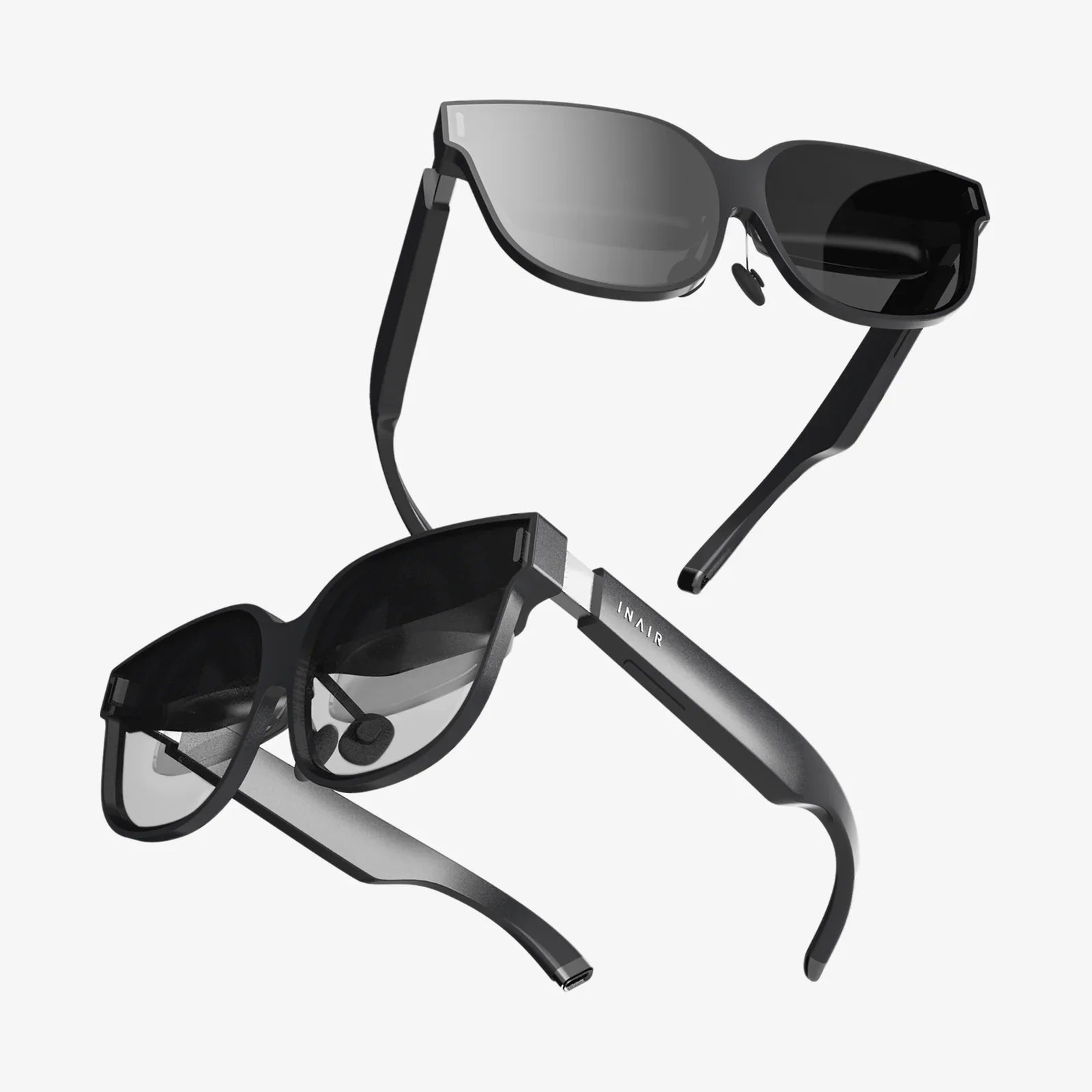
See-Through Displays: Instead of opaque screens, they use waveguides, holographic lenses, or cameras and screens to blend digital content with the user's view of the real world.
-
World-Sensing Capabilities: A suite of sensors, including depth sensors (like time-of-flight cameras), LiDAR, and multiple RGB cameras, is essential for continuously scanning and understanding the 3D space.
-
Portability and Battery Life: Since they are designed to be used while moving around in the real world, form factor and all-day battery life are critical design challenges.
The Application Divide: How Each Technology Solves Different Problems
The "why" behind each technology is just as important as the "how." Their unique strengths make them suited for vastly different applications.
Where VR Excels: Simulation and Empathy
VR's strength is its ability to create controlled, repeatable, and safe simulations. It is unparalleled for:
-
Training and Education: Practicing dangerous procedures (surgery, electrical work, flight) without any real-world risk. Students can take field trips to ancient Rome or inside the human bloodstream.
-
Design and Prototyping: Automotive designers can build and walk around a full-scale 3D model of a new car long before a physical prototype is built.
-
Therapy and Rehabilitation: Used for exposure therapy to treat anxiety disorders or to make physical therapy exercises more engaging.
Where AR/MR Excels: Information and Assistance
AR and MR thrive by making people more knowledgeable and efficient in their current tasks and environment. They are ideal for:
-
Remote Assistance and Collaboration: An expert can see what a field technician sees and annotate the real world with arrows and instructions to guide a repair.
-
Logistics and Warehousing: AR can visually show warehouse pickers the most efficient route and highlight the exact shelf and bin for an item, dramatically improving accuracy and speed.
-
Retail and Try-Before-You-Buy: Visualizing products in your own space or on your own body before making a purchase decision.
The Convergence: The Blurring Lines and the Rise of XR
The future does not belong solely to AR, VR, or MR. The frontier is XR—a fluid ecosystem where the boundaries are increasingly porous. We are already seeing this convergence:
-
Passthrough AR: Modern VR headsets are incorporating high-resolution color cameras, allowing users to switch to a "passthrough" mode. This turns them into AR/MR devices by blending the real world from the cameras with digital content, effectively creating a powerful MR experience from a VR device.
-
Varifocal and Adaptive Displays: Research into displays that can dynamically adjust focus allows virtual objects to feel more physically present and can reduce eye strain, a key step for long-term XR use.
-
Shared Universal Standards: The development of platforms and standards for building XR experiences ensures that content can be more easily adapted across different devices on the spectrum.
This convergence means that the device of the future may not be purely a "VR headset" or "AR glasses," but rather an "XR headset" capable of operating anywhere on the virtuality continuum based on the user's needs at that moment.
Choosing Your Reality: A Decision Framework
So, how do you decide which technology is right for a given task? Ask these questions:
-
Do I need to be aware of my physical surroundings? If yes, you need AR/MR. If no, VR is an option.
-
Is the interaction with the physical world crucial? If the digital content must interact with real walls, tables, and objects, you need high-fidelity MR.
-
Is the goal complete immersion and isolation? For deep training, gaming, or storytelling, VR's total control is its greatest asset.
-
Is accessibility and device availability a primary concern? Smartphone-based AR currently has the largest reach, while VR and MR require more specialized hardware.
The distinctions between AR, VR, and XR are far more than semantic pedantry; they are the foundational principles shaping the next wave of human-computer interaction. AR acts as a digital layer of intelligence over our world, VR serves as a gateway to limitless synthetic realms, and XR represents the entire expanding universe of possibilities that connects them all. This isn't just about cooler games or nifty filters—it's about fundamentally new tools for work, profound new mediums for storytelling, and ultimately, a redefinition of how we connect with information, with each other, and with experiences that transcend the limits of physical space. The journey into this blended world is just beginning, and your passport is understanding the map.


Share:
Current Augmented Reality Technology: Bridging the Digital and Physical Worlds
Smart Sunglasses Australia: The Ultimate Guide to Tech-Infused Eyewear Down Under