


- by wangfred
Current Trends in Augmented Reality 2025: The Invisible Revolution Reshaping Reality
- by wangfred
Imagine a world where the digital and the physical are no longer separate realms but a single, seamless tapestry of experience, where information doesn't just appear on a screen but is woven into the very fabric of your perception, enhancing every glance, every interaction, and every decision. This is no longer the stuff of science fiction; it is the palpable, accelerating reality of augmented reality in 2025. We are standing at the precipice of a revolution that is moving beyond novelty to necessity, transforming how we work, connect, learn, and see the world itself. The trends defining this year are not just about sharper graphics or new hardware; they are about the quiet, fundamental integration of augmented intelligence into the rhythm of daily life, promising a future so intuitive it becomes almost invisible.
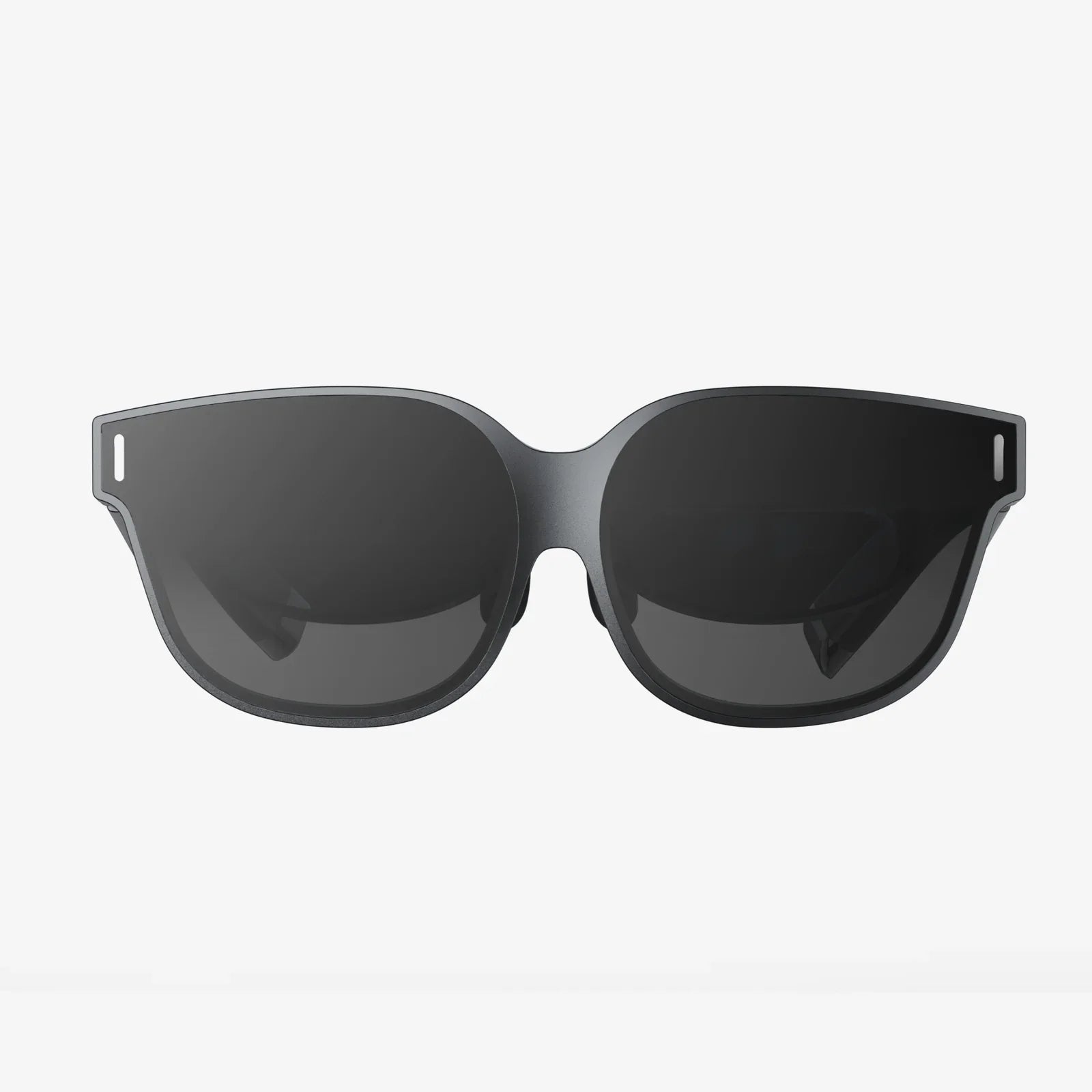
The most significant and pervasive trend in 2025 is the strategic retreat of the hardware itself. The bulky headsets and conspicuous glasses that once defined AR are rapidly becoming a transitional technology. The goal is no longer to wear a computer on your face but to have the computer enhance your reality without any obvious intermediary. This is being achieved through several parallel advancements.
First, we see the maturation of micro-projectors and laser-based retinal scanning systems. These technologies can be embedded into everyday items—eyeglass frames, sunglasses, even contact lenses in early-stage human trials—projecting high-fidelity imagery directly onto the retina. This creates a stunning, full-color, high-resolution overlay that appears to float in the user's field of view without the need for large, light-blocking lenses.
Second, the proliferation of ambient AR is accelerating. Smart environments, from retail stores and airports to modern offices and homes, are being equipped with sensor arrays and micro-projectors. These systems recognize individuals (via secure, anonymized tokens) and project contextually relevant information onto surfaces around them—a flight gate number on the floor, a recipe instruction onto a kitchen counter, or a colleague's name subtly hovering near them in a meeting. The environment itself becomes the interface, reducing our reliance on personal wearables entirely.
This shift towards invisibility is crucial for mass adoption. It removes the social awkwardness and physical discomfort that previously hindered widespread use, making AR a seamless enhancement rather than a distracting device.
In 2025, AR is becoming profoundly intelligent. It's no longer about overlaying static digital information but about delivering a dynamic, context-aware stream of intelligence that anticipates needs. This is powered by a sophisticated fusion of technologies.
This creates a powerful, personalized digital assistant that exists not in your ear or pocket, but in your world, visually guiding and informing your actions.
The uncanny valley of digital objects is finally being crossed. A key trend for 2025 is the achievement of photorealistic AR rendering. Digital objects are no longer cartoonish or obviously artificial; they possess realistic textures, accurate lighting, and proper physical interaction with the real world.
This is made possible by real-time ray tracing and radiosity calculations running on powerful mobile chipsets. A virtual lamp placed on a real desk will cast accurate shadows, and its light will bounce realistically off the surrounding surfaces. A digital character can walk through a room, and its skin tone and clothing will be affected by the ambient light from the window.
Furthermore, physics engines have become incredibly sophisticated. Virtual objects have weight, density, and material properties. They can knock over real-world items (that the AR system has identified and mapped) or be obstructed by them. This level of fidelity is crucial for serious applications beyond gaming. An architect can place a photorealistic, to-scale model of a new building on an empty plot of land, walk around it, and see how the sunlight hits its facade at different times of day. A mechanic seeing a repair overlay on an engine will see graphics that are indistinguishable from the physical components themselves, drastically reducing error and improving comprehension.
While consumer AR captures headlines, the most impactful and financially significant trends in 2025 are occurring in enterprise and industry. The concept of the "Industrial Metaverse" has moved from buzzword to standard practice, and at its heart are AR-powered digital twins.
A digital twin is a perfect, real-time digital replica of a physical asset—a factory floor, a power grid, a jet engine. In 2025, AR is the primary interface for interacting with these twins. Technicians and engineers on the factory floor can wear AR glasses to see the digital twin overlaid onto the physical machinery. They can see performance data, heat signatures, stress fractures, or maintenance histories floating directly on the equipment they are viewing.
This allows for:
This trend is revolutionizing sectors from manufacturing and logistics to energy and healthcare, delivering massive returns on investment through increased efficiency, safety, and precision.
The infrastructure that powers AR is also undergoing a radical transformation. The dream of the "Spatial Web"—a version of the internet where digital content is mapped to and interacts with specific locations in the physical world—is becoming a reality. This is being driven by the widespread adoption of standards like the W3C's WebXR Device API.
In practical terms, this means AR experiences are increasingly being accessed directly through web browsers without the need to download a dedicated application. This trend, known as WebAR, has exploded in 2025. A user can simply point their smartphone's camera (or their AR glasses' browser) at a QR code on a product, a landmark, or even a blank wall, and instantly experience a rich AR overlay.
This removes the friction of app downloads and has opened the floodgates for new use cases:
The Spatial Web turns the entire world into a clickable, discoverable, and augmentable interface.
With these powerful capabilities come profound ethical challenges, and in 2025, the conversation has moved from theoretical to urgent. The industry is grappling with the "Privacy Paradox" of AR: to be truly useful, these systems must be constantly capturing and analyzing the most intimate data possible—a live video and audio feed of the user's life.
Trends in 2025 show a strong push towards what is termed "Ethical by Design" AR. This includes:
The companies that succeed in this new era will be those that build trust by prioritizing user privacy and ethical considerations as a core feature, not an afterthought.
The trajectory is clear: augmented reality is shedding its technological skin to become an organic extension of human cognition and perception. It’s shifting from a tool we actively use to an environment we unconsciously inhabit, a layer of intelligence so seamlessly integrated that we will soon wonder how we ever navigated the world without it. The promise of 2025 is not just a new set of features, but a fundamental rewiring of our relationship with information, transforming every blank space into a potential portal and every ordinary moment into an opportunity for enhanced understanding and connection. The future isn't on its way; it's already here, waiting for you to look up and see it.