


Imagine slipping on a headset and instantly feeling the sun-warmed stone of a Roman ruin beneath your fingertips, hearing the distant chatter of a marketplace in a language you don't understand but can instantly comprehend, and sharing a look of awe with a colleague from across the globe as if they were standing right beside you. This is no longer the stuff of science fiction; it is the breathtaking precipice on which virtual reality stands in 2025. The technology has shed its bulky, isolating skin to emerge as a sleek, intuitive portal to experiences that are indistinguishable from—and in some cases, superior to—physical reality. We are witnessing a fundamental transformation, not just in the hardware we wear, but in the very fabric of how we perceive and interact with digital information and with each other. The trajectory is clear: VR is becoming the next major computing platform, and its current trends are painting a future that is more immersive, more useful, and more human than ever before.
The Unseen Hardware: Miniaturization and Biometric Integration
The most immediate and tangible trend defining VR in 2025 is the radical evolution of the hardware itself. The clunky, cable-laden contraptions of the past are giving way to a new generation of devices that prioritize ergonomics, aesthetics, and seamless integration into daily life.
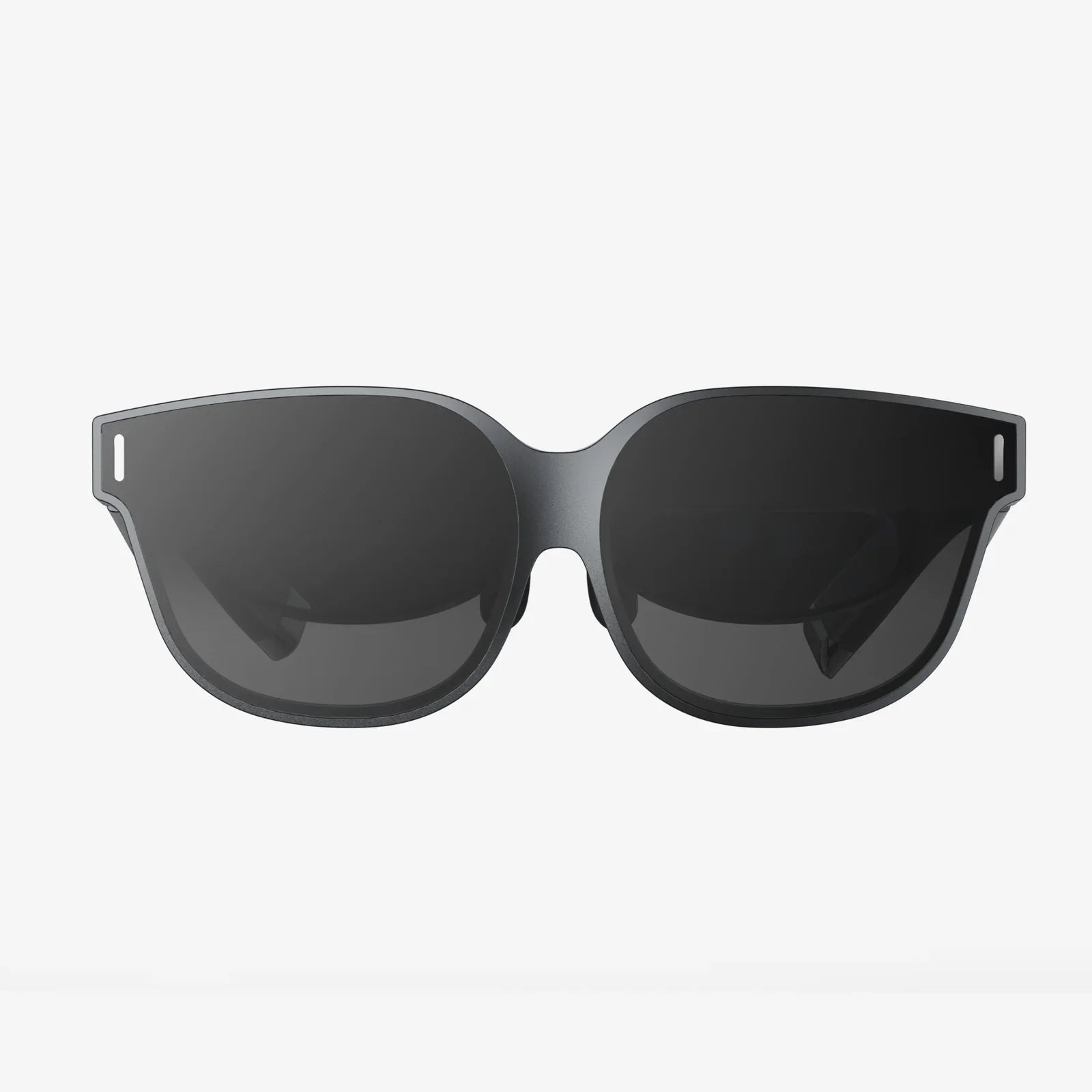
The drive for miniaturization has been relentless. Through advancements in micro-OLED and Laser Beam Scanning (LBS) displays, pancake lenses, and more efficient processing architectures, headsets are becoming significantly lighter, slimmer, and more comfortable for extended use. The goal is to create a form factor that resembles a pair of premium sunglasses more than a desktop-bound console. This shift is crucial for mass adoption, reducing the social and physical barriers to entry.
Beyond just size, we are seeing a profound integration of biometric sensors. High-fidelity eye-tracking is now a standard feature, serving multiple critical functions. It enables Foveated Rendering, a technique that drastically reduces the computational load by rendering only the center of the user's gaze in full detail, while the peripheral vision is rendered at a lower resolution. This allows for stunning visual fidelity without requiring prohibitively expensive hardware. Furthermore, eye-tracking provides a powerful data stream for nuanced social interaction in virtual spaces—avatars can now convey subtle emotional cues through pupil dilation, blink rate, and gaze direction.
This biometric integration extends to electroencephalography (EEG) sensors that can read basic neural signals and electromyography (EMG) sensors on wristbands that decode neural motor commands from muscle movements. This allows for new forms of control: a mere thought or a tiny finger twitch can execute a command, moving us toward a future of truly intention-based computing. This technology is the bedrock for the next trend: hyper-realistic avatars and embodiment.
The Mirror World: Photorealistic Avatars and Full-Body Embodiment
In 2025, the cartoonish, floating torsos that once populated social VR platforms are becoming a relic of the past. The current trend is overwhelmingly toward photorealism and full-body embodiment, driven by a combination of sophisticated hardware and AI.
Creating a digital twin of a user is now a swift and automated process. Headsets with inward-facing cameras can perform rapid face scans to create a geometrically accurate 3D model. AI algorithms then take over, trained on vast datasets of human features and expressions, to animate this model in real-time. By analyzing the user's eye movements, lip movements (via microphone or camera), and even the subtle flexing of facial muscles detected by headset-mounted sensors, the AI can generate a stunningly lifelike avatar that mirrors the user's every expression, frown, and smile.
The challenge of full-body tracking without external sensors has been largely solved. Advanced inside-out tracking systems, combined with AI-powered inverse kinematics, can accurately infer the position of a user's elbows, knees, and feet based on the movement of the head and controllers. For the ultimate fidelity, lightweight haptic suits are entering the consumer market, providing tactile feedback that corresponds to in-world interactions, completing the illusion of physical presence. This level of embodiment is transformative for social connection, professional collaboration, and therapeutic applications, making remote interactions feel genuinely present and emotionally resonant.
The AI Co-Pilot: Generative Environments and Adaptive Experiences
If hardware is the body of modern VR, then artificial intelligence is its nervous system and brain. AI is no longer a backend tool; it is an active, pervasive force shaping every aspect of the virtual experience in 2025.
The most revolutionary application is in generative environments. Users can now describe a world—"a serene Japanese garden at night, with a koi pond and cherry blossoms gently falling"—and an AI engine will construct it in real-time, complete with appropriate sounds, physics, and ambient life. This democratizes world-building, allowing educators, therapists, designers, and everyday users to create rich, interactive spaces without a team of 3D artists and programmers.
Furthermore, AI serves as a dynamic narrative director and personalized guide. In training simulations, the AI can adapt scenarios in real-time based on the user's performance, creating more challenging or supportive situations as needed. In social spaces, AI-powered non-player characters (NPCs) can hold fluid, context-aware conversations, acting as hosts, assistants, or collaborators. This creates experiences that are never the same twice, infinitely scalable and personalized to the individual's needs and mood.
The Persistent Nexus: The Rise of the Social Metaverse
The concept of the metaverse evolved past the hype cycle and has crystallized into a more pragmatic, yet powerful, trend: the rise of persistent, interconnected social and professional hubs. In 2025, VR is less about isolated apps and more about jumping into a persistent digital space where your identity, friendships, and work persist.
These are not single, monolithic virtual worlds, but a constellation of interoperable spaces. Your photorealistic avatar, digital assets, and credentials can travel with you from a professional architectural review meeting to a virtual concert to a mindfulness retreat. The focus is on shared experiences that leverage the unique strengths of presence. Attending a live music event in VR means having the best seat in the house, feeling the crowd's energy through haptic feedback, and interacting with the performance in ways impossible in the real world.
For enterprise, this has become the default for remote collaboration. Teams scattered across the globe meet in virtual boardrooms where 3D data models, prototypes, and complex visualizations can be manipulated and examined collectively as if they were physical objects. This spatial collaboration eliminates the misunderstandings and fatigue associated with traditional video conferencing, leading to more innovative and efficient workflows.
Beyond Entertainment: VR's Expansion into Health, Education, and Enterprise
The most significant indicator of VR's maturity in 2025 is its deep integration into critical, non-entertainment sectors. The technology is proving its value as a tool for profound human advancement.
In healthcare, VR is revolutionizing exposure therapy for PTSD and phobias, providing a safe, controlled environment for patients to confront and overcome their triggers. Surgeons use VR to plan complex procedures by practicing on detailed, patient-specific 3D models of organs. Furthermore, VR-based physical rehabilitation programs use gamification and immersive environments to increase patient motivation and engagement, leading to better outcomes.
The education sector is undergoing a similar transformation. History students don't just read about ancient Egypt; they explore a faithfully reconstructed Giza plateau. Medical students perform virtual dissections. Mechanics trainees practice repairing complex engines without the cost or risk of real equipment. This experiential learning leads to dramatically improved knowledge retention and understanding.
In enterprise, the applications are vast. From virtual prototyping in manufacturing and architecture to immersive onboarding experiences for new employees to virtual showrooms for customers, VR is streamlining operations, reducing costs, and enhancing customer engagement across countless industries.
The Ethical Frontier: Privacy, Accessibility, and the Digital Divide
With such powerful technology comes immense responsibility. The trends of 2025 are not solely technological; they are also deeply ethical. The industry is grappling with the unprecedented amount of biometric and behavioral data that VR headsets collect—from your gaze patterns and emotional responses to the unique way you move.
Questions of data privacy, ownership, and protection are paramount. There is a strong push for transparent data policies, on-device processing for sensitive information, and clear user consent models. Furthermore, the industry is focusing on accessibility, ensuring that experiences are designed for users with different physical abilities, preventing the creation of a new digital barrier.
Finally, the specter of the digital divide looms large. As VR becomes a platform for work, education, and social connection, ensuring equitable access is critical to prevent a society where significant opportunities are available only to those who can afford the hardware and connectivity required for high-fidelity immersion.
The virtual reality of 2025 is a tapestry woven from threads of incredible technological achievement, profound human-centric design, and complex ethical considerations. It is a platform shedding its novelty to reveal its true utility—not as an escape from reality, but as a powerful amplifier of human potential, connection, and understanding. The headset is no longer just a display; it is a gateway to better versions of our world and ourselves, and we are only just beginning to map its infinite possibilities.
Share:
Positives and Negatives of Virtual Reality: A Deep Dive into the Digital Frontier
Efficiency in Virtual Reality: The New Frontier of Human Productivity