


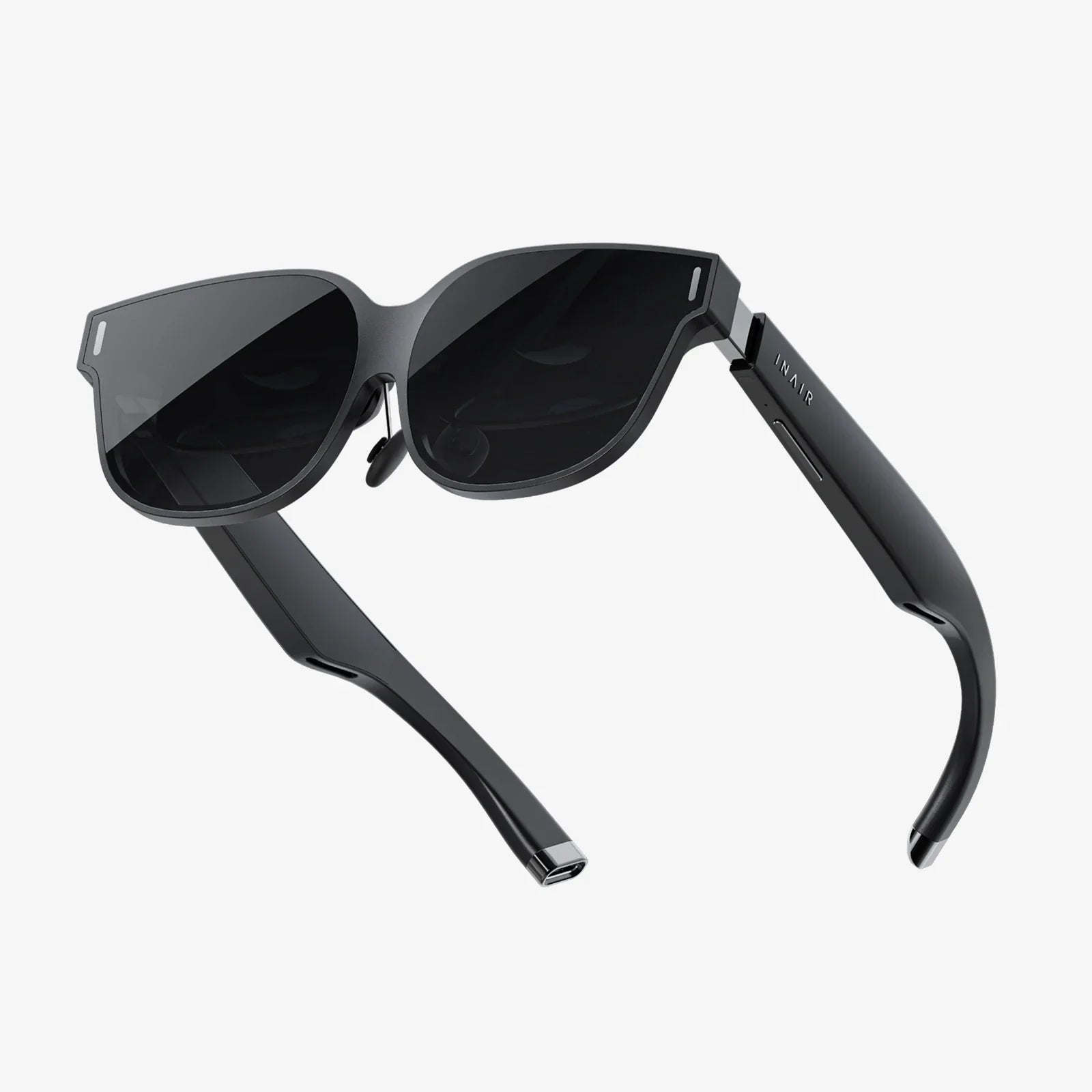
Imagine slipping on a virtual reality headset that feels less like a piece of mass-produced hardware and more like a natural extension of your own senses. A device that contours perfectly to the unique shape of your face, displays a visual field optimized for your specific vision, and operates with software tailored to your exact needs. This is no longer a futuristic fantasy; it is the tangible reality offered by the burgeoning world of the custom VR headset. This deep dive explores how personalized virtual reality is moving beyond one-size-fits-all solutions to unlock unprecedented levels of comfort, performance, and application-specific power, fundamentally changing who can use VR and what it can achieve.
The Limitations of Off-the-Rack Virtual Reality
For years, consumer virtual reality has been dominated by a handful of major players, each offering flagship devices aimed at capturing the broadest possible market. This approach has undeniably driven adoption and lowered costs, but it has also come with significant compromises. The standard headset is designed for an "average" user—a statistical concept that rarely matches any single individual. This leads to a cascade of common complaints: light leakage breaking immersion, pressure points causing discomfort during extended use, and a visual experience that may not be sharp for users with particular interpupillary distances (IPD) or prescription needs. For many professionals in fields like medicine, engineering, or design, these consumer-grade tools also lack the specialized sensors, computational power, or software integration required for high-stakes, precision work. It is from the friction of these limitations that the demand for a truly custom VR headset has emerged.
Defining the Custom VR Headset: Beyond Aesthetic Skins
A custom VR headset is far more than a device with a custom paint job or a branded faceplate. True customization operates on multiple, interconnected levels, each addressing a core aspect of the user experience. It is a holistic approach to personalization that encompasses hardware, software, and ergonomics.
Ergonomic and Anatomical Customization
This is the most immediate and physical form of customization. It begins with a perfect fit. Using 3D scanning technology or detailed anatomical measurements, companies can create facial interfaces and head straps that distribute weight evenly and eliminate pressure points. This is particularly crucial for enterprise applications where an employee might need to wear the headset for an entire workday. Furthermore, custom optical inserts—essentially prescription lenses that slot inside the headset—eliminate the need for users to wear their glasses, providing a crisp, clear image corrected for their specific vision. This not improves comfort but also maximizes the field of view and visual fidelity, which are critical for both immersive entertainment and detailed professional tasks.
Hardware and Performance Tailoring
At a deeper level, customization involves the internal components themselves. This can mean integrating specialized high-resolution displays for visual clarity that surpasses consumer standards, incorporating eye-tracking modules with unparalleled accuracy for research and analytics, or adding inside-out tracking sensors for more robust positional data in complex environments. For industrial applications, a custom VR headset might be built with specific sensors like thermal cameras or LiDAR scanners, turning it into a specialized tool rather than a general-purpose entertainment device. The core computing unit can also be customized, with options for more powerful processors, increased RAM, or expanded storage to handle complex simulations and detailed 3D models.
Software and Experience Personalization
The hardware is only as good as the software that drives it. Customization here involves creating a tailored user interface and experience (UI/UX) that strips away unnecessary gaming-centric menus and features, presenting the user with only the tools they need for their specific workflow. This could be a simplified dashboard for a warehouse worker using VR for inventory management, or a complex suite of simulation controls for a surgeon training on a virtual patient. This software-level customization ensures that the technology enhances productivity rather than complicating it.
The Technologies Powering Personalization
The rise of the custom VR headset is propelled by advancements in several key technologies. Additive manufacturing, or 3D printing, is perhaps the most important. It allows for the rapid and cost-effective production of bespoke components, from unique facial interfaces to custom-designed mounting brackets for additional hardware. Without 3D printing, creating these one-off parts would be prohibitively expensive and slow. Similarly, modular design philosophies are becoming increasingly common. Imagine a headset with swappable sensor modules, battery packs, or processing units, allowing an organization to upgrade specific functionalities without replacing the entire device. Advances in computer vision and machine learning also enable more sophisticated forms of customization, such as software that automatically calibrates the display based on detected user biometrics like IPD, ensuring an optimal image for every individual without manual adjustment.
Revolutionizing Industries: The Enterprise Frontier
While individual enthusiasts can benefit from custom-fit solutions, the most profound impact of the custom VR headset is being felt in the enterprise sector. Across various industries, businesses are discovering that tailored VR solutions offer a compelling return on investment by solving unique challenges.
Healthcare and Medical Training
In medicine, precision is paramount. Custom VR headsets are being used to create hyper-realistic surgical simulators. These devices can integrate eye-tracking to monitor a surgeon's focus and attention during a procedure, provide haptic feedback through custom controllers that mimic surgical tools, and display medical imagery with exceptional clarity. Furthermore, headsets can be customized for sterility, using materials that can withstand rigorous cleaning protocols for use in operating rooms.
Industrial Design and Architecture
For architects and engineers, visualizing a design at a 1:1 scale is invaluable. A custom VR headset with ultra-high-resolution displays allows designers to spot minute details and flaws in a virtual prototype long before physical construction begins. These headsets can be integrated directly into the design software suite, enabling seamless transition from desktop to immersive review, drastically reducing revision cycles and costs.
Corporate Training and Simulation
From training retail employees to handle Black Friday crowds to preparing first responders for emergency scenarios, custom VR simulations offer a safe and scalable training environment. A headset built for this purpose might prioritize durability, wireless freedom, and long battery life over raw graphical power, and its software would be exclusively focused on the training module without any distracting elements.
The Path to Acquisition: Bespoke vs. Modular
For those interested in a custom VR headset, the path to acquisition typically falls into two categories. The first is the fully bespoke route, working directly with specialized firms that design and build headsets from the ground up for a specific client's needs. This is typically the domain of large enterprises with very specific, high-budget requirements. The second, and more accessible, path is through modular or modifiable consumer-grade devices. A growing ecosystem of third-party manufacturers offers custom-fit facial interfaces, prescription lens adapters, and comfort mods that can significantly personalize a standard headset. This allows individuals and smaller businesses to achieve a high degree of customization without the cost of a completely bespoke device.
Gazing into the Future: The Next Evolution of Personal VR
The trajectory of the custom VR headset points toward an even more integrated and personalized future. We are moving toward biometric integration, where headsets will continuously monitor user vitals like heart rate variability and pupil dilation to adapt content in real-time, perhaps reducing visual intensity if it detects simulation sickness. Brain-computer interface (BCI) technology, though in its infancy, promises a future where a custom headset could interpret neural signals, allowing for control of the virtual environment through thought alone. Furthermore, as the metaverse concept evolves, our digital identities will become increasingly important. A custom headset will be the gateway to that identity, a personally tuned instrument that faithfully translates our intentions and expressions into a digital world, ensuring that our virtual presence is as unique and nuanced as our physical one.
The era of compromise in virtual reality is ending. The custom VR headset represents a fundamental shift from technology that we adapt to, to technology that adapts to us. It promises a future where virtual experiences are not just visually impressive but are physically comfortable, visually perfect, and purpose-built to empower professionals, delight enthusiasts, and open doors for those previously excluded by standard design. This isn't just about a better piece of hardware; it's about building a better bridge to the digital worlds we are increasingly choosing to inhabit.
Share:
VR Headset Compatibility: The Ultimate Guide to Navigating the Digital Frontier
Best iPhone VR Headset for Android: Your Ultimate Cross-Platform Immersion Guide