


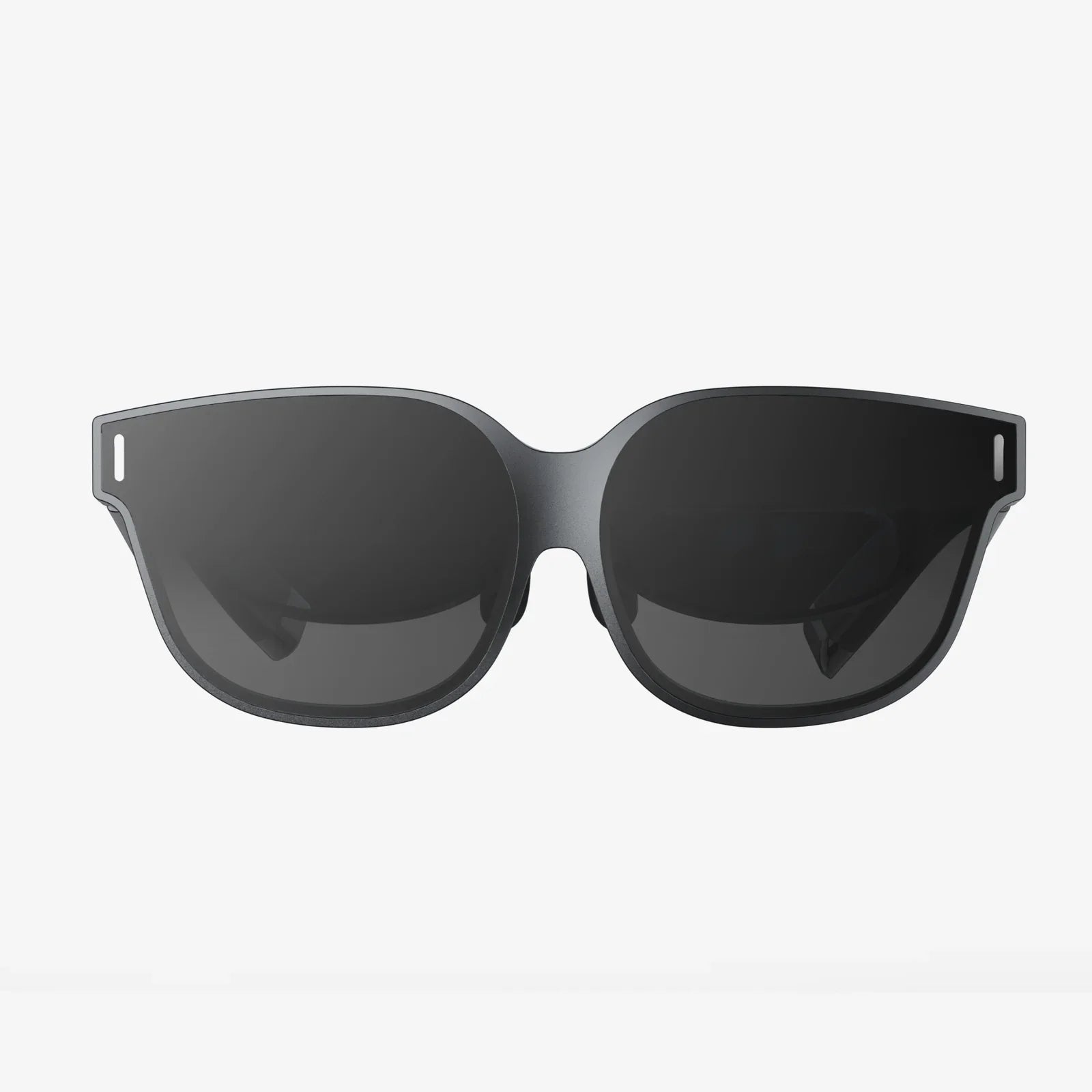
Imagine stepping through your living room wall into a bustling ancient Roman marketplace, feeling the sun on your virtual skin and hearing the chatter of merchants in a language long dead. Picture a surgeon on one continent guiding the hands of a rookie medic on another, both peering into the same intricate, beating, digital heart. Envision not just playing a game, but inhabiting its world, your every movement and breath shaping the narrative. This is the tantalizing promise, the siren's call, of virtual reality—a term we hear constantly but one that often eludes a complete and concrete definition. To truly define the term virtual reality is to embark a journey into one of the most transformative technologies of our time, a frontier where the very fabric of human perception is being rewoven.
Beyond the Buzzword: A Foundational Definition
At its most fundamental level, virtual reality (VR) is a computer-generated simulation of a three-dimensional environment that can be interacted with in a seemingly real or physical way by a person using special electronic equipment, such as a headset with a screen inside or gloves fitted with sensors. This definition, however, is merely the skeleton. To give it flesh and blood, we must understand its core components, often referred to as the pillars of VR.
The first and most crucial pillar is immersion. Immersion is the technical achievement of convincing the user's senses that they are present in the simulated environment. It is the objective measure of the technology's fidelity—the resolution of the displays, the field of view, the accuracy of the head-tracking, the quality of the spatial audio, and the reduction of latency (the delay between a user's movement and the system's response). High immersion is what makes the virtual world feel stable, solid, and believable. It's the engineering behind the magic trick.
The second pillar, intrinsically linked to the first, is presence. If immersion is a technical state, presence is a psychological one. It is the subjective, gut-level feeling of "being there" inside the digital realm. It's the moment your brain stops registering the pixels and the headset and accepts the simulation as its reality. You forget you are standing in your playroom; you believe you are standing on the edge of a volcano. Presence is the holy grail of VR design, and it is achieved when the technology becomes so seamless that it disappears from the user's conscious thought.
The Engine Room: How Virtual Reality Technology Works
Creating these feelings of immersion and presence is no small feat. It requires a sophisticated symphony of hardware and software working in perfect harmony. The process begins with a powerful computer or console that generates the complex 3D environments in real-time. This is the brain of the operation.
The primary interface between this digital brain and the human user is the head-mounted display (HMD), commonly known as the VR headset. This device is a masterpiece of miniaturization and optics. Inside, two small high-resolution displays (one for each eye) project slightly different images, creating a stereoscopic 3D effect that provides depth perception. Lenses placed between the eyes and the screens focus and reshape the picture to fill the user's peripheral vision, creating a wide field of view that sells the illusion of being inside the world, not just looking at a screen.
But a visual alone is not enough. This is where motion tracking comes in. Using a combination of internal sensors (like gyroscopes, accelerometers, and magnetometers) and external sensors or cameras, the headset constantly monitors the position and orientation of the user's head. This data is fed back to the computer, which instantly adjusts the visuals accordingly. When you turn your head to the left, the world pivots around you in perfect sync. This 6-degrees-of-freedom (6DoF) tracking—tracking movement along the X, Y, and Z axes (surge, sway, heave) and rotation around them (pitch, yaw, roll)—is what allows for natural movement and is critical for preventing simulation sickness, a type of motion sickness caused by latency or a disconnect between visual motion and physical sensation.
Finally, interaction completes the loop. Hand-held controllers, haptic feedback gloves, or even full-body tracking suits allow users to reach into the virtual world and manipulate it. These devices track the position of your hands and fingers, letting you push buttons, grab objects, throw virtual punches, or paint in 3D space. Haptic feedback provides a sense of touch through vibrations or force feedback, making the collision with a virtual wall feel jarring or the pull of a virtual bowstring feel tense.
A Spectrum of Experiences: From Non-Immersive to Fully Immersive
It is a common misconception that VR is a single, monolithic experience. In reality, it exists on a spectrum, defined by the level of immersion and the technology used.
On one end lies non-immersive VR. This is arguably something we've all experienced for decades. A standard computer screen displaying a virtual world, like a flight simulator or a video game, where interaction happens through a keyboard, mouse, or standard controller. The user remains acutely aware of their physical surroundings.
Next is semi-immersive VR. This often involves large projection systems, like flight simulators used for pilot training, where the user sits in a physical mock-up of a cockpit in front of a wide screen that displays the virtual world. It provides a strong sense of visual immersion but the physical interaction is largely with real-world objects.
At the far end of the spectrum is fully-immersive VR. This is what most people today think of when they hear "VR." It involves a high-fidelity head-mounted display, accurate motion tracking, and intuitive interaction controllers. It is designed to shut out the physical world completely and fully engage the user's visual, auditory, and sometimes even tactile senses to generate a powerful feeling of presence. This is the realm of room-scale VR, where users can physically walk around a virtual space.
More Than Games: The Expansive Applications of VR
While gaming and entertainment are the most visible and commercially successful applications of VR, its potential extends far beyond. The ability to simulate any environment or scenario safely, repeatably, and at a low cost is revolutionizing numerous fields.
In medicine, VR is used for surgical training, allowing students to practice complex procedures on virtual patients without risk. It is used for exposure therapy to help patients overcome phobias like a fear of heights or public speaking in a controlled environment. It's also a powerful tool for pain management, distracting burn victims during wound care with calming virtual experiences.
In education, VR can transport students inside a human cell, onto the surface of Mars, or back in time to historical events. This experiential learning creates powerful memories and a deeper understanding of complex subjects that textbooks alone cannot provide.
In architecture and design, clients can take immersive walkthroughs of unbuilt buildings, experiencing the scale, lighting, and flow of a space before a single brick is laid. Engineers use VR prototypes to test designs, spotting flaws and making adjustments long before manufacturing begins, saving immense time and resources.
Furthermore, VR is enabling new forms of remote collaboration. Colleagues from across the globe can meet as lifelike avatars in a shared virtual boardroom, interacting with 3D models of their projects as if they were physically present. This concept of the "metaverse" points to a future where our professional and social interactions are increasingly mediated by persistent virtual spaces.
The Human Factor: Challenges and Ethical Considerations
For all its promise, the path of VR is not without obstacles and profound questions. Technologically, achieving perfect photorealism, eliminating all latency, and creating affordable, comfortable, wireless hardware remains a challenge. The phenomenon of simulation sickness still affects a portion of the population, limiting accessibility.
Beyond the technical, deeper ethical and societal questions loom. As these experiences become more realistic and compelling, what are the psychological effects of spending significant time in virtual worlds? How do we prevent the creation of "simulation addiction"? The concept of "virtual presence" also raises complex legal and philosophical questions about actions within VR—where does one draw the line between a virtual crime and a real one when the psychological impact on a victim could be very real?
Furthermore, the data collected by VR systems is unprecedented. Beyond simple usage statistics, they can track your precise movements, gaze direction, physiological responses, and even the micro-expressions on your face. This data is incredibly valuable and incredibly sensitive, raising massive concerns about privacy, security, and the potential for manipulation.
A Bridge Between Realities: The Future Horizon
The definition of virtual reality is not a static thing; it is evolving as rapidly as the technology itself. We are already seeing its convergence with augmented reality (AR), which overlays digital information onto the real world, and mixed reality (MR), which anchors digital objects convincingly within our physical environment. The ultimate goal is a seamless spectrum of experiences, often called the "continuum of reality," where we can fluidly move between the purely physical and the purely virtual based on our needs.
Future advancements will focus on engaging more senses—incorporating smell (olfactics), taste (gustation), and more sophisticated full-body haptics to create truly holistic simulations. Brain-computer interfaces represent a even more distant but profound frontier, potentially allowing us to navigate virtual worlds through thought alone.
To define the term virtual reality, then, is to define a new medium for human experience. It is a mirror reflecting our own reality, a canvas for our imagination, and a tool for expanding the very limits of human potential. It is the art and science of building worlds from bits and inviting the human spirit to come and play, to learn, to work, and to connect in ways previously confined to the realm of dreams. The headset is merely the key; the door it opens leads to the future of human experience, and we have only just stepped across the threshold.
The line between the digital and the physical is not just blurring; it is being consciously and deliberately redrawn by artists, engineers, and dreamers. This is not about escaping our reality, but about augmenting it, understanding it better, and creating shared experiences that transcend geographical and physical limitations. The question is no longer what virtual reality is, but what we, as a species, will choose to become within it.
Share:
Virtual Reality Amazing: A Journey Beyond the Screen and Into the Impossible
Cost of Virtual Reality Systems: A Comprehensive Breakdown of the True Investment