


Imagine a world where the boundaries between the digital and the physical dissolve, where you can walk with dinosaurs, practice complex brain surgery on a holographic patient, or overlay a virtual instruction manual directly onto a malfunctioning engine. This is not a distant science fiction fantasy; it is the imminent future being built today through the power of Extended Reality, or XR. This transformative technology is poised to revolutionize everything from how we work and learn to how we connect and play, making it one of the most critical technological concepts to understand for the coming decade.
Deconstructing the Acronym: What Does XR Really Mean?
At its core, the definition of Extended Reality (XR) is an umbrella term that encompasses all real-and-virtual combined environments and human-machine interactions generated by computer technology and wearables. It refers to a spectrum of immersive technologies that extend the reality we experience by either blending the virtual and real worlds or by creating a fully immersive experience. The "X" in XR stands for "extended," signifying its role in extending human experiences beyond the ordinary by combining real and virtual environments. It is not a single technology but a confluence of several, working in harmony to create new forms of reality.
The Three Pillars of the XR Spectrum
To truly grasp the definition of Extended Reality, one must understand its primary components, which exist on a continuum known as the Virtuality Continuum, a concept first proposed in the 1990s. This spectrum ranges from the completely real environment to the entirely virtual one.
Virtual Reality (VR): The Complete Immersion
On one far end of the spectrum lies Virtual Reality (VR). VR is a fully digital, computer-generated simulation of an environment. It completely immerses the user in a synthetic world, replacing their natural environment. This is typically achieved through a head-mounted display (HMD) that blocks out the physical world, paired with headphones and motion-tracking sensors. The goal of VR is to create a convincing, interactive, and explorable artificial world that shuts out the physical world and makes the user feel present within the digital one. Applications range from immersive gaming and virtual tourism to high-stakes training simulations for pilots, soldiers, and surgeons.
Augmented Reality (AR): The Digital Overlay
On the opposite end of the spectrum, closest to the real world, is Augmented Reality (AR). Unlike VR, AR does not replace the real world. Instead, it overlays or superimposes digital information—such as images, text, or 3D models—onto the user's view of their physical environment. The core principle of AR is to enhance the real world with contextual, computer-generated perceptual information. This is most commonly experienced through smartphone cameras, smart glasses, or transparent displays. Think of popular mobile games that place digital characters in your living room, or navigation apps that project directions onto the live view of the street in front of you. AR adds a layer of useful data to our existing reality.
Mixed Reality (MR): The Seamless Blend
Occupying the crucial middle ground between AR and VR is Mixed Reality (MR). This is often considered the most advanced and least understood facet of XR. MR not only overlays digital objects onto the real world (like AR) but also allows those digital objects to interact with the physical world in real-time. In a true MR experience, a virtual ball can bounce off a real-world table, and a digital character can hide behind your physical sofa. This requires advanced sensors and cameras to deeply understand and map the geometry and physics of the surrounding environment. MR creates a hybrid reality where physical and digital objects co-exist and interact, making the virtual elements feel anchored and real within a user's space.
The Technology Powering the XR Revolution
Bringing these immersive experiences to life requires a sophisticated stack of hardware and software technologies working in concert.
Hardware: The Gateways to New Realities
The hardware forms the physical bridge between the user and the extended reality. This includes:
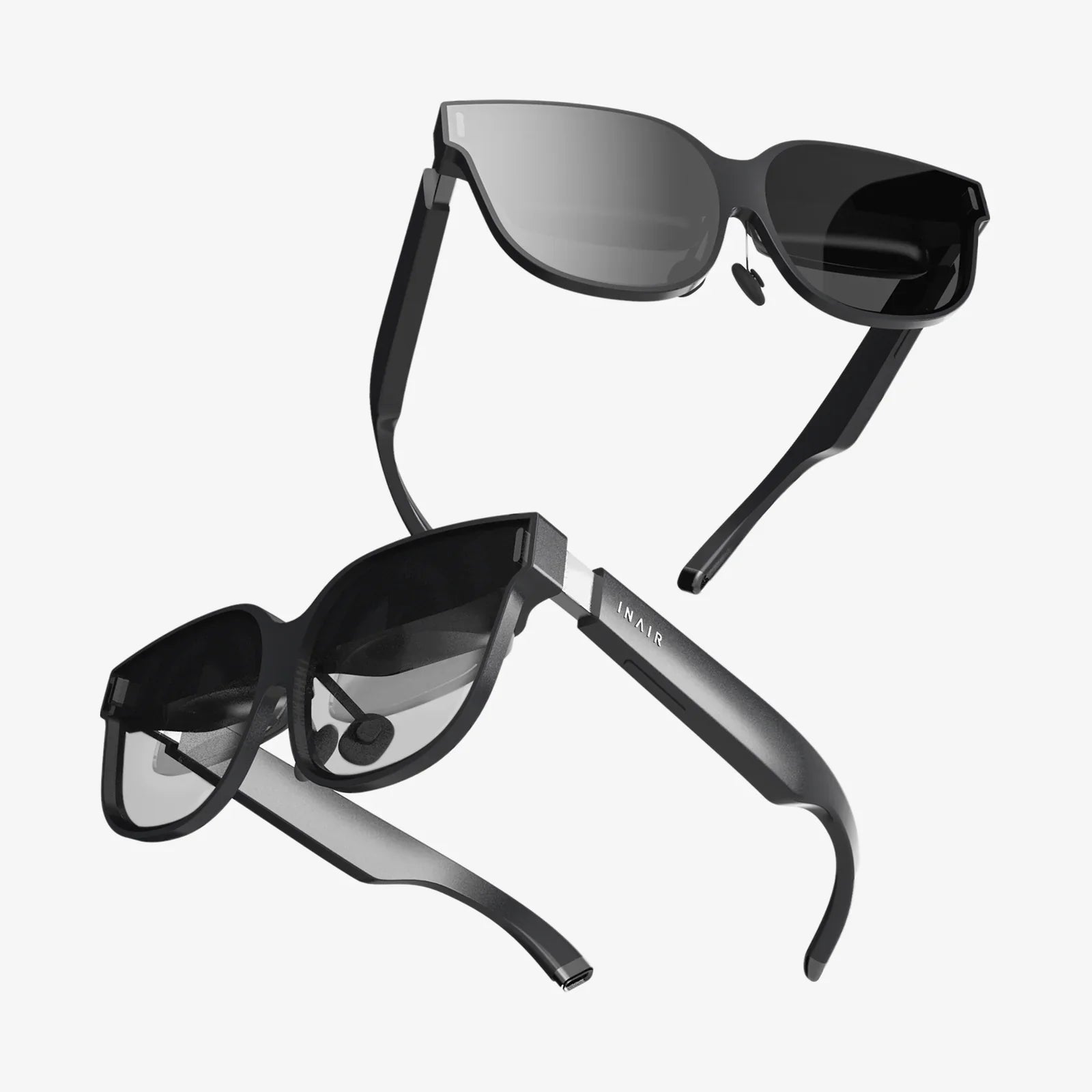
- Headsets and Glasses: From fully enclosed VR headsets with high-resolution displays to sleek AR smart glasses that look like regular eyewear, these are the primary viewing devices.
- Tracking Systems: Cameras, infrared sensors, gyroscopes, and accelerometers track the user's head, eye, and hand movements with precision, ensuring the digital world responds naturally to their actions.
- Controllers and Haptic Devices: These input devices allow users to interact with the virtual environment. Advanced haptic gloves and suits can even simulate the sense of touch, providing feedback when a user "feels" a virtual object.
- Processing Units: The immense computational power required to render complex 3D worlds in real-time is handled by powerful onboard processors or connected high-end computers.
Software and Development: Building the Worlds
On the software side, game engines and 3D modeling tools are fundamental to creating the assets and environments. Simultaneous Localization and Mapping (SLAM) technology is critical for MR and AR, as it allows a device to understand its position in the physical world while mapping the environment around it. This enables digital content to be placed persistently on a real table or wall. Furthermore, software development kits (SDKs) provide developers with the necessary tools and APIs to build compelling XR applications across different hardware platforms.
Beyond Novelty: The Transformative Applications of XR
The power of XR extends far beyond entertainment. It is a foundational technology with the potential to reshape major industries.
Revolutionizing Education and Training
XR creates unparalleled opportunities for experiential learning. Medical students can perform virtual dissections and practice complex procedures without risk. History students can take a walk through ancient Rome. Mechanics can train on virtual engines, and factory workers can learn safety protocols in a simulated hazardous environment. This "learn by doing" approach in a safe, controlled, yet highly realistic setting dramatically improves knowledge retention and skill acquisition.
Transforming Enterprise and Remote Work
The concept of the office is being redefined by XR. Instead of a flat video call, teams from across the globe can meet as lifelike avatars in a shared virtual boardroom, interacting with 3D data models as if they were physically present. Field technicians can receive remote expert guidance through AR glasses, with instructions and diagrams overlaid directly onto the equipment they are repairing. Architects and engineers can walk clients through full-scale, immersive holographic models of unbuilt structures.
Enhancing Healthcare and Therapy
In healthcare, XR is proving to be a powerful tool for both treatment and rehabilitation. Surgeons use AR to visualize patient anatomy during operations, overlaying CT scans onto the surgical field. VR is being used for exposure therapy to treat phobias and PTSD, allowing patients to confront their fears in a safe, controlled environment. It is also used for physical rehabilitation, turning painful or repetitive exercises into engaging games that motivate patients.
Redefining Retail and Commerce
Imagine trying on clothes, glasses, or makeup virtually from your home, or seeing how a new sofa would look and fit in your living room before you buy it. XR is empowering consumers to make more informed purchasing decisions by bridging the gap between the online and in-store experience. This "try before you buy" model reduces returns and increases customer satisfaction.
Navigating the Challenges and Ethical Considerations
Despite its immense potential, the widespread adoption of XR faces significant hurdles. Technical challenges include achieving photorealistic graphics without causing latency-induced motion sickness, creating smaller, more comfortable, and affordable hardware, and developing longer-lasting batteries. The social and ethical implications are even more profound. Issues of data privacy are paramount, as these devices can collect unprecedented amounts of intimate biometric and behavioral data. The potential for deepfakes and hyper-realistic misinformation in XR is a serious societal threat. Furthermore, the concept of the "proximity paradox" questions how these technologies might impact genuine human connection, potentially leading to greater isolation even as they promise to bring us together virtually.
The Future is Extended: What Lies Ahead?
The trajectory of XR points towards a future of increasingly seamless and pervasive experiences. We are moving towards lighter, more socially acceptable form factors, eventually converging on something akin to everyday eyeglasses. The development of the so-called "metaverse," a persistent network of interconnected virtual worlds, will rely entirely on XR as its primary interface. Advances in artificial intelligence, 5G/6G connectivity, and brain-computer interfaces will further blur the lines between what is real and what is digital, creating experiences we can scarcely imagine today.
The journey into these blended worlds is just beginning, and the definition of Extended Reality will continue to evolve as the technology itself does. It represents a fundamental shift in the human-computer interface, moving from screens we look at to environments we step into. Understanding XR is no longer a niche interest for gamers and tech enthusiasts; it is essential literacy for anyone who wants to actively participate in and shape the future of work, communication, and human experience. The next great frontier isn't in outer space; it's the space between the digital and the physical, and it's being built all around us, right now.
Share:
Which VR Headset Should You Buy: The Ultimate Guide to Navigating the Virtual Frontier
What's The Best VR Headset Right Now? A 2024 Buyer's Guide