


Imagine a world where digital information doesn’t just live on a screen but is seamlessly woven into the very fabric of your physical environment, where historical figures can walk you through ancient ruins, complex engine schematics can float before a mechanic’s eyes, and a simple glance at a restaurant reveals its reviews and menu. This is no longer the stuff of science fiction; it is the rapidly unfolding present and future being built by the relentless development of augmented reality. The journey of AR from a nascent laboratory concept to a transformative technology poised to revolutionize nearly every aspect of human life is a story of technological triumph, visionary thinking, and a fundamental reimagining of how we interact with information and with each other.
The Conceptual Seeds and Early Prototypes
The dream of augmenting our reality is not a product of the 21st century. Its conceptual roots stretch back decades, born in the minds of scientists and storytellers who envisioned a symbiosis between human and machine. The term "augmented reality" itself is widely credited to former Boeing researcher Thomas Caudell, who in 1990 used it to describe a digital display system that guided aircraft electricians. However, the foundational idea was visualized much earlier.
In 1968, computer scientist Ivan Sutherland, a towering figure in computer graphics, created what is widely considered the first head-mounted display system, dubbed "The Sword of Damocles." This terrifyingly primitive yet revolutionary apparatus hung from the ceiling and presented users with simple, wireframe graphics. It was the undeniable proof-of-concept that a machine could overlay information onto a user’s field of view, even if the hardware was too cumbersome for any practical use beyond the lab.
Throughout the 1970s and 1980s, research continued within military and academic institutions, often focusing on heads-up displays (HUDs) for fighter pilots. These systems projected critical flight data onto the cockpit canopy, allowing pilots to keep their "heads up" and focused on their mission without glancing down at instruments. This application perfectly illustrated the core value proposition of AR: delivering contextual information at the precise moment and location it is needed.
The Dawning of Modern AR: Software and Hardware Converge
The true acceleration of AR's development began in the late 1990s and early 2000s, driven by advancements in three critical areas: computing power, miniaturization of components, and most importantly, software. The rise of powerful, affordable smartphones equipped with cameras, sensors, GPS, and fast processors provided the perfect catalyst. Suddenly, the device needed to experience AR was already in billions of pockets.
Software frameworks and algorithms became the unsung heroes of this era. The development of robust computer vision techniques, particularly simultaneous localization and mapping, was a quantum leap. SLAM allows a device to understand its position in the physical world while simultaneously mapping the environment around it. This complex process is what enables digital content to stay locked to a tabletop or a wall, rather than drifting aimlessly. Furthermore, the creation of software development kits democratized AR creation, allowing a new generation of developers to build applications without starting from scratch.
Early consumer-facing AR experiences were often simple markers. Users would point their phone’s camera at a specific image (a marker), and a 3D model would appear on screen, seemingly perched on top of it. While limited, these applications captured the public's imagination and demonstrated the technology's potential for marketing and entertainment.
Breaking the Marker: The Rise of Markerless and World-Scale AR
The next major evolutionary step was the move away from markers toward markerless AR. This shift was powered by improved environmental understanding. Instead of relying on a predefined image, devices could now recognize horizontal planes (like floors and tables) and vertical planes (like walls) using their cameras and sensors. This meant users could place virtual furniture in their living room or play a game on their kitchen table without any physical triggers.
This development unlocked a new wave of practical applications. The viral sensation of a mobile game in 2016 was a cultural watershed moment, proving that AR could be a mass-market, socially engaging phenomenon. It wasn't just a gimmick; it was a compelling new way to play. Beyond gaming, retailers began offering apps that let customers visualize how products like makeup, sunglasses, or new couches would look on them or in their homes, drastically enhancing the online shopping experience and reducing purchase uncertainty.
The frontier then expanded from table-top scale to world-scale AR. This requires a persistent, shared digital map of the world. Tech giants began developing these capabilities, envisioning a future where digital annotations—directions, information about landmarks, reviews for businesses—are permanently anchored to specific locations for anyone with an AR device to see. This concept, often called the "metaverse" or "spatial web," aims to create a unified layer of digital information over our entire planet.
The Hardware Revolution: From Handheld to Head-Worn
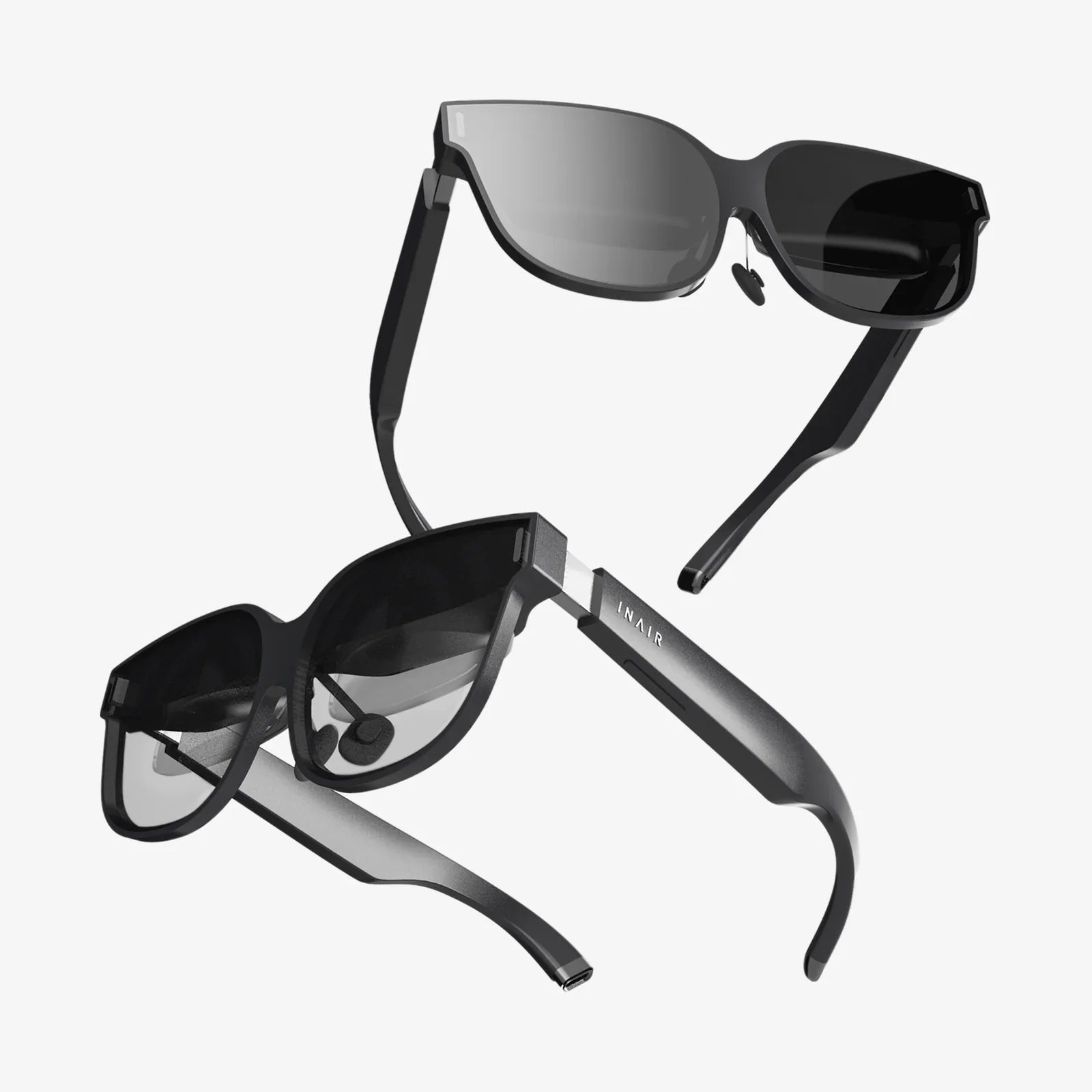
While smartphones launched AR into the mainstream, they represent a transitional form factor. The ultimate expression of AR requires a hands-free, head-worn device—smart glasses. The development of this hardware represents the single greatest challenge in the field, a daunting balancing act of performance, size, battery life, cost, and aesthetics.
Early smart glasses for consumers were hampered by limited fields of view, short battery life, and social awkwardness. However, their development has continued unabated, often finding immense success in enterprise and industrial settings. In these environments, the value proposition is clear and the ROI is easily calculated.
Warehouse workers use AR glasses to see picking instructions hands-free, dramatically improving efficiency and accuracy. Field service technicians can see schematics and receive remote expert guidance overlaid on the faulty equipment they are repairing. Surgeons can visualize patient data during procedures. These enterprise applications are not just testing grounds; they are refining the technology, driving innovations in display technology (like waveguide and microLED), processing, and battery efficiency that will eventually trickle down to consumer devices.
The holy grail remains a pair of stylish, lightweight glasses that can deliver high-fidelity, all-day AR experiences. The development of more powerful and efficient processors, advanced display systems, and new input paradigms like gesture and voice control is bringing this goal closer to reality with each passing year.
Augmenting Industries: The Practical Application Boom
The development of AR is no longer theoretical; it is actively transforming core industries today.
- Healthcare: Medical students use AR to practice complex procedures on detailed, interactive 3D holograms of the human body. Surgeons use AR for precision guidance during operations, overlaying CT scans directly onto the patient to visualize tumors or blood vessels beneath the skin.
- Manufacturing & Maintenance: Complex assembly instructions are projected directly onto workstations, reducing errors and training time. A technician repairing a jet engine can see torque specifications and animated guidance for each component, improving safety and speed.
- Education & Training: Textbooks become living, interactive models. History lessons transport students to ancient civilizations. Chemistry students can safely combine virtual elements to see reactions unfold on their desk.
- Retail & Design: Customers can try on clothes virtually or see how a new car’s custom color would look in their driveway. Architects and interior designers can walk clients through full-scale, interactive holographic models of unbuilt structures.
- Remote Collaboration: The concept of "see what I see" is revolutionized. A remote expert can annotate a worker's live field of view with arrows, notes, and diagrams, making distance irrelevant for solving physical problems.
The Future Unfolds: Challenges and the Road Ahead
The path forward for AR is incredibly exciting, but it is not without significant hurdles that must be overcome through continued development.
Technical Challenges: Achieving photorealistic rendering that blends perfectly with real-world lighting, overcoming issues of occlusion (where digital objects realistically pass behind physical ones), and creating devices that are socially acceptable to wear all day remain immense engineering challenges. Furthermore, managing the vast amounts of spatial data required for persistent world-scale AR demands new cloud infrastructure and raises critical questions about data ownership and privacy.
The Social and Ethical Dimension: As AR becomes more pervasive, it will create new social dilemmas. How do we prevent digital spam and visual pollution in public spaces? How do we ensure equitable access and avoid a new digital divide? The potential for constant data collection about what we look at and how we interact with the world raises profound privacy concerns that society is only beginning to grapple with.
Despite these challenges, the trajectory is clear. The next phase of AR's development will be defined by the convergence of AR and Artificial Intelligence. AI will power more intuitive and context-aware interfaces, understanding our intentions and delivering information before we even ask. We are moving toward a future of ambient computing, where technology fades into the background, and the augmented world feels not like a tool we use, but a natural extension of our own cognition and perception.
We are standing at the precipice of a new era, one where the line between the digital and the physical will blur into irrelevance. The development of augmented reality is not merely about building new gadgets; it is about constructing a new layer of human experience, redefining communication, creativity, and our very understanding of reality itself. The device in your pocket was just the beginning; the world through your future glasses will be utterly transformed.
Share:
AR VR Market Size 2030 Growth: Charting the Course of a Digital Revolution
VR AR Reality: The Blurring Line Between Our World and The Digital Frontier