


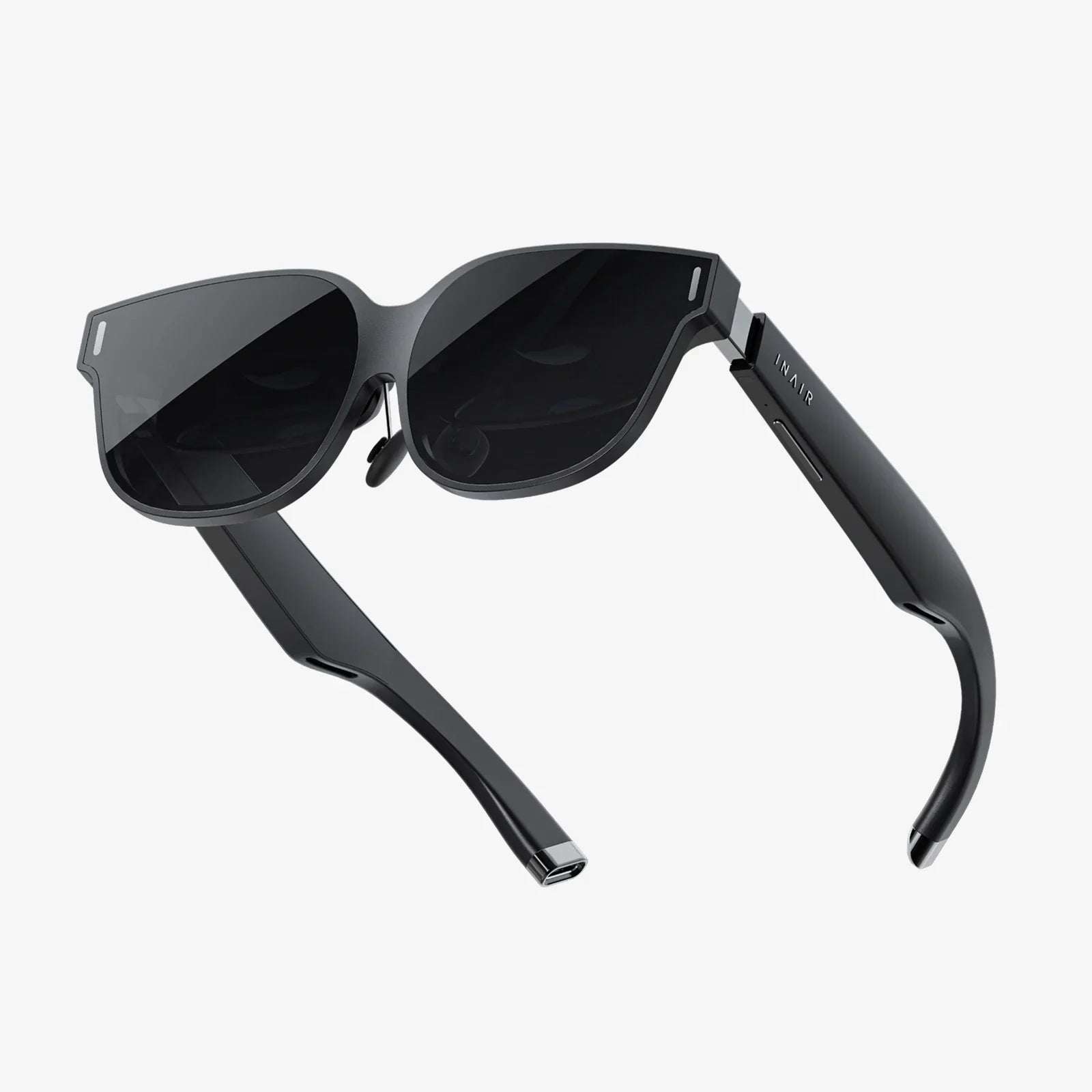
Imagine a world where you can walk with dinosaurs, perform complex heart surgery from your living room, or overlay digital instructions onto the machinery you're repairing. This isn't the distant future; it's the emerging present, powered by the rapid evolution of Virtual and Augmented Reality technologies. These immersive tools are poised to revolutionize everything from how we work and learn to how we connect and play, fundamentally altering our perception of reality itself. The line between the physical and the digital is not just thinning; it's becoming porous, creating a new hybrid existence that we are only beginning to understand.
The Foundational Divide: Defining the Realities
While often grouped under the umbrella of immersive technologies, Virtual Reality (VR) and Augmented Reality (AR) represent two distinct approaches to blending the digital and the physical.
Virtual Reality (VR) is an all-encompassing, simulated experience. By wearing a head-mounted display, users are fully transported into a computer-generated environment, completely shutting out the physical world. This is the technology of total immersion. Whether navigating a fantastical game world, touring a property on another continent, or undergoing exposure therapy in a controlled virtual setting, VR replaces reality. Its power lies in its ability to create presence—the undeniable sensation of "being there," even when "there" is a meticulously crafted digital fiction.
Augmented Reality (AR), by contrast, does not seek to replace our world but to augment it. It superimposes digital information—images, text, 3D models, and data—onto our view of the real environment through a device, typically a smartphone, tablet, or a pair of smart glasses. The world remains your backdrop, but it is now annotated and enhanced. Think of seeing navigation arrows painted onto the road as you walk, visualizing how a new sofa would look in your apartment before you buy it, or having a technician's manual appear as a holographic overlay on a broken engine. AR adds a layer of useful, interactive context to our immediate surroundings.
Bridging these two is a concept often referred to as Mixed Reality (MR). MR is a more advanced form of AR where digital objects are not just overlaid but can interact with the physical world in real-time. A virtual ball in MR can bounce off a real-world table and roll behind a real-world couch, with its physics and occlusion behaving as if it were actually there. This represents the next step in the convergence of our physical and digital realities.
From Science Fiction to Tangible Fact: A Brief Evolutionary Leap
The concepts behind VR and AR are not new. The seeds were planted in the mid-20th century with Morton Heilig's Sensorama in 1962, a mechanical device that offered multisensory film experiences, and Ivan Sutherland's "Sword of Damocles" in 1968, the first head-mounted display system that laid the groundwork for both VR and AR. For decades, these technologies remained largely in the domain of multi-million-dollar military, aerospace, and academic research labs, tantalizingly out of reach for the public.
The catalyst for change was the smartphone revolution. The mass production of components like high-resolution micro-displays, precise motion sensors (gyroscopes, accelerometers), powerful mobile processors, and compact cameras drastically reduced the cost and size of the technology required for immersion. This democratization of components meant that what once required a supercomputer and a warehouse-sized setup could now be achieved with a device that fits in your pocket or on your face. The 2010s witnessed a renaissance, with a new wave of hardware bringing consumer-grade VR and AR to the masses, igniting an explosion of development and creativity that continues to accelerate today.
Transforming Industries: The Enterprise Metaverse
While entertainment captures headlines, the most profound and immediate impact of VR and AR is happening within enterprise and professional fields. These technologies are solving real-world problems, increasing efficiency, reducing costs, and enhancing safety.
Healthcare and Medicine: The medical field is being transformed. Surgeons use AR to project CT scans and 3D models of a patient's anatomy directly onto their body during procedures, providing X-ray vision and improving precision. Medical students practice intricate surgeries in risk-free VR simulations, gaining valuable muscle memory and experience without ever touching a cadaver. VR is also a powerful therapeutic tool, used for treating PTSD through controlled exposure, managing acute pain by distracting the brain, and aiding in physical rehabilitation by making exercises engaging.
Manufacturing and Design: From automotive to aerospace, companies are leveraging "the digital twin" concept. Engineers and designers can create and interact with full-scale 3D prototypes in VR, making changes in real-time and collaborating with colleagues across the globe as if they were in the same room. On the factory floor, AR smart glasses provide workers with hands-free instructions, highlight specific components that need attention, and connect them remotely with experts who can see their view and annotate their field of vision to guide them through a complex repair.
Education and Training: Immersive learning is revolutionizing education. Instead of reading about ancient Rome, students can take a VR field trip to walk its streets. Instead of watching a safety video, a factory worker can practice operating dangerous machinery in a VR simulation where mistakes have no real-world consequences. This experiential learning dramatically improves knowledge retention and comprehension.
Retail and Real Estate: AR allows customers to "try before they buy" in an entirely new way, visualizing furniture in their home, seeing how clothes fit, or experimenting with new makeup shades. Real estate agents offer immersive VR tours of properties, allowing potential buyers to walk through homes at any time, from anywhere in the world, saving time and expanding market reach.
The Human Experience: Social Connection and Storytelling
Beyond practical applications, VR and AR are forging new frontiers in how we tell stories and connect with one another. Social VR platforms are emerging as new public squares where people can meet, watch concerts, play games, and collaborate, all embodied as avatars. This sense of shared presence, of being in a room with someone who is physically thousands of miles away, is a qualitative leap beyond a video call. It fosters a deeper, more human connection in the digital realm.
Storytelling is being redefined through immersive media. Traditional film offers a single rectangular perspective. VR cinema places the viewer inside the story, allowing them to look anywhere and become an active participant rather than a passive observer. Journalists are using VR to create powerful empathy machines, transporting viewers to the heart of a refugee camp or a climate disaster zone to foster a deeper understanding of world events.
The Other Side of the Lens: Ethical Challenges and The Reality Gap
This powerful technology does not come without significant risks and ethical dilemmas. As we begin to live more of our lives in blended realities, several critical issues demand our attention.
Data Privacy and Surveillance: Immersive technologies are data collection engines. A VR headset can track your eye gaze, hand movements, body posture, and even emotional responses. AR glasses could continuously record your environment. This biometric and behavioral data is incredibly intimate and valuable. The question of who owns this data, how it is used, and how it is protected is paramount. The potential for surveillance and manipulation is unprecedented.
The Reality Gap and Societal Impact: When everyone can craft their own perfect reality, what happens to our shared sense of truth? The ability to create hyper-realistic deepfakes and convincing artificial environments could erode trust and make it impossible to distinguish fact from fiction. Furthermore, these immersive escapes could exacerbate social isolation and addiction, as some may prefer a curated digital paradise to the complexities of the real world.
Access and the Digital Divide: There is a real risk that these technologies could create a new societal schism—between those who can afford access to these advanced tools for learning, work, and entertainment and those who cannot. Ensuring equitable access will be crucial to preventing a further widening of the digital divide.
Gazing into the Crystal Ball: The Next Decade of Immersion
The trajectory of VR and AR points toward a future where the technology becomes increasingly seamless, social, and integrated into our daily lives. We are moving toward lighter, more comfortable, and more powerful form factors, eventually converging on something akin to ordinary eyeglasses. This will be the key to "always-on" AR, where digital information is constantly available as a layer on top of our world.
The development of the "metaverse," a persistent network of interconnected virtual spaces, will continue, though its final form is still being written. It will likely be less a single destination and more a protocol for the internet to become spatially aware and immersive. Advancements in haptics will allow us to not just see and hear digital objects but to feel them. Brain-computer interfaces, though far off, hint at a future where we could control these environments with our thoughts, creating the ultimate interface.
The most significant evolution will be the fading of the technology itself. The goal is not to be "using VR" but to simply "be" in a place. It's not about "using AR" but about having the information you need, when you need it, without ever taking your eyes off the world. The device will disappear, and the experience will become everything.
The journey into VR and AR is more than a technological upgrade; it's a philosophical and sociological experiment on a global scale. It challenges our very definitions of reality, presence, and human connection. It offers breathtaking potential to solve humanity's greatest challenges, from remote medicine to climate visualization, while simultaneously presenting profound risks to our privacy and shared reality. The path we take is not predetermined. It will be shaped by the choices of developers, policymakers, and users today. One thing is certain: the door to this new world is now open, and there is no turning back. The future is not just something we enter; it's something we will actively build and experience, layer by digital layer.
Share:
Development of Augmented Reality: From Sci-Fi Fantasy to Mainstream Reality
Who Made Augmented Reality: The Unsung Architects of a Digital Revolution