


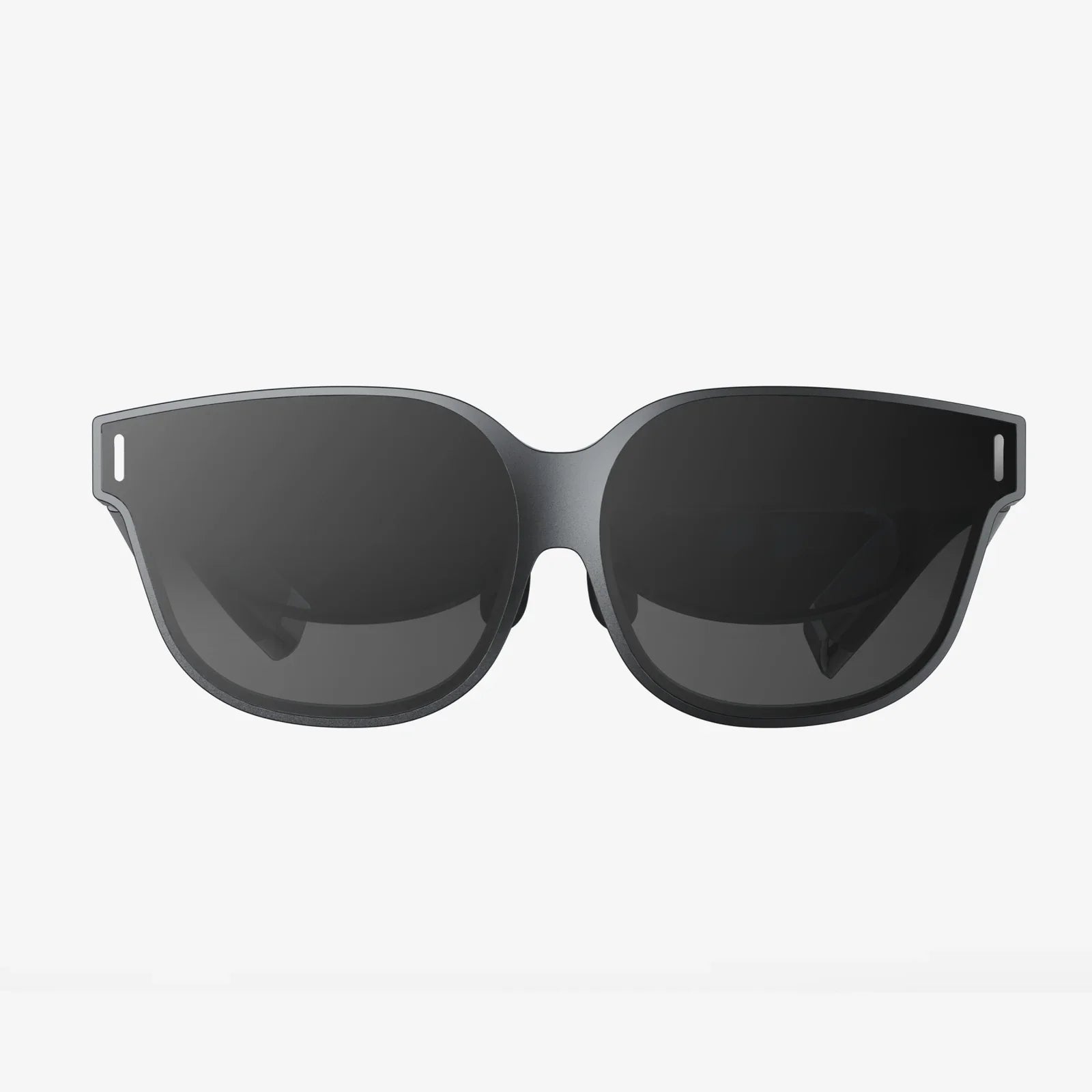
Imagine pointing your device at a static page in a manual and watching a complex engine assembly spring to life, its parts rotating and moving in perfect harmony right before your eyes. This is the magic of augmented reality (AR), a technology that seamlessly blends the digital and the physical, and it feels like a sudden leap into the future. Yet, the journey to this point is a rich, complex tapestry woven by countless minds over decades, even centuries. The question of who truly made augmented reality is a fascinating exploration of parallel innovations, unforeseen collaborations, and a persistent human desire to enhance our perception of reality itself. It’s a story that begins not in a Silicon Valley garage, but in the imagination of a nineteenth-century playwright.
The Conceptual Genesis: A Foundation of Ideas
Long before the requisite technology existed, the foundational concept of augmented reality was being explored in art and literature. The term itself may be modern, but the desire to overlay information onto our view of the world is profoundly human.
In 1901, L. Frank Baum, the author of The Wonderful Wizard of Oz, published a novel titled The Master Key. In it, a young boy accidentally summons the Demon of Electricity, who bestows upon him a set of fantastic gifts. Among these were "character markers," a pair of spectacles that, when worn, would place a letter on a person's forehead indicating their character—a 'G' for good, an 'E' for evil, and so on. This was a pure, literary vision of AR: a wearable technology that provided contextual, data-driven insights about the world in real-time. Baum’s speculative fiction had, in essence, described the core functionality of AR over eighty years before the hardware to create it would arrive.
This conceptual thread was picked up again decades later by another visionary, not an author, but a scientist. In 1957, cinematographer Morton Heilig developed the Sensorama, a mechanical arcade cabinet that engaged multiple senses (sight, sound, smell, and touch) to create a fully immersive experience. While more aligned with what we now call Virtual Reality (VR), Heilig’s philosophy was clear: technology should be used to create experiences. He followed this in 1962 with a patent for a head-mounted display, a staggering precursor to today's AR and VR headsets. Heilig didn't have the digital technology to create true AR, but he had unequivocally invented the form factor and planted the flag for immersive, wearable tech.
The Birth of the Name and the Technology
While Heilig built the shell, it would take a Harvard professor and a systems engineer to breathe digital life into it. The pivotal moment in the history of AR, the point where concept met execution, arrived in 1968 at Harvard University.
Computer scientist Ivan Sutherland, with the crucial engineering help of his student Bob Sproull, created The Sword of Damocles. This system is universally recognized as the first head-mounted display system. It was a terrifying and magnificent contraption so heavy it had to be suspended from the ceiling (hence its dramatic name). It used primitive computer graphics to display simple wireframe shapes that users could see overlaid in their physical environment. Though it lacked the ability to track the environment meaningfully and the graphics were rudimentary, the principle was proven: a computer-generated image could be persistently placed within a user's real-world space. Sutherland is thus rightly celebrated as the forefather of both AR and VR. He didn't just imagine it; he built it.
However, it wasn't until 1990 that this field of study received its official name. Tom Caudell, a researcher at Boeing, was working on simplifying the complex process of assembling miles of wiring in aircraft. He and his colleague David Mizell developed a head-mounted display system that would project the diagram of the wiring harness directly onto the assembly boards, guiding workers through the process. Caudell, witnessing this digital information augmenting the physical reality of the worker, coined the term "augmented reality." The name stuck, giving a definitive identity to the work that had been progressing for decades.
The Invisible Engine: Military, Aviation, and Industrial Research
Parallel to the academic advancements, massive investment from the military and industrial sectors was providing the funding and rigorous application needed to push AR technology forward. This is a critical, though often less publicized, chapter in the story of who made AR.
The U.S. Air Force's Armstrong Laboratory was a key player. Their research into virtual interfaces throughout the 1980s and 1990s culminated in projects like Virtual Fixtures, a system developed by Louis Rosenberg in 1992. This was a remarkably complex AR platform that allowed users to control robots in a remote environment, using overlaid visual cues to enhance their precision and strength. This work proved AR's value in overcoming human limitations in dangerous or complex tasks.
Similarly, NASA was a major driver of innovation. Their research into telepresence and the need to provide astronauts and ground controllers with overlays of complex data directly in their field of view accelerated developments in display technology, tracking, and real-time data integration. The aviation industry, following Caudell's lead at Boeing, began exploring AR for maintenance and assembly, proving its immense value in reducing errors and improving efficiency in high-stakes environments. These sectors didn't just use AR; they forced it to become more robust, reliable, and practical, solving real-world problems that academic prototypes never faced.
The Software Revolution: Making AR Accessible
Hardware defines the possibility, but software defines the experience. The true catalyst for the modern AR explosion was the development of powerful software frameworks and the proliferation of capable hardware in the form of smartphones.
The release of the ARToolKit in 1999 by Hirokazu Kato of the Nara Institute of Science and Technology was a watershed moment. This open-source software library allowed developers to create AR applications using simple square markers for tracking. For the first time, developers without access to million-dollar military labs could experiment with AR. It democratized development and led to a wave of creative and commercial applications, from early marketing campaigns to interactive museum exhibits.
This democratization accelerated exponentially with the smartphone. The iPhone and Android devices created a perfect storm: they were powerful computers with high-resolution displays, high-quality cameras, accelerometers, gyroscopes, and GPS—all the necessary sensors for mobile AR. Tech giants entered the arena, not as inventors of the core technology, but as its powerful amplifiers. They developed and released sophisticated software development kits (SDKs) that moved beyond clunky markers to enable markerless tracking using simultaneous localization and mapping (SLAM) algorithms. This allowed digital content to be placed on any surface and remain persistent, finally unlocking the seamless blend of digital and physical that defines modern AR.
The Modern Tapestry: A Collaborative Masterpiece
Today, AR is not the product of a single entity but a symphony of contributions. The narrative of who made augmented reality expands to include:
- The Gaming Industry: Which, through blockbuster titles, introduced millions of consumers to the thrill of AR, normalizing the technology and pushing the boundaries of interactive entertainment.
- The Developer Community: A global network of creators who continue to explore the limits of AR, building everything from practical tools for measuring spaces to artistic experiences that transform cityscapes into digital galleries.
- Social Media Platforms: Which integrated AR filters and effects into their cameras, making AR a daily part of social interaction and communication for billions of users, often without them even realizing the technology's name.
- Medical Researchers: Who are using AR for everything from overlaying ultrasound data onto a patient's body during surgery to providing visual guidance for complex physiotherapy exercises.
This collaborative ecosystem is the true maker of modern AR. It is a technology built upon the hardware foundations of Heilig and Sutherland, named by Caudell, hardened by military and industrial research, democratized by open-source software, and popularized by consumer tech and creative developers. It is a story with no single hero, but a cast of thousands.
From the whimsical imagination of L. Frank Baum to the terrifying glow of Ivan Sutherland's Sword of Damocles, the path to modern AR was anything but straightforward. It was a convergence of art, science, industry, and entertainment, each contributor adding an essential layer to the technology we have today. The next time you use an AR filter to place a dancing dinosaur on your kitchen table or follow a holographic arrow through a museum, remember that you are interacting with a dream over a century in the making—a dream woven together by the most unsung architects of the digital age. The story of who made augmented reality is still being written, and the next chapter promises to be its most immersive yet.
Share:
VR AR Reality: The Blurring Line Between Our World and The Digital Frontier
Remote Help Using Smartglasses: The Future of Expert Assistance is Here