


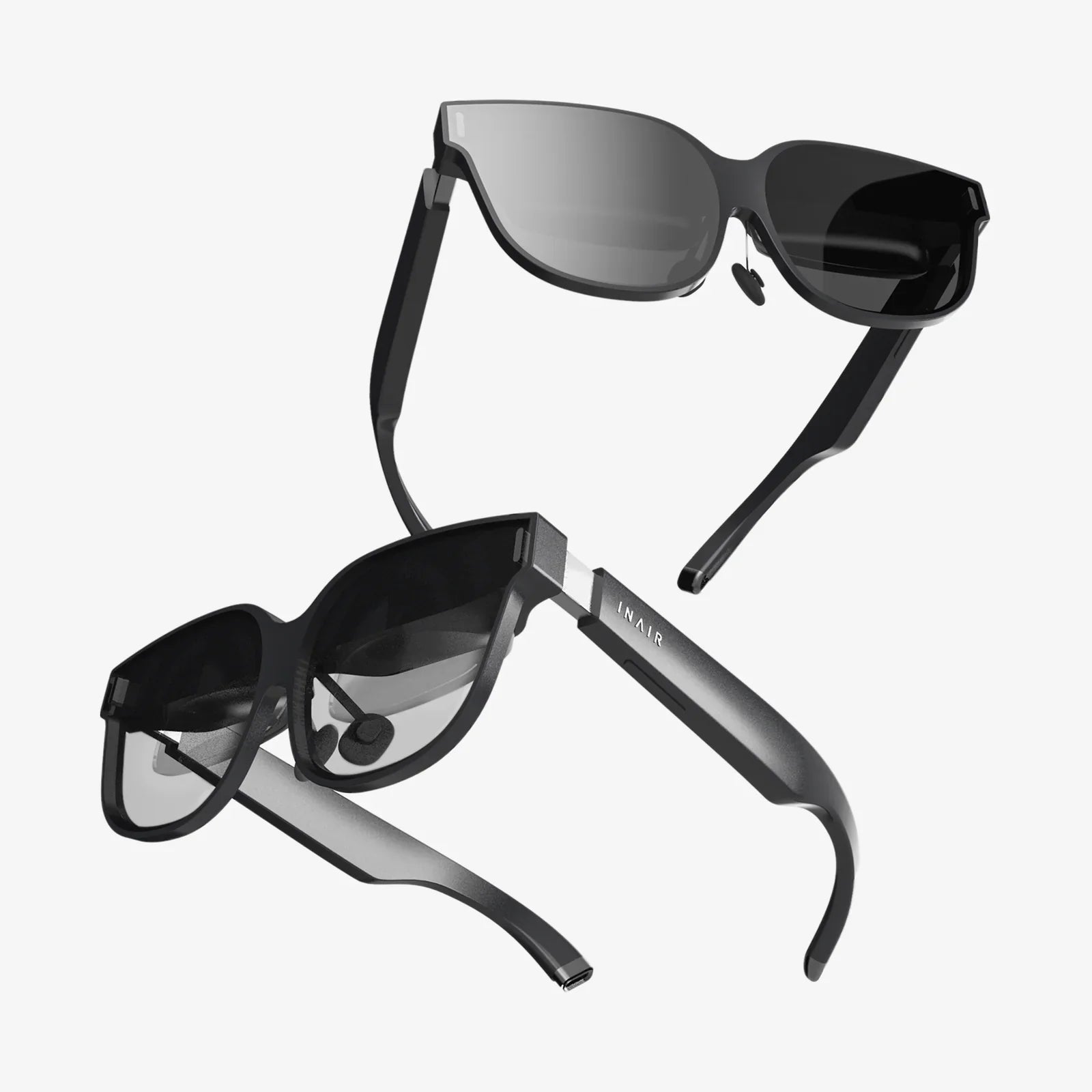
Imagine a world where the line between the digital and the physical blurs beyond recognition, where you can explore ancient ruins from your living room or have diagnostic data overlaid onto a patient during surgery. This isn't the distant future; it's the burgeoning present, powered by two revolutionary technologies that sound similar but offer profoundly different experiences: Augmented Reality and Virtual Reality. Understanding the difference between AR and VR is not just tech jargon—it's the key to unlocking how we will work, play, learn, and connect in the coming decades.
The Core Dichotomy: Enhancement vs. Immersion
At its most fundamental level, the difference between AR and VR is a difference of intent and experience.
Virtual Reality (VR) is an all-encompassing, simulated digital environment. Its primary goal is to isolate the user from the physical world and fully immerse them in a computer-generated one. When you don a VR headset, your physical surroundings are replaced. You might be standing on a virtual Martian landscape, sitting in a cockpit of a starship, or facing down a digital dragon. VR creates a reality that is entirely separate from your own, transporting your consciousness to a new place. It is a gateway to another world.
Augmented Reality (AR), on the other hand, is not about escape but about enhancement. It layers digital information—images, sounds, text, holograms—onto the user's real-world environment in real-time. Instead of replacing your reality, AR supplements it. Think of popular mobile games that project characters onto your street, or navigation apps that superimpose directions onto a live video feed of the road ahead. You remain present and aware of your actual surroundings, but those surroundings are now augmented with a digital overlay. It is a lens that adds a new dimension to your existing world.
Under the Hood: A Technical Breakdown
The technological foundations of AR and VR, while sharing some common ancestry in display and sensor tech, diverge significantly to achieve their distinct goals.
Virtual Reality Technology
VR systems are designed for deep immersion, which requires sophisticated hardware to trick the human senses.
- Headsets: VR headsets are typically fully opaque, blocking out all ambient light. They contain high-resolution displays for each eye, creating a stereoscopic 3D effect.
- Tracking Systems: Precise tracking is paramount. This includes rotational tracking (using gyroscopes, accelerometers, and magnetometers to follow head orientation) and positional tracking (using external sensors/lighthouses or internal-outward-facing cameras to map the user's movement in physical space).
- Controllers: Handheld motion-tracked controllers are standard, allowing users to interact intuitively with the virtual world, mimicking grabbing, pointing, and throwing.
- Computational Power: Rendering two high-frame-rate, high-resolution feeds simultaneously is computationally intensive, often requiring a powerful external computer or a highly optimized self-contained system.
Augmented Reality Technology
AR technology focuses on seamless integration, which presents a unique set of engineering challenges centered on understanding the real world.
- Displays: AR employs either optical see-through (using semi-transparent lenses like waveguides to project images onto clear glass) or video see-through (using cameras to capture the real world and then blending digital elements into the video feed on a screen). Smartphone AR uses the latter.
- Spatial Mapping: The core magic of AR is its ability to understand geometry. Using technologies like Simultaneous Localization and Mapping (SLAM), AR devices scan the environment to create a 3D mesh, allowing digital objects to sit convincingly on real surfaces, occlude correctly, and remain locked in place.
- Cameras and Sensors: A suite of sensors—RGB cameras, depth sensors, LiDAR scanners—continuously scans the environment to track surfaces, measure distances, and understand lighting conditions to make digital overlays appear physically present.
- Processing: While complex, the processing can be more focused on computer vision tasks rather than generating entire worlds, making it more accessible on mobile devices.
The Spectrum of Experience: From AR to VR and the Metaverse
It's more accurate to think of AR and VR as two points on a spectrum of mediated reality, often referred to as Extended Reality (XR). Between them exists a continuum of experiences:
- Augmented Reality (AR): Digital overlays on the real world (e.g., a holographic furniture model in your room).
- Augmented Virtuality (AV): Primarily a virtual world with some real-world elements integrated (e.g., a VR meeting where a live video feed of a colleague is inserted into the virtual boardroom).
- Virtual Reality (VR): A fully digital, immersive environment.
This spectrum is crucial to understanding the concept of the metaverse. The metaverse is not synonymous with VR. Rather, it is a hypothesized persistent network of shared 3D virtual spaces, likely accessed through a combination of AR and VR technologies. You might use AR glasses to see metaverse data and interactions overlaid on your city as you walk to work, and then switch to a VR headset to enter a fully immersive concert within that same metaverse later that evening.
Transforming Industries: Practical Applications
The unique strengths of AR and VR are already driving innovation across countless sectors.
Virtual Reality Applications
- Gaming and Entertainment: This is VR's most famous application, offering unparalleled immersion in games, interactive stories, and virtual concerts.
- Training and Simulation: VR provides a safe, cost-effective environment for high-stakes training. Surgeons can practice complex procedures, pilots can simulate emergency scenarios, and soldiers can train for combat missions without any real-world risk.
- Architecture and Design: Architects and clients can walk through a full-scale 3D model of a building before a single brick is laid, allowing for design validation and changes that are impossible with blueprints.
- Therapy and Rehabilitation: VR is used for exposure therapy to treat phobias (e.g., fear of heights, flying) and PTSD. It's also used in physical rehab to make exercises more engaging and to simulate real-world movements.
Augmented Reality Applications
- Industrial Maintenance and Repair: Technicians can see schematics, instructions, and diagnostic data overlaid directly on the machinery they are fixing, improving accuracy and speed while reducing errors.
- Healthcare: Surgeons can use AR overlays to see critical information like patient vitals or the location of blood vessels beneath the skin during an operation. It can also aid in vein visualization for injections.
- Retail and E-commerce: Customers can try on clothes, glasses, or makeup virtually using their smartphone camera or see how a new sofa would look in their actual living room before purchasing.
- Navigation: AR can project turn-by-turn directions onto the real road through a car's windshield or a user's smartphone, making navigation more intuitive and safer.
- Education: Students can interact with 3D models of historical artifacts, dissect virtual frogs, or see the solar system projected around them, bringing abstract concepts to life.
Challenges and Considerations
Both technologies face significant hurdles on the path to mass adoption.
VR Challenges: A primary barrier is the potential for motion sickness (cybersickness), caused by a lag between a user's movement and the visual response on the screen. The hardware can also be cumbersome, expensive, and isolating, cutting users off from their immediate environment and the people around them.
AR Challenges: For AR to reach its true potential, the technology needs to become socially acceptable and aesthetically pleasing—imagine moving from today's bulky prototypes to a pair of stylish eyeglasses. This requires massive leaps in miniaturization, battery life, and processing power. Furthermore, the always-on, data-collecting nature of AR raises profound privacy and security concerns about how our environments and actions are recorded and used.
The Future is a Blend
The trajectory of these technologies is not towards one winning and the other fading away. Instead, the future points to a convergence. We are already seeing headsets that can switch between a full VR immersion and a full-color, high-fidelity AR pass-through mode, effectively blending the two functionalities into a single device. This hybrid approach will likely become the norm, giving users the flexibility to choose the right tool for the task at hand, whether it's enhancing their reality or escaping it entirely.
The true revolution will begin when these technologies become as ubiquitous and unobtrusive as smartphones, weaving a seamless layer of digital information and experience into the fabric of our daily lives. The difference between AR and VR will remain a crucial distinction for developers and designers, but for the end-user, it will simply be different modes of interacting with a more dynamic, responsive, and fascinating world. The ultimate winner won't be AR or VR, but our expanded human experience.
As the boundaries between our physical and digital lives continue to dissolve, the question is no longer which reality will dominate, but how you will choose to enhance your own. The power to reshape your world, to learn, create, and explore in ways once confined to science fiction, is rapidly moving from the realm of imagination to the palm of your hand—and right before your eyes.
Share:
Augmented Reality at Work: The Invisible Revolution Reshaping Your 9-to-5
Advanced in Augmented Reality: The Invisible Revolution Reshaping Our World