


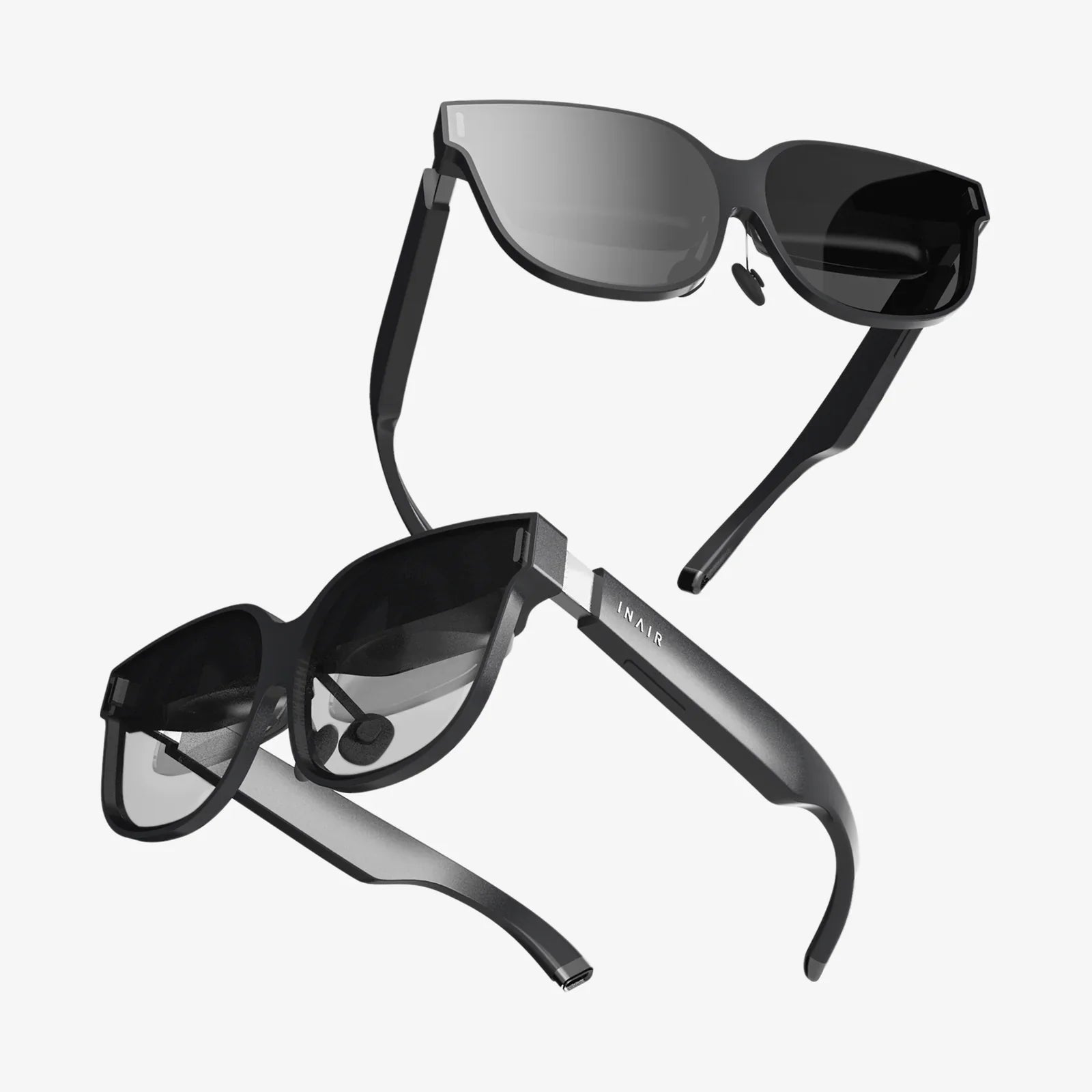
Imagine a world where the digital and the physical are no longer separate realms but a single, intertwined experience. Where information doesn’t live on a screen in your hand but is painted onto the very fabric of your reality, accessible with a glance, a gesture, or a spoken word. This is no longer the stuff of science fiction; it is the imminent future being built today, driven by breathtaking advancements in augmented reality. The revolution is not coming; it is already here, quietly evolving in labs, on factory floors, and in our homes, poised to fundamentally alter how we work, learn, connect, and perceive the world around us.
Beyond the Novelty: The Core Pillars of Modern AR Advancement
The journey of AR has been one of rapid maturation. It has moved far beyond the initial wave of smartphone-based filters and games, which, while popular, were merely a glimpse of its potential. True, advanced augmented reality is built upon a foundation of several converging technological pillars, each experiencing its own revolutionary progress.
Spatial Mapping and Understanding
Early AR could place a digital object in your room, but it didn’t truly understand the room itself. The latest systems use a combination of sophisticated sensors—LiDAR, depth cameras, and advanced algorithms—to create a rich, millimeter-accurate 3D map of the environment in real-time. This isn't just a point cloud; it's a semantic understanding of space. The system doesn't just see a flat surface; it recognizes it as a table, a wall, or a floor. It can identify objects, understand occlusion (so a digital character can hide behind your real sofa), and allow for persistent placement of content. This means you can place a virtual clock on your real wall, leave a note for a family member on the kitchen counter, or design a piece of furniture in your living room, and it will remain exactly where you left it, days or even weeks later. This persistent, world-locked digital layer is the first major step toward a truly blended reality.
Photorealistic Rendering and Occlusion
For digital content to feel genuinely part of our world, it must obey the same laws of physics and light. Advanced rendering engines now simulate complex lighting, shadows, and reflections based on the actual ambient conditions of the user's environment. A virtual car model placed on a showroom floor will cast accurate shadows under the bright halogen lights and reflect the surrounding details. Crucially, advanced occlusion ensures that real-world objects correctly block digital ones. If you move your hand in front of a AR display, your real hand remains convincingly in the foreground, a simple yet vital detail for maintaining the illusion. This move towards photorealistic integration is what separates gimmicky overlays from believable, useful digital additions.
The AI Brain: Contextual Awareness and Personalization
Perhaps the most significant leap forward is the integration of powerful artificial intelligence. AR devices are becoming contextually aware. By processing the visual, auditory, and even locational data they collect, they can infer user intent and provide relevant information proactively. Imagine an engineer wearing AR glasses while repairing a complex machine. The AI, recognizing the specific component she is looking at, could automatically overlay the relevant schematic, torque specifications, and a highlight of the next step in the repair manual. Or a tourist walking through a historic city could have information about the architecture, historical events, and even restaurant reviews pop up seamlessly as they gaze at different buildings. This shift from passive display to active, intelligent assistant is powered by machine learning models that run both on the device for speed and in the cloud for depth, creating a responsive and deeply personalized experience.
Hardware Evolution: Towards Inconspicuous Form Factors
The technology is only as good as the vessel that delivers it. The clunky, tethered headsets of yesteryear are giving way to a new generation of wearables. The holy grail remains a pair of stylish, lightweight glasses that can deliver high-fidelity AR experiences all day long. We are not quite there yet, but progress is rapid. Advancements in waveguide technology, micro-LED displays, and holographic optics are allowing for brighter, sharper images in increasingly slim form factors. Simultaneously, developments in battery technology, thermal management, and miniaturized computing are solving the critical challenges of power and performance. The goal is to make the technology fade into the background—to be worn as comfortably as a pair of everyday eyewear, making the augmentation feel natural, not intrusive.
The Industrial Metaverse: AR's Silent Revolution
While consumer applications often grab headlines, the most profound impact of advanced AR is already being felt in industrial and enterprise settings. This is where the technology is delivering undeniable ROI, solving complex problems, and transforming workflows.
Transforming Manufacturing and Design
In manufacturing, AR is revolutionizing the entire product lifecycle. Designers and engineers can collaborate in real-time on life-size, 3D holographic prototypes, making changes and assessing ergonomics long before any physical materials are used. On the factory floor, assembly line workers receive hands-free, step-by-step instructions overlaid directly onto the machinery they are assembling, drastically reducing errors and training time. Quality assurance inspectors can see deviations from CAD models highlighted in their field of view, and remote experts can see what an on-site technician sees and provide guidance by drawing arrows and circles directly into their visual field, effectively teleporting expertise across the globe. This eliminates travel time and cost while ensuring problems are solved instantly.
Revolutionizing Healthcare and Surgery
The applications in medicine are nothing short of extraordinary. Surgeons can use AR to visualize complex anatomical structures, such as tumors or blood vessels, precisely superimposed onto a patient’s body during a procedure, effectively giving them "X-ray vision." This enhances precision and can minimize invasiveness. Medical students can practice procedures on detailed holographic patients, and physical therapists can guide patients through exercises with perfect form, tracked and corrected by AR software. It also holds immense promise for diagnostics, allowing doctors to call up and manipulate patient scans right beside them during a consultation.
Architecture, Engineering, and Construction (AEC)
The AEC industry is being reshaped by AR's ability to bridge the gap between digital blueprints and physical space. Architects and clients can walk through a full-scale holographic model of a building before the foundation is even poured, experiencing the space, light, and flow. On construction sites, workers can see where hidden conduits, pipes, and wires are located behind walls, preventing costly mistakes. They can also verify that the constructed elements align perfectly with the digital design model, ensuring quality and adherence to plan.
The Social and Urban Fabric: Augmenting Human Connection
Beyond industry, advanced AR promises to reshape our social interactions and urban environments, creating a new layer of shared experience and context over our cities.
The Evolution of Social AR
Social media is poised to evolve from a feed on a screen to a shared experience in space. Friends separated by distance could meet up as lifelike avatars in a virtual space that feels like a real living room, or leave holographic messages and artwork in specific locations for each other to find. Public spaces could host AR art installations visible only through enabled devices, creating a new form of public, interactive art. This creates a potential for a new "digital public square," a layer of communication and expression that is anchored to the physical world.
Navigating the Smart City
In the cities of the near future, AR will become an indispensable tool for navigation and information. Directions will be painted onto the sidewalk ahead of you. Looking at a train station could display real-time schedules and platform changes. Information about local businesses, historical landmarks, and community events will be available simply by looking around. This ambient, contextual data layer will make cities more navigable, informative, and efficient for both residents and visitors.
The Invisible Challenge: Ethical and Societal Implications
With such transformative power comes immense responsibility. The development of advanced AR is not just a technical challenge; it is a societal one that demands careful consideration and proactive governance.
The Data Privacy Dilemma
An always-on, always-worn AR device is arguably the most intimate data-gathering apparatus ever conceived. It sees what you see, hears what you hear, and knows where you are. This generates an unprecedented amount of sensitive biometric and environmental data. Who owns this data? How is it stored, used, and protected? The potential for surveillance, both by corporations and state actors, is staggering. Robust, transparent data governance frameworks must be established before these devices become ubiquitous.
Reality Divide and Digital Addiction
There is a genuine risk of creating a "reality divide" between those who can afford advanced AR wearables and those who cannot, potentially leading to a new form of digital inequality. Furthermore, if the augmented layer becomes more engaging, convenient, or entertaining than the real world, what does that mean for our attention spans, our mental health, and our connection to unmediated reality? The lessons from social media and smartphone addiction must be applied proactively to this far more immersive technology.
Safety and Reality Blurring
How do we ensure safety when people are partially immersed in a digital world? Walking down a street while interacting with AR content poses obvious physical risks. Furthermore, the potential for malicious actors to create convincing but dangerous overlays—hiding real hazards or creating false ones—is a serious security threat. Establishing clear digital boundaries and norms will be crucial for public safety.
The path forward is not to halt progress but to guide it with intention. The vision of advanced augmented reality is not to escape our world, but to enhance it; not to replace human connection, but to enrich it. It offers a chance to weave knowledge into perception, to turn every space into a classroom, every object into a teacher, and every challenge into an opportunity for collaborative problem-solving. The tools to build this future are now in our hands. The question is no longer if we can build it, but what kind of world we will choose to build.
Share:
Difference Between AR and VR: A Comprehensive Guide to the Realities of Tomorrow
AR VR Development Course: Your Ultimate Guide to Building Immersive Realities