Imagine a world where digital information seamlessly blends with your physical surroundings, or where you can be instantly transported to a completely fabricated universe. This is no longer the realm of science fiction; it's the present and future being shaped by two of the most transformative technologies of our time: Augmented Reality and Virtual Reality. While often mentioned in the same breath, they offer profoundly different experiences and serve distinct purposes. Understanding the difference between augmented reality and vr is crucial for anyone looking to navigate the next wave of digital innovation, whether as a consumer, a developer, or a business leader. This deep dive will not only clarify the distinction but will illuminate the vast potential each holds.
Defining the Realms: Core Concepts and Origins
At its most fundamental level, the difference between augmented reality and vr is a question of immersion versus augmentation. One replaces your reality, while the other enhances it.
What is Virtual Reality (VR)?
Virtual Reality is a fully immersive, computer-generated simulation of a three-dimensional environment. Users are placed inside this digital world, effectively blocking out the physical world around them. The primary goal of VR is to create a convincing sense of presence, making the user feel as if they have been transported elsewhere. This is achieved through a head-mounted display (HMD) that covers the user's entire field of vision. The origins of VR can be traced back to the Sensorama machine of the 1960s, but it wasn't until the 2010s that consumer-grade technology made it accessible to the masses. VR is an entirely synthetic experience; everything the user sees and hears is generated by a computer.
What is Augmented Reality (AR)?
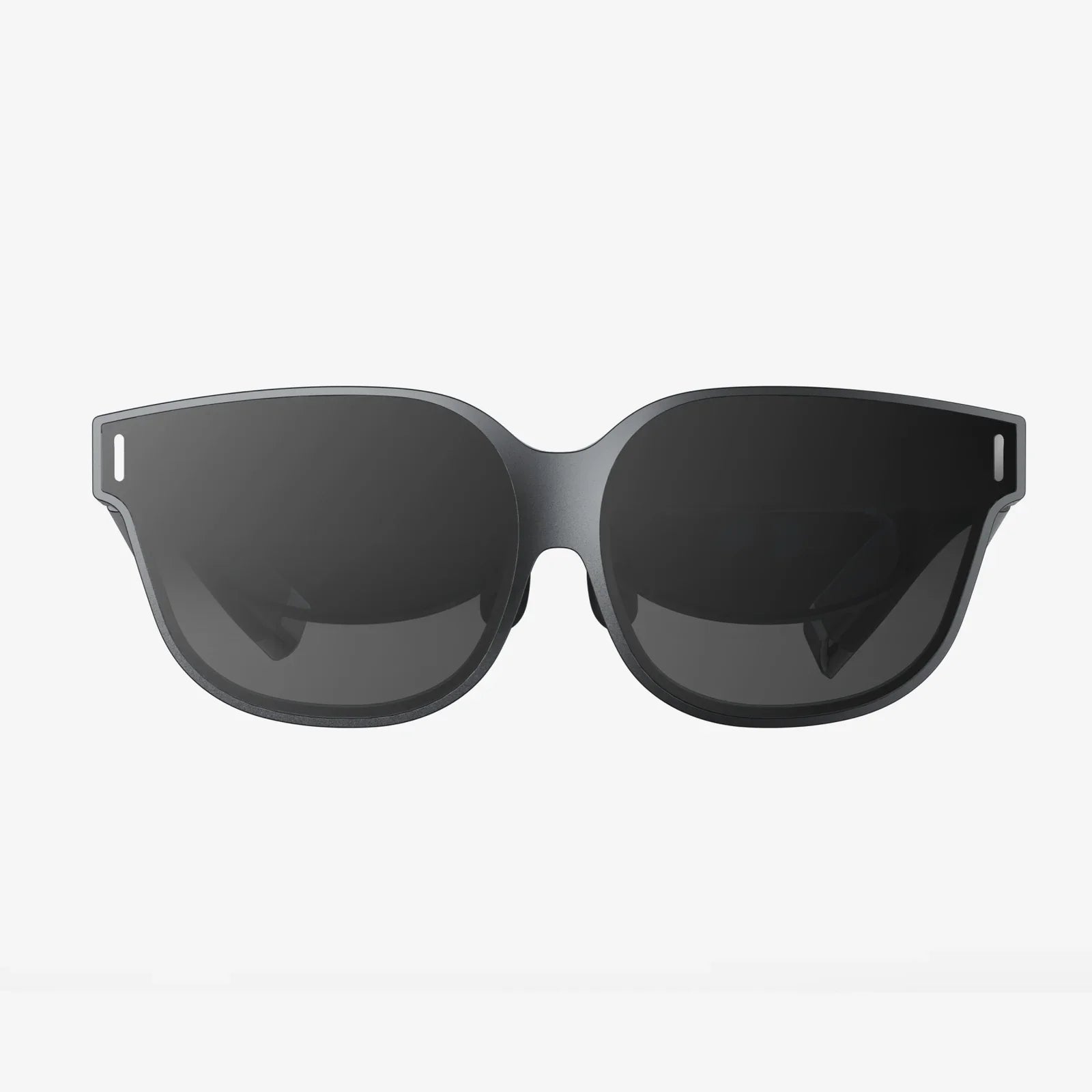
Augmented Reality, by contrast, layers digital information—be it images, text, or 3D models—onto the user's real-world environment. Instead of replacing reality, AR supplements it. The user continues to see and interact with their physical surroundings, which are now enhanced with contextual digital overlays. This technology can be experienced through various devices, from smartphones and tablets to specialized smart glasses. The concept gained widespread recognition with the release of a popular mobile game in 2016, but its industrial and military applications predate this consumer-facing use by decades. AR operates on the principle of symbiosis between the real and the virtual.
The Technological Divide: How They Work
The fundamental difference between augmented reality and vr is most apparent in the underlying technology that powers each experience. The hardware and software requirements diverge significantly to achieve their respective goals of immersion and augmentation.
VR Technology: Building a World from Scratch
Creating a convincing VR experience is a computationally intensive task. The technology stack includes:
-
Head-Mounted Displays (HMDs): These devices use two high-resolution displays (one for each eye) to create a stereoscopic 3D effect. They are completely opaque, eliminating any view of the outside world.
-
Tracking Systems: To sell the illusion of presence, VR systems employ sophisticated outside-in or inside-out tracking. This uses cameras, lasers (lighthouses), and inertial measurement units (IMUs) to precisely monitor the user's head position and orientation in real-time, updating the virtual view accordingly.
-
Controllers: Handheld motion-tracked controllers allow users to interact naturally with the virtual environment, picking up objects, pushing buttons, and gesturing.
-
Audio: Spatial 3D audio is critical. Sounds change based on the user's head position, making a noise behind them actually seem like it's coming from behind.
-
Computing Power: Generating two high-frame-rate, high-resolution views simultaneously requires significant graphical processing power, often provided by a powerful personal computer or a console, though standalone headsets have their own integrated processors.
AR Technology: Bridging the Digital and Physical
AR technology is focused on perception and integration rather than pure generation. Its key components are:
-
Transparent Displays or Cameras: Smart glasses use waveguide technology or other methods to project images onto transparent lenses, allowing the user to see the real world. Smartphone-based AR uses the device's camera to capture the real world and then displays the augmented view on the screen.
-
Sensors and Cameras: A suite of sensors is crucial for understanding the environment. This includes RGB cameras for capturing video, depth sensors (like LiDAR) for mapping spatial geometry, and IMUs for tracking device movement.
-
Computer Vision: This is the brains of the operation. SLAM (Simultaneous Localization and Mapping) algorithms allow the device to understand and map its surroundings in real-time. Object recognition software can identify surfaces (floors, tables) and specific items (a product box, a machine part).
-
Processing: While still demanding, the processing power for AR can be more focused on sensor data interpretation rather than full-world rendering, making it increasingly viable on mobile chipsets.
The User Experience: Immersion vs. Assistance
The most tangible difference between augmented reality and vr for an end-user is the nature of the experience itself. One demands your complete attention, while the other weaves itself into your existing tasks.
The VR Experience: Total Escape
Using VR is an active, dedicated activity. You put on a headset and commit to being somewhere else. This makes it exceptional for:
-
Gaming: VR gaming is unparalleled in its ability to create visceral, heart-pounding experiences. You are inside the game.
-
Training and Simulation: From training surgeons to practicing dangerous industrial procedures or flying a plane, VR provides a risk-free environment to learn muscle memory and complex tasks.
-
Virtual Tourism and Storytelling: Explore the pyramids of Giza or the surface of Mars from your living room. Filmmakers are using VR to create empathetic, immersive documentaries.
-
Social Connection: Social VR platforms allow people to meet as avatars in virtual spaces, interacting with body language and shared activities in a way that video calls cannot replicate.
The trade-off is a complete disconnect from your immediate physical environment, which can lead to safety concerns and limits its use to controlled settings.
The AR Experience: Contextual Enhancement
AR is passive and contextual. It is designed to assist you in your current environment, not pull you out of it. Its strengths lie in:
-
Navigation: Arrow overlays on a live street view, guiding you to your destination.
-
Retail and Try-Before-You-Buy: Visualizing how a new sofa would look in your living room or trying on virtual makeup.
-
Industrial Maintenance and Repair: A technician seeing wiring diagrams overlaid directly onto the machine they are fixing, or receiving remote expert guidance with annotations drawn in their field of view.
-
Education: Bringing textbooks to life—a student can point their tablet at a diagram of the human heart to see a beating 3D model emerge from the page.
-
Information Overlay: Getting real-time stats and data about a sports game by pointing your phone at the TV or seeing a tourist's name and history when looking at a landmark through glasses.
AR is inherently mobile and situational, enhancing reality rather than replacing it.
Applications Shaping Industries
The practical difference between augmented reality and vr is crystallizing in their adoption across various sectors. Each technology is finding its niche, solving unique problems.
Where VR is Revolutionizing Fields
VR's power of immersion makes it ideal for scenarios requiring complete focus and simulation.
-
Healthcare: Beyond surgical training, VR is used for exposure therapy to treat phobias and PTSD, for pain distraction in burn victims during wound care, and for cognitive and physical rehabilitation through gamified exercises.
-
Architecture and Real Estate: Architects and clients can walk through a full-scale, photorealistic model of a building before a single brick is laid. Real estate agents offer virtual tours of properties across the globe.
-
Corporate Training: Companies use VR to train employees in soft skills like public speaking and leadership by placing them in virtual boardrooms, or to train for high-stakes scenarios like emergency evacuations.
Where AR is Driving Efficiency and Innovation
AR's strength in overlaying information is making workers smarter and consumers more informed.
-
Manufacturing and Logistics: Warehouse workers see the most efficient picking routes overlaid on their vision, along with exact bin locations. Assembly line workers see digital instructions superimposed on the product they are building, reducing errors and training time.
-
Field Service: A lone field technician can have a remote expert see what they see and provide guidance through AR annotations, dramatically reducing downtime and the need for expert travel.
- Marketing and Advertising: Interactive AR campaigns allow customers to engage with products in their own space, creating memorable experiences that drive conversion.
The Blurred Line: Mixed Reality and the Future
The dichotomy between AR and VR is not absolute. The spectrum of immersive technologies is evolving, leading to the emergence of Mixed Reality (MR). MR is a blend of physical and digital worlds, unlocking natural and intuitive 3D interactions between humans, computers, and environments. Advanced headsets now offer passthrough cameras, allowing high-resolution video of the real world to be displayed inside the headset and then augmented with digital objects that can be physically occluded by real-world objects. This represents a fusion of both technologies, pointing towards a future where the line between what is real and what is digital becomes increasingly fluid. The ultimate goal is the concept of the "metaverse"—a persistent network of shared, real-time virtual spaces that could be accessed through both AR and VR interfaces, further eroding the hard distinction between the two.
Choosing the Right Tool for the Job
So, which technology is superior? The question is moot. The difference between augmented reality and vr is not about which is better, but which is the right tool for a specific task. Ask yourself: Does the experience require complete immersion and a total escape from reality? VR is the answer. Is the goal to provide contextual information, assistance, and enhancement within the user's current environment? Then AR is the clear choice. For many future applications, a hybrid MR approach will likely prevail. The key is to understand the core strengths and limitations of each and apply them to solve real human problems.
The journey into our digital future is not a choice between the real world and a virtual one, but an exploration of how the two can coexist and enhance our lives. From transforming how we work and learn to redefining entertainment and social connection, both AR and VR are powerful keys to unlocking experiences we've only just begun to imagine. The next time you see a headline about immersive tech, you'll know exactly whether it's enhancing your world or building a new one from the ground up—and that knowledge is your passport to participating in what comes next.


Share:
Mobile Augmented Reality Market Forecast: A Deep Dive into the Next Digital Revolution
Hologram vs Augmented Reality: The Ultimate Showdown for Our Digital Future