


- by wangfred
Hologram vs Augmented Reality: The Ultimate Showdown for Our Digital Future
- by wangfred
Imagine a world where digital information isn't confined to screens but is seamlessly woven into the fabric of our physical reality. This is the tantalizing promise of immersive technologies, a frontier dominated by two captivating concepts: the hologram and augmented reality. For decades, these terms have been used interchangeably in science fiction, blurring the lines in the public imagination. Yet, beneath the surface of this technological spectacle lies a fundamental and fascinating distinction. Understanding the difference between a hologram and augmented reality isn't just academic; it's a key to unlocking how we will interact with information, with each other, and with the world itself in the coming decades. This is the ultimate showdown for the future of human-computer interaction.
At its core, a hologram is a three-dimensional image created through the photographic technique of holography. The term itself is derived from the Greek words holos, meaning "whole," and gramma, meaning "message." A true hologram is a "whole message" of light, capturing and reproducing the light field of an object as if it were actually present. Unlike a photograph, which is a flat, two-dimensional representation, a hologram encodes information about the depth, parallax, and perspective of the subject. This allows you to move around it and see it from different angles, just as you would a real object.
The magic of a hologram lies in its creation using laser light. A laser beam is split into two: one beam (the object beam) is directed at the object and then onto the recording medium, while the other (the reference beam) is directed onto the same medium. The interaction of these two beams creates a complex interference pattern on the medium (a holographic plate or film). When this pattern is later illuminated by a light source similar to the original reference beam, it diffracts the light to reconstruct the original light field, making the three-dimensional image appear.
It is crucial to distinguish between real holograms and the pepper's ghost illusion that is often mislabeled as holography. The latter, a centuries-old technique, uses angled glass or film to reflect a two-dimensional image, making it appear as a ghostly, semi-transparent figure on a stage. While visually striking, it lacks the true three-dimensional properties, depth, and interactivity of a genuine hologram. Most so-called "holograms" seen in concerts or on news broadcasts are sophisticated, high-resolution versions of this illusion, not true laser-projected holograms.
If a hologram is a captured and projected light field, augmented reality (AR) is a digital layer superimposed onto our real-world view. AR is an interactive experience that enhances the real world by overlaying computer-generated perceptual information across one or more sensory modalities, primarily visual. The key differentiator is that AR is experienced in real-time and is contextually aware of its environment.
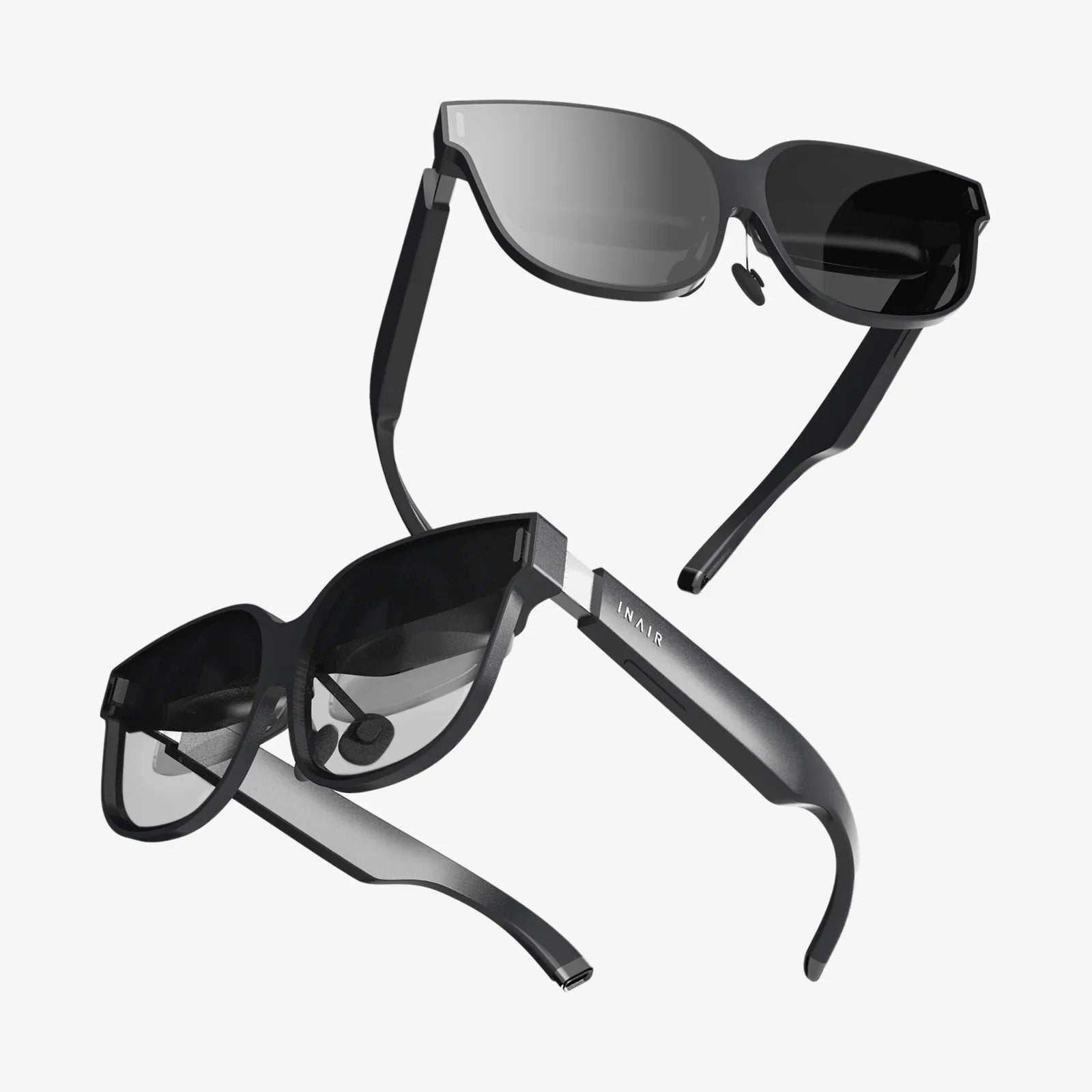
AR functions through a pipeline of sophisticated technology. A camera on a device—be it a smartphone, tablet, or a pair of smart glasses—captures the user's surroundings. Computer vision algorithms then analyze this video feed to understand the environment, identifying flat surfaces (like a table or floor), objects, and spatial geometry. Once the environment is mapped, the AR software precisely anchors digital assets—3D models, text, animations, or videos—onto these real-world points. The composite view, a blend of the real and the virtual, is then displayed to the user on their screen or through optical see-through lenses.
This technology relies on a suite of hardware to function seamlessly. This includes:
The most profound difference between a hologram and AR lies in their fundamental nature and purpose. A hologram is a static or pre-rendered visual artifact. It is a stunningly realistic representation of an object's light, but it is not interactive in a computational sense and is not aware of its surroundings. It exists as a spectacle to be observed.
Augmented reality, conversely, is a dynamic, interactive, and contextual information system. Its primary purpose is not just to show a 3D object but to provide relevant data that interacts with and responds to the real world in real-time. A hologram of a car engine might let you walk around it to see all its parts. An AR view of that same engine, viewed through a tablet in a mechanic's garage, could label every component, display torque specifications when you look at a bolt, and show an animated overlay of the combustion process. AR is functional, data-driven, and interactive.
This distinction is critical. A hologram is about visual fidelity—creating a perfect, believable 3D illusion. Augmented reality is about information utility—enhancing a user's perception and capabilities by integrating actionable data into their immediate environment.
While conceptually distinct, the lines between these technologies are beginning to blur in exciting ways, particularly with the advent of advanced headsets. These devices often market their ability to project high-fidelity, seemingly solid 3D objects into the user's environment. Technically, these are not true holograms as defined by laser holography. They are stereoscopic 3D renders that are so precisely tracked and anchored to the real world that they exhibit hologram-like properties—they are volumetric, have parallax, and can be viewed from different angles.
This is a form of AR, but one that prioritizes the visual realism typically associated with holograms. The ultimate goal for many in the field is to create what is often called "holographic AR" or "mixed reality"—a seamless blend where photorealistic digital objects coexist and interact with the physical world in real-time. This convergence is pushing both fields forward, with holographic techniques inspiring new display technologies and AR providing the computational framework to make them interactive and context-aware.
The practical applications of both technologies highlight their unique strengths and differences.
Predicting a single "winner" in the hologram vs. AR debate is a misunderstanding of their roles. They are not in a winner-takes-all race but are instead complementary technologies evolving toward a shared future.
In the near term, augmented reality has a clear path to mass adoption. Its utility is proven, its hardware is becoming more accessible (starting with the smartphone in everyone's pocket), and its applications solve immediate, tangible problems across countless industries. The development of more comfortable, powerful, and affordable AR glasses is the next major hurdle, with the potential to make AR as ubiquitous as the mobile phone.
True holography, while less commercially prevalent, continues to advance. Research into new materials, like metasurfaces, and computational holography aims to create holographic displays that don't require special glasses and can be integrated into everyday objects. Its future may lie in highly specialized fields requiring the utmost visual accuracy and in public spectacles.
The true future, however, is a synthesis. We are moving toward a spectrum of experiences often grouped under the term spatial computing. In this future, the ability to generate believable, high-fidelity "holograms" will be a feature of our AR devices. The question will shift from "Is it a hologram or is it AR?" to "How convincingly and usefully is this digital information integrated into my reality?" The goal is a seamless fusion where the virtual and real are indistinguishable, and information is not just displayed but is contextually interwoven with our lives.
So, the next time you see a breathtaking digital illusion, you'll know the difference between a masterful trick of light and a dynamic window into a data-rich world. This isn't just a technical distinction—it's the first step in understanding the new reality being built before our very eyes, a reality where our digital and physical selves will finally meet on common ground.
Share:
Difference Between Augmented Reality and VR: A Comprehensive Guide to Immersive Technologies
Future Augmented Reality Technology Will Fundamentally Reshape Our Daily Lives