


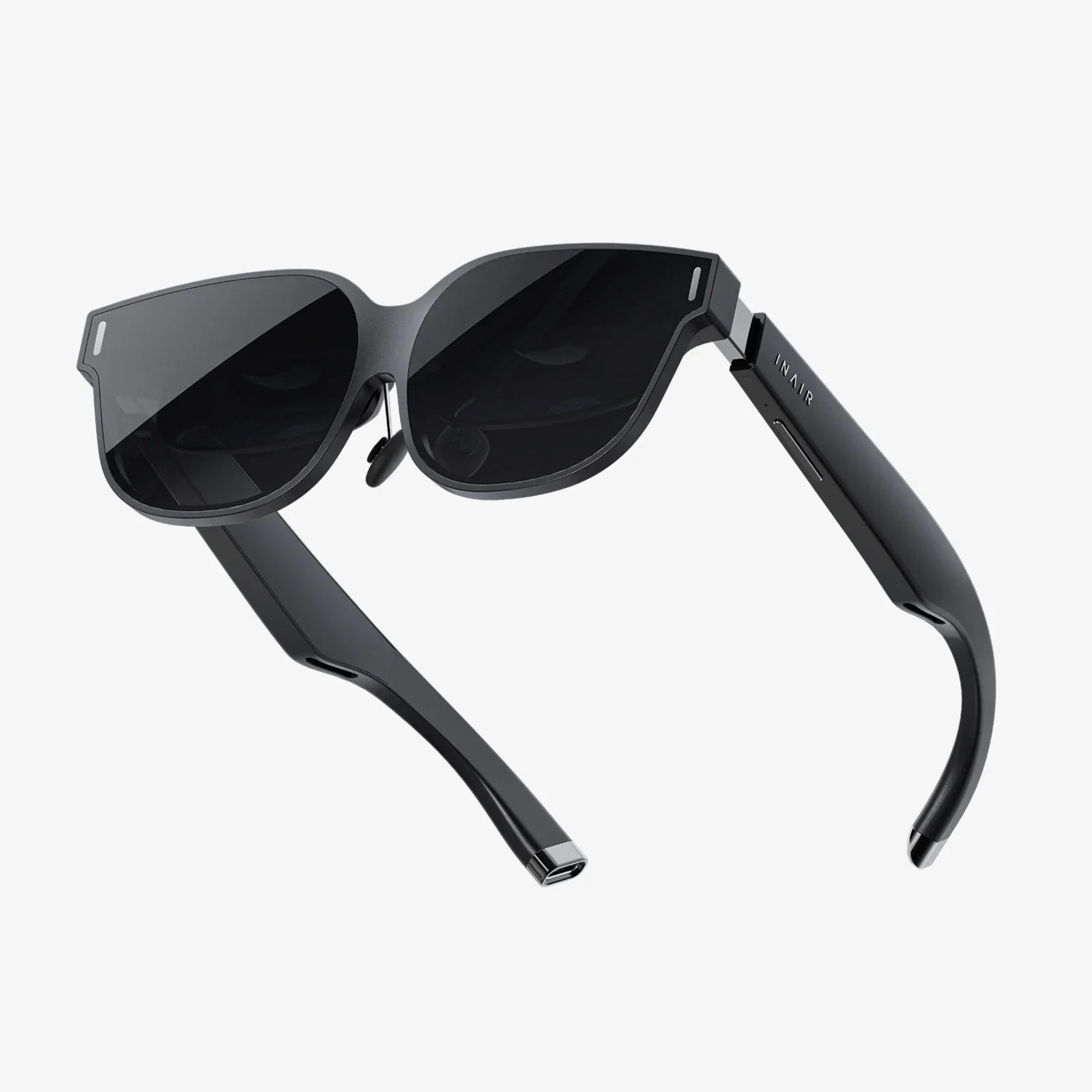
- by wangfred
Future Augmented Reality Technology Will Fundamentally Reshape Our Daily Lives
- by wangfred
Imagine a world where information doesn’t live on a screen in your hand but is woven directly into the fabric of your reality. The digital and the physical, once distinct realms, merge into a single, enhanced experience. This is the breathtaking promise of future augmented reality technology, a frontier not of science fiction, but of imminent technological evolution that stands to redefine every facet of our existence, from how we work and learn to how we connect and perceive the world itself.
The journey of augmented reality is already underway, with rudimentary applications gracing smartphone screens. However, the future of AR technology moves far beyond holding up a device to see a virtual character dance on your desk. The next generation hinges on a constellation of advanced technologies converging to create a seamless, intuitive, and powerful experience.
At its core, future AR requires a profound understanding of the user's environment in real-time. This is achieved through a sophisticated combination of:
The true measure of this technology's success will be its invisibility—its seamless integration into the rhythm of our daily routines. Future augmented reality technology won't be an app you open; it will be a persistent, contextual layer of intelligence enhancing your perception.
The workplace will be one of the first domains to be transformed. Imagine a surgeon performing a complex procedure with vital signs, MRI data, and procedural guides visually overlaid directly onto the patient's body. A field engineer repairing a malfunctioning turbine could see internal components, historical service data, and animated repair instructions projected onto the machinery itself, guided remotely by an expert thousands of miles away who sees everything they see. Architects and interior designers will walk through full-scale, interactive holograms of their creations long before a single brick is laid, making changes in real-time with a wave of their hand.
Learning will shift from passive absorption to active, immersive exploration. A history student could walk through a photorealistic recreation of ancient Rome, witnessing historical events unfold around them. A chemistry student could manipulate complex molecular structures that float above their desk, observing reactions without risk. Medical students will practice intricate surgeries on virtual patients, gaining invaluable muscle memory and experience in a zero-risk environment. This kinesthetic, visual form of learning caters to diverse learning styles and democratizes access to experiences previously confined to textbooks or wealthy institutions.
Social media will evolve from flat feeds into shared, spatial experiences. Instead of a video call on a screen, you could have a virtual coffee with a friend who appears to be sitting across your table, their digital avatar rendered with photorealistic detail. Concerts and sporting events could be experienced from the best seat in the house, or even from the perspective of a player on the field, all from your living room. Gaming will explode beyond the television, transforming your entire home into a level for puzzle-solving or your local park into a battlefield for epic, collaborative adventures.
Navigation arrows will be painted onto the street in front of you, guiding you seamlessly through a complex airport or a foreign city. Looking at a restaurant could reveal its reviews, menu, and current wait time. Historical landmarks could come alive, showing what they looked like centuries ago. This technology has the potential to make our cities more accessible and informative, blending the historical with the contemporary in a constantly updating informational landscape.
This powerful future is not without its profound challenges. The path to widespread adoption is littered with technological, social, and ethical hurdles that must be addressed with foresight and responsibility.
The ultimate evolution of this technology is the development of the "AR Cloud"—a persistent, universally accessible digital copy of the real world. Think of it as a shared, collaborative layer of information and experience anchored to every person, place, and thing on Earth. This cloud would allow digital content to persist in a location forever. A virtual note left on a friend's refrigerator; a complex engineering schematic permanently anchored to a factory floor; an art installation that exists only in a specific city square—all accessible to anyone with an AR device. This creates a new kind of public utility, a digital commons that could accelerate collaboration, preserve culture, and enhance our collective intelligence.
The trajectory is clear: we are moving from a world of isolated devices to one of ambient computing, where technology fades into the background and human intuition takes the foreground. Future augmented reality technology represents the culmination of this shift, offering a bridge between human cognition and machine intelligence. It promises to augment not just our reality, but our very humanity—expanding our memory, enhancing our perception, and deepening our understanding of the world and each other. The challenge ahead is not just to build it, but to build it wisely, ensuring that this powerful tool is shaped by a commitment to equity, ethics, and the enduring value of authentic human experience.
We stand on the precipice of the next great platform shift, one that will dissolve the barrier between the information we consume and the world we inhabit. The devices we stare into today will soon vanish, replaced by an invisible interface that empowers us to see further, understand deeper, and interact with our reality in ways we are only beginning to imagine. The future is not something we will watch on a screen; it is something we will live inside.
Share:
Hologram vs Augmented Reality: The Ultimate Showdown for Our Digital Future
AI Glasses Battery Life: The Ultimate Bottleneck and How to Break Free