


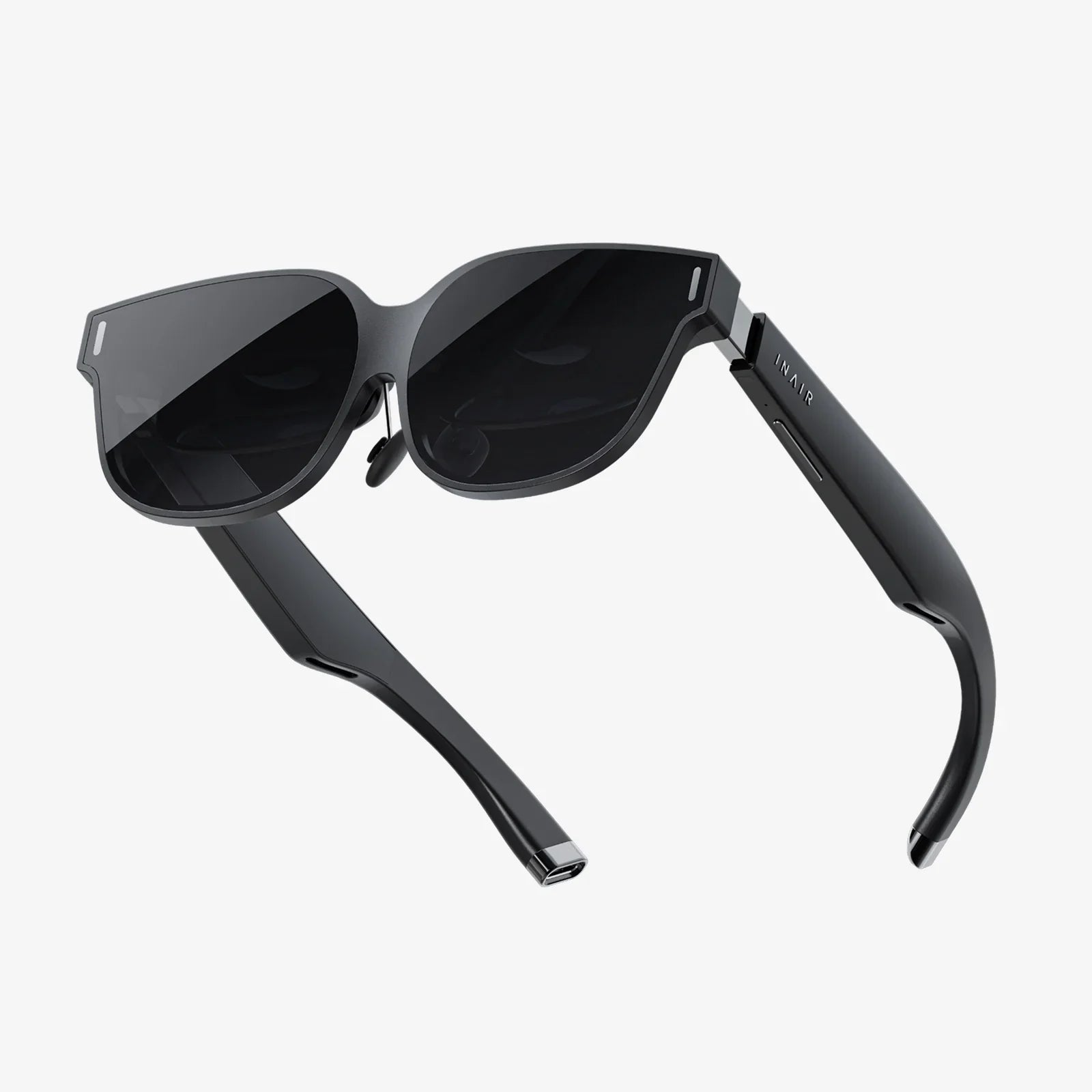
You’ve seen the headlines, heard the buzzwords, and maybe even strapped on a headset yourself. The world of immersive technology is exploding, promising to reshape everything from how we work to how we play. But in the rush to embrace the future, the crucial distinctions between different realities have become a blur. Understanding the fundamental difference between XR and VR isn't just tech jargon—it's the key to unlocking which of these powerful tools is right for your needs, your business, and your vision for tomorrow. This isn't just about gadgets; it's about understanding a fundamental shift in how humans interact with information and with each other.
Defining the Realms: From Acronyms to Experience
Before we can contrast them, we must first define our terms. The language of immersive tech is often used interchangeably, but each term describes a unique segment of the spectrum.
What is Virtual Reality (VR)?
Virtual Reality is the most well-known and established of the immersive technologies. At its core, VR is about replacement. A VR system completely blocks out the physical world, replacing your visual and auditory reality with a fully digital, computer-generated environment. When you don a VR headset, you are transported. You might find yourself standing on the surface of Mars, navigating a fantastical dungeon, or sitting in a virtual meeting room with avatars of your colleagues.
The experience is typically delivered through a head-mounted display (HMD) that contains a screen for each eye, creating a stereoscopic 3D effect. This is combined with head-tracking technology, so when you turn your head, the virtual world responds in kind, creating a powerful and convincing sense of presence—the feeling of actually "being there." Input is handled through handheld controllers, gloves, or even full-body tracking systems that translate your real-world movements into the digital realm. The key takeaway is that VR is a closed ecosystem; it is entirely synthetic and does not incorporate your actual surroundings.
What is Extended Reality (XR)?
If VR is a specific destination, then Extended Reality (XR) is the entire map. XR is not a technology itself but an umbrella term that encompasses all immersive technologies, including those that blend the real and virtual worlds. It is the supercategory that includes:
- Virtual Reality (VR): Immersive experiences in a fully digital environment.
- Augmented Reality (AR): Digital overlays projected onto the real world (e.g., seeing navigation arrows on the street through your smartphone camera).
- Mixed Reality (MR): A more advanced form of AR where digital objects can interact with and be occluded by the physical world in real-time.
Think of XR as the collective noun for all realities that are altered by computer-generated input. It describes the entire continuum from the completely real environment to a fully virtual one. Therefore, the statement "XR vs. VR" is a slight misnomer; it's more accurately described as "XR (the whole) includes VR (a part)." The confusion often arises because "XR" is sometimes used colloquially to refer specifically to the blended spaces of AR and MR, but its technical definition is all-inclusive.
The Core Dichotomy: Replacement vs. Extension
The most fundamental difference between VR and the broader XR category lies in their relationship to the user's physical environment.
VR's Paradigm: Isolation and Total Immersion
Virtual Reality operates on a principle of segregation. It severs your connection to your immediate physical space to create a controlled, distraction-free digital experience. This is its greatest strength. For tasks requiring deep focus, complete training simulation, or total escapism, this isolation is invaluable. A surgeon practicing a complex procedure in VR cannot be distracted by the operating room; a soldier training for a high-stakes mission must be fully immersed in the simulation. VR creates a reality that is separate and distinct from our own.
XR's Paradigm (AR/MR): Integration and Contextual Enhancement
In contrast, Augmented and Mixed Reality—as subsets of XR—are all about integration. Instead of replacing your world, they aim to supplement and enhance it. Digital information is anchored to and interacts with the physical world. This could be a holographic furniture model you can place in your actual living room to check its size, a repair manual with animated instructions overlaid directly on a malfunctioning engine, or a historical figure seemingly standing on your street corner narrating events from the past. The real world remains the foundation, and the digital layer adds context, information, and magic.
Technological Underpinnings: How the Magic is Made
The different goals of VR and other XR technologies like AR/MR demand different hardware and software solutions.
VR Hardware: The Gateway to Another World
VR systems are defined by their high-performance, self-contained nature. Since they must generate two high-resolution, high-refresh-rate images (one for each eye) to maintain immersion and avoid motion sickness, they require significant processing power. This can be provided by a powerful external computer tethered to the headset or by an integrated system within a standalone headset. They prioritize:
- High-Resolution Displays: To make the virtual world sharp and believable.
- Precise Inside-Out Tracking: Cameras on the headset track its position in space relative to the room.
- Low Latency: The time between moving your head and the image updating must be minuscule to prevent disorientation.
- Advanced Controllers: Often with haptic feedback to simulate the sense of touch.
AR/MR Hardware: Blending Two Worlds Seamlessly
AR and MR hardware faces a more complex challenge: perceiving the real world and then convincingly blending digital content with it. This requires a different set of sensors:
- Cameras and Sensors: To scan, map, and understand the geometry, lighting, and surfaces of the physical environment.
- Transparent Lenses or displays: Unlike VR's opaque screens, many AR devices use waveguides or other systems to project light onto transparent lenses, allowing you to see the real world clearly.
- Powerful Onboard Compute: To process the environment data in real-time and render digital objects that respect the physics of the real world (e.g., having a virtual ball bounce correctly off a real table).
This is why many early AR experiences were smartphone-based, using the phone's camera and screen as a viewport. More advanced MR headsets resemble sleek sunglasses but pack a tremendous amount of environmental sensing technology into a small form factor.
A World of Applications: Where Each Technology Excels
The philosophical and technological differences between VR and other XR forms naturally lead them to excel in different applications.
The Virtual Reality Domain
VR's strength is in creating experiences that are impossible, too dangerous, or too expensive to undertake in the real world.
- Gaming and Entertainment: This is VR's most famous application. It offers unparalleled immersion, placing you directly inside the game world.
- Training and Simulation: From training pilots and surgeons to preparing emergency responders for crisis scenarios, VR provides a safe, repeatable, and cost-effective training ground.
- Therapy and Rehabilitation: VR is used for exposure therapy to treat phobias, for physical rehab by making exercises more engaging, and for managing pain by distracting patients.
- Virtual Collaboration and Remote Work: Teams distributed across the globe can meet in a shared virtual space, interacting with 3D models and data as if they were in the same room.
The Extended Reality (AR/MR) Domain
AR and MR thrive in applications where context is king—where digital information is most powerful when connected to a specific object, location, or task in the real world.
- Industrial Maintenance and Repair: A technician can see step-by-step instructions overlaid on the machinery they are fixing, with arrows pointing to specific components.
- Design and Prototyping: Architects and engineers can visualize full-scale 3D models of their designs on the actual build site.
- Retail and E-Commerce: "Try before you buy" experiences for furniture, clothing, and makeup using your own space or body as the canvas.
- Navigation: Arrow directions can be superimposed onto the road ahead, making it intuitive to find your way.
- Education: Bringing textbooks to life, allowing students to interact with 3D models of ancient artifacts or biological cells.
The Blurring Line: The Convergence of Realities
While the definitions are distinct, the line between VR and MR is beginning to blur thanks to technological advancements. The latest high-end VR headsets are incorporating high-resolution, passthrough cameras. This feature allows them to switch from a fully virtual experience to a mixed reality one. With video passthrough, you can see a black-and-white or color video feed of your real surroundings, onto which the headset can then anchor digital objects.
This effectively turns a VR device into an MR device, creating a hybrid hardware platform capable of spanning the entire XR spectrum. This convergence suggests that the future may not be about choosing one type of headset, but rather owning a device that can adapt to the needed reality—be it fully virtual, fully augmented, or a blend of both—depending on the task at hand.
Choosing Your Reality: A Question of Purpose
So, how do you decide which technology is relevant for you? It boils down to a simple question: Do you need to create a new world or enhance the existing one?
- Choose VR if: Your goal is complete immersion, total focus, deep simulation, or escapism. You want to create a contained experience that exists separately from the user's physical location.
- Choose AR/MR if: Your goal is to provide information, context, or visualization tied to the user's immediate environment. You want to augment their reality, not replace it, making them more efficient, informed, or engaged with the world around them.
For enterprises, this means VR is often the tool for corporate training and virtual design review, while AR is the tool for on-the-job support and remote expert assistance.
The Future is Extended
The trajectory of immersive technology is not towards one reality winning out, but towards a flexible and continuous spectrum of experiences, all under the XR umbrella. We are moving towards always-available, spatially-aware computing where digital information is seamlessly integrated into our perception of the world. The ultimate goal is a pair of elegant, lightweight glasses that can effortlessly shift from providing opaque VR immersion for entertainment to transparent AR overlays for daily tasks. Understanding the difference between XR and VR is the first step in navigating this exciting and transformative future, allowing you to harness the right technology for the right moment, and ultimately, to shape the reality you want to create.
Imagine a world where your workspace is as limitless as your imagination, where learning is a hands-on journey through time and space, and where the line between digital convenience and real-world experience simply vanishes. This isn't a distant sci-fi fantasy—it's the inevitable destination of the path we're on today. The revolution won't be televised; it will be overlayed, immersed, and experienced. The only question left is: which reality will you build first?
Share:
How Much Is It For A VR Headset - The Ultimate 2024 Price & Value Guide
High End VR Headset: The Unseen Revolution Reshaping Reality