


You've heard the terms whispered in tech circles, seen them in flashy headlines, and perhaps even experienced them through a smartphone game or a friend's new headset. Augmented Reality and Virtual Reality are no longer science fiction; they are the bleeding edge of how we are beginning to interact with the digital world. But for many, the line between them is blurry, a confusing mix of headsets and holograms. What truly separates these two transformative technologies? Is one destined to overshadow the other, or will they evolve to serve entirely different purposes in our lives? Understanding this distinction is not just tech trivia—it's the key to unlocking the future of computing, entertainment, and human connection. Prepare to have the virtual veil lifted as we dive deep into the realities of AR and VR.
The Core Philosophical Divide: Enhancement vs. Replacement
At its heart, the difference between Augmented Reality (AR) and Virtual Reality (VR) is a philosophical one, dictating their entire design and purpose. It boils down to a simple but powerful question: does the technology aim to enhance your existing reality or completely replace it?
Augmented Reality operates on the principle of enhancement. It layers digital information—images, text, data, 3D models—onto the real world you see around you. Think of it as a high-tech, interactive heads-up display for life. Your physical environment remains the stage, and AR adds the digital props and characters. The goal is to supplement and enrich your reality with contextually relevant data, making your interaction with the real world more informed, efficient, or entertaining. You never lose touch with your surroundings; you simply see more than what was there before.
Virtual Reality, in stark contrast, is built on the principle of replacement. It seeks to completely immerse you in a simulated, digital environment, effectively shutting out the physical world. By donning a headset, you are transported. The real world is replaced by a virtual one, whether it's a realistic simulation of a far-off location or a fantastical landscape that could never exist. The goal is to create a profound sense of presence—the convincing feeling of "being there" inside the digital realm. It's an exercise in escapism, training, or exploration within a universe governed entirely by code.
Under the Hood: A Tale of Two Technologies
This philosophical chasm is bridged by distinctly different technological approaches. While both are feats of modern engineering, they solve unique challenges.
The Architecture of Augmentation
AR technology is primarily concerned with perception and integration. Its core components include:
- Sensors and Cameras: These are the eyes of an AR system. They continuously scan the user's environment to understand the physical space—identifying surfaces, measuring depths, and tracking objects. This environmental mapping is crucial for placing digital content in a way that feels stable and connected to the real world.
- Processing: Powerful processors analyze the sensor data in real-time, solving complex spatial calculations to anchor digital objects. This ensures a virtual cat sits convincingly on your real coffee table and doesn't drift through it.
-
Display Technology: This is where the magic becomes visible. AR employs various methods:
- Smartphone and Tablet Screens: The most accessible form, using the device's camera to capture the world and its screen to overlay graphics.
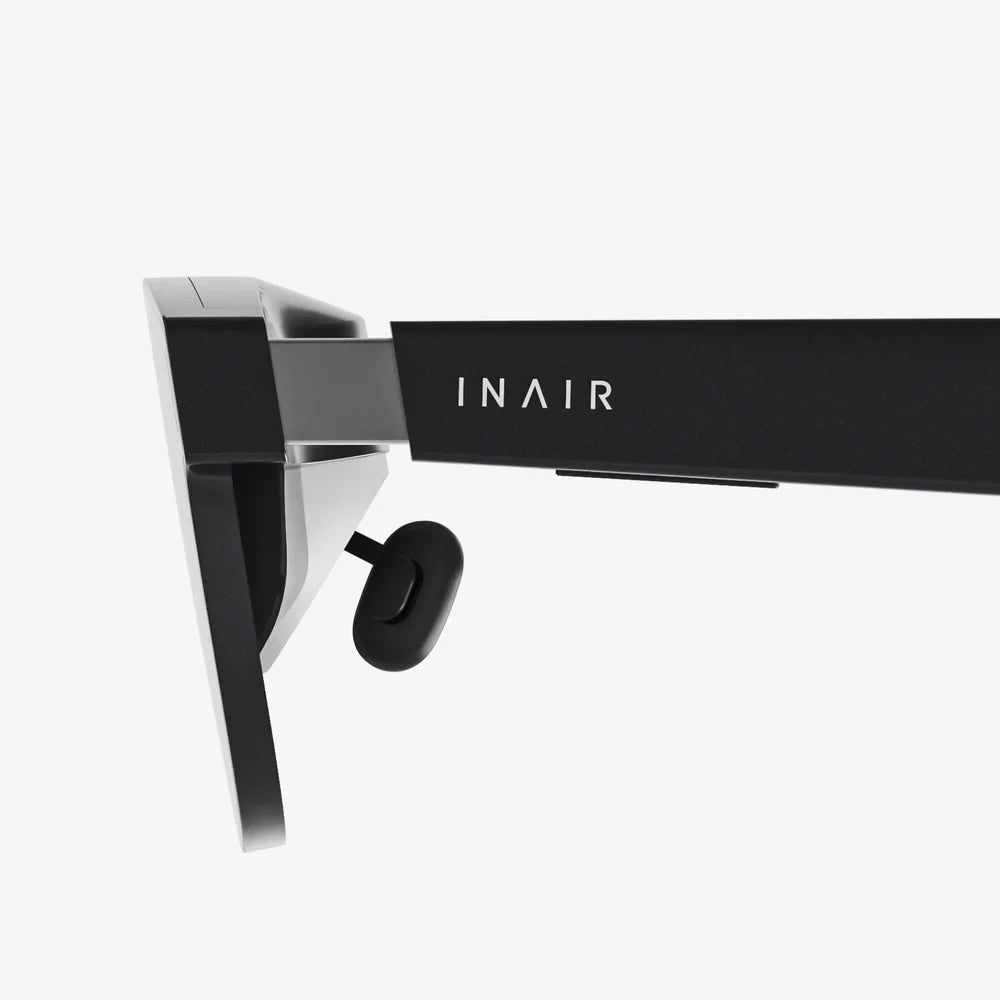
- Smart Glasses and Headsets: These use transparent lenses or cameras paired with miniature projectors to beam images directly into the user's field of view, allowing them to see digital content while maintaining a clear view of their surroundings.
The Machinery of Immersion
VR technology is architected for immersion and isolation. Its key components are:
- Head-Mounted Displays (HMDs): The defining piece of VR hardware. These are opaque headsets containing two small screens (one for each eye) that display the virtual world. They completely block out ambient light and the user's physical environment.
- Tracking Systems: To sell the illusion of being in another world, the system must track the user's head movements (rotation and translation) with extremely high precision and low latency. This is often done with internal sensors like gyroscopes and accelerometers, and sometimes supported by external base stations or cameras.
- Controllers and Haptics: VR isn't just visual; it's about interaction. Motion-tracked controllers allow users to reach into the virtual world and manipulate it. Advanced systems incorporate haptic feedback, providing tactile sensations that simulate touch, from the recoil of a weapon to the texture of a virtual object.
- Audio: Immersive 3D spatial audio is critical. Sounds come from specific directions and distances in the virtual space, further convincing the brain that the simulated environment is real.
The Experience Spectrum: From See-Through to Shut-Out
The user experience of AR and VR is where the theoretical differences become practically palpable.
Navigating the Augmented World
An AR experience feels like a superpower. You can point your phone at a complex piece of machinery and see animated repair instructions overlaid onto the components. You can wear glasses that display navigation arrows directly onto the street in front of you, guiding you to your destination without ever looking down at a map. You can try virtual furniture in your actual living room to see how it fits and looks before you buy. The experience is characterized by its utility and contextuality. It's grounded, practical, and seamlessly blends the digital and physical. Social interaction remains largely unchanged, as you can still see and converse with the people around you.
Diving into the Virtual Realm
A VR experience is a trip. From the moment you put on the headset, you are elsewhere. You might find yourself standing on the surface of Mars, conducting a delicate surgical procedure, or painting in 3D space with virtual light. The experience is all-consuming. It demands your full visual and auditory attention. This total immersion is VR's greatest strength, enabling unparalleled levels of focus, simulation, and escapism. However, it also creates a physical barrier between the user and their real-world environment, often requiring a cleared-out "play area" for safety and limiting natural social interaction with those not in the virtual space with you.
Applications: Shaping Industries and Everyday Life
The divergent paths of AR and VR naturally lead them to revolutionize different sectors.
Augmented Reality in Action
- Retail and E-commerce: Virtual try-ons for clothes, glasses, and makeup. Placing life-size models of appliances and furniture in your home.
- Industrial and Manufacturing: Providing hands-free, overlay instructions for assembly, maintenance, and repair, reducing errors and training time.
- Healthcare: Superimposing medical data like vein maps onto a patient's skin for easier injections, or providing surgeons with real-time, in-view diagnostic information during procedures.
- Navigation: AR wayfinding in complex environments like airports, university campuses, or subway stations, with arrows and directions painted onto the real world.
- Education: Bringing textbooks to life with interactive 3D models of historical artifacts, biological cells, or geological formations.
Virtual Reality in Action
- Gaming and Entertainment: The most well-known application, offering deeply immersive gaming experiences and virtual concerts where users feel like they are on stage with the performer.
- Training and Simulation: Used for high-risk, high-cost training for pilots, surgeons, soldiers, and first responders in a safe, controlled, and repeatable virtual environment.
- Real Estate and Architecture: Allowing clients to take full-scale, immersive walkthroughs of buildings that are still in the blueprint stage or located in another country.
- Therapy and Rehabilitation: Treating phobias (like fear of heights or flying) through controlled exposure therapy. Used in physical rehab to make exercises more engaging.
- Social Connection: Platforms that create virtual meeting spaces where avatars of users can interact, collaborate, and socialize as if they were physically together.
The Blurred Line and The Converging Future
While the distinctions are clear today, the future points toward a spectrum of experiences rather than two isolated silos. We are already seeing the emergence of Mixed Reality (MR), which sits between AR and VR. MR devices, often using advanced passthrough camera technology, can blend real and virtual worlds to create environments where physical and digital objects not only coexist but can interact in real-time. Imagine playing a virtual video game where a monster bursts through your actual living room wall—that's the promise of MR.
Furthermore, the hardware is evolving. Some newer VR headsets are incorporating high-resolution color video passthrough, allowing them to function more like AR devices when needed. This technological convergence suggests that the ultimate device of the future might be a single headset capable of seamlessly shifting across the reality-virtuality continuum, from full immersion to subtle augmentation, based on the user's needs at any given moment.
Ultimately, the question is not which technology will win, but how they will co-evolve to serve humanity. AR will likely become an integral, ubiquitous layer of our daily lives, an invisible interface that enhances our perception and efficiency. VR will remain the gateway to experiences that are impossible, impractical, or too dangerous in the real world, serving as the ultimate tool for training, simulation, and deep entertainment. The journey into these new digital frontiers has just begun, and understanding their unique languages is the first step toward shaping a future where technology expands our reality instead of limiting it.
Imagine a world where your surroundings are alive with hidden data, and your next great adventure is just a headset away. The divide between what's real and what's digital is collapsing, creating a new hybrid existence that will redefine how we work, play, and connect. The era of spatial computing is here, and it's not a single technology but a spectrum of experiences waiting to be explored. Your reality is about to get an upgrade—whether you choose to enhance it or escape it entirely is the next great decision awaiting every user.
Share:
2D to 3D VR: The Complete Guide to Transforming Flat Content into Immersive Worlds
Portable Dual Computer Monitor: The Ultimate Guide to Doubling Your Productivity On the Go