


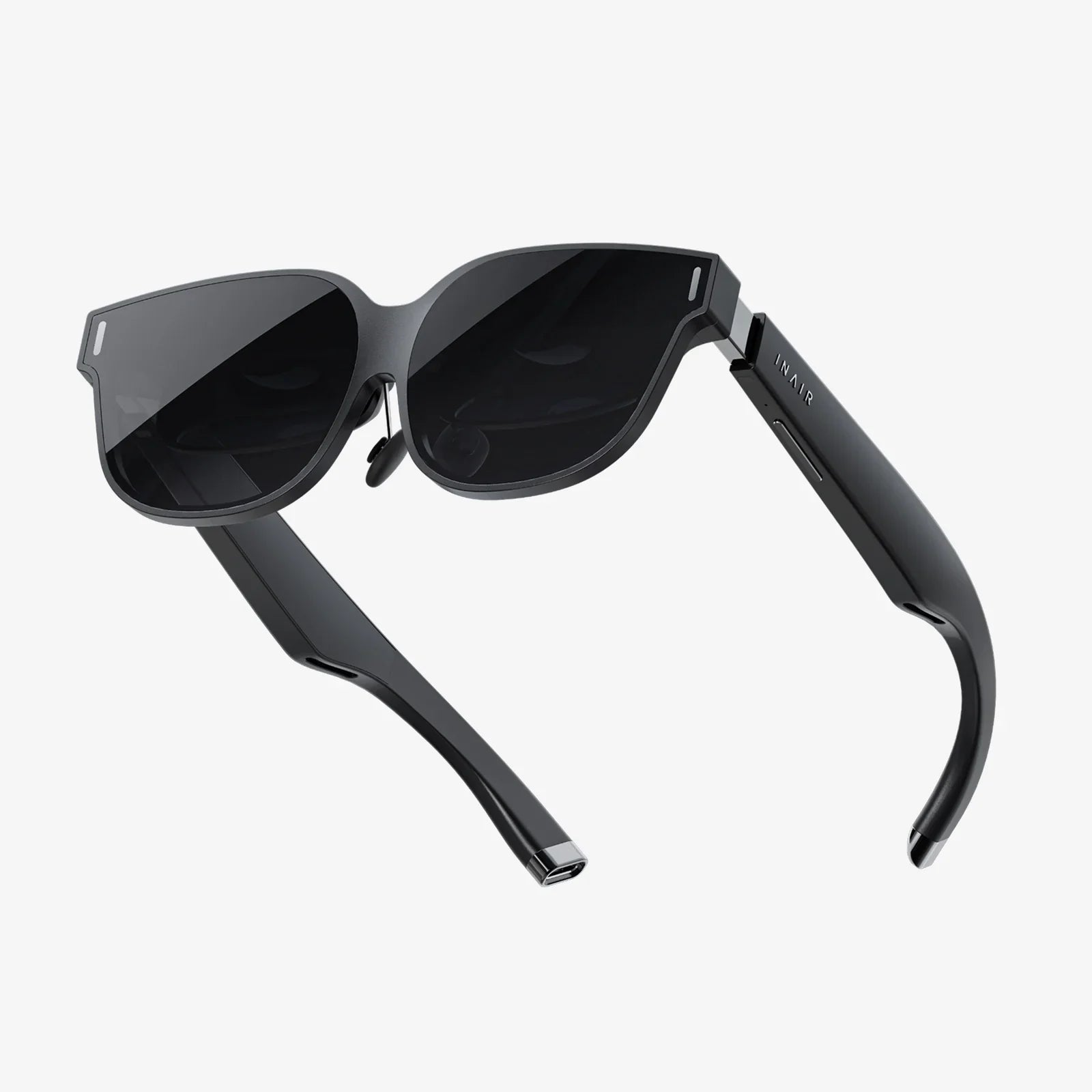
Imagine a world where your vision is no longer limited by biology, where information flows seamlessly into your field of view, and the line between the digital and the physical effortlessly blurs. This is not a scene from a science fiction novel; it is the emerging reality being crafted by digital enhance glasses, a technology poised to fundamentally alter the human experience. These sophisticated wearable devices are more than just a screen in front of your eyes; they are dynamic portals, cognitive partners, and powerful tools that promise to augment our reality, enhance our capabilities, and redefine our connection to the digital universe.
The Core Technology: More Than Meets the Eye
At their essence, digital enhance glasses are a complex symphony of hardware and software working in perfect harmony to create a cohesive augmented experience. The magic lies in their ability to perceive the world, process it, and then project a digital layer on top of it, all in real-time.
The Hardware Trinity: Sensors, Processors, and Displays
The foundational elements of any pair of digital enhance glasses can be broken down into three critical components.
First, a sophisticated array of sensors acts as the device's eyes and ears. High-resolution cameras continuously capture the user's environment. Advanced depth sensors, often using LiDAR or structured light, map the world in three dimensions, understanding the geometry and distance of objects. Inertial Measurement Units (IMUs), including accelerometers and gyroscopes, track the precise movement and orientation of the user's head. Microphones capture audio, while ambient light sensors adjust display brightness. This constant stream of data creates a rich digital understanding of the user's immediate surroundings.
Second, a powerful, miniaturized processing unit acts as the brain. This onboard computer is tasked with a monumental job: it fuses the data from all the sensors, runs complex computer vision and machine learning algorithms to identify objects and surfaces, and renders the digital content that must be overlaid. This requires immense processing power packed into an incredibly small and energy-efficient form factor, a testament to modern engineering. This processor is what transforms raw sensor data into actionable, contextual information.
Third, the optical display system is the canvas upon which the digital world is painted. This is arguably the most challenging technical hurdle. Early systems used simple prism-based projection, but modern implementations employ advanced waveguides and holographic optical elements. These tiny, transparent pieces of glass or plastic use principles of diffraction to pipe light from micro-LED projectors at the temple directly into the user's retina. The result is a bright, sharp digital image that appears to float in the real world, whether it's text, a 3D model, or a video call participant sitting on your sofa.
The Invisible Software: AI and Contextual Awareness
While the hardware is impressive, the true intelligence of digital enhance glasses lies in their software. Artificial intelligence, particularly machine learning models, is the secret sauce. It is the AI that identifies a dog in your living room, translates the menu in a foreign restaurant the instant you look at it, or highlights the specific wrench you need from a cluttered toolbox.
This software creates a contextual awareness that is the key to a seamless experience. The glasses don't just see shapes and colors; they understand context. By analyzing the sensor data, the AI can determine if you are cooking in the kitchen, walking through an airport, or sitting in a business meeting. This context dictates what information is presented and how it is presented, ensuring the digital enhancements are helpful and not distracting. This move from a generic screen to a contextually intelligent interface is what separates digital enhance glasses from every piece of technology that has come before.
A Universe of Applications: Transforming Industries and Daily Life
The potential applications for this technology are as vast as human endeavor itself. We are already seeing early glimpses of how they will revolutionize specific fields and integrate into our daily routines.
Professional and Industrial Metamorphosis
In the professional realm, digital enhance glasses are not an incremental improvement but a paradigm shift. For the field technician repairing a complex piece of machinery, the glasses can overlay step-by-step holographic instructions, highlight the specific component to be replaced, and allow a remote expert to see their view and annotate the real world with digital arrows and notes. This drastically reduces errors, training time, and the need for travel.
In healthcare, a surgeon could see vital signs and ultrasound data overlaid directly on the patient during a procedure, maintaining focus without looking away. Medical students could practice on detailed, interactive holograms of human anatomy. For first responders, the glasses could display building layouts and the location of individuals in need during an emergency.
In architecture and manufacturing, designers and engineers can project full-scale 3D models of their creations into physical spaces, allowing them to walk around a building before a single brick is laid or visualize how a new engine part will fit into an assembly line. This seamless blend of digital prototyping and physical reality saves immense time and resources.
The Social and Personal Dimension
Beyond the workplace, digital enhance glasses promise to reshape our social interactions and personal lives. Navigation will evolve from looking down at a phone to seeing glowing arrows and directions painted onto the sidewalk ahead. You could follow a path through a museum where exhibits come to life with additional information and animations.
Communication could become profoundly more immersive. Instead of video calls on a flat screen, you might see a photorealistic hologram of a loved one sitting across from you at the table, creating a powerful sense of presence and connection despite physical distance.
For those with visual or auditory impairments, the assistive potential is staggering. The glasses could amplify contrast, highlight obstacles, recognize faces and display their names, or provide real-time captioning of conversations for the hard of hearing, effectively acting as a always-available assistive companion.
Navigating the New Frontier: Challenges and Ethical Considerations
With such transformative power comes a host of significant challenges that society must thoughtfully address. The path to widespread adoption is fraught with technical, social, and ethical hurdles.
The Privacy Paradox
The most immediate and pressing concern is privacy. A device that records audio and video continuously raises alarming questions. Who has access to this data? How is it stored and used? The potential for constant, undetectable surveillance is a legitimate fear. Robust, transparent data governance frameworks, perhaps even new laws, will be essential. Features like a physical shutter for the camera or a clear, external indicator light when recording are not just features but necessities for building public trust.
The Social Contract and the Digital Divide
There is also a serious risk of a new digital divide. If these devices become essential tools for work, education, and social integration, what happens to those who cannot afford them? Will we see a new class of "augmented" individuals with significant advantages over those who are not? Furthermore, the social etiquette of wearing such devices is uncharted territory. Is it rude to wear them during a conversation? Will we become distracted, living more in the digital overlay than in the shared physical reality? These are profound questions about what it means to be present and human in an augmented age.
Health, Safety, and Psychological Impact
Long-term health effects, both physical and psychological, require careful study. While current display technology is designed for eye safety, the impact of wearing a emitting device on the head for extended periods is not fully known. More subtly, what is the cognitive load of constant information stimulation? Could it lead to increased anxiety or an inability to focus on the analog world? Ensuring these technologies are designed to enhance well-being, not detract from it, must be a primary goal for developers and regulators alike.
The Augmented Horizon: What the Future Holds
The current generation of digital enhance glasses is merely the first step on a much longer journey. The future trajectory points toward devices that are increasingly lighter, more powerful, and more seamlessly integrated into our lives.
We are moving toward a form factor that is indistinguishable from standard eyewear, eliminating the social stigma and physical discomfort. Battery technology will improve to allow for all-day use, and connectivity will evolve to a seamless blend of onboard processing and powerful cloud computing, enabling even more complex AI interactions.
The ultimate goal is contextual and anticipatory computing. The glasses of the future will not just react to your commands but will anticipate your needs based on your location, schedule, and habits. They will become a true extension of your mind, offering the right piece of information at the right time without you ever having to ask. They could remember names and details you forget, help you learn new skills through interactive guidance, and connect you to a global knowledge network in a way that feels intuitive and natural.
This evolution will gradually make the technology itself fade into the background. We won't think about "using" the glasses; we will simply experience an enhanced version of reality, much like we don't think about using our natural vision. The technology will become so woven into the fabric of our perception that it will feel like a part of us.
The true promise of digital enhance glasses is not to pull us away from the real world, but to deepen our engagement with it. They offer a bridge between human intuition and machine intelligence, between our analog senses and the digital universe we have created. They hold the potential to make us more knowledgeable, more capable, and more connected than ever before. The world is about to gain a new layer, and it will change everything we see, everything we do, and ultimately, how we define reality itself.
Share:
Windows Auto Adjustment: The Smart Technology Revolutionizing Your View
Perceptually Based Foveated Virtual Reality: The Future of Immersive Computing