


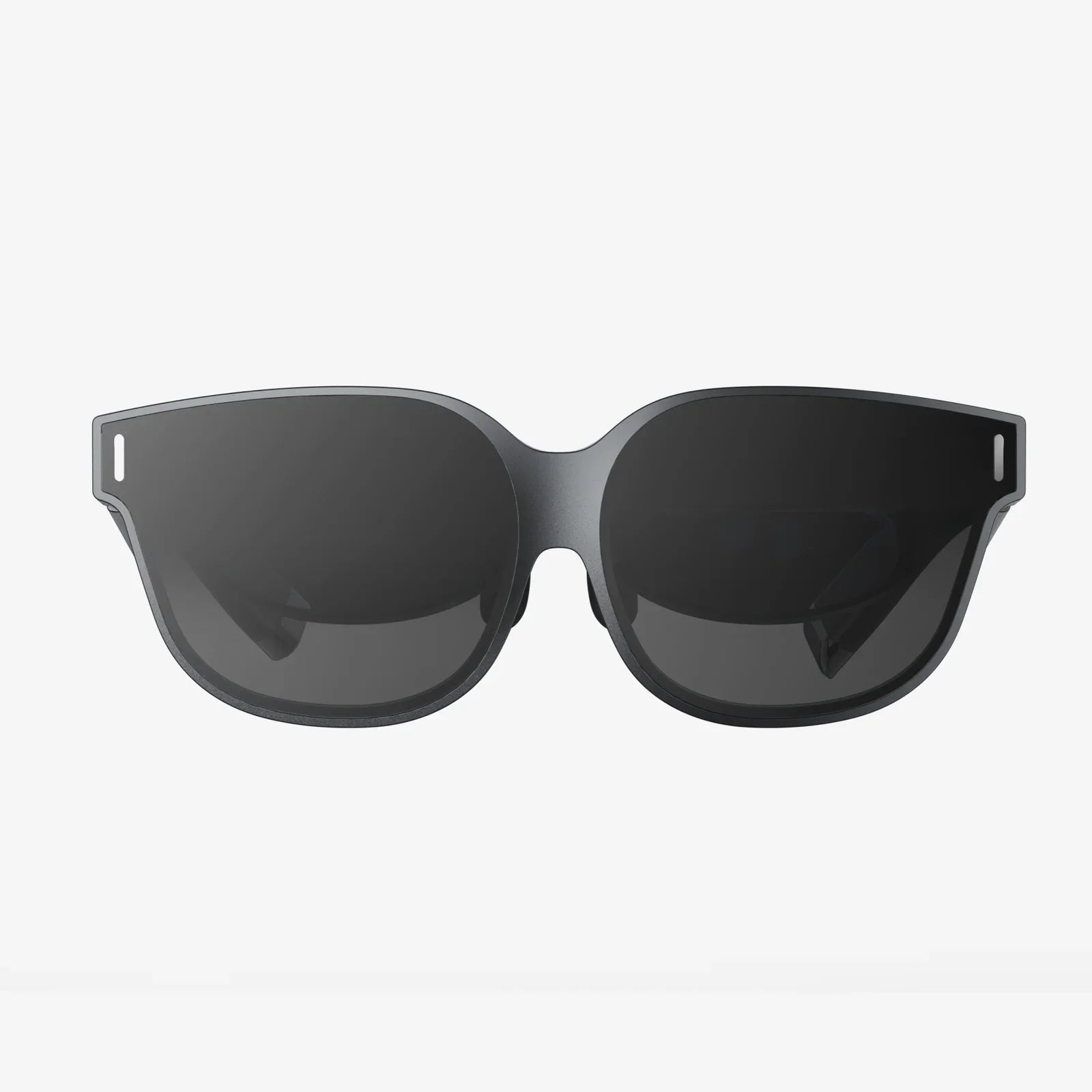
Imagine stepping into a virtual world so crisp, so vast, and so breathtakingly real that your brain struggles to distinguish it from physical existence. A world rendered not with brute computational force, but with elegant, biological intelligence. This is not a distant sci-fi fantasy; it is the imminent future being unlocked by one of the most transformative technologies in computing: perceptually based foveated virtual reality. This sophisticated approach doesn't just improve graphics; it redefines the very foundation of how we build and experience digital realms by working in harmony with the human visual system.
The Fundamental Challenge: The Rendering Bottleneck
For decades, the pursuit of realism in computer graphics has been a relentless arms race. The goal is simple: generate more pixels, at higher resolutions, and at faster frame rates. Standard displays demand a uniform level of detail across the entire screen. However, next-generation VR headsets feature stunningly high-resolution displays, often exceeding 4K per eye. Rendering a complex, interactive 3D scene at this resolution, twice over (once for each eye), and at a mandatory 90 frames per second to prevent motion sickness, requires an astronomical amount of computational power. This creates an immense bottleneck, limiting the complexity of virtual worlds, driving up the cost of hardware, and creating a significant barrier to widespread, high-fidelity adoption.
Traditional solutions have focused on incremental improvements: faster graphics processors, more efficient rendering algorithms, and better display technology. Yet, these advancements often follow a law of diminishing returns, requiring exponentially more power for linearly perceptible improvements. The industry needed a paradigm shift—a move away from rendering for a uniform display and towards rendering for the unique instrument that will perceive it: the human eye.
A Biological Blueprint: Understanding Human Foveated Vision
Perceptually based foveated VR is not an engineering invention; it is a biological discovery applied to technology. Our own visual system is, in fact, the original and most efficient foveated renderer. The human eye is not a perfect, uniform sensor. The retina contains two primary types of photoreceptor cells: rods and cones.
- The Fovea: At the very center of the retina lies the fovea, a tiny pit densely packed with cone cells responsible for sharp, central color vision. When you look directly at an object, you are aligning its image onto your fovea to see it in maximum detail.
- The Periphery: Moving outward from the fovea, the density of cones drops dramatically, and rod cells, which are more sensitive to light and motion but provide low-resolution, monochromatic vision, become dominant. Our peripheral vision is excellent at detecting movement and general shapes but is profoundly lacking in detail.
This means that at any given moment, we only see a very small fraction of our field of view in high resolution. Our brain constructs a stable, coherent, and seemingly detailed picture of the world by constantly making rapid, unconscious eye movements called saccades, snapping the fovea from one point of interest to another and filling in the peripheral gaps based on memory and expectation. We are largely unaware of the low resolution of our periphery because our brain masterfully edits the final cut.
The Core Principle: Rendering for the Eye, Not the Screen
Perceptually based foveated virtual reality (FB-FVR) directly mimics this biological process. Instead of wasting immense processing power to render the entire virtual scene in ultra-high detail, an FB-FVR system dynamically allocates rendering resources based on the user's gaze.
- Eye Tracking: High-speed, low-latency eye-tracking cameras inside the headset precisely and continuously monitor the position and movement of the user's pupils. This data is used to pinpoint the exact coordinates of the user's foveal gaze point within the virtual environment.
- Dynamic Resource Allocation: The rendering engine uses this gaze-point data to create a rendering "mask" over the display. The region directly aligned with the fovea is rendered at the display's full native resolution. Areas in the near periphery are rendered at a moderately reduced resolution. The far periphery is rendered at a significantly lower resolution.
- Seamless Integration: Sophisticated filtering and blending techniques are applied at the boundaries between these different resolution zones to create a smooth, imperceptible transition. The goal is to ensure the user cannot consciously detect the quality gradient.
The computational savings are staggering. By focusing up to 90% of the processing power on less than 10% of the visual field, an FB-FVR system can achieve performance gains of 300% to 700% or more. This means a complex scene that would normally run at 45 frames per second on a given system could suddenly run at a smooth 90 or even 180 frames per second with the implementation of effective foveated rendering.
Beyond Resolution: The "Perceptually Based" Advantage
While the basic concept of foveated rendering has existed for years, the critical differentiator lies in the term "perceptually based." Early implementations used simple geometric zones (a sharp circle in the center, surrounded by concentric rings of lower quality). However, these systems were often brittle. If the eye tracking was slightly off or the user became aware of the blurry periphery, the illusion shattered, creating a distracting and immersion-breaking experience.
Perceptually based models are far more advanced. They leverage deep research in visual psychophysics—the study of the psychological and neurological correlates of visual perception. These models don't just reduce resolution; they apply a nuanced set of optimizations informed by how we actually see:
- Contrast Sensitivity: The human visual system is less sensitive to contrast in the periphery. An FB-FVR system can reduce contrast in peripheral areas without the user noticing, saving further computational overhead.
- Color Perception: Our ability to distinguish fine color differences (chromatic acuity) also drops off sharply outside the fovea. Rendering can use simplified color processing in the periphery.
- Detail and Shading: Complex shading calculations, anti-aliasing, and texture filtering can be drastically reduced or even omitted in peripheral regions. The system might also delay rendering of non-essential peripheral details by a frame or two, as the brain is less sensitive to temporal delays in the periphery.
- Predictive Modeling: Advanced systems can even use gaze prediction models to anticipate saccadic movement, pre-emptively loading high-detail assets for the area the eyes are about to land on, ensuring a seamless transition.
This holistic, perception-driven approach is what makes modern FB-FVR truly robust and effective. It’s a closed-loop system: it measures perception to drive rendering, whose output is then perceived again, creating a feedback cycle that continuously optimizes for the user's specific visual experience.
Transformative Applications and Implications
The ramifications of perfecting perceptually based foveated VR extend far beyond just prettier video games. It is a foundational technology that will unlock new possibilities across numerous fields.
- Democratizing High-Fidelity VR: The most immediate impact is the democratization of high-quality VR. By drastically reducing the hardware required to run complex experiences, FB-FVR can enable compelling, photorealistic VR on more affordable, accessible hardware, including standalone headsets and less powerful computers. This breaks down a major barrier to entry for consumers and enterprises alike.
- Architectural and Industrial Design: Architects and engineers could walk clients through full-scale, photorealistic models of unbuilt structures, examining minute material details with foveal clarity while the surrounding environment remains performant. Complex CAD assemblies could be explored in immersive detail without requiring a data center to render.
- Medical Training and Visualization: Medical students could practice intricate surgical procedures on virtual patients, their gaze controlling the level of detail on anatomical structures, from the broad organ system down to the individual vessel. Radiologists could explore high-resolution MRI scans in 3D space, focusing on potential anomalies with microscopic precision.
- Social Presence and Telepresence: In virtual meetings and social spaces, FB-FVR could enable unprecedented levels of realism. The subtle, high-resolution details of a person's facial expressions and eye contact in the foveal region would be rendered perfectly, creating a powerful sense of social presence, while the surrounding virtual office is managed efficiently.
- The Next Frontier: Augmented Reality: The principles of FB-FVR are perhaps even more critical for optical see-through augmented reality. AR must seamlessly blend digital content with the real world. The computational demands are immense, and doing this with a power-efficient, lightweight form factor is the holy grail. FB-FVR is the key to creating AR glasses that can render convincing digital objects that lock into our visual reality without overwhelming a mobile processor.
Challenges and the Path Forward
Despite its promise, the widespread deployment of imperceptible FB-FVR still faces hurdles. The accuracy, speed, and latency of eye tracking are paramount. Any lag between eye movement and the corresponding rendering update will be immediately noticeable and cause discomfort. Furthermore, the technology must work flawlessly for every user, regardless of eye shape, color, or visual impairments.
Another challenge is standardization and developer adoption. Implementing FB-FVR effectively requires deep integration into a game engine's rendering pipeline. As the tools and APIs become more mature and accessible, more developers will be able to harness its power. The future likely lies in a hybrid approach, where fixed foveated rendering is used as a baseline on all hardware, with perceptually based, eye-tracked rendering as the premium, high-performance option.
The journey of perceptually based foveated virtual reality is a testament to a powerful idea: that the most elegant engineering solutions are often found not by fighting nature, but by learning from it. By respecting the intricacies of human perception, we are not just building more powerful machines; we are building more intelligent and empathetic ones. This technology promises to dissolve the final barriers between our minds and the digital worlds we wish to create, making the act of seeing in virtual reality indistinguishable from the act of believing.
The screen you're reading this on is about to become obsolete. The future of digital interaction won't be a uniform rectangle of light, but a dynamic, intelligent window into reality—one that sees what you see, focuses where you focus, and knows that the most profound details are always found at the center of your attention.
Share:
Digital Enhance Glasses Are Revolutionizing How We See the World
How Much Does AR Coating Cost for Glasses: A Complete Price Breakdown