


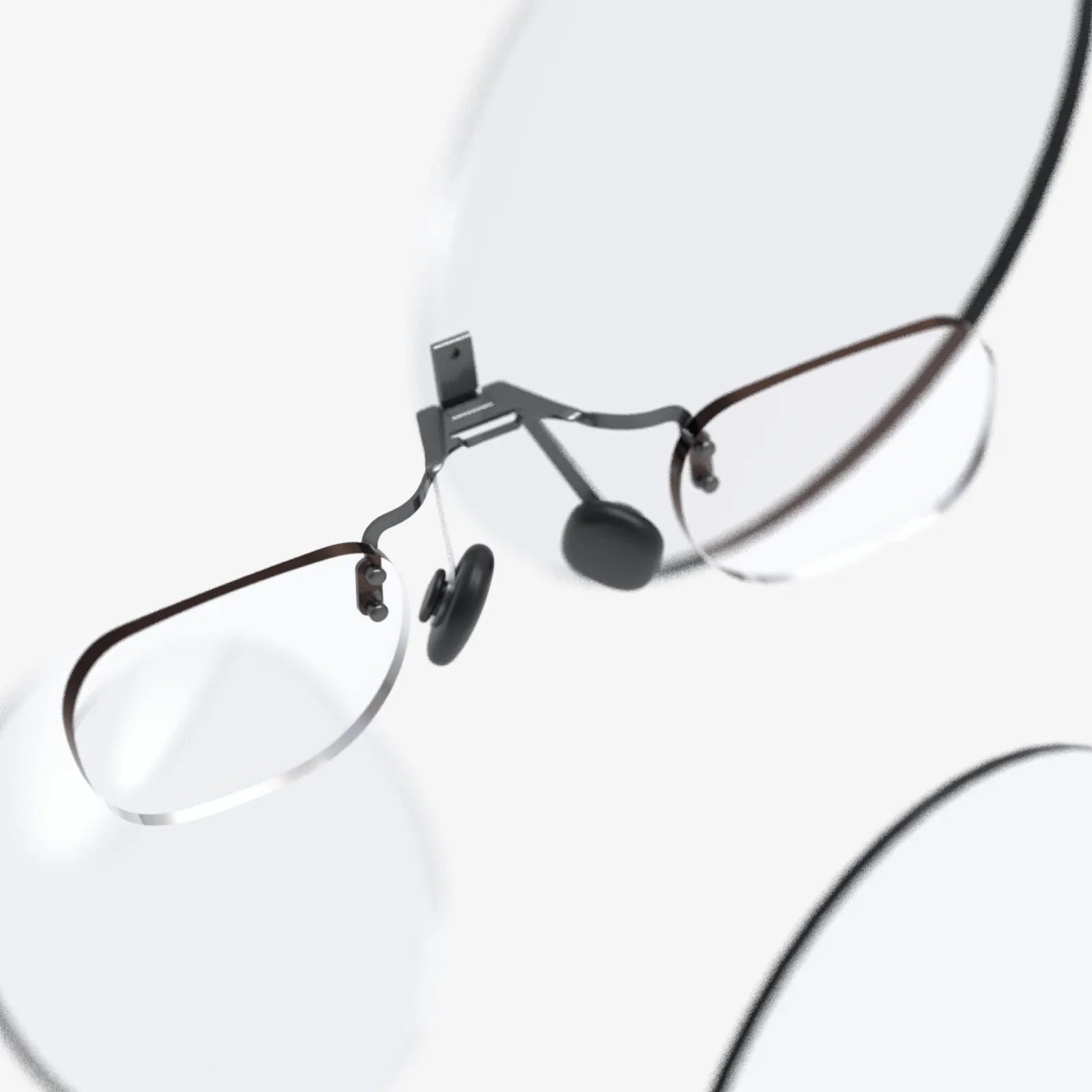
Imagine a world where your sunglasses do more than just shield your eyes from the sun; they are your personal concierge, your health guardian, your augmented reality portal, and your seamless connection to the digital realm, all while looking like a sleek, futuristic accessory. This is the promise, the potential, and the profound shift heralded by the advent of digital sunglasses. This technology, once confined to the pages of cyberpunk novels and blockbuster films, is rapidly maturing, poised to transition from a niche gadget for tech enthusiasts to a mainstream wearable that could fundamentally alter our daily lives. The journey from simple tinted glass to intelligent, connected eyewear is a fascinating story of convergence—of optics, micro-electronics, artificial intelligence, and material science—coming together to create something truly revolutionary. We are standing on the precipice of a new era in personal technology, one that will change how we see, and interact with, the world around us.
The Evolutionary Leap From Passive to Active Eyewear
For centuries, the primary function of sunglasses was singular and passive: to reduce glare and protect the eyes from harmful ultraviolet (UV) radiation. The invention of polarized lenses in the 1930s was a significant step forward, actively filtering out reflected light to enhance visual clarity. However, the core principle remained unchanged—the lenses reacted to light, but they did not compute, connect, or communicate. The concept of digital sunglasses shatters this paradigm entirely. They represent a shift from passive eye protection to active visual enhancement and digital integration.
The genesis of this technology can be traced to the early experiments with head-mounted displays and the eventual commercialization of wearable cameras. The true catalyst, however, was the smartphone revolution. The miniaturization of processors, batteries, sensors, and high-resolution micro-displays created the essential building blocks. Suddenly, it became technologically feasible to pack significant computing power into the slim form factor of eyeglass frames. The challenge shifted from "if it could be done" to "how it could be done elegantly," balancing performance, battery life, connectivity, and most importantly, style and comfort.
Deconstructing the Technology: More Than Meets the Eye
At their core, digital sunglasses are a marvel of modern engineering, integrating a suite of sophisticated technologies into a deceptively simple form.
The Brain: On-Board Processing and Connectivity
Embedded within the frame is a micro-computer, often based on architecture similar to that found in high-end wearables. This system-on-a-chip (SoC) is responsible for managing all operations: processing data from sensors, running applications, handling wireless communications like Bluetooth and Wi-Fi, and driving the display systems. This connectivity is the lifeline, tethering the sunglasses to a user's smartphone ecosystem or directly to the cloud, enabling a constant flow of information and interaction.
The Eyes: Advanced Display Systems
This is perhaps the most critical and challenging component. How do you project digital information onto a user's field of view without obstructing their natural vision? The prevailing technology for digital sunglasses is often based on Augmented Reality (AR) waveguides or similar micro-projection systems. Tiny projectors, usually located in the temples or browline of the frames, beam light onto specially engineered lenses. These lenses then reflect this light directly into the user's retina, superimposing images, text, and interfaces over their real-world view. The result is a seamless blend of the physical and digital worlds, with information contextually available without the need to look down at a separate screen.
The Senses: A Suite of Integrated Sensors
Digital sunglasses are equipped with an array of sensors that allow them to perceive the environment and the user. This can include:
- Inertial Measurement Units (IMUs): Accelerometers and gyroscopes that track head movement and orientation, crucial for stabilizing AR content.
- Ambient Light Sensors: Automatically adjust the display brightness and, in models with electrochromic lenses, the tint level for optimal visibility and battery conservation.
- Biometric Sensors: Some prototypes feature sensors that measure physiological data like heart rate, blood oxygen levels, or even pupil dilation, opening doors for health and wellness applications.
- Cameras: Integrated cameras enable first-person perspective photography and videography, visual search ("what is that building?"), and object recognition.
- Microphones and Speakers: For voice commands, making calls, and receiving audio notifications through bone conduction or miniature speakers, allowing the user to hear digital audio without blocking ambient sound.
The Power: Battery Technology and Efficiency
Powering all this technology is a significant hurdle. Designers must integrate a small but powerful battery, often into the thickest part of the frames, like the temples. Battery life is a key differentiator, with most current models aiming for a full day of use. Innovations in low-power displays, efficient processors, and wireless charging are critical to making digital sunglasses a practical all-day companion. Some concepts even explore energy harvesting from solar or kinetic movement.
A World of Applications: Beyond the Hype
The true value of any technology lies in its application. Digital sunglasses are not merely a novelty; they offer tangible benefits across numerous facets of life.
Augmented Navigation and Contextual Awareness
Imagine walking through a foreign city with turn-by-turn directions floating effortlessly on the street in front of you. Landmarks could be tagged with historical information, and restaurants could display their ratings and menus as you look at them. This contextual overlay of data transforms navigation and exploration, making it more intuitive and information-rich.
Enhanced Productivity and Hands-Free Operation
For professionals in fields like logistics, manufacturing, or field service, digital sunglasses can project schematics, instructions, or inventory data directly into their line of sight, freeing their hands for work. Receiving message notifications, calendar reminders, or translation subtitles during a conversation without interrupting the flow of activity can significantly boost efficiency and multitasking capabilities.
Revolutionizing Fitness and Health
For the fitness enthusiast, real-time performance metrics—heart rate, pace, altitude, route maps—can be displayed without ever breaking stride. The potential for health monitoring is even more profound. Continuous, unobtrusive tracking of vital signs could provide early warnings for medical events, help manage chronic conditions, and offer a rich dataset for personal wellness, all from a device you already wear.
Immersive Entertainment and Social Interaction
The gaming and entertainment industries are poised for disruption. AR games can transform any park into a digital battlefield. Watching a sports game could see live stats and player information overlaid on the field. Socially, the ability to seamlessly capture and share a first-person perspective of life's moments could redefine content creation and communication.
Navigating the Challenges: The Road Ahead
Despite the exciting potential, the path to widespread adoption of digital sunglasses is fraught with technical, social, and ethical challenges that must be thoughtfully addressed.
The Privacy Paradox
This is arguably the most significant hurdle. A device that can constantly record audio and video raises immense privacy concerns for both the wearer and those around them. The potential for surreptitious recording is a serious issue. Robust, transparent, and user-friendly privacy controls are non-negotiable. Features like a mandatory recording indicator light, clear audio cues, and geofencing capabilities to disable recording in sensitive areas will be essential to building public trust.
Social Acceptance and the "Glasshole" Stigma
Early attempts at smart glasses faced a social backlash, with wearers being perceived as intrusive or pretentious—a stigma that has proven difficult to shake. Overcoming this requires not only more elegant and socially invisible design but also a clear demonstration of value that outweighs the social friction. Society will need to develop new etiquettes for when and how it is appropriate to use such devices in social settings.
Battery Life and Form Factor
The eternal struggle of wearable tech continues. Consumers will not accept bulky, uncomfortable, or heavy sunglasses that need to be charged every three hours. The industry must continue to drive innovation in miniaturization, battery density, and power efficiency to create devices that are truly all-day wearable and indistinguishable from high-end fashion sunglasses in terms of weight and style.
The Digital Divide and Accessibility
As with any advanced technology, there is a risk of creating a new digital divide. The high cost of early-adopter models could limit access, exacerbating inequalities. Conversely, if designed with inclusivity in mind, digital sunglasses could be a powerful tool for accessibility, offering real-time captioning for the hearing impaired or enhanced visual descriptions for the visually impaired.
The Future Vision: A Seamless Interface for Life
Looking forward, the trajectory of digital sunglasses points toward even deeper integration into our lives. We can anticipate lenses with dynamically variable focus, correcting presbyopia and other vision issues on the fly. Haptic feedback in the frames could provide tactile notifications. Advanced AI assistants, powered by contextual awareness, will become true proactive partners, offering information before it's even asked for. The ultimate goal is for the technology to fade into the background—to become so intuitive, useful, and unobtrusive that it feels like a natural extension of our own senses.
The emergence of digital sunglasses represents more than just a new product category; it is a fundamental step toward a future where computing is ambient, contextual, and seamlessly interwoven with our physical reality. They challenge us to reimagine the very nature of human-computer interaction, moving beyond the screen-in-our-hand model to a more immersive, hands-free, and eyes-up paradigm. While the challenges are significant, the potential to enhance human capability, connectivity, and understanding is too great to ignore. The next time you put on a pair of sunglasses, consider that their future may hold far more than just shade.
Share:
Is The VR Worth It? A Deep Dive Into The Virtual Reality Investment
Is The VR Worth It? A Deep Dive Into The Virtual Reality Investment