


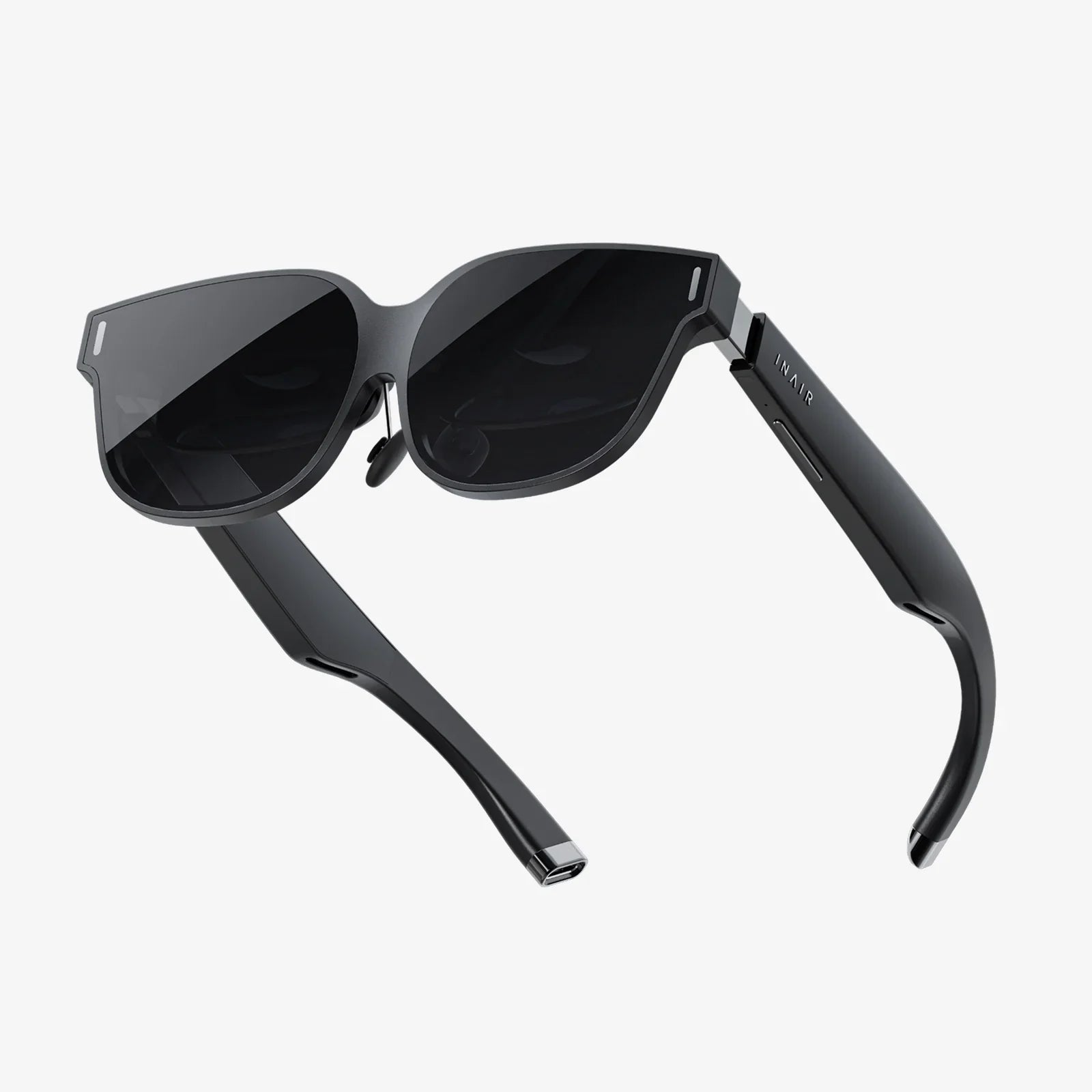
Imagine a world where your vision is not limited by biology, where information flows seamlessly into your field of view, and where the line between the physical and digital realms becomes beautifully blurred. This is no longer the stuff of science fiction; it is the promise and rapidly unfolding reality of digitally enhanced glasses. This transformative technology is poised to become the next pivotal platform in human-computer interaction, fundamentally altering our perception of reality and redefining our connection to the vast digital universe.
The Evolution of Sight: From Correction to Augmentation
For centuries, eyeglasses served a single, vital purpose: to correct imperfect vision. They were tools to achieve normalcy. Then, came the first whispers of augmentation—the idea that eyewear could do more than just correct; it could enhance. Early prototypes were clunky, expensive, and limited in function, often seen as niche gadgets for tech enthusiasts. However, the relentless march of Moore's Law, coupled with breakthroughs in miniaturization, display technology, and battery efficiency, has catapulted digitally enhanced glasses from a conceptual novelty to a viable consumer product.
The core architecture of these devices is a marvel of modern engineering. At their heart are several key components working in concert:
- Micro-Optical Waveguides: These are the lenses themselves, but engineered with nano-precision to project images directly onto the retina. Unlike a screen you look at, these waveguides superimpose digital information onto your view of the real world, creating a cohesive, integrated visual experience.
- Advanced Sensors: A suite of sensors, including high-resolution cameras, depth sensors, accelerometers, gyroscopes, and microphones, constantly scans the environment. This array allows the glasses to understand the world in three dimensions, track head and eye movement, and recognize objects and sounds.
- Onboard Processing Unit: Acting as the brain, a compact but powerful processor analyzes the immense data stream from the sensors in real-time. This is where the magic of spatial computing happens—understanding surfaces, mapping environments, and executing commands.
- Connectivity Suite: Seamless 5G and Wi-Fi connectivity tether the glasses to the cloud, offloading complex computations and accessing vast databases of information instantaneously, ensuring the user is always connected to the collective intelligence of the network.
A World Overlaid with Intelligence: Practical Applications
The true power of digitally enhanced glasses lies not in their individual components, but in their transformative applications across every facet of human life.
Revolutionizing Professional Fields
In industrial and medical settings, these devices are already proving to be invaluable. For a surgeon, a critical piece of data or a live feed from an internal scanner can be projected directly into their line of sight, allowing them to remain focused on the procedure without glancing away. For a field engineer repairing a complex machine, interactive schematics can be overlaid onto the equipment, highlighting components and providing step-by-step guidance. This hands-free access to information dramatically increases efficiency, reduces errors, and enhances safety.
Redefining Social Interaction and Accessibility
Socially, digitally enhanced glasses promise to break down barriers. Real-time translation subtitles can be displayed beneath a person speaking a foreign language, making cross-cultural communication fluid and natural. For individuals who are hard of hearing, speech could be instantly converted to text, displayed in their vision during a conversation. This technology has the profound potential to create a more inclusive and connected global community.
Transforming Navigation and Exploration
Gone are the days of holding up a phone to navigate a new city. With digitally enhanced glasses, directional arrows can be painted onto the street itself, guiding you turn-by-turn. Historical landmarks can come alive with informational overlays recounting their stories. Imagine looking at a restaurant and instantly seeing its reviews and menu highlights. The world becomes an interactive, informative tapestry, waiting to be explored.
The Future of Entertainment and Gaming
The entertainment industry will be utterly transformed. Instead of watching a movie on a screen, you could be sitting in a virtual cinema, or have the action play out on your living room table. Gaming will evolve into a truly immersive physical experience, where digital characters and objects interact with your real-world environment, encouraging movement and spatial awareness in ways never before possible.
The Other Side of the Lens: Ethical and Societal Challenges
With such transformative potential comes a host of complex ethical dilemmas that society must confront head-on. The integration of this technology into daily life is not a question of if, but how we will manage its profound implications.
The Privacy Paradox
The most immediate concern is privacy. A device that records audio and video continuously raises alarming prospects for surveillance. Who has access to this data? How is it stored and used? The potential for constant, passive recording in public and private spaces necessitates a completely new legal and ethical framework. Clear boundaries must be established to prevent a dystopian future of perpetual monitoring, whether by corporations or governments.
The Digital Divide and Accessibility
There is a significant risk that digitally enhanced glasses could exacerbate social and economic inequalities. If they become essential tools for work, education, and social participation, a new "digital divide" could emerge between those who can afford this enhanced reality and those who cannot. Ensuring equitable access and preventing a two-tiered society will be a critical challenge for policymakers and developers alike.
Reality Dilution and Mental Health
As digital overlays become richer and more compelling, what happens to our appreciation of un-augmented reality? Will we become addicted to the constant stream of information and stimulation, leading to anxiety and an inability to be present in the moment? The long-term psychological effects of blending reality with a digital facade are unknown. Furthermore, the potential for misinformation or malicious manipulation of what a user "sees" is a terrifying prospect, with implications for personal safety and social stability.
Designing the Future: The Human-Centered Imperative
For digitally enhanced glasses to achieve widespread adoption and avoid the pitfalls of previous wearable technologies, they must be designed with humanity at their core. This means moving beyond mere technical feasibility to embrace elegance, comfort, and social acceptability.
The devices must be lightweight, have all-day battery life, and, crucially, look like ordinary eyewear. People will not adopt technology that makes them feel self-conscious or socially awkward. The user interface must be intuitive, relying heavily on voice commands, subtle gestures, and eventually, neural inputs, minimizing the need for external controllers. The technology must feel like a natural extension of the self, not a distracting gadget.
Most importantly, the value proposition must be undeniable. The benefits—effortless access to knowledge, enhanced communication, increased productivity, and new forms of creativity—must far outweigh the costs and perceived risks. The technology should empower individuals, not control them, giving users complete agency over their digital experience, including what they see, when they see it, and what data they share.
The journey toward mainstream adoption will be iterative. We will likely see a gradual integration, starting with specific professional use cases before expanding into broader consumer applications. Each iteration will teach us more about how humans interact with augmented reality, allowing developers to refine the experience and society to adapt to the new norms it creates.
The era of passive viewing is ending. We are stepping into an age of active, enhanced seeing, where our glasses will be the portal to a deeper, richer, and more intelligent interaction with the world around us. The potential to amplify human intelligence, bridge communication gaps, and unlock new layers of reality is staggering. Navigating this future responsibly is one of the most exciting and critical challenges of our time, promising to reshape the human experience in ways we are only beginning to imagine.
Share:
Virtual Reality Headset China: The Unseen Engine Powering a Global Metaverse
AI Hardware News: The Cutting-Edge Chips and Systems Powering the Intelligence Revolution