


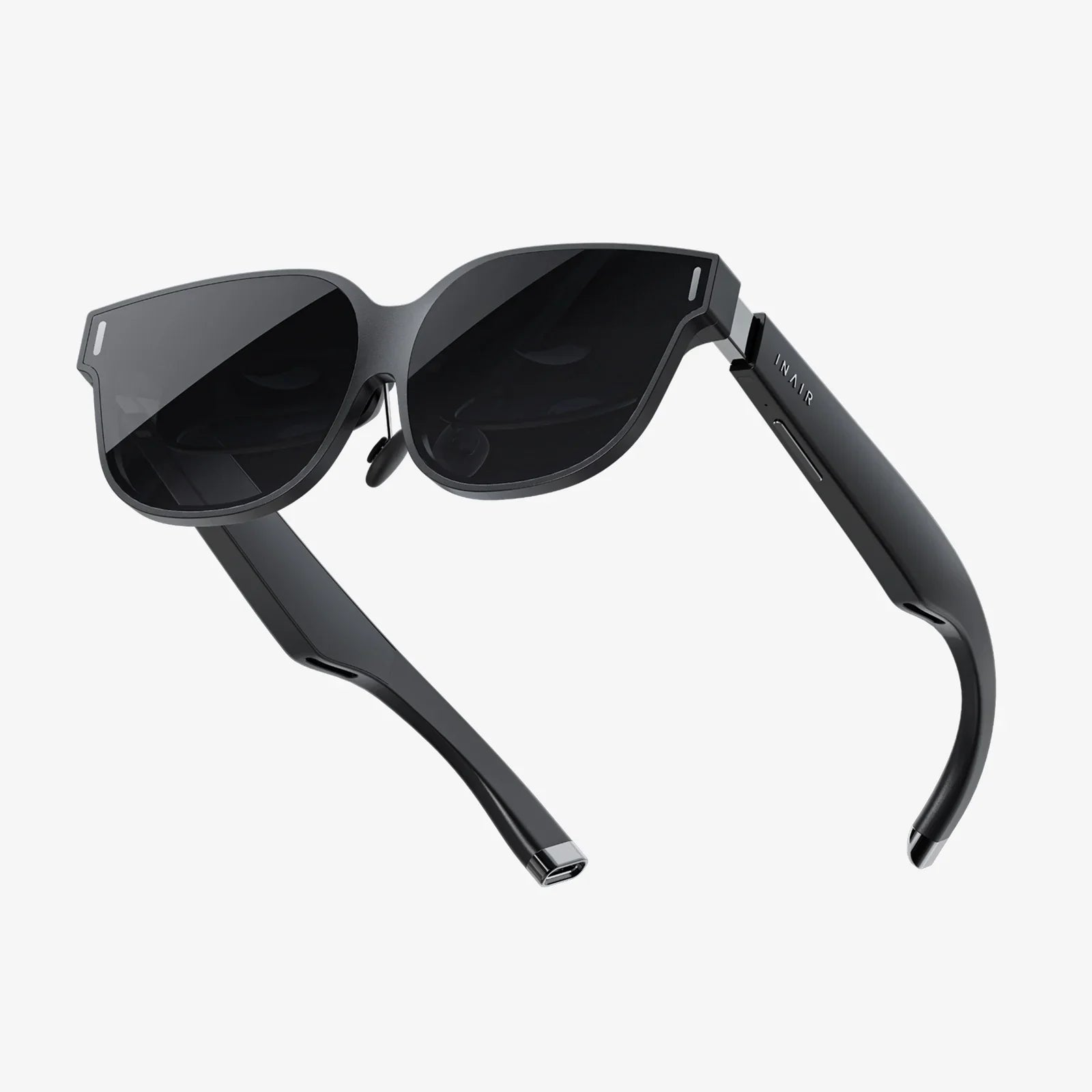
Imagine a world where the digital and physical seamlessly intertwine, a new frontier of experience accessible through a device perched on your head. Now, imagine that the very engine building this future, the unseen hand manufacturing, innovating, and consuming these portals to the metaverse, is not in Silicon Valley, but in the sprawling industrial hubs and tech parks of China. The story of the virtual reality headset is inextricably linked to China, a tale of manufacturing supremacy, a voracious domestic market, and a strategic national vision that is quietly shaping the next digital revolution for the entire world.
The Manufacturing Colossus: The World's VR Workshop
To understand the global VR landscape, one must first acknowledge a simple, undeniable fact: China is the world's workshop for consumer electronics, and virtual reality headsets are no exception. The vast majority of headsets, from budget-friendly mobile VR viewers to high-end tethered and standalone devices, are assembled within its borders. This dominance is not accidental; it is the result of a perfected ecosystem.
The Pearl River Delta, particularly the megacity of Shenzhen, acts as the nerve center. Here, a visitor can find every component supplier, mold maker, circuit board fabricator, and final assembly line imaginable, all within a few hours' drive. This unparalleled supply chain density and agility, often called "the Silicon Valley of hardware," allows for rapid prototyping and mass production at a scale and speed unmatched anywhere else. A startup can go from a concept to a finished product on a container ship in a fraction of the time it would take elsewhere, simply because every link in the production chain is next door.
This environment has given rise to a specific breed of manufacturer. While global brands design their flagship products, the actual creation—the sourcing of high-resolution displays, the design of intricate Fresnel lenses, the programming of inside-out tracking cameras, and the meticulous assembly—is often handled by sophisticated Chinese OEMs (Original Equipment Manufacturers) and ODMs (Original Design Manufacturers). These firms possess the engineering talent and production muscle to turn blueprints into millions of units, ensuring that whether a headset is sold in Seattle, Berlin, or Tokyo, its birthplace is almost certainly China.
Beyond Assembly: The Rise of Domestic Innovation and Brands
For years, the narrative around Chinese technology was one of imitation and low-cost duplication. In the VR sector, that chapter is rapidly closing. China is no longer just building others' dreams; it is designing and launching its own. A vibrant ecosystem of homegrown VR headset companies has emerged, pushing the boundaries of technology and catering to a unique domestic market.
These domestic players are competing fiercely, not on price alone, but on technological innovation. They are investing heavily in research and development, creating headsets with higher pixel-per-degree density for sharper images, more accurate inside-out tracking for greater immersion, and improved ergonomics for comfort during extended use. The competition is fierce, driving a rapid iteration cycle where new models with significant improvements are launched multiple times a year.
This innovation is strategically aligned with national policy. The Chinese government's latest Five-Year Plans and its "Made in China 2025" initiative have explicitly identified virtual and augmented reality as a core strategic industry. This translates into substantial state support, including subsidies for manufacturers, funding for R&D, and the creation of national VR innovation centers. The goal is clear: to move up the value chain and establish Chinese companies as global leaders in the next generation of computing, not just its manufacturers.
The Great Walled Garden: A Unique Digital Ecosystem
The Chinese VR market does not operate in a global vacuum; it is a powerful, self-contained ecosystem. The same "walled garden" principles that apply to the Chinese internet—with its distinct apps, social media platforms, and content distribution networks—apply directly to virtual reality.
Content is king, and in China, the king speaks Mandarin. A plethora of local content platforms and app stores have sprung up, offering a vast library of experiences tailored to Chinese users. This includes everything from immersive educational tours of the Forbidden City and breathtaking virtual nature experiences showcasing Zhangjiajie National Forest Park to popular VR games, social VR platforms, and live-streamed concerts from top C-pop stars. This robust and localized content ecosystem is a critical driver of headset adoption, giving consumers a compelling reason to invest in the hardware.
Furthermore, the business model often differs. While international markets may focus on consumer sales, enterprise adoption is a massive growth vector in China. Companies are deploying VR headsets for a wide range of applications: training surgeons in complex procedures, teaching engineering students in virtual classrooms, simulating dangerous scenarios for firefighters and police, and allowing architects and real estate developers to walk clients through unbuilt properties. This enterprise focus provides a stable revenue stream for headset makers and embeds the technology deep into the fabric of industry and education.
The Consumer Wave: VR Adoption in the World's Largest Market
With a population of over 1.4 billion and a digitally-native middle class that is eager for new experiences, China represents the single largest potential market for VR headsets on the planet. Domestic manufacturers have a distinct advantage in understanding the nuances of this market.
Consumer preferences are carefully analyzed and catered to. This has led to the popularity of all-in-one (standalone) headsets that require no powerful computer or console, making them more accessible and affordable for the average household. These devices are often marketed not just as gaming peripherals, but as holistic entertainment hubs for the family—a device for watching immersive movies, attending virtual events, and even engaging in light fitness activities.
The retail experience is also being transformed. Major electronics chains dedicate significant floor space to VR, allowing customers to demo headsets. Large-scale VR arcades and theme parks, offering premium experiences too expensive for home use, are popular destinations in major cities, socializing the technology and acting as a powerful marketing tool for home adoption. This combination of accessible hardware, localized content, and experiential marketing is successfully bringing VR into the Chinese mainstream.
Global Ripples: How China's VR Industry Affects the World
The developments within China's VR headset industry are not contained within its borders; they send ripples across the global market, influencing trends, prices, and accessibility for everyone.
The most immediate impact is on affordability. The intense competition and manufacturing scale in China have been instrumental in driving down the cost of VR hardware globally. Components become cheaper, assembly more efficient, and this cost-saving is passed on, making high-quality VR more accessible to a broader international audience than ever before. This democratization of the technology is a direct result of the competitive pressure and production prowess of the Chinese supply chain.
Secondly, Chinese companies are increasingly looking outward. They are no longer content with just the domestic market and are launching their products internationally, often under their own brands. They compete directly with established Western tech giants, offering feature-rich headsets at aggressive price points. This forces global innovation to move faster and keeps the entire industry on its toes, ultimately benefiting consumers with better products and more choices.
Finally, the sheer volume of users in China provides an unparalleled dataset. The way Chinese consumers use VR, the content they engage with, and the features they demand provide invaluable insights. This data fuels a feedback loop that informs global product development, subtly shaping the future of VR interfaces, social features, and application design for users everywhere, whether they realize it or not.
Navigating the Future: Challenges and Opportunities
The path forward is not without its challenges. The global VR hardware market is still nascent and can be volatile. Intense domestic competition leads to thin profit margins, testing the sustainability of some players. Geopolitical tensions and trade policies can disrupt the intricate global supply chains that these companies rely on for both components and sales.
Furthermore, the question of data privacy and software ecosystems remains. The bifurcation between the Chinese and international software environments means that a headset designed for one market may struggle to gain traction in the other without significant adaptation. Navigating these two parallel digital universes will be a key challenge for any company with global ambitions.
Despite these hurdles, the trajectory is one of immense growth and influence. As technologies like 5G, cloud rendering, and better haptics mature, Chinese companies are poised to integrate them rapidly into new hardware. The focus will likely continue to expand beyond gaming into transformative applications for education, healthcare, remote work, and social connection.
The next time you strap on a virtual reality headset, transported to a concert, a battlefield, or a foreign planet, take a moment to consider its journey. It's a device born from global ambition, but undoubtedly forged in the factories and coding houses of China. This invisible engine is not just assembling hardware; it is actively constructing the lenses through which millions, and soon billions, will perceive and interact with a new layer of reality. The metaverse may be a global concept, but its gateway is being built, in large part, with a distinctly Chinese imprint.
Share:
Smart Interactive Panel: The Future of Collaboration and Learning
Digitally Enhanced Glasses Are Redefining Human Vision and Connection