


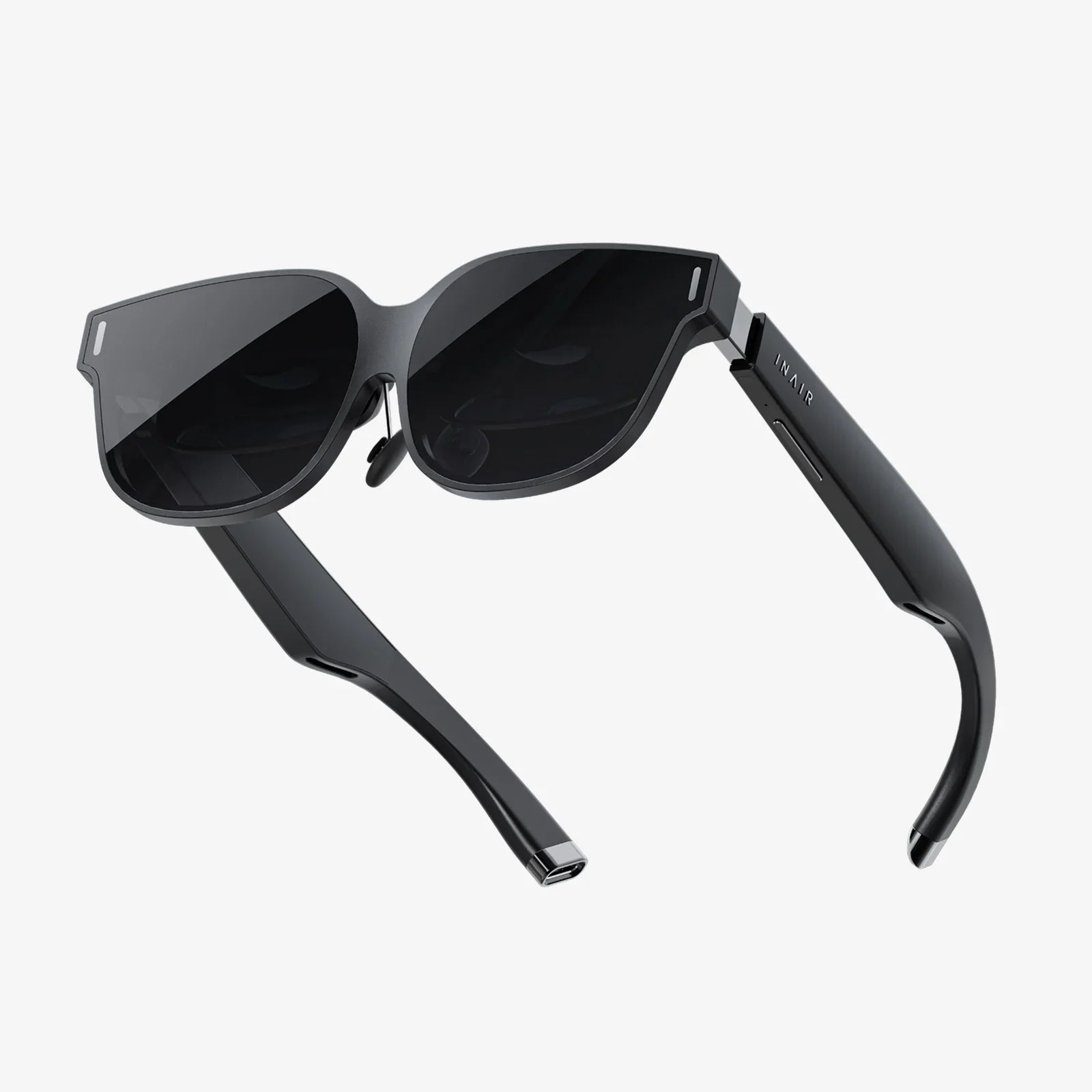
Imagine a world where information flows as effortlessly as sight itself, where complex computations happen in the periphery of your vision, and digital assistance is as subtle as a glance. This is no longer the realm of science fiction; it is the burgeoning reality ushered in by the arrival of discreet AI glasses. This revolutionary wearable technology promises to dissolve the barrier between the digital and the physical, offering a hands-free, intuitive, and, most importantly, inconspicuous interface with artificial intelligence. The clunky, obtrusive headgear of the past is giving way to a new generation of sleek, stylish, and socially acceptable eyewear designed not to isolate the user but to augment their reality silently and powerfully. The era of staring down at a screen is about to be challenged by looking up and out into a world enhanced by intelligence you can wear.
The Evolution from Concept to Subtle Companion
The journey to today's discreet AI glasses has been a long and technologically arduous one. Early attempts at head-mounted displays were bulky, power-hungry, and required extensive external processing, making them impractical for daily use. They were tools for specialists, not accessories for the general public. The concept of augmented reality (AR) glasses captured the imagination, but the hardware often failed to blend into everyday life, creating a noticeable and sometimes socially awkward barrier between the user and their environment.
The true turning point has been a confluence of several technological miniaturizations. The development of micro-OLED and waveguide displays allows information to be projected onto incredibly small, transparent lenses without obstructing the user's view. Nanotechnology has enabled cameras and sensors to shrink to the size of a pinhead, easily embedded within a standard eyeglass frame. Furthermore, the exponential growth in processing power, combined with advanced edge computing and lightning-fast mobile connectivity, means the bulky computing unit of the past can now be replaced by a powerful, miniaturized chipset discreetly housed in the temple of the glasses or offloaded to a paired device.
This evolution is defined by a critical design philosophy: social acceptance. The goal is no longer to create the most powerful standalone device, but the most seamlessly integrated one. Manufacturers now prioritize a form factor that is indistinguishable from high-end traditional eyewear. This involves using familiar materials like acetate, titanium, and custom finishes, ensuring the technology is subservient to the style. The most successful designs are those you wouldn't look at twice on someone's face—the technology is hidden in plain sight, which is the ultimate marker of its success.
Deconstructing the Technology: How They Work Their Magic
Behind the seemingly ordinary facade of these glasses lies a sophisticated network of technology working in harmony. Understanding these components is key to appreciating the engineering marvel they represent.
The Visual Interface: See-Through Displays
At the heart of the experience is the optical system. Unlike virtual reality headsets that immerse you in a digital world, discreet AI glasses use AR displays to overlay digital information onto the real world. This is primarily achieved through two methods:
- Waveguide Technology: Tiny projectors in the temples beam light into a transparent glass or plastic lens etched with microscopic patterns (the waveguide). This pattern guides the light, bending it until it enters the user's eye, creating the illusion that the text, image, or UI is floating in space ahead of them. This allows for a large digital field of view within an incredibly thin lens.
- Micro-OLED Displays: These are minuscule, high-resolution screens that project images directly onto the lens. Advanced optics then reflect this image into the eye. While sometimes requiring a slightly thicker frame, they offer exceptional brightness and color fidelity.
The result is a small, crisp display—often resembling a floating smartwatch screen in the corner of your vision—that can be glanced at without obstructing your overall view.
The感知 Suite: Eyes and Ears
To understand and interact with the world, these glasses are equipped with a suite of sensors:
- High-Resolution Cameras: These are the primary "eyes," enabling visual search, object recognition, text translation, and document scanning. Their discreet placement is crucial for both aesthetics and privacy.
- Microphones: An array of beamforming microphones allows for clear voice pickup even in noisy environments. This enables voice assistant control, ambient sound recording, and advanced hearing-aid functionalities like speech enhancement and noise suppression.
- Inertial Measurement Units (IMUs): These accelerometers and gyroscopes track head movement and orientation, allowing the digital interface to remain stable in your field of view as you move your head.
- Depth Sensors: Some models include time-of-flight sensors to map the environment in 3D, understanding the distance and spatial relationship between objects for more immersive AR experiences.
The Brain: Onboard Intelligence
The data from these sensors is processed by a sophisticated combination of hardware and software:
- On-Device AI: A dedicated neural processing unit (NPU) inside the glasses handles tasks in real-time, such as translating text the second you look at it or identifying an object without needing an internet connection. This minimizes latency and protects privacy.
- Cloud AI: For more complex tasks—like searching for information based on a visual query or processing a lengthy audio translation—the data is encrypted and sent to powerful cloud-based AI models via a connected smartphone or built-in cellular modem, with the results fed back to the glasses.
A World of Applications: Beyond Novelty
The power of discreet AI glasses lies in their utility across countless professional and personal scenarios.
Professional and Productivity Powerhouse
In the workplace, they are revolutionizing hands-free operations. Field technicians can view schematics, instruction manuals, or receive remote expert guidance overlaid on the machinery they are repairing, without fumbling with a tablet. Surgeons can access vital patient statistics and imaging data without looking away from the operating table. Warehouse workers can see inventory information and optimal picking routes, dramatically improving efficiency and accuracy. For the general professional, the ability to discreetly see notifications, calendar reminders, or even subtitles during a multilingual meeting could transform daily workflow.
Enhanced Accessibility and Learning
This technology has profound implications for accessibility. For individuals with visual impairments, AI glasses can describe scenes, read text aloud from menus or documents, identify currency, and recognize faces, granting a new level of independence. For those with hearing difficulties, real-time transcription of conversations can be displayed directly in their vision, making social interactions smoother. For language learners, instant translation of spoken and written language provides an immersive learning tool unlike any other.
Social and Personal Enrichment
On a personal level, the applications are boundless. Imagine touring a museum and seeing information about each painting materialize next to it. Imagine remembering the name of a casual acquaintance as it subtly appears when you look at them. Imagine navigating a new city with arrows seamlessly integrated onto the street ahead, all while keeping your phone in your pocket and your head up, fully engaged with your surroundings.
The Elephant in the Room: Privacy, Security, and Ethical Quandaries
The very feature that defines these devices—their discreet nature—also fuels significant ethical concerns. A device that can record audio and video from a first-person perspective without others readily knowing introduces a massive shift in social dynamics and privacy norms.
- Consent and Surveillance: The potential for surreptitious recording is the most glaring issue. Societies will need to develop new etiquettes and potentially new laws regarding recording in public and private spaces. Clear, unambiguous visual and auditory indicators that recording is active will be a non-negotiable feature for ethical manufacturers.
- Data Security: The amount of intimate, first-person data collected by these devices is staggering—everything you see, hear, and potentially even where you look. Protecting this data from hackers is paramount. Robust encryption, both for data at rest and in transit, and clear user-controlled data policies are essential.
- Psychological and Social Impact: Will constant access to information degrade our innate memory and cognitive abilities? Could the ability to record everything lead to a society where people constantly curate their lives for fear of being recorded? These questions do not have easy answers and will be debated for years to come.
Navigating this landscape requires a multi-faceted approach: stringent regulation that protects individual privacy without stifling innovation, transparent corporate policies that give users full control over their data, and a cultural conversation that establishes new social contracts for acceptable use.
Gazing into the Future: What Comes Next?
The current generation of discreet AI glasses is merely the first step. The trajectory points toward even deeper integration. We can anticipate advancements like:
- Advanced Biometric Monitoring: Sensors capable of tracking blood pressure, blood glucose levels, and other health metrics through the skin near the temples, turning glasses into a continuous health monitor.
- Brain-Computer Interfaces (BCI): Further out, more direct neural integration could allow for control of the interface through thought alone, moving beyond voice commands and gestures.
- Holographic Displays: Moving from 2D overlays to full 3D holograms that can be interacted with in space, creating a truly immersive mixed-reality experience.
- Contextual Hyper-Awareness: AI that anticipates your needs based on what you see and hear, proactively offering information and assistance before you even ask.
The path forward is not just about making the technology more powerful, but about making it more empathetic, secure, and ultimately, more human-centric.
The true promise of discreet AI glasses lies not in replacing reality, but in enhancing it, making us more capable, connected, and informed without ever demanding we look down or break our stride. They represent a fundamental shift from technology we hold to technology we wear, a silent partner in perception that has the potential to redefine human potential itself. The future is not on your phone screen; it’s right before your eyes, waiting to be unlocked.
Share:
Augmented Reality Disadvantages: The Hidden Costs of a Digital Overlay
AR VR Equipment: The Ultimate Guide to the Hardware Shaping Our Digital Future