


Imagine a world where the digital and physical seamlessly intertwine, where you can learn, work, and play in boundless virtual landscapes or have information and fantastical creatures appear right in your living room. This is no longer the stuff of science fiction; it's the reality being built today by rapidly evolving AR and VR equipment. This hardware is the gateway, the essential bridge that connects our human senses to experiences previously unimaginable. The journey into these immersive worlds begins not with code, but with the sophisticated and increasingly accessible devices you wear on your head and hold in your hands.
The Fundamental Divide: Understanding AR and VR
While often grouped together, Augmented Reality (AR) and Virtual Reality (VR) represent two distinct approaches to altering our perception, and their equipment reflects this core difference.
Virtual Reality: The Total Immersion Machine
VR equipment is designed with one primary goal: to completely replace your field of vision with a computer-generated environment. By blocking out the physical world, a VR headset transports you elsewhere. Whether you're exploring the depths of the ocean, walking on the surface of Mars, or battling dragons in a fantasy realm, the experience is all-encompassing. The hardware is a self-contained portal, and its effectiveness is measured by its ability to make you forget the real world exists.
Augmented Reality: The Digital Overlay
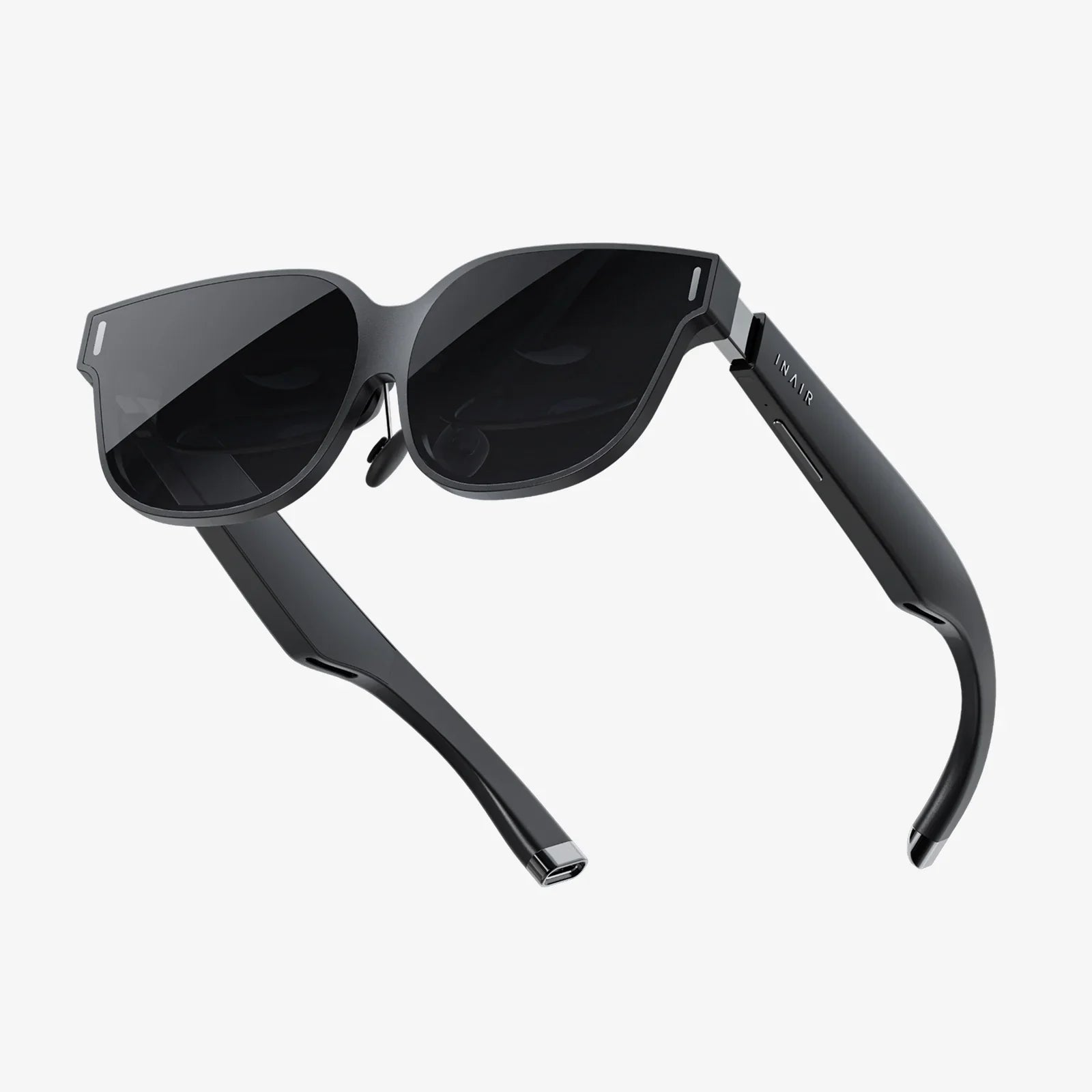
In contrast, AR equipment is designed to augment and enhance the real world. It layers digital information—text, images, 3D models, animations—onto your view of your immediate surroundings. This requires a different technological approach. Instead of blocking your vision, AR devices, like smart glasses, use transparent lenses or cameras to pass through a view of reality and then project digital elements onto it. This allows you to see navigation arrows on the street in front of you, view a heart anatomy model floating over a medical mannequin, or see how a new sofa would look in your actual living room.
Deconstructing the VR Headset: A Symphony of Sensors and Screens
The modern VR headset is a marvel of miniaturization, packing a suite of sophisticated components into a wearable form factor.
The Display: The Window to Another World
At the heart of every VR headset is the display system. Most consumer-grade devices use a single high-resolution LCD or OLED screen, split to provide a slightly different image to each eye, creating the stereoscopic 3D effect that gives scenes their depth. Key metrics here are resolution, refresh rate, and field of view (FOV). Higher resolution reduces the "screen door effect" (seeing the gaps between pixels), a higher refresh rate (90Hz and above) ensures smooth motion and reduces latency-induced motion sickness, and a wider FOV (above 100 degrees) increases the feeling of immersion by filling more of your peripheral vision.
Tracking: Knowing Where You Are
For immersion to work, the headset must track its own position in space and the orientation of your head with incredible speed and precision. This is achieved through a combination of technologies:
- Inside-Out Tracking: Cameras mounted on the headset itself look outward, tracking the environment's unique features to triangulate its position. This eliminates the need for external sensors and makes for a more convenient setup.
- Outside-In Tracking: External sensors or base stations placed around the room emit signals (like infrared light) that are picked up by sensors on the headset. This method is often considered more precise for high-end applications but requires a more complex setup.
- Inertial Measurement Units (IMUs): These internal sensors, including gyroscopes, accelerometers, and magnetometers, provide high-frequency data on rotational movement and acceleration, filling in the gaps between the camera's updates.
Lenses and Audio: Completing the Illusion
Positioned between your eyes and the screen are specialized Fresnel or pancake lenses. They focus your vision across the curved display, correct for distortion, and ensure a clear image across the entire FOV. Equally important is spatial audio. High-quality built-in headphones or speakers use head-related transfer function (HRTF) algorithms to simulate 3D sound, making a noise behind you sound like it's actually behind you. This auditory cue is critical for selling the illusion of presence in a virtual space.
Controllers: Your Virtual Hands
VR controllers are your primary means of interaction. They are ergonomic wands packed with their own IMUs for tracking rotation, and often use the headset's external cameras or external base stations for positional tracking. They feature buttons, triggers, thumbsticks, and haptic feedback motors to provide tactile sensation, letting you feel the virtual recoil of a gun or the subtle buzz of touching a surface.
The AR Spectrum: From Handheld to Hands-Free
AR equipment exists on a broad spectrum, from simple smartphone-based experiences to advanced optical see-through glasses.
Smartphone-Based AR: The Gateway Drug
The most accessible form of AR leverages the powerful computer almost everyone carries in their pocket: the smartphone. Using the device's camera, GPS, accelerometer, and gyroscope, apps can overlay digital content onto the real world viewed through the screen. While limited by the small screen and the need to hold the device up, it proved the concept's mass appeal and spawned countless games, shopping apps, and educational tools.
Standalone AR Glasses: The Future on Your Face
True AR glasses aim to be a lightweight, wearable, and always-available interface. This category is technologically challenging but rapidly advancing. They incorporate:
- Waveguide Displays: Tiny projectors shoot light into transparent glass lenses etched with microscopic patterns (waveguides) that bounce the light into your eye, painting digital images onto your view of the real world.
- Advanced Tracking: Like VR headsets, they use cameras and IMUs for simultaneous localization and mapping (SLAM), understanding the room's geometry to anchor digital objects persistently.
- Bone Conduction Audio: Many glasses use bone conduction to deliver sound directly through your skull bones, leaving your ears open to hear the real environment clearly.
Powering the Experience: Tethered vs. Standalone Systems
A major differentiator in VR equipment is where the computing power comes from.
Tethered/PCVR Headsets
These headsets act as high-end displays and sensors, but must be connected via a cable to a powerful external computer. This setup provides the highest fidelity graphics, the most complex physics simulations, and the most immersive experiences possible. The trade-off is a loss of freedom, higher cost (needing both a headset and a capable computer), and a more complex setup.
Standalone Headsets
These all-in-one devices have the computer, battery, and all components built directly into the headset. They are completely wireless, offering unparalleled freedom of movement and ease of use—you can start experiencing VR within seconds of putting it on. While historically less powerful than PCVR, the processing chips inside modern standalone headsets are achieving remarkable graphical prowess, making them the dominant and most accessible form of VR equipment for the mass market.
Beyond Gaming: The Expansive Applications of Immersive Hardware
While entertainment is a massive driver, the value of AR and VR equipment extends far beyond the living room.
Enterprise and Industry
Companies are leveraging this hardware for immense practical benefit. Technicians wearing AR glasses can see schematics and instructions overlaid on the machinery they are repairing, hands-free. Architects and engineers use VR to walk clients through full-scale 3D models of unbuilt structures. Corporations use VR for hyper-realistic employee training simulations, from public speaking to dangerous emergency scenarios, all in a consequence-free environment.
Healthcare and Therapy
Surgeons use AR overlays for visualizing patient data during procedures. Medical students practice complex operations in VR simulations. Perhaps most profoundly, VR is being used for exposure therapy, helping patients with phobias (like fear of heights or flying) confront their triggers in a controlled setting. It's also used for pain distraction, immersing burn victims in a calming snowy landscape to reduce their perceived pain during wound care.
Education and Social Connection
Imagine history students witnessing ancient Rome firsthand or biology students taking a journey through the human bloodstream. VR makes this possible, creating unforgettable experiential learning. Furthermore, social VR platforms allow people to meet, play, and collaborate as lifelike avatars in shared virtual spaces, offering a new paradigm for human connection that transcends physical distance.
The Horizon: Where AR and VR Equipment is Headed Next
The technology is advancing at a breakneck pace, driven by relentless innovation. The next generation of hardware is focused on solving the remaining challenges and unlocking new possibilities.
Key Technological Frontiers
- Varifocal and Eye-Tracking: Future headsets will track your eyes to know precisely where you are looking. This allows for foveated rendering, where full processing power is focused only on the spot you're looking at, drastically improving performance. It also enables dynamic focus, making virtual objects feel more real by simulating the natural blur of objects in your peripheral vision.
- Haptics and Feedback:
Beyond simple controller vibration, research into full-body haptic suits, gloves with finger tracking, and even devices that simulate touch and temperature will deepen immersion, making virtual interactions feel tangible.
Miniaturization and the Path to Normalization
The ultimate goal for AR, in particular, is to look like a regular pair of eyeglasses. Advances in micro-LED displays, nanotechnology waveguides, and ultra-efficient processing are steadily shrinking the form factor. The day is coming when powerful AR glasses will be socially acceptable to wear all day, seamlessly blending our digital and physical lives.
The Convergence: The Mixed Reality Future
The lines between AR and VR are already blurring. Modern high-end VR headsets feature high-resolution color passthrough cameras, effectively allowing them to function as AR devices by showing you a video feed of your real world with digital elements overlaid. This mixed reality (MR) capability is a glimpse into a future where a single, versatile headset might toggle between fully virtual, fully augmented, and every state in between, becoming the ultimate compute platform.
The click of a headset's power button is more than just starting a device; it's opening a portal to new ways of seeing, learning, connecting, and creating. AR and VR equipment is evolving from niche novelties into foundational tools that will redefine entire industries and reshape our daily lives. The hardware is becoming lighter, smarter, and more intuitive, quietly building the infrastructure for a reality where the only limit is the imagination of the person wearing it. The next world is waiting, and it’s closer than it appears.
Share:
Discreet AI Glasses: The Invisible Revolution in Wearable Technology
Impact of Augmented Reality: Reshaping Our World Through a Digital Lens