


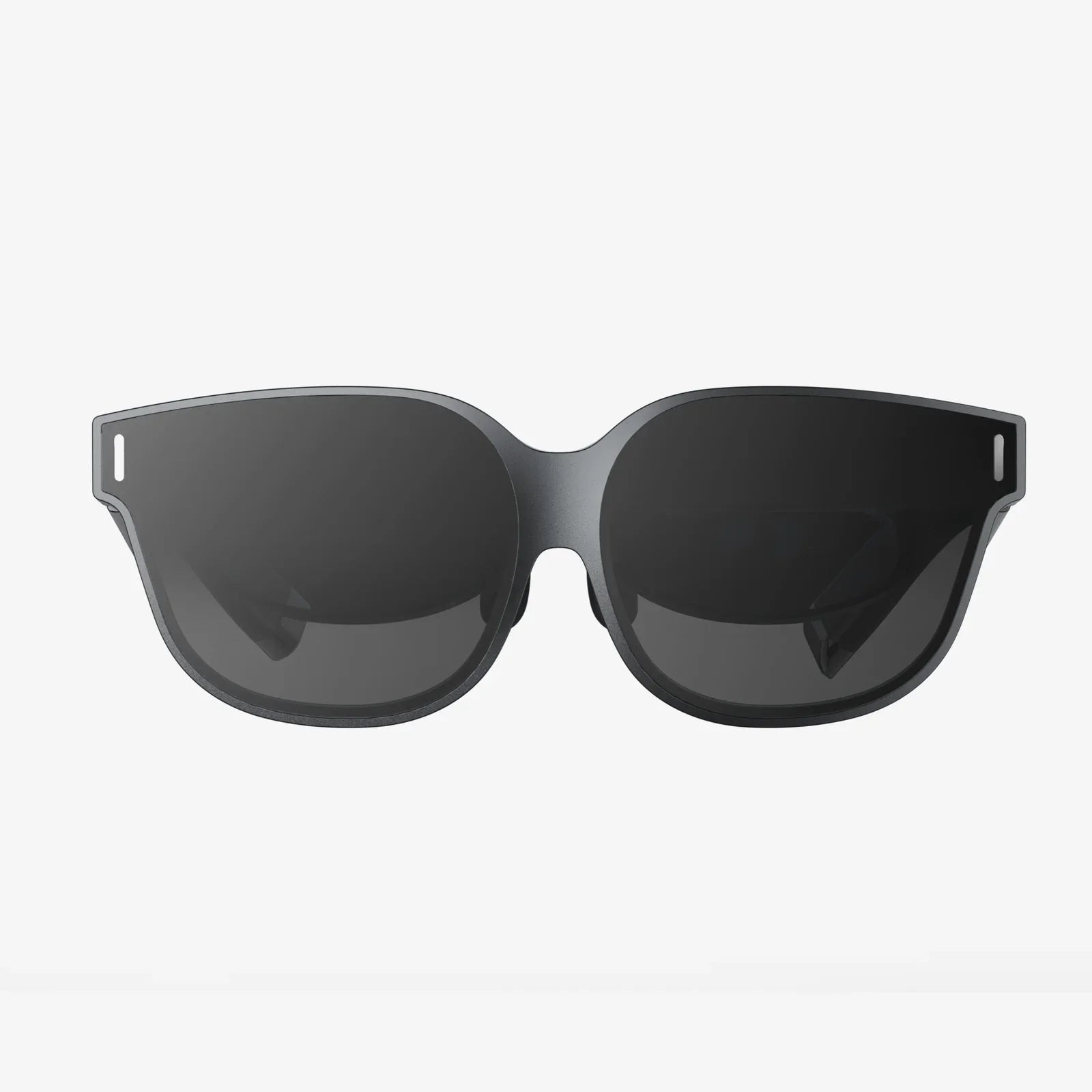
Imagine a world where the digital and the physical are no longer separate realms but a single, intertwined experience. A world where information is not something you search for on a screen but is seamlessly overlaid onto your immediate reality, enhancing your understanding, your capabilities, and your perception of everything around you. This is no longer the stuff of science fiction; it is the burgeoning reality being built today through the rapid advancement of augmented reality (AR). The impact of this technology is not a distant future prediction—it is happening now, rippling through every sector of society, from the way we shop and learn to how we work and connect. The digital veil is descending, and it promises to fundamentally reshape our existence.
The Core of the Revolution: Beyond the Novelty
At its essence, augmented reality is a technology that superimposes computer-generated sensory input—be it sound, video, graphics, or GPS data—onto a user's view of the real world. Unlike virtual reality, which creates a completely artificial environment, AR enhances the real world by adding a digital layer to it. This is achieved through a variety of devices, from smartphones and tablets to more sophisticated head-mounted displays and smart glasses. The magic lies in its ability to bridge the gap between abstract data and the tangible world, creating a powerful, context-rich user experience.
Transforming Commerce and the Retail Experience
Perhaps the most visible impact of augmented reality has been in the realm of commerce and retail. It is solving one of the most significant limitations of online shopping: the inability to try before you buy.
Virtual Try-On and Visualization
Shoppers can now see how a piece of furniture would look in their living room, accurately scaled and positioned, before making a purchase. They can "try on" glasses, makeup, or even clothes from the comfort of their homes, drastically reducing purchase uncertainty and the likelihood of returns. This is revolutionizing product discovery and consumer confidence.
Enhanced In-Store Engagement
Physical retail is also being revitalized. By pointing their device at a product or a store display, customers can access a wealth of additional information, see related items, watch demonstration videos, or unlock exclusive offers. This turns a passive shopping trip into an interactive and personalized experience, blending the best of online and offline retail.
Revolutionizing Education and Training
The impact of augmented reality on education and professional training is nothing short of revolutionary. It is moving learning from a passive, two-dimensional activity to an active, immersive, and three-dimensional one.
Interactive Learning
Imagine a history lesson where students can see a historical battle play out on their classroom desk, or a biology class where they can walk around and examine a life-sized, beating human heart from every angle. AR makes complex abstract concepts tangible and visually engaging, catering to different learning styles and dramatically improving knowledge retention.
Skill Development and Practice
In fields like medicine, AR provides trainee surgeons with the ability to practice complex procedures on virtual patients overlaying anatomical guides onto mannequins. Mechanics can see internal wiring diagrams overlaid on the actual engine they are repairing. This allows for risk-free, repeatable, and highly effective skill development, reducing errors and improving proficiency before anyone touches a real patient or a critical piece of machinery.
Advancing Healthcare and Medicine
The healthcare sector is leveraging AR to enhance both patient outcomes and medical workflows. Its impact here is literally life-changing.
Surgical Precision and Visualization
Surgeons can use AR headsets to view critical patient data, such as MRI scans or 3D models of tumors, directly in their field of vision while operating. This allows them to keep their focus on the patient without looking away at a separate screen. It can project veins onto a patient's skin to make injections easier or highlight sensitive areas to avoid during a procedure, increasing precision and safety.
Patient Education and Rehabilitation
Doctors can use AR models to explain a diagnosis or a surgical procedure to patients in a clear, visual manner, reducing anxiety and improving understanding. In physical therapy, AR games and exercises can make the repetitive process of rehabilitation more engaging and motivating for patients, helping them track their progress in real-time.
Redefining Industrial Design and Manufacturing
In industrial settings, often referred to as Industry 4.0, AR is a key pillar of digital transformation. It is streamlining complex processes and empowering the workforce.
Assembly, Maintenance, and Repair
>Technicians wearing AR glasses can have digital work instructions, safety information, and schematic diagrams overlaid directly onto the machinery they are assembling or fixing. This hands-free access to information reduces errors, speeds up task completion, and lowers the training required for complex jobs. Remote experts can see what an on-site worker sees and provide visual annotations and guidance from anywhere in the world.Design and Prototyping
Engineers and designers can visualize and interact with 3D prototypes at full scale, making design iterations faster and more cost-effective than building physical models. They can collaborate in shared augmented spaces, manipulating digital holograms of products to refine their designs before any physical resources are committed.
The Social and Ethical Implications: Navigating the New Reality
With such profound transformative power comes a host of significant societal and ethical challenges that we are only beginning to grapple with. The impact of augmented reality is not solely positive, and its widespread adoption demands careful consideration.
Privacy in an Augmented World
AR devices, by their very nature, are data collection powerhouses. They often require cameras, microphones, and sensors to map and understand the environment. This raises immense privacy concerns. Who has access to the continuous video feed of a user's life? How is this data stored, used, or sold? The potential for surveillance, both corporate and governmental, is unprecedented. Furthermore, the ability to instantly recognize and overlay information about people in a crowd—a technology known as facial recognition—presents a dire threat to personal anonymity and freedom in public spaces.
The Digital Divide and Accessibility
As AR becomes more integrated into essential services like education, healthcare, and navigation, a new form of digital divide emerges. Those who cannot afford the necessary hardware or lack access to high-speed data networks risk being left behind, unable to participate fully in an AR-enhanced society. This could exacerbate existing social and economic inequalities. Conversely, AR also holds great promise for accessibility, offering new tools for people with disabilities, such as visual or auditory aids that describe the world around them.
Reality Manipulation and Mental Health
When everyone can potentially curate their own reality by filtering or altering what they see, what becomes of our shared objective reality? The line between truth and fiction could become dangerously blurred. The constant bombardment of digital advertisements and notifications in our physical space could lead to new forms of information overload and anxiety. The long-term psychological effects of living with a persistent digital layer are still unknown, posing questions about attention spans, human connection, and our relationship with the natural, non-augmented world.
The Future is Layered: What Comes Next?
The trajectory of AR points towards increasingly smaller, more powerful, and more socially acceptable devices—eventually evolving towards something like sleek everyday glasses. The concept of the spatial web, where the internet is mapped onto the physical world, is becoming a tangible goal. This will unlock even more profound applications, from navigation cues painted onto the street to persistent digital art installations in city squares that anyone with the right device can see.
The true impact of augmented reality lies not in the technology itself, but in its silent, pervasive integration into the fabric of our daily lives. It is a tool of immense power, capable of unlocking human potential, solving complex problems, and creating breathtaking new forms of art and expression. Yet, it also carries the weight of significant risk, challenging our notions of privacy, truth, and equality. Our task is not to stop its progress, but to guide it with thoughtful regulation, ethical design principles, and a broad public conversation. We are not just users of this technology; we are the architects of the new, augmented world it is creating. The lens is focusing, and the future it reveals will be built by the choices we make today.
Share:
AR VR Equipment: The Ultimate Guide to the Hardware Shaping Our Digital Future
Why Augmented Reality is Important: Bridging Our Digital and Physical Worlds