


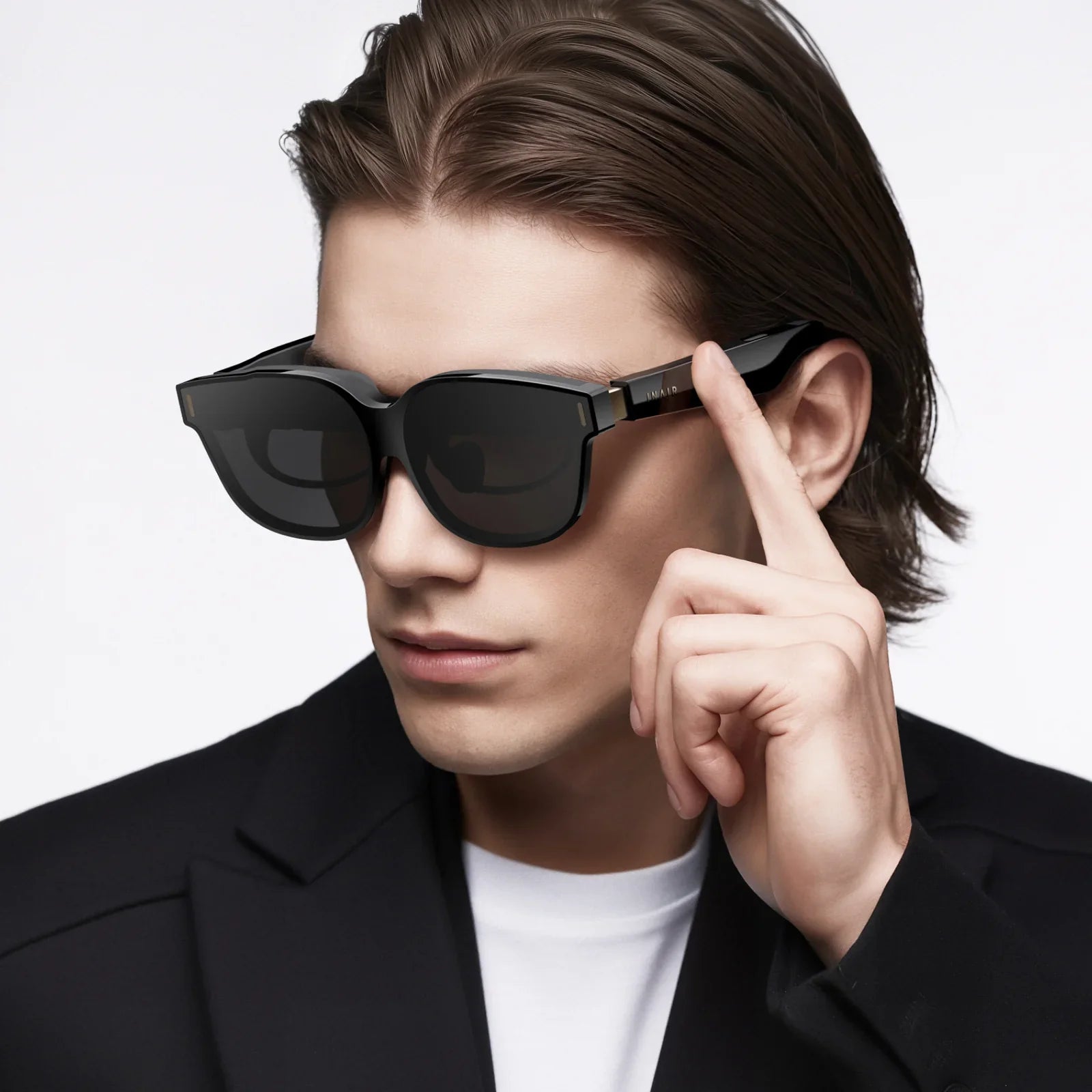
Stepping into a breathtaking virtual world only to be met with the frustrating clunk of plastic against plastic, or a blurred landscape that strains your eyes, is a common fear for the four-eyed among us. The question of whether VR headsets work with glasses isn't just a minor detail; it's a fundamental barrier to entry for a huge portion of potential users. For millions who rely on corrective lenses to see the world clearly, the prospect of removing them to enter a digital one is a non-starter. But here’s the good news: the virtual realm is not off-limits. With careful consideration, the right accessories, and a bit of knowledge, a crystal-clear and comfortable VR experience is not only possible but easily achievable for glasses wearers. This definitive guide will walk you through everything you need to know, from the core challenges to the innovative solutions that make VR accessible to all.
The Core Challenge: Why Glasses and VR Can Clash
At its heart, the issue is one of simple physics and geometry. A VR headset is designed to create an immersive visual experience by placing a set of lenses very close to your eyes. These lenses focus your vision onto the screens inside, which are typically only a few inches away. Glasses introduce a third set of lenses into this carefully calibrated optical system, creating a host of potential problems.
1. The Space Squeeze: A Battle for Real Estate
The most immediate and common issue is a lack of physical space. VR headsets have a built-in facial interface, usually made of foam or silicone, that creates a light-seal around your eyes. This interface is designed to accommodate the average face, not the additional protrusion of eyeglass frames. When you try to fit glasses inside, several things can happen:
- Discomfort and Pressure Points: The arms of your glasses are pressed tightly against your temples by the headset's strap, leading to pain and headaches during extended use.
- Scratches, Scratches Everywhere: This is a two-way street. The hard, often glass, lenses of your prescription glasses can easily scratch the softer, plastic lenses of the VR headset. Conversely, the headset's lenses can also damage your expensive glasses. This is a primary concern for users.
- Breaking the Immersive Seal: To make room, you might not pull the headset visor all the way in, breaking the light seal. This allows external light to bleed in, shattering the sense of immersion and reminding you that you're just looking at screens.
2. The Optical Dilemma: Finding the Sweet Spot
Even if you manage to physically fit your glasses inside, there's an optical challenge. VR headsets have a specific "sweet spot"—a small area in the center of the lens where the image is perfectly clear. Moving your eye away from this spot causes blurriness and distortion. Your glasses must align perfectly with both your eyes and the headset's lenses to maintain this sweet spot. If your glasses slip down your nose or are pushed askew by the headset's padding, the visual fidelity plummets.
3. Field of View (FOV) Reduction
Pushing the headset further away from your face to accommodate your glasses has another consequence: it reduces your effective field of view. Instead of feeling like you're looking out at a vast world, it can feel more like you're looking through a pair of binoculars or a tunnel. This "binocular effect" can lessen the feeling of presence and immersion that VR is famous for.
Assessing Your Specific Situation: It's Not One-Size-Fits-All
Before exploring solutions, it's crucial to understand that your experience will be highly dependent on two factors: your glasses and your headset.
The Glasses Factor
- Frame Size: Large, thick, or wide frames are the most problematic. Smaller, rounder, and wire-rimmed frames have a much higher chance of fitting comfortably.
- Frame Material: Flexible acetate or thin metal frames are more forgiving than rigid plastic ones.
- Lens Thickness: Strong prescriptions result in thicker lenses, which can protrude further and increase the risk of contact with the headset's lenses.
The Headset Factor
Modern headset design has increasingly acknowledged the glasses-wearing population.
- Older/Entry-Level Models: Many earlier or budget-friendly headsets have very limited eye relief (the distance between the lens and your eye), making them notoriously difficult for glasses wearers.
- Modern Premium Headsets: The current generation of high-end devices often includes a crucial feature: a mechanical IPD (Interpupillary Distance) adjustment. This allows you to physically move the lenses closer together or further apart to match the distance between your pupils, which is essential for aligning the optical path correctly, especially with glasses. More importantly, many feature a "glasses mode" or provide a deeper facial interface spacer in the box to manually create more room.
The Spectrum of Solutions: From DIY to Professional
Thankfully, you are not left to suffer. A range of solutions exists, from simple free tricks to custom-made accessories.
Solution 1: Wearing Your Glasses Inside the Headset (The Default Approach)
This is the first thing everyone tries. If you have smaller frames and a modern headset, it might just work.
Best Practices for This Method:
- Use the Spacer: If your headset came with a rubber or foam glasses spacer, use it! This little ring attaches to the headset's facial interface and pushes it out by a few precious millimeters, creating a safe buffer zone.
- Adjust the Headset Carefully: Put the headset on over your glasses, not the other way around. Loosen the straps, position the headset, and then tighten it gradually until it's secure without applying excessive pressure.
- Protect Your Investment: Seriously consider applying aftermarket lens protection films. These are cheap, removable plastic films that act as a sacrificial layer, protecting both your headset's lenses and your glasses from scratches.
Solution 2: Prescription Lens Inserts (The Ultimate Solution)
For those serious about VR, prescription lens inserts are far and away the best solution. These are custom magnetic or clip-in lenses that are precisely manufactured to your prescription and physically placed over the headset's built-in lenses.
Why they are the gold standard:
- Perfect Comfort: Your glasses remain on your desk. The headset feels exactly as it was designed to, with no pressure points or awkward fitting.
- Optimal Optics: The inserts are calibrated to work seamlessly with the headset's lenses, providing the largest possible sweet spot and the clearest image quality.
- Full Protection: They permanently protect the headset's underlying lenses from dust, scratches, and sweat.
- Convenience: They pop on and off in seconds, making it easy to share your headset with others who have different vision needs.
The process involves ordering from a specialized company online, providing your prescription details (sphere, cylinder, axis, and IPD), and waiting for your custom inserts to arrive. While this is an added cost, most users consider it an essential and worthwhile investment for a premium experience.
Solution 3: Contact Lenses (The Biological Fix)
The simplest way to circumvent the problem entirely is to use contact lenses while in VR. This eliminates all physical and optical interference, allowing you to use the headset exactly as intended. If you are already a contact lens wearer, this is your easiest path to a perfect experience. However, for extended sessions, some users report dry eyes, so having lubricating eye drops on hand is advisable.
Solution 4: Alternative Frame Options
Some companies offer specialized, ultra-thin glasses frames designed specifically for VR and AR use. These are minimalistic frames that prioritize a low profile above all else, maximizing the chance of compatibility with a wider range of headsets. This can be a good middle-ground solution if you don't want to use contacts or buy inserts.
Step-by-Step Guide: Getting the Right Fit
- Measure Your IPD: This is the single most important number for visual comfort in VR, with or without glasses. Many optometrists can provide this, or you can use apps and rulers to get a rough estimate at home. Set your headset's IPD adjustment to this number.
- Install the Spacer: Before you even put the headset on, attach the included glasses spacer to the facial interface.
- Loosen the Straps: Fully loosen the side and top straps to create the largest possible opening.
- Don the Headset: Hold the headset with both hands and place it over your glasses, letting the back strap cradle the base of your skull.
- Find the Sweet Spot: While holding the visor to your face, move it slightly up, down, left, and right until the image is at its clearest.
- Secure the Straps: Tighten the top strap first to take the weight off your cheeks, then the side straps until the headset is snug but not crushing your glasses.
- Fine-Tune: Check for any light leak and ensure the image remains clear. Readjust as necessary.
Beyond Clarity: Addressing Other Concerns
Comfort is King
Even with a perfect visual setup, comfort over long periods is key. Consider upgrading the headset's default strap to a rigid "halo" style or an elite-style strap with a battery counterweight. This distributes the weight more evenly across your head, eliminating pressure on your face and, by extension, your glasses.
Sharing Your Headset
If multiple people with different vision corrections use the same headset, prescription lens inserts are still the best solution. Their magnetic design allows them to be popped on and off in seconds, making it effortless to switch between users. Without them, you'll be constantly readjusting the headset and IPD setting for each person, a tedious process that increases the risk of damaging lenses.
Looking to the Future: A Built-In Solution?
The long-term future of VR and vision correction looks even brighter. There is active research and development into headsets with built-in diopter adjustment wheels, similar to high-end binoculars or cameras. This would allow users to dial in their specific prescription directly on the headset itself, rendering glasses, contacts, and inserts unnecessary. While this technology is in its infancy and currently limited to adjusting for near-sightedness, it represents a promising path toward making VR universally accessible right out of the box.
So, throw away the notion that your glasses are a ticket out of the virtual revolution. They are nothing more than a minor logistical hurdle, one that has been thoroughly solved by a thriving ecosystem of innovators and accessory makers. The blurred line between your vision needs and digital worlds has been brought into sharp focus. By embracing solutions like spacers, lens protectors, or the unparalleled convenience of custom inserts, you can claim your place in the metaverse with absolute clarity and comfort. The only thing left to question is which incredible world you’ll choose to explore first, with every detail rendered in perfect, breathtaking sight.
Share:
Best VR Glasses: A Comprehensive Guide to Immersive Technology in 2024
AR VR Headset News: The Next Frontier in Computing and How It Will Change Everything