


Imagine pointing your device at a static instruction manual and watching it spring to life with animated, 3D guides floating above the page. Or visualizing a new piece of furniture not just on your screen, but in your actual living room, perfectly scaled to the inch, before you ever click "buy." This is the magic of augmented reality (AR), a technology that once seemed like a distant sci-fi fantasy. But what was once the exclusive domain of major corporations with vast development budgets is now accessible to nearly anyone. The key to this revolution isn't just more powerful hardware; it's the emergence of a new paradigm: Easy AR.
From Complex Code to Intuitive Creation: The Evolution of AR
To truly appreciate the significance of Easy AR platforms, we must first understand the formidable barriers that once existed. Traditional AR development was a labyrinthine process. It required expertise in complex game engines, 3D modeling, computer vision, and advanced programming languages. Developers had to manually code the recognition of real-world objects and surfaces, a painstaking task prone to error. The process of anchoring a digital object securely in the real world, a concept known as tracking, was a significant technical hurdle. This high barrier to entry meant that AR experiences were rare, expensive to produce, and often limited to high-value marketing campaigns or experimental applications.
The turning point came with the convergence of several technological trends. The ubiquitous adoption of powerful smartphones equipped with high-resolution cameras, precise sensors like gyroscopes and accelerometers, and powerful GPUs provided the perfect hardware foundation. Simultaneously, tech giants and innovative software companies began to abstract away the underlying complexity. They packaged the most challenging aspects of AR—environment scanning, surface detection, motion tracking, and lighting estimation—into streamlined Software Development Kits (SDKs) and cloud-based services. This abstraction is the very heart of Easy AR: it handles the hard parts behind the scenes, allowing creators to focus on the experience itself.
What Exactly Makes AR "Easy"?
The term "Easy AR" doesn't refer to a single product but to a category of tools and approaches designed to minimize the technical knowledge required to build AR. These platforms share several common characteristics that democratize the creation process.
Drag-and-Drop Interfaces and Visual Programming: Many modern Easy AR tools feature intuitive, visual interfaces. Instead of writing lines of code to position a 3D model, creators can simply drag it from a library and drop it into their scene. They can use node-based visual scripting to create interactions—for example, connecting a "tap" event to a "play animation" command—without ever touching a text-based code editor. This opens the door for graphic designers, marketers, and educators to become AR authors.
Pre-Built Templates and Asset Libraries: Why build from scratch when you can adapt? Easy AR platforms often provide a rich marketplace of templates for common use cases like product try-ons, interactive posters, or room decor apps. Vast libraries of ready-to-use 3D models, animations, and sound effects further accelerate the process, reducing the need for specialized 3D modeling skills.
Cross-Platform Compatibility: A major headache of early development was creating separate experiences for iOS and Android. Easy AR solutions typically offer cross-platform publishing, meaning a creator can build an experience once and deploy it to both major mobile operating systems and often to web browsers as well, ensuring the widest possible audience can access it.
Cloud-Based Recognition and Storage: Advanced features like image or object recognition no longer need to be processed solely on the device, which can be computationally expensive and limited. Cloud-based services can store vast databases of target images, recognize them instantly, and stream the corresponding AR content. This makes it feasible to create experiences that recognize thousands of unique items without bloating the app's download size.
The Transformative Impact Across Industries
The accessibility ushered in by Easy AR is not just a convenience; it's a catalyst for innovation across countless sectors. It's moving AR from a novelty to a utility.
Retail and E-Commerce: This is perhaps the most visible application. Customers can now virtually "try on" sunglasses, makeup, or see how a new sofa fits their space. Easy AR tools allow retail brands to create these try-before-you-buy experiences quickly and update them with new inventory without a full-scale app overhaul. It reduces purchase uncertainty and lowers return rates, providing clear value for both businesses and consumers.
Education and Training: Textbooks become interactive portals. Students can explore a human heart in 3D, watch historical events unfold on their desk, or dissect a virtual frog. In corporate and industrial settings, Easy AR enables the creation of step-by-step assembly or repair instructions overlaid directly onto machinery. This on-the-job guidance improves accuracy, speeds up training, and enhances safety for complex tasks.
Marketing and Advertising: Static print ads in magazines or posters on a street corner can be transformed into immersive portals. A user can scan an ad for a new car and see a full 3D model they can inspect from every angle, customize the color, and even hear the engine roar. This deepens engagement and creates a memorable brand interaction far beyond a flat image.
Art and Storytelling: Museums and artists are using Easy AR to add digital layers to physical exhibits. A painting can tell its own story through animation, and a historical artifact can be restored to its original glory virtually. This creates a new medium for narrative, blending the physical and digital worlds to create deeply engaging cultural experiences.
Gazing into the Crystal Ball: The Future of Easy AR
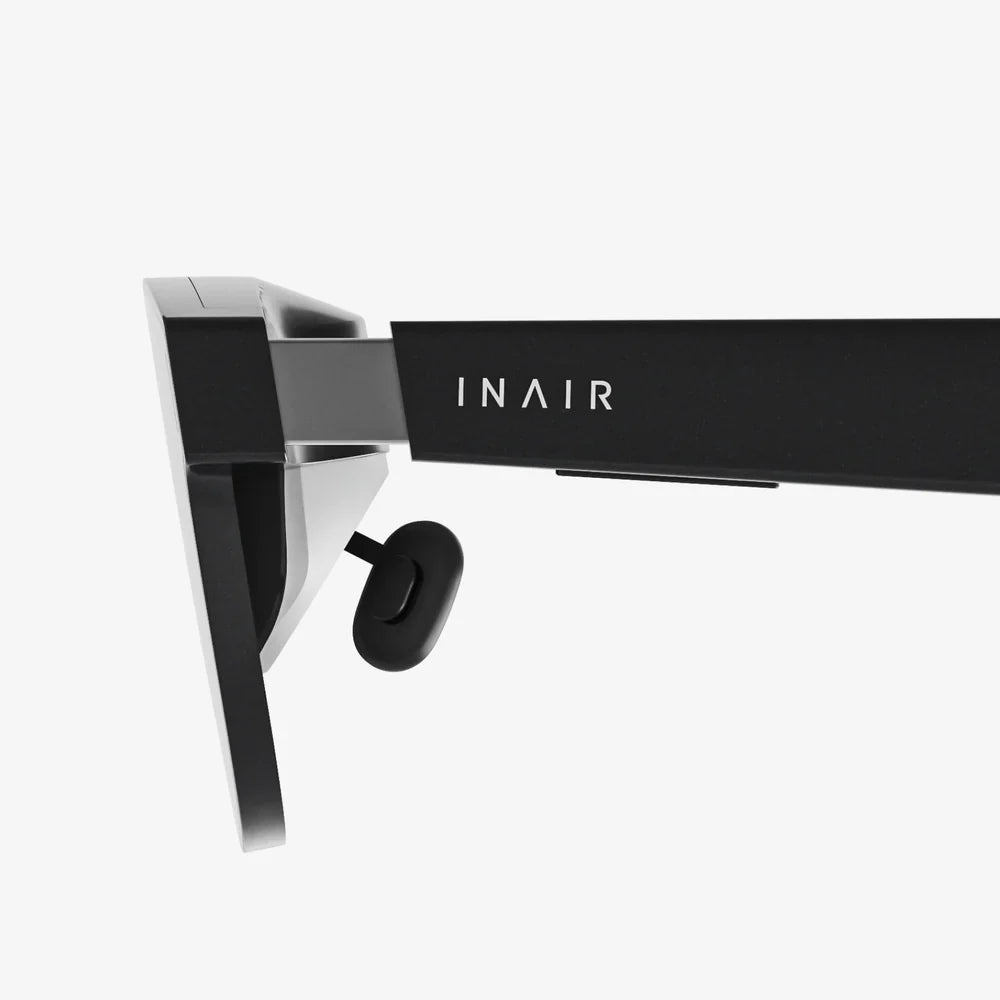
The trajectory of Easy AR points toward even greater integration and immersion. The next frontier is the move beyond handheld screens toward wearable devices like smart glasses. As these devices become more affordable and socially accepted, Easy AR authoring tools will evolve to create experiences for this hands-free, always-available context. We can also expect a greater emphasis on collaborative AR, where multiple users can see and interact with the same digital objects in a shared physical space, all built with simplified multi-user tools.
Furthermore, the integration of artificial intelligence will make AR smarter and more contextual. Imagine an AR app that not only places a virtual table in your room but uses AI to suggest designs that match your existing decor. Or an educational app that can answer questions about the 3D model it's displaying through a built-in AI assistant. The combination of Easy AR and AI will create experiences that are not just visual but genuinely intelligent and responsive to user needs.
Embracing the Augmented World
The era of gatekept, complex AR is over. The rise of Easy AR platforms represents a fundamental shift, empowering a new generation of creators who have ideas but not necessarily doctorates in computer science. It's a tool for artists, teachers, shop owners, and storytellers. It's breaking down the walls between the digital and the physical, allowing us to enhance our reality with information, beauty, and functionality. This democratization is the true revolution; it's ensuring that the future of our augmented world will be built not just by a few tech giants, but by the boundless creativity of everyone.
The line between your imagination and the world you see is thinner than you think. With the power of Easy AR now at your fingertips, what will you create? The tools are waiting, the canvas is the world around you, and the only limit is your creativity. The next great augmented experience could be just one drag, drop, and click away.
Share:
What Does Virtual Meeting Mean: The Complete Guide to Digital Collaboration
Build Augmented Reality Glasses: A Comprehensive Guide to Crafting Your Own Wearable Digital Lens