


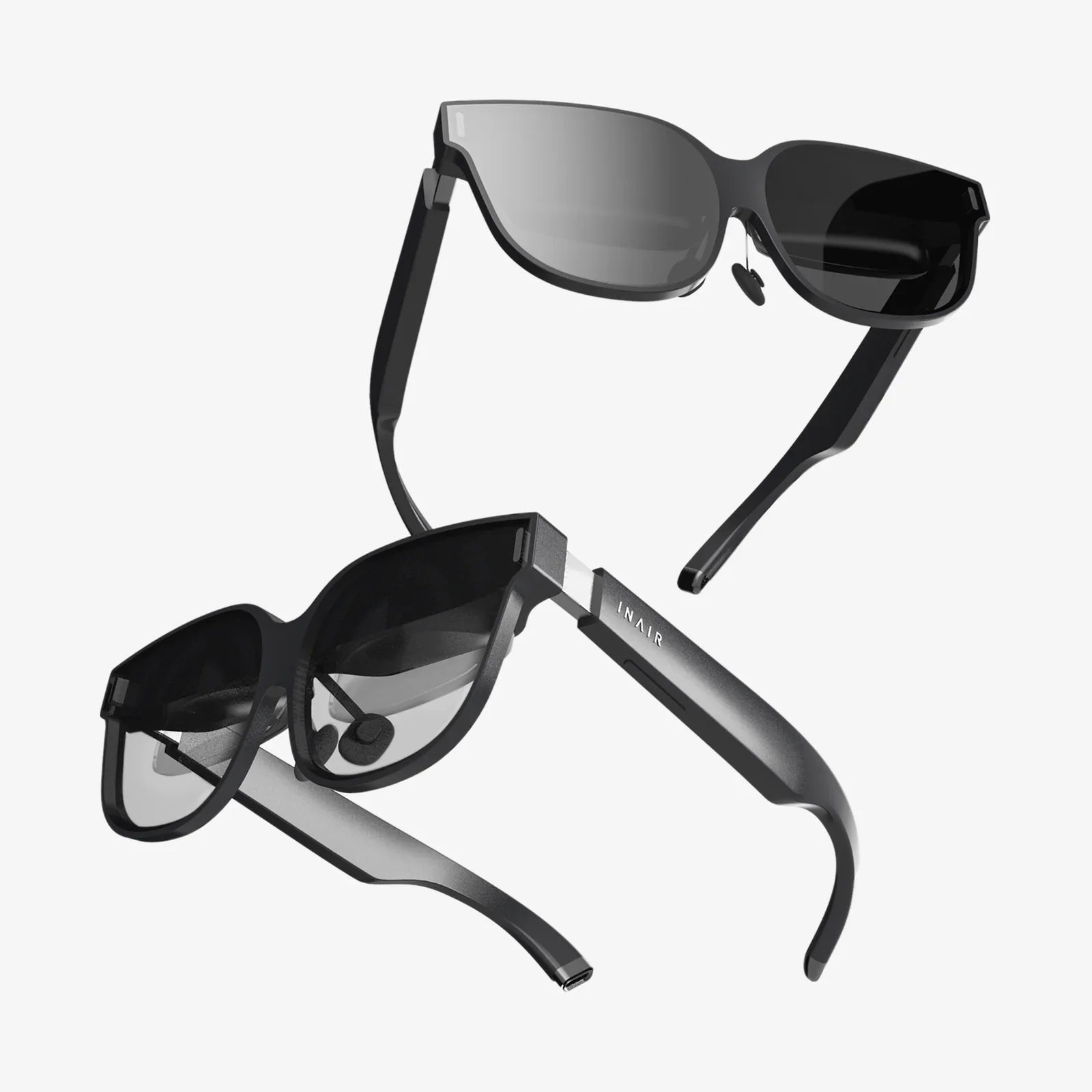
Imagine a history class where students don't just read about ancient Rome; they walk through its bustling forums, gazing up at the towering, newly constructed Colosseum. Envision a biology lesson where learners don't just see a diagram of a cell; they shrink down to navigate its intricate organelles, watching proteins assemble in real-time. This is no longer the stuff of science fiction. It is the new reality being forged by educational VR (Virtual Reality) and AR (Augmented Reality) software, a technological revolution that is poised to redefine the very essence of learning and teaching.
The Foundational Shift: From Abstract to Experiential Learning
For centuries, education has largely relied on abstract, two-dimensional methods of instruction. Textbooks, blackboards, and more recently, digital screens, have been the primary conduits of knowledge. While effective to a degree, these methods often struggle to convey complex, spatial, or dynamic concepts. Students are frequently asked to memorize facts and visualize processes they have never directly experienced. Educational VR and AR software shatters this paradigm by introducing immersive, experiential learning. It is a shift from passive reception to active participation, transforming students from spectators into explorers.
VR software creates completely digital, computer-generated environments that users can interact with. Using a headset, learners are transported to different worlds, eras, or even inside the human body. This total immersion is powerful for creating presence—the feeling of "being there"—which is a key driver of engagement and memory retention.
AR software, by contrast, overlays digital information onto the real world. Using a tablet, smartphone, or AR glasses, students can point their device at a textbook page to see a 3D heart model beating above it, or view a historical battlefield unfold on their classroom desk. AR enhances reality rather than replacing it, making it exceptionally useful for contextual learning and blending digital content with physical surroundings.
Unlocking Cognitive Benefits: How Immersion Accelerates Understanding
The power of educational VR and AR software is not merely novelty; it is deeply rooted in cognitive science. These tools align with constructivist learning theories, which posit that people learn best by actively constructing their own knowledge through experiences.
First, immersion significantly boosts memory retention. The brain encodes memories based on their emotional and experiential weight. The wonder of walking on Mars or the excitement of assembling a virtual engine creates a strong emotional hook, making the associated information far more memorable than text on a page. This is known as episodic memory—recalling information based on where and when it was learned—and immersive experiences make these episodes incredibly vivid.
Second, these technologies excel at visualizing the invisible. Concepts that are too small, too vast, too slow, too fast, or too dangerous for a traditional classroom become accessible. A student can:
- Witness the formation of the solar system over billions of years, sped up in minutes.
- Manipulate complex mathematical equations in 3D space, seeing how changing a variable alters a geometric form.
- Safely conduct a chemistry experiment with volatile substances.
- Stand at the edge of a volcano and understand tectonic plate movement from the inside out.
This ability to concretize the abstract is perhaps the single greatest cognitive benefit, leading to profound conceptual understanding rather than superficial memorization.
Transforming Core Subject Areas
The application of educational VR and AR software spans the entire curriculum, injecting new life into every subject.
STEM Education (Science, Technology, Engineering, and Mathematics)
This is arguably the most fertile ground for immersive tech. Biology students can take a journey through the bloodstream. Physics students can manipulate gravity and observe projectile motion in a vacuum. Engineering students can build and stress-test virtual models before a single physical resource is expended. Mathematics becomes a tangible, visual playground where complex graphs and geometries can be walked through and manipulated, demystifying subjects that often intimidate learners.
History and Social Studies
These subjects are transformed from a recitation of facts into a living, breathing experience. Instead of reading about the pyramids of Giza, students can explore their chambers, understanding their scale and construction. They can stand in a recreated ancient Athenian agora, listen to Martin Luther King Jr. deliver his "I Have a Dream" speech on the National Mall, or experience the daily life of a Viking village. This fosters empathy and a deep, contextual understanding of historical events and cultures that is impossible to achieve through text alone.
Language Arts and Literature
Imagine reading Shakespeare's "Romeo and Juliet" and then being able to step onto the balcony in Verona during the famous scene. Students can explore the settings of the novels they read, interacting with the environment and even with digital avatars of characters. This creates a powerful emotional connection to the text, enhancing comprehension and appreciation. AR can also bring static book illustrations to life, providing additional context and engagement for younger readers.
Vocational Training and Skills Development
Beyond traditional academics, VR and AR offer incredible value for vocational training. Medical students can practice complex surgical procedures on virtual patients, gaining muscle memory and confidence without risk. Automotive repair students can learn to diagnose and fix engines with AR instructions overlaid directly onto the physical vehicle. Aspiring welders, electricians, and pilots can all hone their skills in safe, cost-effective virtual environments that provide immediate feedback.
Fostering Essential Soft Skills
The benefits extend beyond academic content to the development of crucial 21st-century skills. Multi-user VR experiences promote collaboration and communication as students work together to solve problems in a virtual space. Exploring complex systems fosters critical thinking and systems thinking. Many experiences are designed around problem-solving puzzles that require creativity and innovation. Furthermore, these technologies can be powerful tools for fostering empathy and global citizenship by allowing students to experience perspectives far removed from their own, such as life in a refugee camp or the effects of climate change on a polar landscape.
Implementation Considerations for Educators
Adopting educational VR and AR software is not without its challenges. A successful implementation requires careful planning.
Pedagogical Integration: The technology must serve the learning objective, not the other way around. It should be seamlessly woven into the curriculum as a tool to achieve specific goals, not used as a occasional gimmick. Lesson plans need to be designed to include pre-immersion preparation and post-immersion reflection to solidify learning.
Cost and Accessibility: While prices are falling, hardware (headsets, powerful computers, tablets) still represents a significant investment. Schools must consider models like shared carts of devices or station-based learning. Ensuring equitable access for all students is a critical concern.
Technical Infrastructure and Support: A robust Wi-Fi network is essential, especially for cloud-based AR applications and multi-user VR platforms. Schools also need a plan for device management, software updates, and technical support to avoid frustrating downtime.
Teacher Training and Buy-in: For any edtech to succeed, teachers must be comfortable and confident using it. Professional development is non-negotiable. Training should focus not just on how to operate the hardware, but on how to effectively integrate it into pedagogy.
Health and Safety: Guidelines must be established for appropriate use. This includes setting time limits to prevent eye strain or cybersickness, ensuring a clear physical play area for VR, and addressing privacy concerns related to student data.
The Future Horizon: Where Do We Go From Here?
The evolution of educational VR and AR software is rapid. We are moving towards a future of even more seamless integration. The rise of standalone, wireless headsets is reducing hardware barriers. Advances in haptic feedback technology will soon allow students to "feel" the virtual objects they are manipulating. Artificial Intelligence will enable adaptive learning experiences within these environments, where the simulation responds in real-time to a student's choices and provides personalized guidance.
Furthermore, the concept of the "metaverse"—a persistent network of shared virtual spaces—holds immense potential for education. Imagine a dedicated educational metaverse where students from across the globe can meet for a class, collaborate on projects, and visit virtual museums or historical sites together, breaking down the physical walls of the classroom entirely.
The trajectory is clear. These technologies will become increasingly sophisticated, affordable, and integrated into the educational fabric. They will not replace teachers, but rather empower them, freeing educators from the role of mere disseminators of information to become facilitators of profound, unforgettable experiences.
The classroom of the future is not a distant dream; it is being built in the virtual labs and augmented realities of today. It is a classroom without limits, where a student's curiosity is the only curriculum, and the entire universe—from the atomic to the astronomical—is their interactive textbook. The journey from rote memorization to embodied understanding has begun, and it is an adventure every student deserves to experience.
Share:
Augmented Reality Deep Learning: The Symbiotic Future Reshaping Our World
XR Glasses News Today: The Latest Breakthroughs Shaping Our Digital Future