


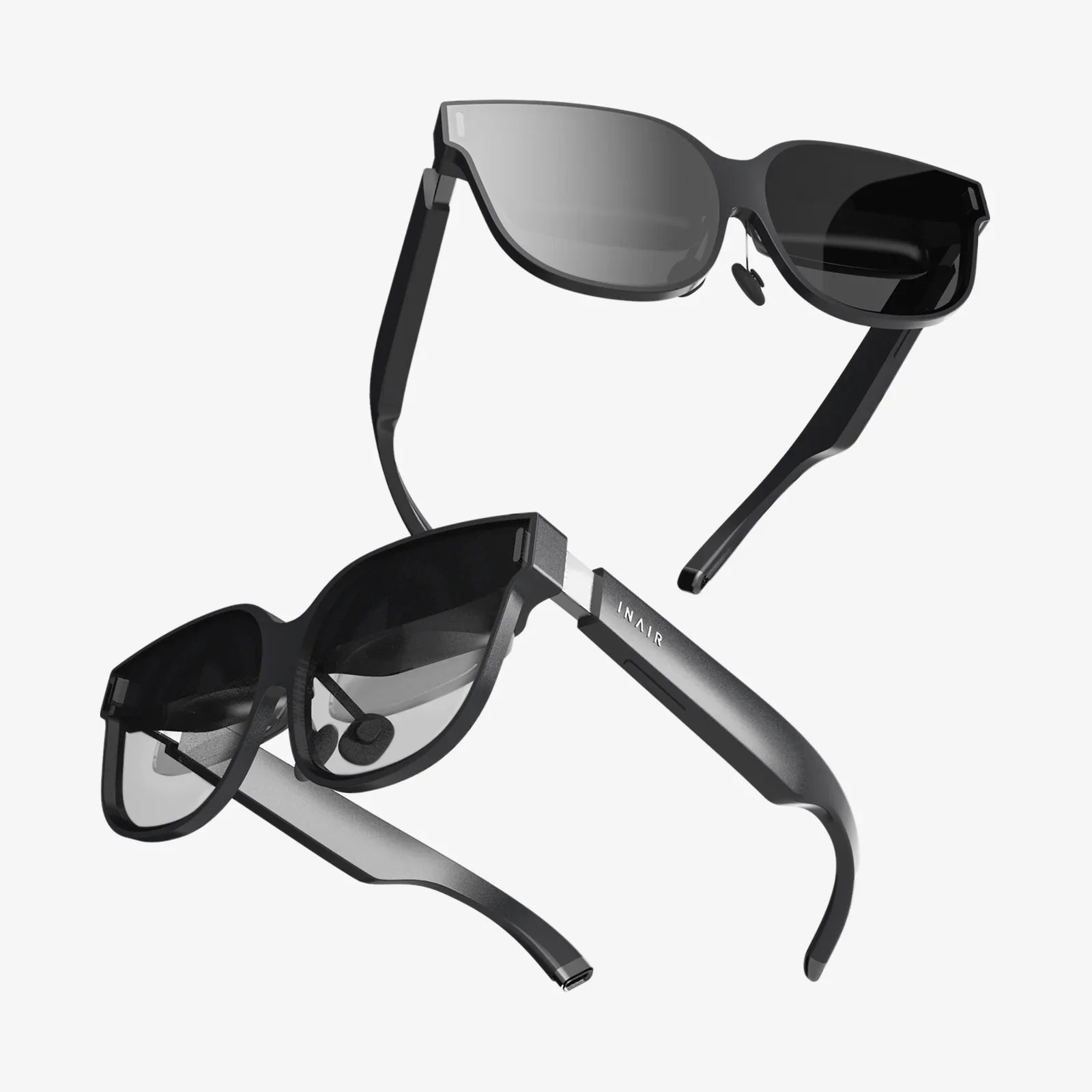
The digital horizon is shimmering with a new kind of reality, one not confined to flat screens but layered seamlessly onto the world we walk through. News from the front lines of technology points to a single, transformative device: XR glasses. Today's headlines aren't just about incremental updates; they are the tremors before a seismic shift in how we compute, connect, and perceive everything around us. The race to create the ultimate pair of smart glasses is heating up, and the implications are nothing short of revolutionary.
The Optical Heart: A Leap in Clarity and Comfort
For years, the primary bottleneck for widespread XR adoption has been the optical stack. Bulky, blurry, and uncomfortable headsets were the norm. However, recent news highlights significant breakthroughs that are finally cracking this code.
One of the most promising advancements is in the field of pancake optics. This revolutionary lens design uses a folded path for light, bouncing it between multiple surfaces before it reaches the eye. The result is a dramatic reduction in the physical depth of the glasses, bringing them closer to the form factor of traditional eyewear. This isn't a minor improvement; it's the key to moving from a strapped-on visor to something you might willingly wear all day.
Simultaneously, advancements in micro-LED display technology are solving the brightness and resolution problem. Unlike older OLED displays, micro-LEDs are incredibly bright and efficient, capable of producing vibrant images that remain visible even in direct sunlight. This is critical for outdoor use and for overlaying digital content onto a well-lit physical environment. When combined with ever-increasing pixel densities, the dreaded "screen door effect"—where users can see the gaps between pixels—is rapidly becoming a relic of the past.
Perhaps the most futuristic news comes from research into holographic and light field displays. These technologies aim to project light in a way that mimics how we naturally perceive depth, reducing the vergence-accommodation conflict that causes eye strain in many current devices. This means digital objects won't just appear on a flat plane; they will exist in true 3D space, appearing to have real volume and depth, making the experience far more immersive and comfortable for extended use.
The Invisible Engine: AI and Spatial Computing
Powerful optics are meaningless without an intelligent brain to drive them. The latest generation of XR glasses is being designed from the ground up as AI-native devices. This represents a fundamental shift from being a passive display to an active perceptual partner.
At the core of this intelligence is on-device AI processing. News from chip manufacturers reveals a new class of dedicated processors capable of handling immense neural network workloads locally. This allows for real-time understanding of the environment without a constant, lag-inducing connection to the cloud. Your glasses can see what you see, understand it, and react instantly.
This capability unlocks a new paradigm of contextual and ambient computing. Imagine walking through a city: your glasses, powered by continuous computer vision, could translate street signs instantly, highlight the route to your meeting, display the menu and reviews for a restaurant you pass, and identify a rare bird perched on a branch—all without you ever uttering a command or pulling out a phone. The device anticipates your needs based on your environment, gaze, and habits.
Furthermore, this AI engine is the key to seamless user interaction. News from developer conferences shows rapid progress in combining precise hand-tracking, eye-tracking, and voice recognition. The goal is to move beyond clunky controllers to intuitive, natural input. You might select an app with a glance, resize a virtual window with a pinch of your fingers, or dismiss a notification with a subtle voice command. The technology itself begins to fade into the background, leaving only the utility.
Beyond Novelty: The Maturing Use Cases
The conversation around XR glasses is evolving from "what could be" to "what is." Today's news is filled with tangible, professional applications that are delivering real value right now.
- Remote Assistance and Collaboration: A field technician repairing a complex machine can be guided by an expert thousands of miles away. The expert can see the technician's view, annotate the real world with arrows and diagrams, and pull up schematics, all within the technician's field of vision. This drastically reduces downtime, errors, and travel costs.
- Design and Prototyping: Architects and engineers are using XR glasses to visualize 3D models at full scale before anything is built. They can walk through a virtual building, inspect the fit of mechanical parts in a factory layout, and make changes in real-time, collaborating with colleagues who appear as life-like avatars in the same virtual space.
- Healthcare and Medicine: Surgeons are using AR overlays during procedures to display vital signs, MRI data, or surgical checklists without looking away from the patient. Medical students can practice complex procedures on detailed holographic patients, and physical therapists can use motion capture to guide patients through exercises with perfect form.
- Training and Education: From practicing dangerous procedures in a safe, simulated environment to exploring the solar system in a classroom, XR glasses offer an unparalleled immersive learning experience that boosts retention and engagement.
The Shifting Market Landscape: Giants and Guerrillas
The competitive landscape for XR glasses is more dynamic than ever. News today suggests we are moving away from a single dominant player towards a fragmented, multi-faceted ecosystem.
Major technology conglomerates are investing billions, betting that XR glasses will be the next essential computing platform. Their strategy often involves creating a closed, end-to-end ecosystem of hardware, software, and services, much like the smartphone market. They are leveraging their vast resources to drive down component costs and fund ambitious, long-term research.
However, a fascinating counter-trend is the rise of specialized startups. These agile companies are not trying to build a do-everything device. Instead, they are focusing on specific vertical markets—enterprise, healthcare, defense—with ruggedized, purpose-built glasses that solve acute business problems. Their success proves that there may not be a "one-size-fits-all" winner in this new category.
Another critical piece of news is the growing emphasis on open platforms and interoperability. The lesson from the PC and internet eras is that open standards foster incredible innovation. Industry consortia are now working to create common protocols for the immersive web, ensuring that digital assets and experiences can be shared across different devices and platforms, preventing a future of walled digital gardens.
The Roadblocks and Ethical Considerations
For all the exciting news, significant challenges remain. Battery life is a perennial issue; powering high-resolution displays, multiple cameras, and powerful processors on a device meant to be worn all day is a formidable engineering challenge. Thermal management is another—no one wants a hot piece of hardware on their face.
But the most pressing discussions in today's news are not about hardware; they are about ethics and society.
- Privacy: XR glasses, by their very nature, are equipped with always-on cameras and microphones. They continuously scan and analyze their surroundings. This raises profound questions about data collection, consent, and surveillance. Who owns the data of the world that your glasses capture? How do we prevent a dystopia of constant recording?
- Social Acceptance: The "glasshole" stigma associated with earlier attempts at smart glasses has not entirely faded. Wearing technology that can record others surreptitiously creates social friction. New social norms and perhaps even laws will need to evolve to govern the use of these devices in public and private spaces.
- The Digital Divide: As with any transformative technology, there is a risk that XR glasses could exacerbate existing inequalities. Will access to immersive education and next-generation productivity tools become a privilege for the wealthy, creating a new class of digitally augmented "haves" and analog "have-nots"?
Glimpsing the Future: What's on the Horizon?
Looking beyond today's news, the trajectory points towards a future where XR glasses become as ubiquitous as smartphones. The end goal is a device that is indistinguishable from regular glasses—lightweight, all-day wearable, and always connected.
The next frontier is neural interfaces. While still in early stages, research into non-invasive brain-computer interfaces could eventually allow us to control our XR experiences with thought alone, making interaction even more seamless and intuitive.
We are also moving towards a world of persistent digital twins. Our physical environments will be mapped and mirrored in the cloud, allowing for shared, persistent AR experiences. A virtual art gallery could be permanently anchored to a city square, or a complex data visualization could be tied to a factory floor, visible to all authorized personnel through their glasses.
The ultimate promise of XR glasses is not to pull us out of reality into a virtual world, but to enrich our existing reality with a layer of useful, beautiful, and empowering information. It's about enhancing human capability and connection, not replacing it.
The journey from today's groundbreaking headlines to tomorrow's indispensable tool is already underway. The pieces are falling into place: the optics are clearing, the AI is smartening, and the world is slowly learning to see through a new lens. The next time you glance at a news alert about XR glasses, know that you're not just reading about another gadget; you're getting a preview of the next chapter of human-computer interaction, and it's being written right before your eyes.
Share:
Educational VR or AR Software: Reshaping the Classroom of Tomorrow, Today
Can People With Glasses Use VR? A Complete Guide to Virtual Reality and Eyewear