


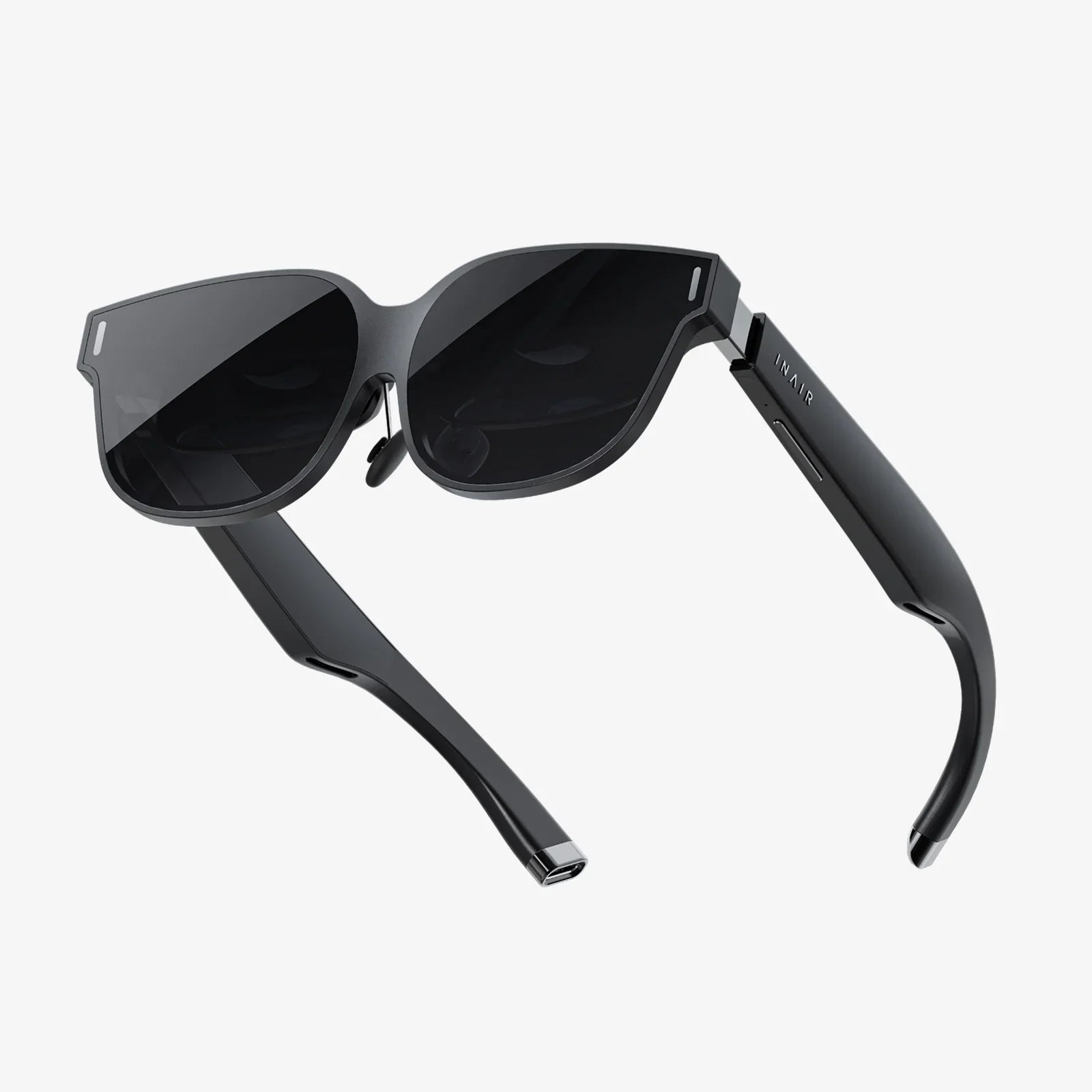
Imagine a world where the line between the digital and the physical isn't just blurred—it's erased. Where you can learn complex surgery by practicing on a holographic heart, collaborate with colleagues as if they were in the same room from thousands of miles away, or walk through your newly renovated kitchen before a single wall is ever torn down. This is not a distant future; it is the nascent present, powered by the rapid and relentless advancement of emerging technologies like AR and VR. These tools are poised to revolutionize everything we know, offering a glimpse into a new paradigm of human-computer interaction that promises to transform our reality itself.
The Foundational Divide: Understanding AR and VR
While often mentioned in the same breath, Augmented Reality (AR) and Virtual Reality (VR) represent two distinct approaches to altering our perception of the world.
Virtual Reality (VR) is an immersive, all-encompassing experience. By donning a headset, users are transported into a completely digital, computer-generated environment. The real world is shut out, replaced by a simulated one that can be a fantastical game world, a meticulous training simulation, or a virtual meeting space. The goal of VR is presence—the convincing feeling of being somewhere else. This is achieved through a combination of high-resolution displays, precise head-tracking technology, and spatial audio that reacts to your movements.
Augmented Reality (AR), by contrast, does not seek to replace the real world but to augment it. It layers digital information—images, data, 3D models—onto our view of the physical environment. This is most commonly experienced through smartphone cameras or, more powerfully, through transparent glasses or lenses. The digital elements appear to coexist with real-world objects, providing context-specific information, entertainment, or guidance. The goal of AR is contextual enhancement, enriching your current reality rather than replacing it.
A third term, Mixed Reality (MR), is often used to describe a spectrum that blends the real and virtual worlds. MR experiences allow physical and digital objects to interact in real-time. For instance, a virtual character might hide behind your real-world sofa, or a digital windmill's shadow might be cast accurately by your room's real sunlight. This represents the most advanced fusion of these technologies, though the terms AR and VR remain the most widely recognized.
Beyond Gaming: The Industrial Metamorphosis
While consumer entertainment provided the initial commercial thrust for these technologies, their most profound impact is being felt far beyond the realm of gaming. Enterprises are deploying AR and VR to solve real-world problems, boost efficiency, and create entirely new value propositions.
Revolutionizing Healthcare and Medicine
The healthcare sector is witnessing a paradigm shift driven by immersive tech. Surgeons are using VR to plan and practice complex procedures on detailed, patient-specific 3D models before ever making an incision, reducing operation times and improving outcomes. AR is being used in the operating room, overlaying critical information like ultrasound data or a patient's vitals directly into the surgeon's field of view, allowing them to keep their focus on the task at hand. Furthermore, VR is proving to be a powerful tool for pain management, physical rehabilitation, and treating psychological conditions like PTSD and phobias through controlled exposure therapy.
Transforming Education and Training
AR and VR are dismantling the traditional boundaries of the classroom. Instead of reading about ancient Rome, students can take a virtual field trip and walk its streets. Medical students can dissect a virtual cadaver countless times. Mechanics-in-training can learn to repair a complex engine by following AR cues that highlight each part and the required steps, superimposed directly onto the physical machinery. This "learning by doing" in a risk-free, immersive environment dramatically improves knowledge retention and skill acquisition.
Empowering Design and Manufacturing
In the world of design and manufacturing, AR and VR are accelerating innovation and streamlining processes. Automotive and aerospace engineers use VR to prototype and evaluate new vehicle designs in a full-scale, collaborative virtual environment long before building expensive physical prototypes. On the factory floor, AR smart glasses guide warehouse workers to items for picking, dramatically reducing errors and training time. Field service technicians can access schematics and receive remote expert guidance overlaid on the equipment they are fixing, minimizing downtime and the need for specialist travel.
Reshaping Retail and Commerce
The retail experience is being reimagined through AR. Customers can now use their smartphones to see how a new sofa would look in their living room, how a pair of glasses fits their face, or how a shade of paint appears on their wall at different times of day. This "try before you buy" digital experience reduces purchase anxiety and product returns, building consumer confidence. Virtual showrooms allow brands to showcase their entire inventory in a fraction of the physical space, creating engaging and novel shopping experiences.
The Confluence of Forces: What's Powering the Rise?
The current acceleration of AR and VR is not happening in a vacuum. It is the result of a powerful convergence of several other technological trends.
5G Connectivity: The high bandwidth and ultra-low latency of 5G networks are critical for streaming rich, immersive content and enabling complex cloud-based rendering. This reduces the processing burden on the headset itself, paving the way for lighter, more affordable, and more powerful devices.
Artificial Intelligence (AI) and Computer Vision: AI is the brain behind the scenes. It enables object recognition (allowing AR apps to understand what they are looking at), spatial mapping (understanding the geometry of a room), and gesture tracking (using hands as controllers). AI makes these experiences intuitive and responsive.
Edge Computing: By processing data closer to the user, edge computing reduces the lag that can break immersion and cause discomfort in VR. It allows for more complex simulations and richer graphics to be delivered seamlessly.
The Metaverse Vision: The burgeoning concept of a persistent, interconnected network of virtual spaces—the metaverse—is a significant driver. AR and VR are widely seen as the primary gateways to this future digital frontier, providing the immersive interface through which we will work, socialize, and play.
Navigating the Obstacle Course: Challenges on the Horizon
Despite the immense potential, the path to ubiquitous adoption is fraught with significant challenges that must be addressed.
Hardware Limitations: For VR, headsets are still often bulky, expensive, and can cause motion sickness or eye strain in some users. For AR, the dream of socially acceptable, all-day smart glasses with long battery life and a wide field of view remains largely unrealized. The hardware needs to become smaller, more powerful, more comfortable, and more affordable.
Content and Interoperability: The ecosystem is still fragmented. Competing standards and closed platforms can lock users and developers into a single ecosystem, hindering the creation of a unified and open metaverse. A critical mass of compelling, must-have enterprise and consumer content is still being developed.
The Social and Ethical Quandary:
The rise of pervasive immersive technologies raises profound questions. How do we prevent the creation of a deeper digital divide? What are the psychological effects of long-term immersion in virtual worlds? How do we protect privacy when devices with always-on cameras and microphones are worn in public and private spaces? Establishing clear ethical guidelines and robust data security frameworks is not an option but a necessity. Looking ahead, the distinction between AR and VR will likely continue to blur into a spectrum of continuous experiences. We are moving towards a future of ambient computing, where technology recedes into the background of our lives, providing information and assistance only when and where we need it, seamlessly woven into the fabric of our everyday reality. We can expect the rise of more sophisticated haptic feedback systems, allowing users to not just see and hear the virtual world but to feel it. Brain-computer interfaces, though far off, hint at a future where we could navigate virtual spaces with our thoughts. Ultimately, the success of these technologies will not be measured by their technical specs, but by their ability to solve human problems, enhance human capabilities, and foster genuine connection. The next time you look at the world around you, consider the invisible digital layer that is slowly, surely, being painted atop it. The devices that will make this visible are evolving from clunky curiosities into sleek, powerful portals. The revolution will not be televised; it will be experienced, interacted with, and lived in a dimension that is only just beginning to reveal its infinite possibilities. The question is no longer if these technologies will change our world, but how quickly we are ready to step into the new one they are building.The Future is Immersive: A Glimpse of What's to Come
Share:
Smart Glasses With Built In Screen: The Invisible Revolution On Your Nose
Human Computer Interaction Products Are Redefining Our Digital Existence