


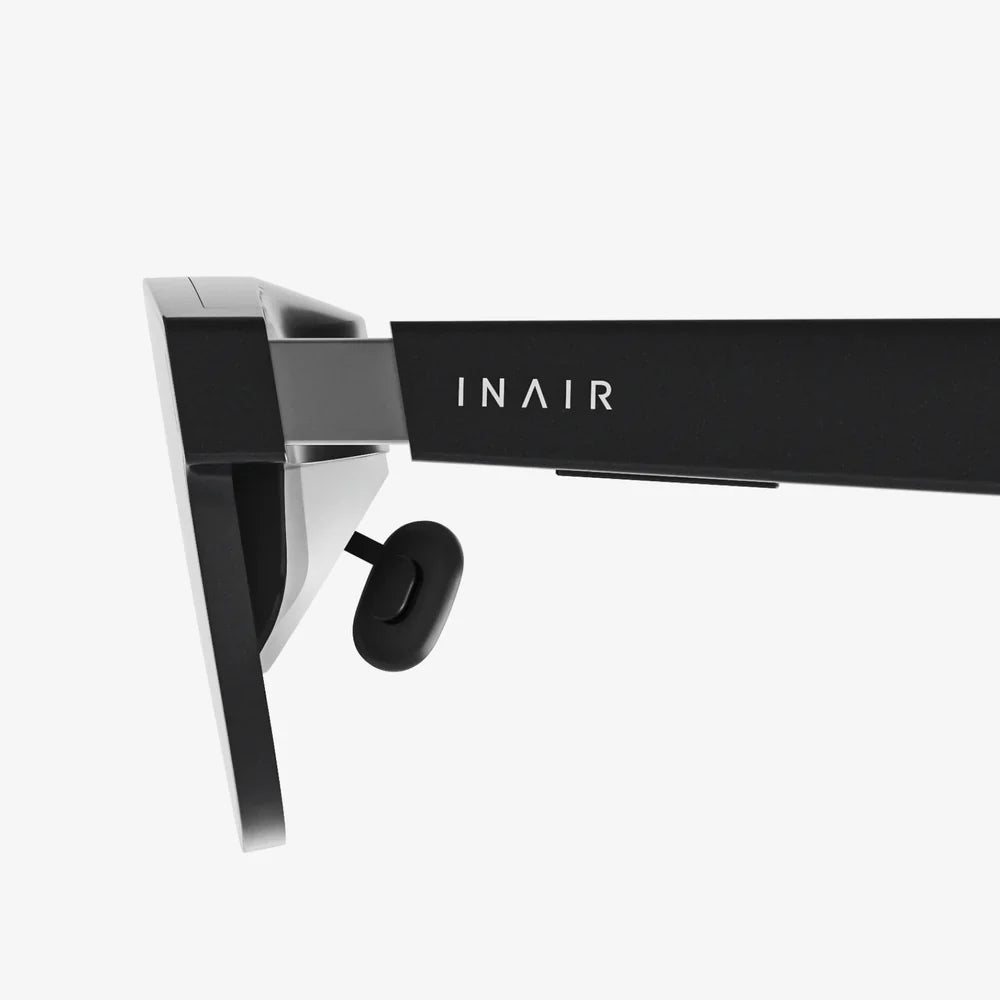
Imagine a world where your technology doesn't just wait for your command—it anticipates your needs, understands your context, and responds with an almost psychic intuition. This is no longer the realm of science fiction; it is the burgeoning reality being crafted by the latest generation of human computer interaction products. We are standing at the precipice of a fundamental shift, moving from a paradigm of simply using computers to one of truly living with them, intertwined in a seamless dance of input and output. The devices and interfaces emerging today are not merely tools; they are becoming partners, assistants, and extensions of our own human capabilities, promising to dissolve the final barriers between our physical intentions and digital actions.
The Evolution of the Dialogue: From Punch Cards to Perceptive Partners
The history of human computer interaction is a story of abstraction. We began with the most literal of languages: binary code and physical punch cards that required deep technical knowledge. The command-line interface (CLI) that followed was a step toward abstraction, using text to bridge the gap, but it still demanded the human to learn the machine's language. The true revolution arrived with the Graphical User Interface (GUI) and the mouse, a paradigm that dominated for decades. This was a monumental leap, translating digital functions into visual metaphors like desktops, folders, and trash cans that we could manipulate directly.
Yet, the GUI still maintained a distinct separation. We went to the computer, sat down, and interacted with a screen-based world. The modern era of human computer interaction products is defined by shattering this separation. The catalyst was the multi-touch screen, which introduced a more natural, direct manipulation of digital objects. But this was just the opening act. We are now in the midst of a much broader revolution, driven by advancements in several key areas:
- Ubiquitous Computing: Computers are no longer just on our desks; they are in our pockets, on our wrists, in our ears, and embedded in our environments. This demands new interaction models that are context-aware and always available.
- Artificial Intelligence and Machine Learning: AI is the engine of modern HCI. It allows systems to learn from vast datasets of human behavior, enabling them to predict intent, recognize patterns (like speech or gestures), and automate complex tasks.
- Sensor Proliferation: A myriad of sophisticated sensors—from LiDAR and depth-sensing cameras to millimeter-wave radar and advanced microphones—now equip devices with a rich understanding of their surroundings and the people within them.
- Haptics and Feedback Systems: Technology is learning to "speak" back to us through more sophisticated means than just visual and auditory signals. Advanced haptic engines can simulate the feel of a button click on a flat surface or the texture of a virtual object.
The New Language of Interaction: Beyond the Screen
This convergence of technologies has given birth to a new lexicon of interaction modalities, moving far beyond the point-and-click or tap-and-swipe of previous eras.
Voice and Conversational Interfaces
The ability to simply talk to our devices has been a long-standing goal of HCI. Today's voice assistants, powered by natural language processing (NLP) and generation (NLG), have made significant strides. The interaction is evolving from stilted, predefined commands to more fluid, conversational dialogues. These products act as invisible intermediaries, allowing us to set reminders, control our smart homes, access information, and even compose messages through speech, often while our hands and eyes are occupied with other tasks. This represents a profound shift towards hands-free, eyes-up computing that integrates into the flow of daily life.
Gesture and Motion Control
Where voice fails in noisy environments or requires silence, gesture control steps in. Using cameras and sensors, human computer interaction products can now interpret human movement as a form of input. This ranges from simple hand waves to dismiss an alarm to complex skeletal tracking that allows a user to control a video game or manipulate 3D models in virtual space with their entire body. This modality is incredibly powerful for immersive technologies and is increasingly found in automotive interfaces, allowing drivers to control infotainment systems without taking their eyes off the road.
Gaze and Eye-Tracking
Perhaps one of the most subtle yet powerful forms of input, eye-tracking technology monitors where a user is looking. This allows for incredibly intuitive interfaces where simply looking at an item can highlight it, and dwelling a gaze can select it. In accessibility contexts, it is transformative, granting computer control to individuals with limited mobility. In consumer applications, it can create deeply immersive experiences in virtual reality, where the virtual world can react to where you look, enhancing realism and performance through foveated rendering.
Contextual and Ambient Awareness
The most advanced human computer interaction products are those that fade into the background. They employ a form of passive interaction, constantly sensing the environment to provide information and functionality without explicit commands. A smart display might show your calendar for the day when you walk into the kitchen in the morning, or a device might automatically silence notifications when it detects you are in a meeting. This proactive, ambient computing model represents the ultimate goal: technology that serves us without demanding our constant attention.
The Human Impact: Accessibility, Ethics, and the Future of Connection
The implications of these advancements extend far beyond mere convenience. They are fundamentally altering the human experience with technology.
Democratizing Access
Perhaps the most profound impact is in the field of accessibility. Voice control provides independence for those who cannot use a traditional mouse and keyboard. Gaze-tracking interfaces offer a world of communication for those with neurodegenerative diseases. Sophisticated prosthetic limbs with advanced HCI allow for precise control through muscle signals. These products are not just consumer gadgets; they are lifelines, breaking down barriers and creating a more inclusive digital world.
The Ethical Imperative
With great power comes great responsibility. As these products become more woven into our lives, they collect unprecedented amounts of personal and biometric data—our voiceprints, our facial patterns, our daily routines, and even our emotional states. This raises critical questions:
- Privacy: Who has access to this data? How is it stored and used? The always-listening, always-watching nature of some devices creates significant privacy concerns.
- Bias and Fairness: AI systems are trained on data, and if that data contains societal biases, the products will perpetuate them. There are well-documented instances of speech recognition systems failing to understand certain accents or facial recognition systems performing poorly on non-white faces.
- Autonomy and Agency: When a system anticipates our needs, does it also risk shaping them? There is a fine line between helpful suggestion and behavioral manipulation, especially when the algorithms driving the suggestions are opaque.
Addressing these challenges is not optional; it is a core requirement for the ethical development of future human computer interaction products. This necessitates transparent design practices, robust data protection frameworks, and a diverse workforce that can anticipate and mitigate these risks.
The Horizon: Where Do We Go From Here?
The trajectory of HCI points toward even deeper integration. Brain-Computer Interfaces (BCIs), once a fantastical concept, are making rapid progress in medical trials, allowing paralyzed patients to control digital interfaces with their thoughts. Haptic technology is advancing to the point where full tactile feedback in virtual reality could simulate the feel of any material. The line between the physical and digital worlds will continue to blur through augmented reality, overlaying interactive information directly onto our perception of reality.
The future of human computer interaction products is not about a single device or a specific modality. It is about a cohesive, intelligent, and multi-modal ecosystem. Your voice, your gaze, your gestures, and the context of your environment will all work in concert across all your devices, from your smallest wearable to your smart home. The technology will become so intuitive, so seamlessly integrated, that we will stop thinking about the interaction itself. We will simply think, and the world will respond. The computer, as a distinct entity, will fade away, leaving only an enhanced human experience, empowered by a silent, intelligent, and ever-present digital partner.
The next time you ask a question aloud and receive an answer, or wave your hand to skip a song, remember you are not just using a product—you are participating in a quiet revolution, one that is meticulously erasing the line between our human instincts and the digital realm, crafting a future where technology understands us better than we ever understood it.
Share:
Emerging Technologies Like AR VR Are Redefining Our Reality
AR Technology Fashion: The Digital Revolution Redefining Style and Shopping