


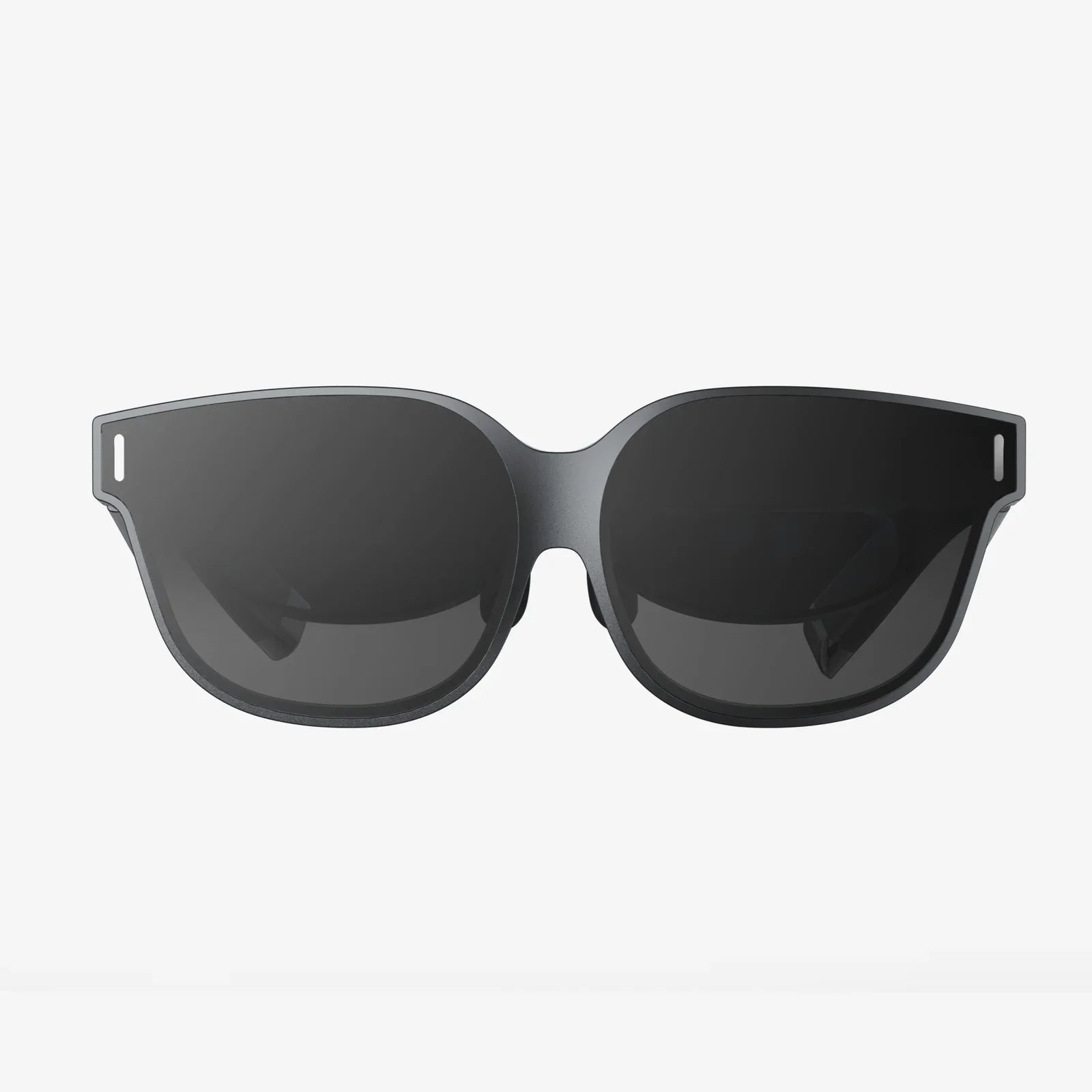
Imagine a world where information doesn’t live on a screen in your hand, but is painted onto the very fabric of reality itself—a silent, intelligent layer enhancing everything you see, know, and do. This is no longer the realm of science fiction; it is the burgeoning present of Enhanced Reality, a term rapidly gaining traction as a more accurate and expansive descriptor for the technological revolution we are living through.
For years, the concept has been popularly known as Augmented Reality (AR), a label that, while functional, carries a certain technological baggage. It speaks of an addition, an augmentation, often conjuring images of bulky headsets and flashy, but ultimately superficial, digital overlays. The term Enhanced Reality, however, hints at something more profound, more integrated, and fundamentally more human. It suggests not just adding digital noise, but intelligently enriching our perception and interaction with the world. It is the difference between a tool and an environment, between a feature and a foundation. This shift in terminology mirrors the technology's own evolution from a novel gimmick to an invisible utility poised to reshape every facet of our lives, from how we work and learn to how we connect and create.
Beyond the Label: Defining the Enhancement
At its core, Enhanced Reality is a live, direct or indirect view of a physical, real-world environment whose elements are amplified by computer-generated perceptual information. This enhancement can engage multiple sensory modalities, including visual, auditory, haptic, somatosensory, and olfactory. The key differentiator from Virtual Reality (VR) is that it does not replace the real world but supplements it, allowing users to maintain a presence in their actual environment while interacting with digital content.
The "enhancement" can manifest in numerous ways:
- Informational Overlay: Text, data, labels, or instructions superimposed onto objects or locations. Imagine looking at a complex piece of machinery and seeing animated repair instructions floating beside each component, or gazing at a restaurant to see its health rating and daily specials materialize on its façade.
- Contextual Visualization: Bringing hidden data or potential futures to life. An architect could walk through an empty construction site and see the fully realized building standing there, or a medical student could practice procedures on a hyper-realistic, interactive anatomical model superimposed on a mannequin.
- Interactive Artistry: Transforming spaces with dynamic digital art, immersive storytelling, and interactive games that use the real world as a playground. Public parks could become the stages for epic narratives, and museum exhibits could burst into animated life.
This technology stack relies on a sophisticated fusion of hardware and software: sensors (like cameras, accelerometers, GPS), processors, and display technologies (from smartphone screens to sleek smart glasses and eventually contact lenses) all working in concert to understand the environment and render digital content in a believable, useful way.
The Engine Room: How Enhanced Reality Perceives the World
For digital content to feel like a natural part of our reality, the technology must possess a deep understanding of the physical space it occupies. This is achieved through a combination of powerful technologies that act as the eyes and brain of the system.
Simultaneous Localization and Mapping (SLAM) is the foundational wizardry. In simple terms, SLAM allows a device to simultaneously map an unknown environment and pinpoint its own location within that map in real-time. It does this by identifying unique features in the environment—the corner of a table, a distinct pattern on a wall, the edge of a doorframe—and tracking their position relative to the device as it moves. This creates a persistent digital twin of the space, a canvas upon which digital objects can be placed and remain locked in position.
Complementing SLAM is the use of computer vision and AI. Advanced algorithms can now not only map a room but also recognize and classify the objects within it. The system doesn't just see a flat surface; it understands it is a "table." It doesn't just detect a shape; it identifies it as a "lamp" or a "car." This semantic understanding is crucial for context-aware enhancements. The technology can then decide what relevant information to display; instructions for a router are shown when looking at a router, not a coffee mug.
Finally, precise tracking and anchoring ensure the digital illusion holds. Through a combination of visual markers, environmental features, and inertial measurement units (IMUs), the system constantly adjusts the placement of digital content to account for the user's head and eye movements, preventing frustrating drift or misalignment that would shatter the sense of immersion.
The Invisible Tool: Enhanced Reality in the Enterprise
While consumer applications often grab headlines, the most significant and immediate impact of Enhanced Reality is occurring behind the scenes, in industrial and enterprise settings. Here, it is not a toy but a powerful tool driving efficiency, safety, and precision.
In manufacturing and field service, technicians wearing smart glasses can have schematics, step-by-step guidance, and remote expert support visually overlaid onto the equipment they are repairing. This hands-free access to information drastically reduces errors, shortens task completion times, and empowers less experienced workers to perform complex tasks with expert-level guidance. A remote senior engineer can see what the on-site technician sees and literally draw instructions onto their field of view, circling a specific valve or highlighting a sequence of buttons to press.
The design and architecture industries are being revolutionized. Instead of reviewing designs on a 2D screen, teams can collaborate around a full-scale, 3D holographic model of a building or product, walking around it, peering inside it, and making changes in real-time. This enhances spatial understanding, catches design flaws early, and improves stakeholder buy-in by providing a tangible vision of the final product long before ground is broken.
Logistics and warehousing have found a killer application in Enhanced Reality. Warehouse workers are guided by visual cues to the exact bin location for items, with the most efficient picking route displayed before their eyes. This technology, often called "vision picking," has been shown to dramatically increase picking speed and accuracy, reducing operational costs and improving order fulfillment rates.
Reshaping Daily Life: The Consumer Experience
The march of Enhanced Reality into our daily lives is slower but no less inevitable. It promises to dissolve the barrier between our digital and physical selves, weaving computing seamlessly into the background of our existence.
Retail and Try-Before-You-Buy is one of the most compelling use cases. Shoppers can preview how a new sofa would look in their living room, see if a particular shade of paint complements their décor, or "try on" watches, glasses, or makeup from the comfort of their home. This reduces purchase anxiety and product returns while creating a more engaging and personalized shopping experience.
Navigation and contextual information will move beyond the turn-by-step directions on a phone. Imagine walking through a foreign city, and simply by looking around, seeing historical facts pop up about a monument, translations of street signs appear in your field of view, or a glowing path on the sidewalk guide you to your destination. The city itself becomes an interactive, informative guidebook.
In education and training, the potential is staggering. Textbooks can transform into interactive 3D models. Students can dissect a virtual frog, explore the solar system in their classroom, or walk through a historical event as if they were there. This experiential learning fosters deeper understanding and retention by engaging multiple senses and making abstract concepts tangible.
Navigating the Enhanced World: Challenges and Considerations
The path to a seamlessly Enhanced Reality is not without its significant hurdles. The dream of lightweight, all-day smart glasses that offer high-fidelity visuals remains hampered by limitations in battery life, processing power, and display technology. The "social acceptability" of wearing such devices in public is another barrier that only time and elegant design will overcome.
More profound are the questions of privacy and data security. An always-on, camera-equipped device that is constantly scanning and analyzing its environment raises serious concerns. Who has access to this video feed? How is the data being used and stored? The very technology that allows for such rich environmental understanding also has immense potential for surveillance if not properly regulated and designed with privacy-first principles.
Furthermore, we must grapple with the digital divide and the potential for new forms of spam or "visual pollution." Will access to certain layers of enhancement become a premium service, creating information haves and have-nots? And how do we prevent our physical world from being cluttered with unwanted digital advertisements, turning every public space into a Times Square billboard? Establishing ethical norms, robust design standards, and thoughtful regulation will be just as important as the technological breakthroughs themselves.
The journey into this enhanced world is already underway, quietly transforming factories, operating rooms, and design studios. It’s a transition from a technology we look at to a technology we look through—an invisible fabric of intelligence woven into the world around us. The ultimate promise of Enhanced Reality is not to distract us from the real world, but to help us see it more clearly, understand it more deeply, and interact with it more meaningfully. The next time you raise your phone to see a digital dinosaur in your garden, remember, you’re not just playing a game; you’re catching an early glimpse of a fundamental new way we will all experience reality.
Share:
Portable VR Glasses: The Unshackled Future of Immersive Technology
Portable VR Glasses: The Unshackled Future of Immersive Technology