


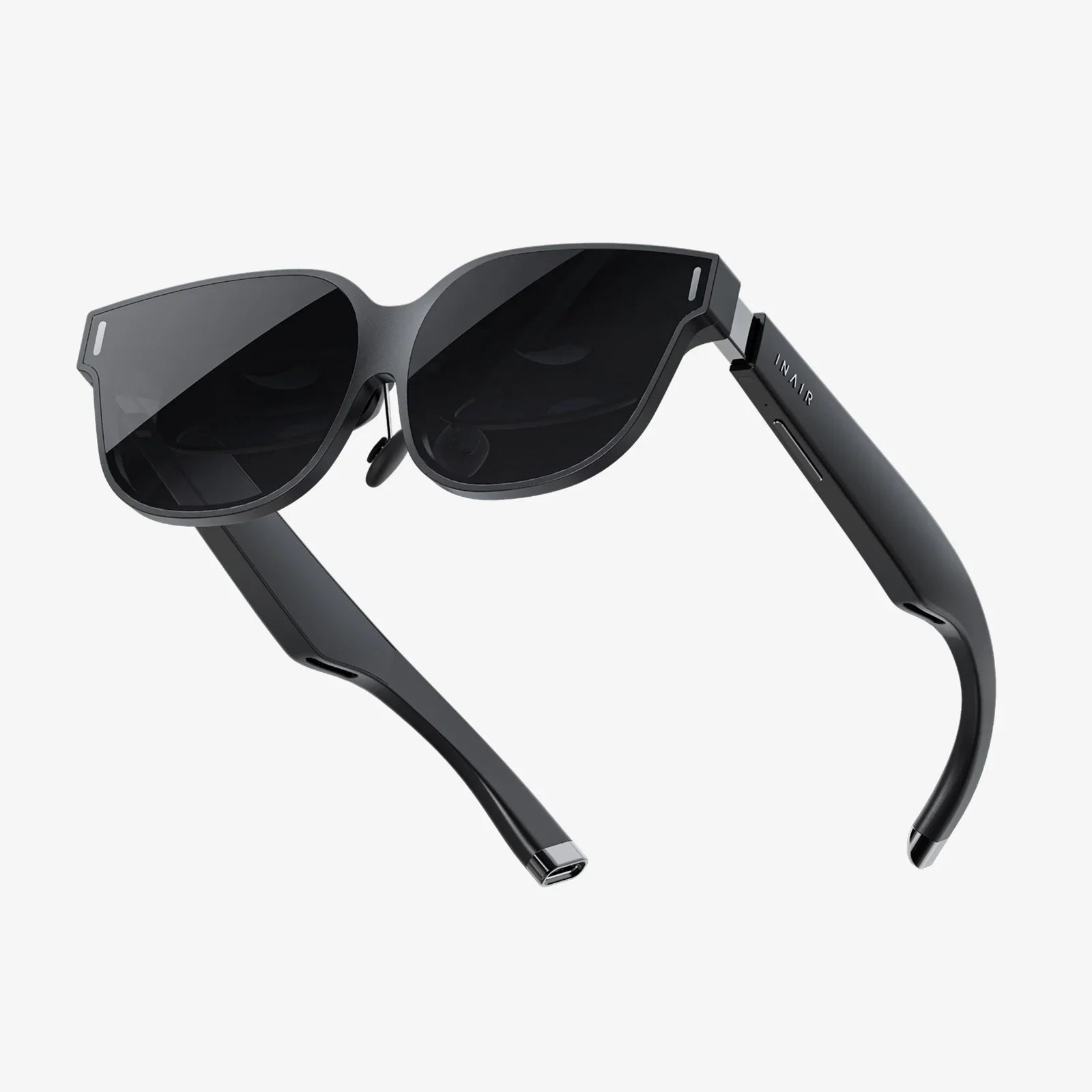
Imagine stepping into a breathtaking virtual world, not from a dedicated room with a powerful computer, but from anywhere your feet can take you. The dream of truly unshackled virtual reality is no longer science fiction; it’s being realized today, nestled in the palms of our hands and the pockets of our backpacks. Portable VR glasses are the key that unlocks this new dimension of freedom, promising to dissolve the final barriers between us and the digital realms we wish to explore. This isn't just an incremental upgrade; it's a fundamental shift in how we interact with immersive technology, moving it from a stationary experience to a personal, on-the-go companion. The era of being tethered to a single spot is over, and the age of portable immersion has just begun.
The Architectural Leap: Power in Your Pocket
The evolution from bulky, tethered headsets to sleek, self-contained glasses is a story of remarkable technological convergence. Early virtual reality systems were beasts of burden, requiring a direct physical connection to a high-end computing unit that rendered the complex environments. This tether was both a literal and figurative chain, limiting movement and accessibility.
Portable VR glasses have shattered this paradigm through a trifecta of innovation:
- Mobile System-on-a-Chip (SoC) Technology: The heart of modern portable glasses is a mobile processor, a marvel of engineering that packs immense computational power into an incredibly small and power-efficient form factor. These chips are directly descended from the technology that powers high-end smartphones, capable of handling sophisticated graphics, complex tracking algorithms, and immersive audio simultaneously.
- Advanced Display Systems: Gone are the heavy, low-resolution screens of the past. Modern portable units utilize high-density, fast-switching LCD or OLED panels. Coupled with sophisticated pancake lens technology, these displays offer a wide field of view, stunning clarity, and significantly reduced screen-door effect, all while maintaining a compact optical stack that allows for a glasses-like form factor.
- Inside-Out Tracking: This is the magic trick that cuts the cord. Instead of relying on external sensors or base stations placed around a room, portable glasses use a array of outward-facing cameras and sensors. These cameras constantly scan the environment, using simultaneous localization and mapping (SLAM) algorithms to understand their position in physical space with incredible precision. This allows users to walk around, duck, dodge, and interact naturally without any external setup.
A World of Experiences Unbound
The true value of any technology is measured by the experiences it enables. Portable VR glasses are not just a more convenient way to access existing content; they are a catalyst for entirely new genres of applications and use cases that were previously impractical or impossible.
Gaming Without Borders
The gaming sector is experiencing a renaissance. Players are no longer confined to a play area defined by the length of a cable. They can turn their entire living room into a battlefield, a puzzle-solving ancient temple, or a dance floor. Location-based experiences are also emerging, where physical spaces like parks, warehouses, or museums become the playing field for large-scale, interactive adventures. The line between the game world and our world becomes beautifully blurred.
Redefining Social Connection and Productivity
Imagine joining a business meeting not as a grid of faces on a screen, but as a lifelike avatar around a virtual conference table, and you can do this from a hotel room or a quiet corner of a coffee shop. Portable VR makes this a daily reality. Social platforms are flourishing, allowing people to meet up in virtual spaces to watch movies, attend concerts, or simply hang out as if they were in the same physical room, fostering a sense of presence that video calls cannot match.
Education and Training in Context
The educational potential is staggering. Students can take a field trip to ancient Rome during history class, hold the solar system in their hands during science, or practice complex surgical procedures in a risk-free simulated environment. This contextual, hands-on learning enhances retention and understanding in ways textbooks never could. For enterprise, training simulations for everything from equipment operation to public speaking can be deployed anywhere, consistently and effectively.
Navigating the Current Frontier: Challenges and Considerations
Despite the exciting progress, the journey towards perfect portable VR is ongoing. The technology operates within a delicate balance of competing demands.
- Battery Life vs. Performance: The most significant constraint remains battery life. High-fidelity graphics and constant environmental tracking are computationally intensive tasks that drain power quickly. Manufacturers are constantly innovating with more efficient chipsets, software optimization, and larger battery capacities, but users must still plan their immersive sessions around charging cycles.
- Thermal Management: All that processing power generates heat. Designing a system that remains cool and comfortable against the user's face during extended use is a critical engineering challenge that directly impacts comfort and device longevity.
- The Compute Conundrum: While mobile processors are incredibly powerful, they still cannot match the raw graphical output of a top-tier dedicated computer. This means that the most visually stunning, hyper-realistic experiences are still the domain of tethered systems. However, the gap is narrowing with each new generation of hardware, and cloud streaming services are emerging as a potential solution to offload heavy computation.
- Content Ecosystem: The library of experiences designed specifically to leverage the unique freedom of portable VR is growing rapidly, but it is still maturing. Developers are learning to design for an untethered audience, creating experiences that emphasize mobility and spatial awareness.
The Horizon: What the Future Holds
The trajectory of portable VR glasses points toward a future of even greater integration and invisibility. We are moving towards devices that are lighter, more powerful, and more intuitive. Several key developments are on the horizon:
- Augmented Reality (AR) Integration: The next evolutionary step is the fusion of VR and AR into a single device—often referred to as Mixed Reality (MR). Future glasses will likely be able to switch seamlessly between fully immersive virtual worlds and augmented experiences that overlay digital information onto the physical environment, all through the same pair of lenses.
- Advanced Input and Interaction: Controllers will become more sophisticated or may even become obsolete. The future lies in advanced hand-tracking, eye-tracking, and eventually, neural interfaces that allow us to control digital elements with a thought, making interaction more natural and intuitive.
- The Metaverse Gateway: Portable VR glasses are poised to become the primary consumer gateway to the broader concept of the metaverse—a persistent network of interconnected virtual spaces. Their accessibility and ease of use will be crucial for widespread adoption of these future digital worlds.
The shackles have been removed. Portable VR glasses are not merely a convenient alternative; they are the vanguard of a fundamental shift in personal technology. They democratize access to immersive experiences, taking them out of the niche enthusiast's den and into the mainstream world. They empower creators, educators, and everyday users to interact with digital content in a more human, physical, and unconstrained way. While challenges remain, the path forward is clear: a future where the digital and physical coexist seamlessly, and the power to explore any reality is literally at our fingertips. The next great adventure doesn't require a powerful desktop or a dedicated room; it’s waiting for you, right in your pocket.
Share:
Enhanced Reality: The Invisible Layer Reshaping Our World
Enhanced Reality: The Invisible Layer Reshaping Our World