


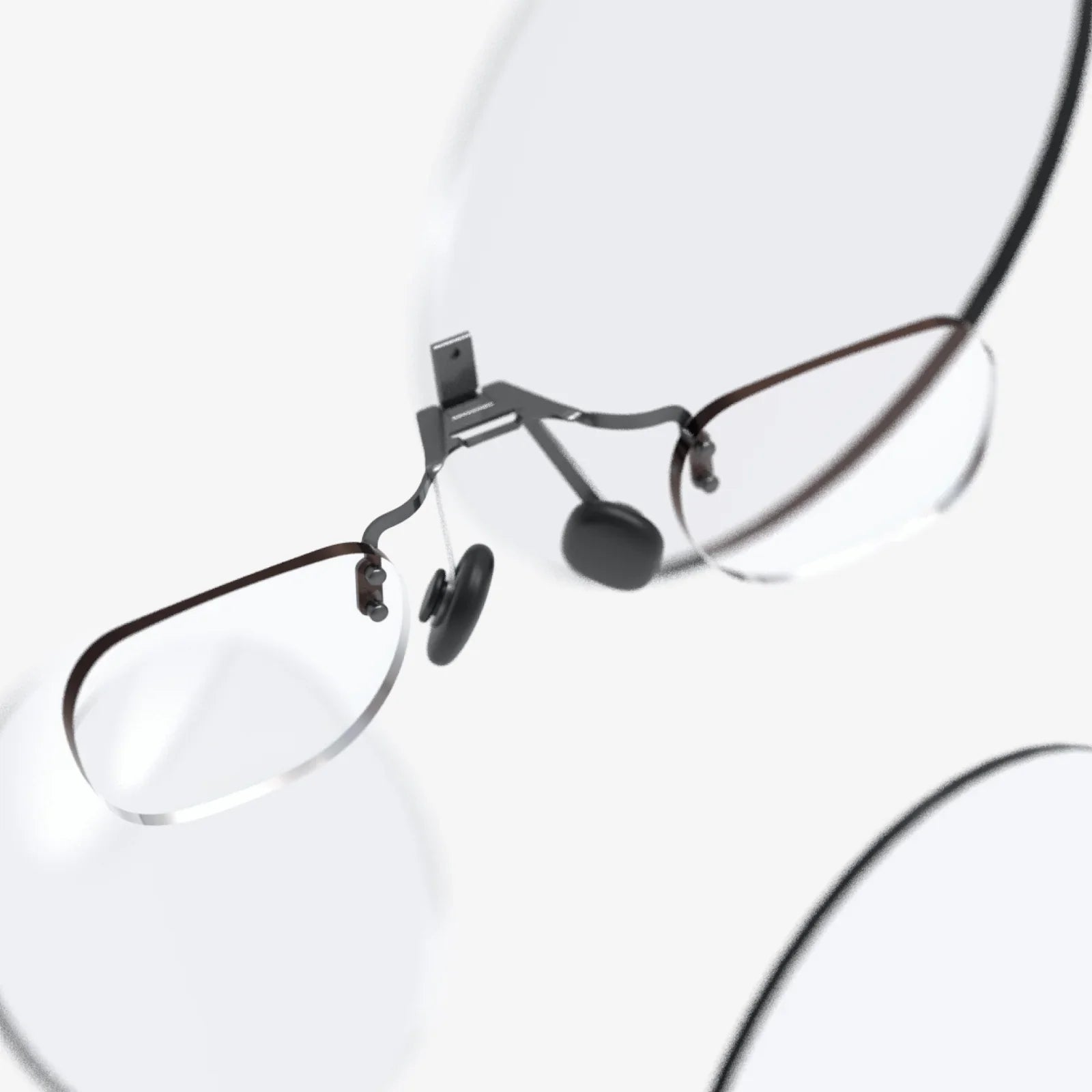
Imagine a world where the line between your thoughts and the internet blurs, where information doesn't appear on a screen you hold but is painted directly onto the canvas of your reality. This isn't a distant sci-fi fantasy; it's the imminent future being built today, and it’s being worn on our faces. The emergence of intelligent eyewear represents one of the most significant technological shifts since the smartphone, promising to move computing from our pockets into our periphery, fundamentally altering how we perceive and interact with everything around us.
The Evolution from Screen to Scene
The journey to this point has been a long one. The dream of overlaying data onto our vision has captivated inventors and storytellers for decades. Early attempts were bulky, expensive, and offered limited functionality, often feeling more like a proof-of-concept than a practical tool. They suffered from poor battery life, low-resolution displays, and a lack of compelling software. They were, in essence, a solution in search of a problem.
However, the foundational technologies needed to make this vision a reality have been advancing at a breakneck pace. Miniaturized sensors, incredibly efficient processors, breakthroughs in display technology like micro-LED and waveguide projectors, and the exponential growth of artificial intelligence have all converged to create a perfect storm. The hardware is now sophisticated enough to be worn comfortably for extended periods, and the AI software is powerful enough to make sense of the world in real-time. This synergy is what separates the current generation of devices from their predecessors; they are not just displays, but intelligent companions that see, hear, and understand the context of your environment.
Beyond Augmented Reality: The Invisible Interface
While often grouped under the umbrella of Augmented Reality (AR), intelligent eyewear aims for something more profound: the invisible interface. The goal is not to fill your field of view with distracting holograms but to provide subtle, contextually relevant information exactly when and where you need it. This technology moves beyond the app-based paradigm of smartphones. You won't 'open' a translation app; you will simply look at a foreign menu, and the translated text will appear, seamlessly integrated over the original words.
The true magic lies in the contextual awareness enabled by AI. By using cameras, microphones, and a suite of sensors, the glasses build a real-time understanding of your situation. Are you in a meeting? Your notifications can be muted and only surfaced as a subtle pulse of light. Are you looking at a complex piece of machinery? A schematic diagram could materialize next to it, highlighting the component you need to inspect. Are you struggling to remember the name of an acquaintance walking towards you? A discreet nametag could appear in your periphery, saving you from social embarrassment. This is ambient computing at its finest—technology that assists you without demanding your full attention.
The AI Brain: Seeing What You See, Understanding What You Mean
At the core of this experience is a sophisticated AI, functioning as a perpetual personal assistant. This is not a simple voice command system; it's a multimodal AI that processes a constant stream of visual and auditory data.
- Computer Vision: The AI can identify objects, people, text, and environments. It can read signs, recognize products, and even gauge emotions from facial expressions.
- Natural Language Processing (NLP): It can understand complex, conversational commands and questions. You can ask, "How do I say 'thank you' in Japanese to the person I'm speaking with?" and it will provide the answer and a pronunciation guide.
- On-Device Intelligence: Crucially, for both speed and privacy, much of this processing is happening directly on the device itself. This allows for near-instantaneous responses without a constant, privacy-compromising stream of data to the cloud.
This always-available, context-aware intelligence could revolutionize fields from healthcare and engineering to education and logistics, providing experts with hands-free access to critical information and guidance.
A New Social Contract: The Privacy Paradox
This powerful capability—an always-on camera and microphone pointed at the world—naturally raises profound and legitimate privacy concerns. The societal implications are staggering. The concept of consent in public spaces becomes murky. If someone is wearing these glasses in a café, are they recording your conversation? Are they identifying you and pulling up your public social media profile without your knowledge?
This technology forces us to renegotiate our social contract and establish new norms and laws. Technical solutions will be paramount. Features like a prominent recording indicator light that cannot be disabled, clear ethical guidelines for developers, and robust data encryption are non-negotiable starting points. The industry must adopt a privacy-first mindset, ensuring that data is processed locally whenever possible and that users have complete transparency and control over what data is collected and how it is used. The alternative is a dystopian future of perpetual surveillance and social anxiety.
Transforming Industries and Empowering People
Beyond the consumer world, the practical applications are vast and transformative.
- Healthcare: Surgeons could see vital signs and 3D anatomical guides superimposed on their patient during an operation. EMTs could receive real-time diagnostic assistance and instructions while on a call.
- Manufacturing & Field Service: A technician repairing a wind turbine could have the manual, safety warnings, and a live video feed from a remote expert overlayed onto their workspace, enabling faster, safer repairs.
- Accessibility: This technology could be life-changing for individuals with visual or hearing impairments, describing scenes, reading text aloud, identifying currency, and providing real-time captioning for conversations.
In these professional contexts, the value proposition is immense, offering unparalleled gains in efficiency, accuracy, and safety.
The Human Factor: Connection or Isolation?
As with any transformative technology, the impact on the fabric of human interaction is a double-edged sword. On one hand, it could enhance our connections. Imagine being at a large conference and having the glasses help you remember the names and key details of everyone you meet, fostering more meaningful conversations. For families separated by distance, it could allow for shared AR experiences, like building a virtual Lego castle together on a real table.
On the other hand, the risk of further digital isolation is real. If everyone is constantly engaged with their own personalized digital overlay, will we disengage from our shared physical reality? Will we stop making the effort to remember things or navigate spaces for ourselves? The technology must be designed to augment human connection, not replace it. The challenge for developers and users alike will be to harness this power to enhance our lived experience without diminishing our humanity.
The Road Ahead: From Novelty to Necessity
The path to mainstream adoption is still filled with hurdles. Battery technology remains a constraint, limiting all-day use. The social acceptance of wearing cameras on your face will take time and a proven track record of ethical use. And finally, the software ecosystem needs to mature, moving from gimmicky demos to truly indispensable applications that solve real human problems.
Yet, the trajectory is clear. The transition from interacting with a device to simply perceiving with enhanced intelligence is underway. This is not just another gadget; it's a new sensory layer for humanity. It promises a world where knowledge is contextual, assistance is ambient, and the barriers between the digital and the physical dissolve.
We stand at the precipice of a new era of perception, where the very act of seeing will be forever changed. The question is no longer if this future will arrive, but how we will choose to shape it—ensuring that even AI glasses serve to enhance our world, not escape from it, making us more capable, connected, and human than ever before.
Share:
Benefits of Augmented Reality to Marketing: Revolutionizing Customer Engagement
Benefits of Augmented Reality to Marketing: Revolutionizing Customer Engagement