


- by wangfred
Everything About Virtual Reality: A Journey Into the Digital Frontier
- by wangfred
Imagine slipping on a headset and instantly being transported. You’re no longer in your living room; you’re walking on the surface of Mars, your boots crunching on red regolith as a dust devil swirls in the distance. Or perhaps you’re standing in the heart of a bustling ancient Roman marketplace, the sounds of merchants hawking their wares echoing all around you. This is the unparalleled promise of virtual reality (VR)—a technology that doesn’t just show you another world but convinces your entire being that you are truly within it. It’s a gateway to experiences once confined to the realms of science fiction and fantasy, and it’s rapidly becoming an integral part of our technological landscape. The journey into this digital frontier is one of breathtaking innovation, profound potential, and complex questions, and understanding everything about virtual reality is key to navigating the future it is helping to build.
While VR feels like a product of the 21st century, its conceptual roots dig deep into the past. The desire to create artificial, immersive experiences is not new. In the 19th century, panoramic paintings, known as cycloramas, aimed to surround viewers with a historical scene, offering a primitive form of visual immersion. The true foundational step towards modern VR, however, came in the 1930s with the invention of the Link Trainer. This flight simulator, using a mechanical motor, replicated the movement of an aircraft to train pilots, establishing the critical link between a virtual environment and practical training.
The term "virtual reality" itself was popularized in the late 1980s by Jaron Lanier, founder of VPL Research, one of the first companies to sell VR goggles and haptic gloves. But the seminal piece of technology that defined the early archetype was the Sensorama, developed by Morton Heilig in the 1950s. This bulky apparatus was a multimedia cabinet designed to stimulate all the senses, featuring stereo speakers, a stereoscopic 3D display, fans, and even scent generators. It was a visionary, if commercially unsuccessful, attempt at total immersion. Throughout the 1960s and 70s, key developments like the Ultimate Display concept by Ivan Sutherland and the first head-mounted display (HMD) system, nicknamed The Sword of Damocles for its intimidating appearance, laid the technical groundwork. The 1990s saw a wave of consumer excitement and subsequent disappointment as companies released clunky, expensive, and low-fidelity hardware that failed to live up to the hype. It wasn't until the 2010s, with the advent of powerful mobile processors, high-density displays, and precise motion tracking, that VR finally found its footing, leading to the development of the sophisticated, accessible systems we see today.
The magic of VR isn’t magic at all—it’s a meticulously engineered illusion crafted by the seamless integration of several advanced technologies. The goal is simple yet extraordinarily complex: to trick the human brain into accepting a digital reality as genuine. This is achieved through a combination of hardware and software working in perfect harmony.
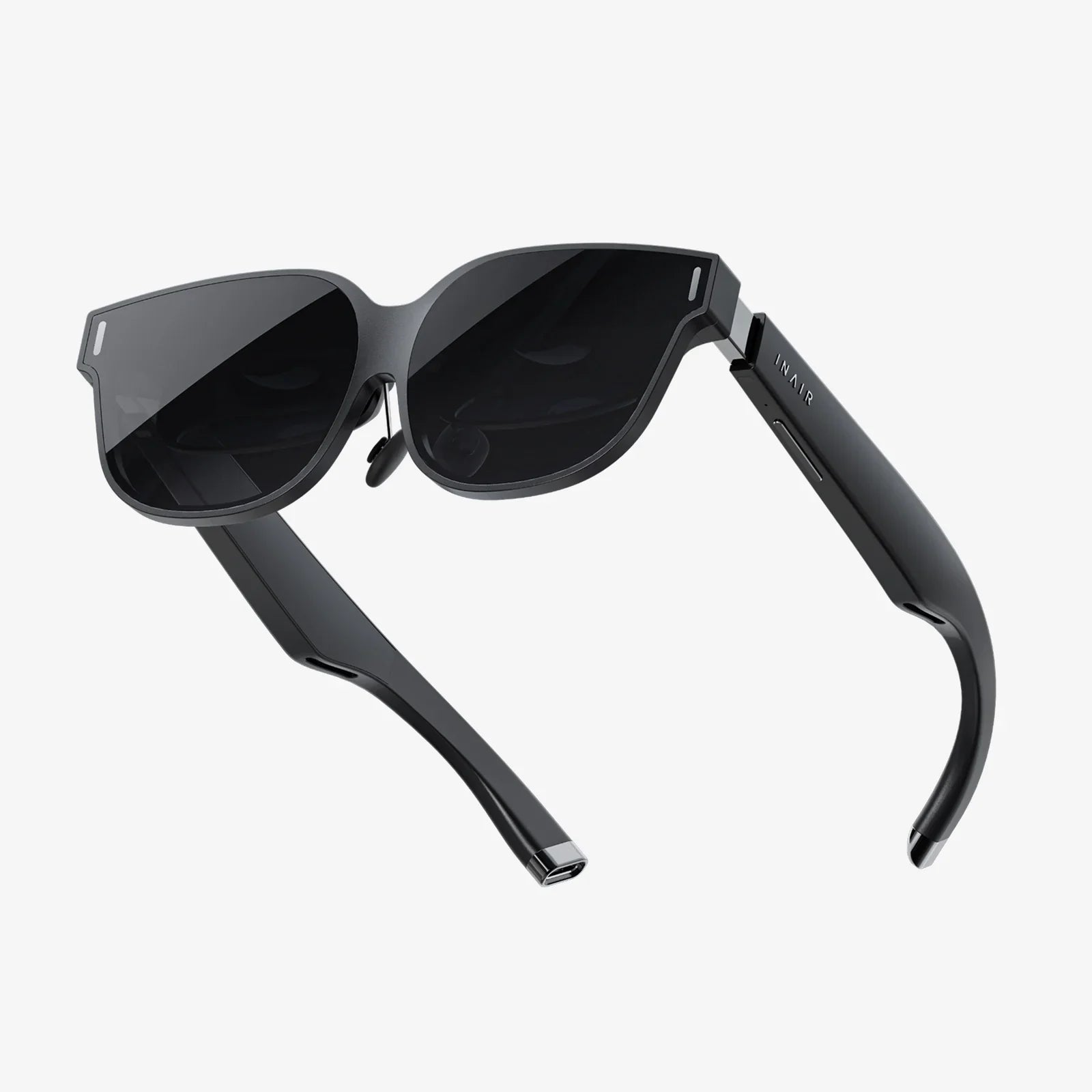
The HMD, or headset, is the cornerstone of the VR experience. It’s the physical portal to the virtual world. Inside today's modern headsets are two small, high-resolution displays (one for each eye) that show slightly different images, creating a stereoscopic 3D effect that provides depth perception. These displays are coupled with specialized lenses that sit between the screens and the user’s eyes, focusing and reshaping the image to fill their field of view (FOV). A wider FOV leads to a greater sense of presence, as the real world is blocked out more effectively. To prevent the nausea-inducing disconnect between visual motion and the inner ear’s sense of stillness, most high-end headsets now feature a high refresh rate (90Hz and above), ensuring smooth and fluid visual feedback that keeps up with the user's rapid head movements.
For the virtual world to feel responsive and real, the system must know precisely where the user is looking and where they are in physical space. This is accomplished through sophisticated tracking systems. Rotational tracking is handled by an Inertial Measurement Unit (IMU), which includes gyroscopes, accelerometers, and magnetometers to measure the headset's orientation and angular velocity. Positional tracking is more complex. Some systems use external sensors or base stations placed around the room that emit lasers or infrared light, which is detected by sensors on the headset to triangulate its exact position (Outside-In tracking). More modern systems use inside-out tracking, where cameras mounted on the headset itself view the surrounding room, using the features of the environment as reference points to track movement without any external hardware.
Our interaction with the real world is not passive; we touch, grab, push, and pull. VR controllers bridge this gap, allowing users to manipulate the digital environment. These are not simple remotes; they are packed with sensors, including IMUs for motion tracking, capacitive sensors to detect finger placement, and haptic feedback motors that provide tactile sensations. A simple vibration when pulling a virtual trigger or the rumble of a virtual engine adds a powerful layer of immersion. The frontier of interaction is evolving towards hand-tracking, which uses the headset's cameras to model the user's bare hands, enabling natural gestures like pointing, grabbing, and pinching without any physical controller, and advanced haptic gloves that can simulate the feel of texture and resistance.
3D Spatial Audio is arguably as important as visual fidelity for selling the illusion. Unlike standard stereo sound, spatial audio mimics how sound waves interact with the human head and ears. Sounds can come from above, behind, or far away, changing dynamically as the user turns their head. This is crucial for situational awareness in games and creating believable environments. Underpinning all of this is raw computing power. Rendering two high-resolution scenes at a high and stable frame rate is immensely demanding on a graphics processing unit (GPU). This is why powerful computers are often required for high-fidelity VR, though standalone headsets are increasingly integrating this power into a single mobile-based unit.
While gaming and entertainment were the initial drivers of consumer VR, the technology's potential extends far beyond. Its ability to simulate reality safely, repeatedly, and at scale is revolutionizing numerous professional fields.
VR is reshaping pedagogy by moving from learning about something to learning by being there. Medical students can practice complex surgical procedures on virtual patients, making mistakes without consequences. History students can take a guided tour through ancient civilizations. Mechanics can train on the intricate systems of a jet engine without needing access to a multi-million dollar physical model. This experiential learning dramatically improves knowledge retention and skill acquisition. Corporations are using VR for soft skills training, immersing employees in challenging scenarios like public speaking or difficult conversations to build confidence and competence in a safe, controlled environment.
The healthcare industry is embracing VR for both treatment and rehabilitation. It is proving highly effective in exposure therapy, helping patients with phobias (like fear of heights or flying) confront their triggers in a gradual, controlled manner. It's used for pain management, distracting burn victims during painful wound care procedures with calming, immersive environments. For physical rehabilitation, VR games can make repetitive motor exercises for stroke victims or those with spinal cord injuries more engaging and measurable, providing direct feedback on their progress. Surgeons also use VR to plan and practice complex operations by working with detailed 3D models of a patient's specific anatomy.
For architects, industrial designers, and engineers, VR has become an indispensable tool. Instead of looking at a building design on a 2D screen, clients and designers can now put on a headset and perform a virtual walkthrough of a structure before a single foundation is poured. They can experience the scale of a room, test sightlines, and identify potential design flaws that would be invisible on a blueprint. This saves enormous amounts of time and money. Car manufacturers use VR to prototype new vehicle interiors, experimenting with ergonomics and styling in a digital space that is infinitely malleable.
The concept of the "metaverse"—a persistent network of shared virtual spaces—is predicated on social VR. Platforms exist where people can meet, socialize, attend virtual concerts, watch movies together in a shared virtual theater, or collaborate in digital workspaces. Avatars represent users, enabling non-verbal communication through body language. For remote work, this offers a powerful sense of co-presence that video conferencing cannot match. Teams from across the globe can gather around a virtual 3D model, brainstorm on a virtual whiteboard, and feel as if they are in the same room, potentially reducing the need for business travel and fostering a stronger collaborative culture.
Despite its immense potential, the path of VR is not without significant obstacles and profound ethical questions that society must address.
Cost and Accessibility: High-quality VR experiences still require a substantial investment, either in a powerful computer or an expensive standalone headset, creating a barrier to entry for many. Simulator Sickness: A portion of the population experiences cybersickness—a form of motion sickness characterized by dizziness, nausea, and eye strain—often caused by lag, low refresh rates, or a mismatch between visual and vestibular stimuli. Hardware Limitations: Headsets are still relatively bulky, and battery life for wireless units is limited. Achieving true photorealistic graphics with perfect haptics and wide field-of-view in a small, comfortable form factor remains the ultimate engineering challenge.
The long-term psychological effects of prolonged VR use are not yet fully understood. Could a hyper-realistic virtual world lead to increased escapism and dissociation from real-life responsibilities and relationships? There are also concerns about data privacy. VR headsets can collect a staggering amount of biometric data—not just what you look at, but how you move, where you hesitate, your pupil dilation, and even your emotional responses. The potential for this data to be mined, sold, or used for manipulative advertising is a serious privacy frontier. Furthermore, the ability to create and experience any scenario raises questions about content moderation. How do we prevent virtual harassment, which can feel intensely real to the victim, and how do we govern behavior in a space that is, by design, beyond physical laws?
VR forces us to confront fundamental questions about the nature of reality and experience. If a simulated experience can elicit genuine emotions, create real memories, and teach tangible skills, in what sense can it be considered "not real"? As the fidelity improves, the line between the virtual and the physical will continue to blur, challenging our very definitions of interaction, presence, and truth.
The evolution of VR is accelerating towards greater immersion, accessibility, and integration with other technologies. We are moving towards lighter, wireless headsets with retinal-resolution displays that are indistinguishable from reality. Haptic technology will evolve from simple vibration to full-body suits that can simulate touch, temperature, and even impact. The most transformative convergence will be with Artificial Intelligence. AI will be used to generate dynamic, responsive virtual worlds on the fly and to create hyper-realistic digital humans capable of natural conversation and emotional expression, revolutionizing customer service, therapy, and storytelling.
Perhaps the most futuristic concept is the development of Brain-Computer Interfaces (BCIs). While still in early stages, the goal is to allow users to control virtual environments with their thoughts alone, and to have sensory information beamed directly into the brain, potentially bypassing physical hardware altogether. This represents the final frontier of immersion—a direct pipeline between the mind and the digital realm.
The journey into virtual reality is more than a technological upgrade; it is a fundamental expansion of human experience. It offers a canvas limited only by our imagination, promising to redefine how we learn, work, heal, and connect. It holds the mirror up to our own reality, challenging us to build virtual worlds that reflect our highest aspirations rather than our deepest fears. The headset is not just a piece of hardware; it is a lens into possible futures, a tool for empathy, and a testament to our unending desire to explore, create, and transcend the boundaries of our physical existence. The door is open, and the adventure is just beginning.