


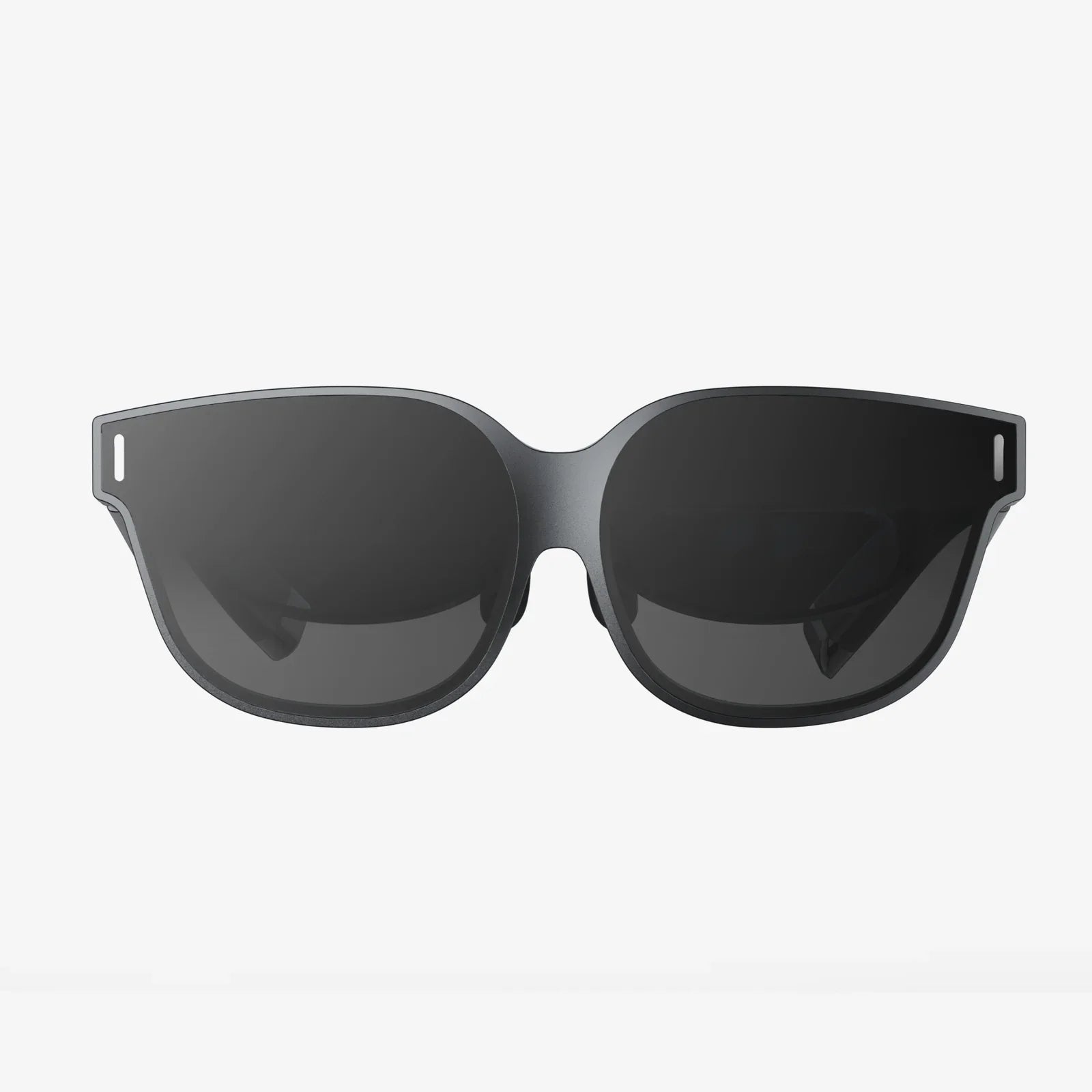
Imagine slipping on a headset and stepping into a world of your own creation, a digital realm where every gesture, glance, and movement feels as natural as breathing. This is the promise of virtual reality, a promise that is not realized through hardware specs or graphical fidelity alone, but through the meticulous, often invisible, science of user interaction testing. This critical process is the bridge between a clunky, disorienting simulation and a truly transformative experience, and it is fundamentally reshaping how we design for the most intimate digital medium ever conceived.
The Paradigm Shift: From Screen to Sphere
Traditional user testing, honed over decades of web and application development, operates on a fundamentally different plane. Testers observe users clicking buttons, scrolling pages, and navigating menus on a two-dimensional screen. The feedback is valuable, but it is distant. In the sphere of virtual reality, the user is not an operator but an inhabitant. The interface is not a screen but the space itself, and interaction is not a click but a motion. This radical shift demands an equally radical overhaul of testing methodologies.
Where a desktop application might be concerned with task completion time, VR testing must grapple with questions of physical comfort, spatial awareness, and even emotional response. A button that is two pixels off on a website is a minor annoyance; a menu that is positioned just slightly too far to reach in VR can break immersion and cause physical strain. User interaction testing in VR is, therefore, a holistic practice. It must account for the entire human sensorium, testing not just for efficiency but for empathy, not just for function but for feeling.
The Core Tenets of VR Interaction Testing
To navigate this complex landscape, researchers and developers have established several core tenets that guide effective VR interaction testing.
1. Presence and Embodiment: The Foundation of Feeling Real
The ultimate goal of any VR experience is to achieve a state of 'presence'—the user's subconscious acceptance of the virtual environment as real. This fragile state is easily shattered by poor interaction design. Testing for presence involves closely observing user behavior for moments of dissonance. Does the user instinctively try to lean on a virtual table? Do they flinch when a virtual object comes too close? These are signs of strong presence. Conversely, if a user consistently misjudges the distance to an object (a problem known as vergence-accommodation conflict) or their virtual hands do not align perfectly with their expected movement, presence evaporates.
Testing embodiment—the feeling that a virtual body is your own—is equally crucial. This involves studying how users react to their digital representation. Do they look down at their body naturally? Do they use their virtual hands to gesture and communicate? Rigorous A/B testing with different avatar designs, levels of realism, and movement fidelity provides invaluable data on what makes a virtual body feel authentic and comfortable to inhabit.
2. Intuitiveness and Discoverability: Learning Without Lessons
In VR, there is no manual. The best interactions are those that users discover naturally through experimentation and mimicry of real-world physics. Testing for intuitiveness involves placing users in an environment with no instruction and observing how they attempt to solve problems. Do they intuitively reach out to grab an object, or do they look for a button to press? Do they try to push a door open with their hands, or do they assume a voice command is needed?
Effective testing identifies points of friction where users' natural instincts fail them. For example, a developer might assume that pulling a virtual lever downward is intuitive, but testing might reveal that a significant number of users first try to push it. This data drives iteration, leading to interactions that feel magical in their simplicity.
3. Comfort and Accessibility: Designing for All Bodies
Perhaps the most critical area of VR interaction testing is mitigating simulator sickness and ensuring physical comfort. This is a deeply individual physiological response, making large-scale testing absolutely essential. Testers meticulously track reports of nausea, eye strain, headaches, and disorientation, correlating them with specific interaction patterns.
Common culprits include:
- Artificial Locomotion: Moving through a virtual space with a joystick while the body is physically stationary is a major trigger for sickness. Testing different locomotion schemes (teleportation, arm-swinging, dash moves) is a huge focus area.
- Camera Control: Forced camera movement, especially rotation that is decoupled from the user's head movement, is a recipe for discomfort. Testing helps find the right settings for optional comfort modes like vignetting (tunneling the field of view during movement).
- Ergonomics: Testing must account for the physicality of interactions. Are users having to hold their arms up for unnaturally long periods? Are repetitive motions causing fatigue? This leads to designs that minimize strain and maximize accessibility for users with different physical abilities.
The Arsenal of VR Testing Methodologies
Gathering this rich, multi-layered data requires a sophisticated toolkit that goes far beyond traditional screen recording and surveys.
Biometric and Physiological Feedback
The most powerful insights often come from data the user cannot consciously provide. Modern VR testing labs are equipped with:
- Eye-tracking: Integrated into many headsets, this reveals exactly where a user is looking, for how long, and in what order. It answers questions like: Did the user see the crucial clue? Is the interface distracting? Where is their visual attention during a stressful event?
- Electrodermal Activity (EDA) Sensors: These measure subtle changes in skin conductance, which is a reliable indicator of emotional arousal, stress, excitement, or fear.
- Heart Rate Monitors: Tracking pulse rate provides another layer of physiological data on user engagement and anxiety levels.
- Facial Expression Analysis: Using cameras to track micro-expressions can reveal moments of frustration, confusion, or delight that a user might not report verbally.
By correlating this biometric data with specific in-game events and interactions, developers gain an unbiased, quantitative window into the user's subconscious experience.
Spatial Analytics and Heatmaps
Just as web designers use heatmaps to see where users click, VR developers use spatial analytics to visualize user behavior in three dimensions. This involves tracking:
- Positional Heatmaps: Showing where users spend the most time and where they rarely go. This can reveal if an important area is being missed or if a pathway is confusing.
- Gaze-point Heatmaps: Projecting eye-tracking data into the 3D environment to create a heatmap on the surfaces of the virtual world. This shows what objects attract attention and which are ignored.
- Interaction Paths: Tracing the literal path a user takes through an environment can reveal bottlenecks and navigational issues.
The Think-Aloud Protocol and Post-Experience Interviews
While quantitative data is critical, the qualitative 'why' behind the numbers is just as important. The classic think-aloud protocol, where users verbalize their thoughts and feelings in real-time, is immensely valuable in VR. It provides context for the biometric and spatial data. Following the experience, in-depth interviews and standardized questionnaires like the Presence Questionnaire (PQ) and the Simulation Sickness Questionnaire (SSQ) are used to gather structured subjective feedback.
The Iterative Loop: How Testing Shapes Design
User interaction testing is not a final gate before release; it is an integral part of the entire development cycle. The process is highly iterative:
- Early Prototyping: Testing begins with crude, grey-box prototypes. The goal is not to test graphics but interaction concepts. Is the core mechanic fun? Is it understandable?
- Formative Testing: Throughout development, small groups of testers are brought in repeatedly. Their feedback shapes the evolution of the interactions, refining gestures, menu systems, and physics.
- Summative Validation: Later in the cycle, larger tests validate that the final interactions meet usability and comfort benchmarks established at the project's outset.
This constant feedback loop ensures that the design is pulled toward the user's natural tendencies rather than pushing users to adapt to a flawed design.
Beyond Entertainment: Testing for Enterprise and Therapy
The principles of VR interaction testing are vital beyond games. In enterprise training, for example, testing ensures that a virtual welding simulator provides accurate haptic feedback and visual cues that properly train muscle memory. A misaligned interaction could teach a dangerous real-world technique.
In therapeutic applications, such as VR exposure therapy for phobias, testing is paramount for both safety and efficacy. The interaction design must carefully control the level of exposure and provide the user with a clear sense of agency and safety controls. Testing here is a matter of clinical best practice, ensuring the experience is therapeutic and not traumatic.
The Future: Machine Learning and Adaptive Interfaces
The future of VR interaction testing lies in leveraging the data it creates to build smarter, adaptive systems. Machine learning algorithms can analyze vast datasets from thousands of test sessions to identify patterns and pain points that would be invisible to a human researcher. This can lead to interfaces that adapt in real-time to a user's behavior and even their emotional state.
Imagine a VR experience that detects user frustration through biometrics and subtly simplifies the interface or offers a hint. Or a creative tool that learns a user's preferred painting technique and adjusts its virtual brush physics to match. This level of personalization, powered by rigorous testing, is the key to moving from universally designed experiences to individually tailored ones.
The next time you lose yourself in a perfectly crafted virtual world, remember that the effortless magic you feel was not an accident. It was forged in the fires of relentless iteration, guided by the silent, data-rich language of user interaction testing. It is this rigorous, human-centered science that transforms a novel piece of technology into a seamless extension of our own intuition, unlocking the true power of virtual reality to inform, connect, and inspire. The journey into the metaverse will be built not on code alone, but on a deep, tested understanding of how we, as humans, truly want to connect with the digital realm.
Share:
Everything About Virtual Reality: A Journey Into the Digital Frontier
Online Mobile Working Jobs: The Ultimate Guide to Earning from Anywhere