


Imagine a world where digital information doesn't just live on a screen but is seamlessly woven into the very fabric of your physical reality. This is the promise of augmented reality (AR), a technology rapidly transitioning from science fiction to an integral part of our daily lives. It’s not just about playful filters on social media; it’s a paradigm shift in how we interact with data, our environment, and each other. The potential is staggering, and the journey to understand it begins with a single, powerful example of augmented reality that demonstrates its profound utility.
Defining the Digital Overlay: What Exactly is Augmented Reality?
At its core, augmented reality is a technology that superimposes a computer-generated image, video, or 3D model onto a user's view of the real world. Unlike Virtual Reality (VR), which creates a completely immersive, digital environment that replaces the real world, AR enhances the real world by adding digital elements to it. This creates a composite view that is part real, part digital. The magic of AR lies in its ability to bridge the gap between the digital and physical realms, providing context-aware information exactly when and where it is needed.
The technology relies on a sophisticated combination of hardware and software. A device—be it a smartphone, tablet, or a pair of smart glasses—uses its camera to capture the real-world environment. Sophisticated software, often powered by machine learning and computer vision algorithms, then processes this visual data in real-time to understand the scene, identify surfaces, track objects, and determine the precise position and orientation of the device in space. This allows the software to anchor digital content convincingly within the physical world, making it appear as if a virtual object is sitting on your real desk or a digital arrow is painted on the actual road ahead.
The Engine Room: Key Technologies Powering AR Experiences
For an example of augmented reality to feel convincing and useful, it must be built on a foundation of advanced technologies that work in concert.
Simultaneous Localization and Mapping (SLAM)
This is the cornerstone technology for most modern AR. SLAM allows a device to simultaneously map an unknown environment and track its own location within that map. It does this by identifying unique feature points in the environment and tracking how they move as the device itself moves. This creates a persistent spatial understanding, ensuring that a virtual character placed in your living room will stay in that spot even if you walk around it or leave the room and come back.
Computer Vision and Object Recognition
This gives AR systems their "eyes" and "brain." Computer vision enables the device to not only see the world but also understand it. It can identify flat surfaces (like floors and tables), recognize specific objects (like a product box or a historical monument), and even track human bodies and hands. This understanding is crucial for enabling interaction. For instance, an AR app can recognize your hand gestures to let you manipulate a virtual object or identify a specific machine part to display its repair manual.
Depth Tracking and LiDAR
To place objects realistically, the AR system needs to understand the depth and geometry of the environment. While software can estimate this, dedicated hardware like LiDAR (Light Detection and Ranging) scanners dramatically improve accuracy. These sensors fire out invisible laser beams and measure how long they take to bounce back, creating a precise depth map of the surroundings. This is why virtual furniture in an AR shopping app can accurately occlude behind real-world objects, creating a much more believable experience.
Wearable Technology and Smart Glasses
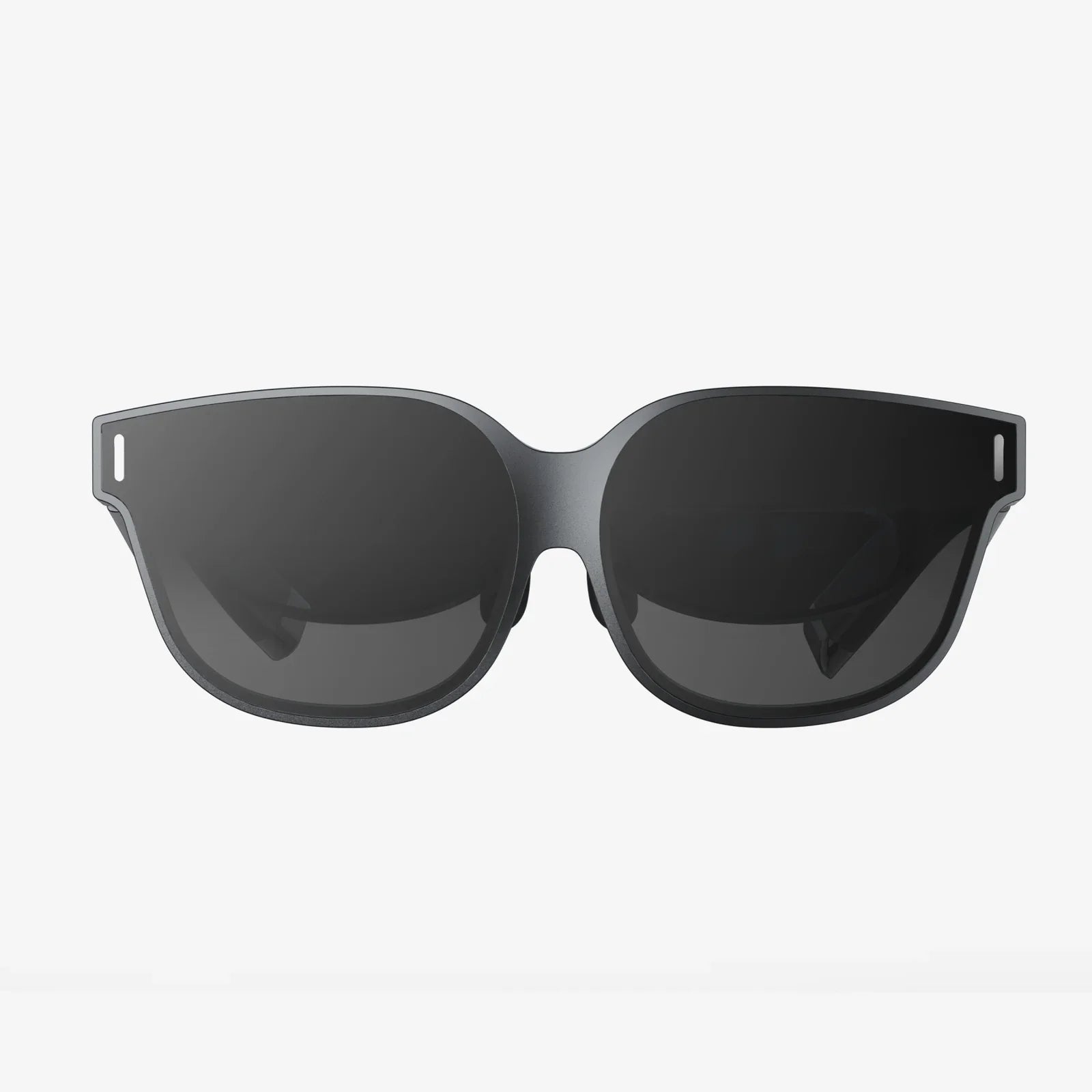
While smartphones offer a fantastic gateway into AR, the ultimate expression of the technology is through wearable devices like smart glasses. These heads-up displays provide a truly hands-free experience, overlaying information directly into the user's field of vision. This form factor is essential for applications where a user needs digital information while keeping their hands free for physical tasks, such as a surgeon viewing a patient's vitals during an operation or a warehouse worker seeing inventory picking lists.
Transforming Industries: Powerful Examples of Augmented Reality in Action
The theoretical potential of AR is vast, but its real power is revealed through its practical, world-changing applications. Here are some of the most impactful examples of augmented reality across various sectors.
Revolutionizing Retail and E-Commerce
The retail sector has been one of the earliest and most enthusiastic adopters of AR. It solves a fundamental problem of online shopping: the inability to try before you buy. Now, shoppers can use their smartphones to see how a new sofa would look in their living room, accurately scaled to their space. They can "try on" watches, glasses, and makeup virtually, seeing how the products look on their own face and skin tone from every angle. This not only enhances consumer confidence and reduces return rates but also creates a fun, engaging shopping experience that blurs the line between online and in-store.
Enhancing Manufacturing and Field Service
In industrial settings, AR is a powerful tool for improving efficiency, accuracy, and safety. Technicians wearing AR glasses can see digital work instructions overlaid directly onto the complex machinery they are repairing. Animated arrows can point to specific components, and safety warnings can pop up in their line of sight when they approach a hazardous area. This hands-free access to information reduces errors, slashes training time for new employees, and allows experts to provide remote guidance by literally "seeing what the on-site worker sees" and drawing annotations into their view.
Advancing Healthcare and Medicine
AR is poised to revolutionize medicine, from education to surgery. Medical students can use AR to explore detailed, interactive 3D models of the human body, peeling back layers of anatomy in a way that textbooks could never offer. Surgeons can use AR to project critical information, such as a patient's MRI data or the precise location of a tumor, directly onto their body during an operation. This provides a kind of "X-ray vision," improving surgical precision and potentially leading to better patient outcomes. AR is also being used for physical therapy, guiding patients through exercises with proper form.
Reimagining Education and Training
AR turns learning into an interactive, immersive adventure. Instead of reading about ancient Rome, students can walk through a digitally reconstructed Colosseum right in their classroom. Chemistry students can manipulate virtual molecules, watching them bond and react without any risk. This kinesthetic, visual learning style caters to different types of learners and makes complex abstract concepts tangible and easier to understand. From K-12 to corporate training, AR is creating more effective and memorable educational experiences.
Enriching Navigation and Tourism
Forget squinting at a small map on your phone. With AR navigation, digital arrows and directions can be overlaid onto the live view of the street in front of you, showing exactly which way to turn. In a museum, pointing your phone at a painting could bring it to life, showing the artist at work or providing historical context. Tourists can explore a city and see digital reconstructions of historical sites layered over the modern ruins, effectively traveling back in time. This contextual, location-based information creates a deeply personal and informative experience.
Navigating the New Frontier: Challenges and Ethical Considerations
As with any transformative technology, the widespread adoption of AR is not without its challenges and risks that society must thoughtfully address.
Privacy in a Perpetually Scanned World
AR devices, by their very nature, are constantly scanning and processing the environment. This raises profound privacy questions. If your smart glasses are always on, what data are they collecting about the people and places around you? Who owns that data? The potential for ubiquitous surveillance, both by corporations and governments, is a significant concern. Clear ethical guidelines and robust data protection laws will be essential to prevent AR from becoming a tool for intrusion.
The Digital Divide and Accessibility
High-quality AR experiences currently require powerful processors, advanced sensors, and high-speed connectivity. There is a risk that the benefits of AR will be accessible only to those who can afford the latest technology, exacerbating existing social and economic inequalities. Furthermore, designing AR interfaces that are accessible to people with disabilities is a critical but complex challenge that must be prioritized from the outset.
Physical Safety and Digital Distraction
Overlaying captivating digital content onto the real world creates a obvious risk of distraction. A user engrossed in an AR game or information feed may fail to notice real-world hazards like oncoming traffic or tripping hazards. This is a particular concern as AR moves from handheld devices to heads-up displays. Establishing norms for safe use, developing context-aware systems that minimize distraction in dangerous situations, and public education will be key to mitigating these risks.
The Blurring of Reality and Perception
As AR content becomes more realistic and pervasive, it may become increasingly difficult to distinguish between what is real and what is digitally augmented. This has implications for trust and truth. Malicious actors could use AR to spread misinformation or create convincing but false scenarios. The very nature of shared reality could be challenged if everyone sees a different, personalized version of the world through their AR lens.
The Invisible Interface: The Future of Augmented Reality
The trajectory of AR points toward a future where the technology becomes smaller, faster, and more integrated into our lives. We are moving toward AR contact lenses and even neural interfaces that could project information directly into our visual cortex, making the technology truly invisible. The concept of the "spatial web" or "Web 3.0" envisions a world where digital information is persistently anchored to locations and objects, creating a universal layer of intelligence over our physical reality.
In this future, your AR device will act as a personalized AI assistant that understands your context and needs. It could recognize people you meet and discreetly display their name and how you know them, translate foreign language signs in real-time, or alert you to a product allergy as you glance at a menu. The line between the digital and physical will continue to erode, not as a gimmick, but as a utility that empowers human capability and enhances our understanding of the world around us.
We are standing at the precipice of a new era, one where our reality becomes a canvas for imagination and information. The most compelling example of augmented reality is no longer a single app or device; it is the emerging reality of a world seamlessly enhanced by data, a world where our digital and physical selves finally converge. The screen is dissolving, and in its place, an entirely new way of seeing, learning, and connecting is coming into focus, promising to redefine human experience itself.
Share:
Easy Augmented Reality: A No-Code Revolution Reshaping Our World
Virtual Glasses Fitting: The Future of Eyewear Shopping is Here