


Imagine pointing your device at a city street and seeing historical figures reenact events on the very pavement you walk on, or trying on a new sofa in your living room before you buy it, or a surgeon seeing a patient’s vital signs and 3D anatomy superimposed directly onto their body during an operation. This is not science fiction; this is the present and rapidly evolving reality powered by augmented reality (AR). Once confined to the realms of gaming and speculative tech demos, AR has burst into the mainstream, offering powerful, practical, and often breathtaking examples of augmented reality applications that are solving real-world problems, enhancing human capabilities, and redefining entire industries. The seamless blending of digital information with our physical environment is unlocking a new layer of human-computer interaction, and its potential is only just beginning to be tapped.
The Foundation: Understanding Augmented Reality
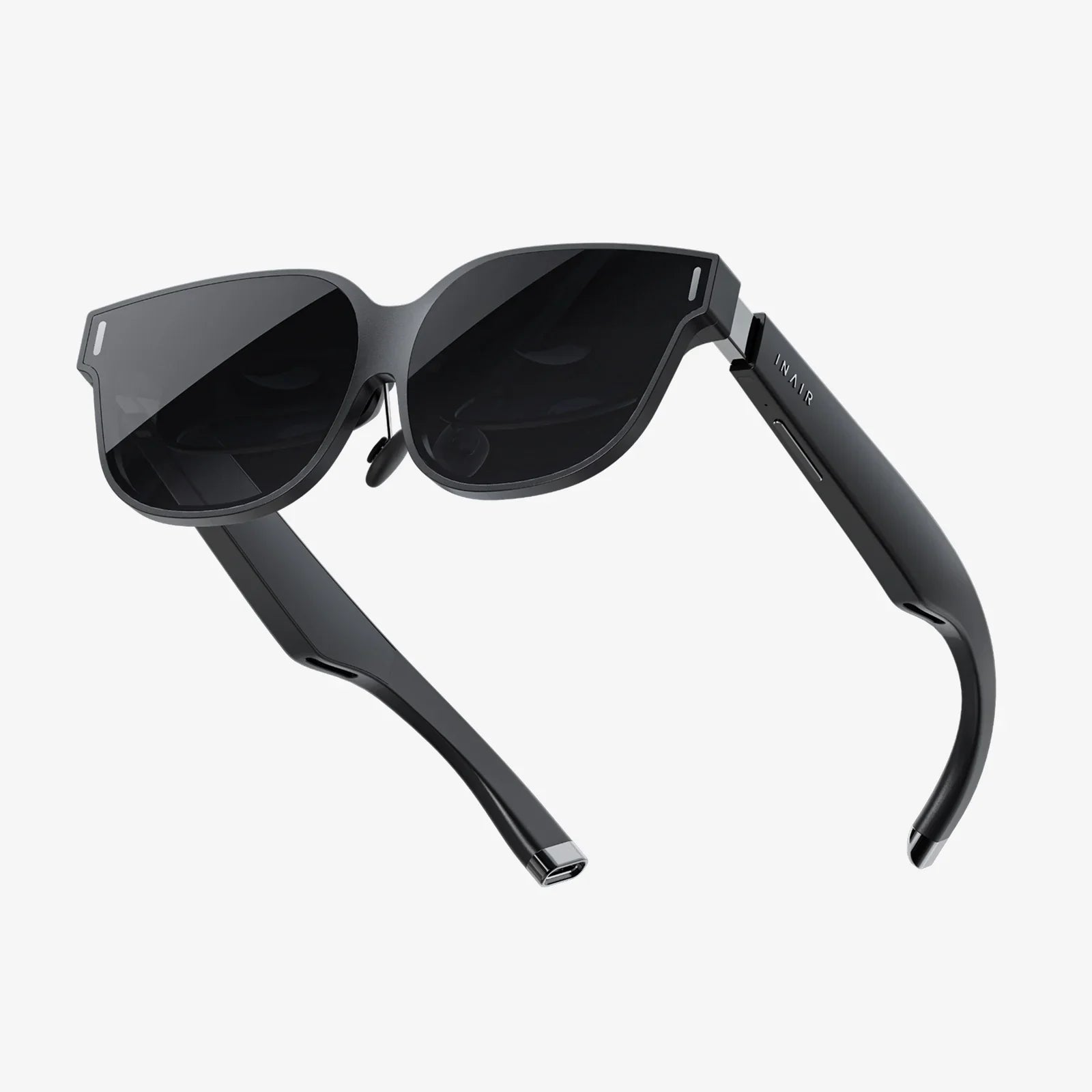
Before diving into the myriad of applications, it's crucial to distinguish AR from its technological cousin, virtual reality (VR). While VR aims to completely immerse a user in a simulated, digital environment, often requiring a headset that blocks out the real world, AR enhances the real world by overlaying digital content—images, data, 3D models, text—onto the user’s view of their immediate surroundings. This is typically achieved through the camera and screen of a smartphone or tablet, or through more advanced optical head-mounted displays like smart glasses.
The magic of AR is powered by a sophisticated combination of technologies. Computer vision algorithms enable the device to understand and interpret the environment, recognizing objects, surfaces, and spatial geometry. Simultaneous Localization and Mapping (SLAM) technology allows the device to map the environment in real-time and track its own position within that space, ensuring digital objects stay anchored to their intended location. This complex dance of hardware and software is what makes the digital elements feel like a natural, persistent part of the real world, creating intuitive and contextually relevant experiences.
Transforming Commerce and Retail
Perhaps the most visible and rapidly adopted examples of augmented reality applications are found in the retail sector, where they are solving age-old customer pain points and creating entirely new shopping paradigms.
Virtual Try-On and Visualization
The "will it fit?" and "how will it look?" questions that have long plagued online shopping are being rendered obsolete by AR. Fashion retailers now offer apps that allow customers to use their smartphone camera to see how a pair of glasses, a watch, or even makeup will look on their own face. Furniture and home decor companies have pioneered room visualization tools; users can place true-to-scale 3D models of sofas, tables, and lamps into their living space, walking around them to see how they fit with their existing decor, the lighting at different times of day, and the overall flow of the room. This drastically reduces purchase hesitation and the likelihood of returns, building consumer confidence and closing sales.
Interactive Product Information and In-Store Navigation
Inside physical stores, AR is enhancing the brick-and-mortar experience. By scanning a product’s tag or packaging with an app, customers can access a wealth of additional digital information—detailed specifications, how-to videos, customer reviews, or suggestions for complementary items. Large retailers are also using AR for indoor navigation; instead of wandering aisles searching for an item, shoppers can pull up a store map on their phone, which uses AR overlays to visually guide them, step-by-step, to the exact shelf location. This merges the convenience of digital search with the tactile benefit of a physical store.
Revolutionizing Education and Training
AR is proving to be a powerful pedagogical tool, moving learning from passive observation to active, immersive exploration. Textbooks and static diagrams are being replaced by dynamic, interactive models that bring complex subjects to life.
Interactive Learning Materials
Imagine a student pointing a tablet at a textbook diagram of the human heart. Suddenly, a detailed, beating 3D heart model appears, which they can rotate, zoom into, and interact with to see the flow of blood through chambers and valves. History students can explore ancient ruins rebuilt in stunning detail right on their classroom floor, while astronomy students can have the solar system orbit around them. This immersive, kinesthetic learning style caters to different learning modalities and dramatically improves information retention and engagement by making abstract concepts tangible.
Skill Development and Complex Training
Beyond K-12 and higher education, AR is revolutionizing professional training. Mechanics in training can practice complex repair procedures on digital overlays of engine components, receiving step-by-step guidance without the cost or risk of working on actual machinery. Field technicians can have schematic diagrams and instruction manuals superimposed onto the equipment they are servicing, allowing them to keep their hands free and their focus on the task. This form of just-in-time, contextual learning accelerates skill acquisition, reduces errors, and enhances safety across numerous high-stakes industries.
Advancing Healthcare and Medicine
The healthcare sector presents some of the most profound and life-changing examples of augmented reality applications, where the technology is enhancing both patient care and medical professional capabilities.
Surgical Planning and Assistance
Surgeons are using AR to gain X-ray vision. By combining AR headsets with pre-operative scans like CT or MRI, a surgeon can see a 3D reconstruction of a patient’s anatomy—such as tumors, blood vessels, or bones—precisely aligned with the patient’s body on the operating table. This provides an invaluable navigational tool during minimally invasive surgeries, allowing for greater precision, smaller incisions, and reduced operative time. It can also be used for training, allowing medical students to observe procedures from the surgeon’s point of view with anatomical annotations.
Patient Education and Rehabilitation
AR is improving the patient experience as well. Doctors can use AR visualizations to explain a complex condition or surgical procedure to a patient in an easily understandable way, reducing anxiety and improving informed consent. In physical therapy and rehabilitation, AR games and exercises can motivate patients to complete repetitive movements by turning them into engaging activities. For instance, a patient recovering from a stroke might play a game where they reach for virtual objects, helping to retrain neural pathways and motor skills in a way that feels less like work and more like play.
Enhancing Industrial Design and Manufacturing
In the industrial world, often referred to as Industry 4.0, AR is a key technology for improving efficiency, safety, and collaboration in design and manufacturing processes.
Prototyping and Design Review
Engineers and designers are using AR to visualize and interact with full-scale 3D prototypes of new products long before physical models are built. They can examine the digital model from every angle, disassemble it virtually to check for fit and function, and even simulate how it will operate in the real world. This allows for rapid iteration and identification of design flaws at a fraction of the traditional cost and time, streamlining the entire product development lifecycle.
Assembly, Maintenance, and Quality Control
On the factory floor, AR is providing workers with real-time, hands-free information. Using AR glasses, an assembly line worker can see digital instructions and animations overlaid directly on the components they are assembling, guiding them through complex wiring or assembly sequences. For maintenance tasks, a technician can look at a piece of machinery and see animated guidance for repair, highlighted parts that need replacement, and real-time data from IoT sensors. This reduces downtime, minimizes human error, and empowers less experienced workers to perform complex tasks correctly the first time.
Redefining Tourism and Navigation
For travelers and urban explorers, AR is acting as a powerful, context-aware digital tour guide, enriching our experience of the world around us.
Interactive City Guides and Historical Exploration
Tourism apps can transform a city walk into a living history lesson. By pointing a device at a monument, building, or street, tourists can see historical photographs, watch reenactments of events, and read stories about the location’s significance. AR arrows and markers can overlay the real world to guide users along a curated historical or cultural path, highlighting points of interest they might otherwise miss. This creates a deeply personalized and educational travel experience that goes far beyond the static information found in a guidebook.
Enhanced Wayfinding
While standard 2D map applications are useful, AR navigation takes it a step further by painting directions onto the real world. Instead of interpreting a blue dot on a abstract map, users can simply hold up their phone and see large, floating arrows indicating the exact path to walk down a street, which turn to take, and even which train platform to go to. This is particularly invaluable in complex transit hubs, large university campuses, or unfamiliar urban landscapes, reducing confusion and making navigation intuitive and effortless.
The Future of Entertainment and Social Interaction
The entertainment industry was one of the first to showcase AR's potential to a mass audience, and it continues to be a fertile ground for creative and social innovation.
Gaming and Interactive Experiences
The success of location-based AR games demonstrated the technology’s ability to get people moving and interacting with their environment in novel ways. This genre has expanded to include immersive treasure hunts, narrative-driven adventures that unfold in local parks, and interactive art installations in public spaces. Beyond gaming, AR is being used at concerts and live events to provide attendees with additional visual effects, information about performers, and interactive experiences through their phones.
Social Filters and Communication
Social media platforms have normalized AR through the ubiquitous use of filters and lenses that add digital accessories, alter appearances, and apply whimsical effects to selfies and videos in real-time. This has evolved into a new form of non-verbal communication and personal expression. The next frontier is persistent AR, where digital content, artwork, or messages can be left in specific locations for friends or the public to discover, creating a shared, augmented layer of reality that fosters new forms of social connection and community art.
Challenges and The Path Forward
Despite its incredible potential, the widespread adoption of AR faces several significant hurdles. Technical challenges include improving battery life for AR wearables, creating displays that are both high-resolution and comfortable for prolonged use, and developing more robust and accurate spatial mapping for complex environments. There are also substantial social and ethical concerns regarding privacy, as AR devices with always-on cameras raise questions about data collection and surveillance. The creation of an AR "digital layer" over physical spaces also introduces new questions about digital litter, advertising spam, and ownership of augmented spaces.
Overcoming these challenges will require continued technological innovation, thoughtful design, and the development of clear ethical frameworks and regulations. The focus must remain on human-centric design—creating AR applications that are genuinely useful, enhance our lives without being intrusive, and prioritize user privacy and safety.
The line between our digital and physical lives is not just blurring; it is being consciously and creatively woven together by the threads of augmented reality. From the way we learn about the human body to how we furnish our homes, from the precision of modern surgery to the joy of exploring a new city, these compelling examples of augmented reality applications are not mere novelties—they are the early indicators of a fundamental shift in human-computer interaction. This is a world where information is not something we go to a screen to find, but something that appears in our world, contextually and instantly, to help us understand, decide, create, and connect. The future is not just in front of us; it’s all around us, waiting to be augmented.
Share:
Latest VR Glasses: A Deep Dive into the Next Frontier of Immersive Technology
Machine Learning and Augmented Reality: The Symbiotic Technologies Reshaping Our World