


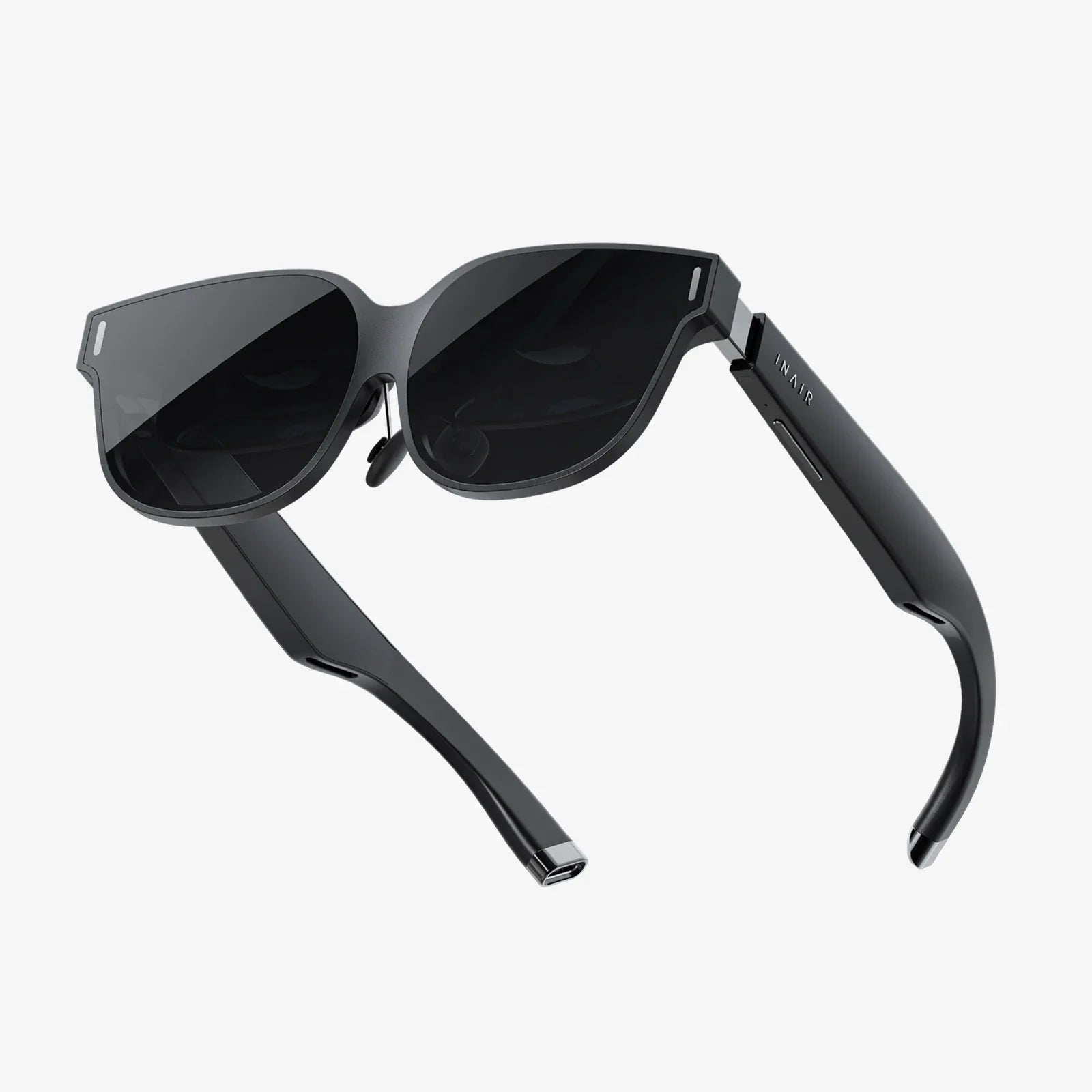
Remember the clunky, low-resolution virtual reality headsets of yesteryear? The ones that promised a trip to another dimension but often delivered a one-way ticket to motion sickness and disappointment? Forget them. The latest VR glasses are not just an incremental upgrade; they are a quantum leap, a fundamental reimagining of what immersive technology can be. We're no longer peeking through a keyhole into a digital world; we are stepping through a portal. This isn't just about gaming anymore; it's about reshaping how we work, connect, learn, and experience reality itself. The future is putting on a headset, and it's arriving faster than anyone predicted.
The Evolution of Form and Function: From Bulky Headsets to Sleek Glasses
The most immediately striking aspect of the latest generation is the dramatic shift in design philosophy. The goal is no longer just to house powerful technology but to integrate it seamlessly into a form factor that is comfortable, socially acceptable, and, dare we say, stylish. The era of the face-consuming, front-heavy helmet is receding.
Engineers and designers have made monumental strides in miniaturization. Through advanced pancake lenses that fold light paths, components are now incredibly slim, bringing the displays much closer to the eyes without sacrificing field of view. This has allowed for a silhouette that increasingly resembles a pair of premium ski goggles rather than a piece of industrial equipment.
Weight distribution is another critical frontier. By moving the battery pack to the rear of the headstrap, either as a counterweight or in a removable, hot-swappable format, the latest VR glasses achieve a near-perfect balance. This eliminates the uncomfortable pressure on the cheeks and bridge of the nose that plagued earlier models, enabling multi-hour sessions of comfortable use, whether for an epic gaming adventure or a lengthy virtual collaboration meeting.
Furthermore, the push towards mixed reality (MR) is dictating new design norms. Passthrough cameras are no longer an afterthought; they are high-resolution, low-latency color cameras that act as your window to the physical world. This allows the latest devices to seamlessly blend digital objects with your real environment, a feat that requires a sleek, open design philosophy to feel natural and intuitive.
A Visual Revolution: Seeing is Believing
If the form factor is the body, the display is the soul. Here, the progress is nothing short of breathtaking. The screen-door effect—that faint grid of lines between pixels that reminded users they were looking at a screen—has been virtually eradicated in the latest VR glasses.
This is thanks to a combination of soaring resolutions and innovative pixel arrangements. We are now firmly in the realm of “retina”-level density for VR, with pixels so small and densely packed that the human eye cannot discern individual ones. The result is a crystal-clear image that feels real and present, not like a digital approximation.
Beyond resolution, other display technologies are creating more vibrant and lifelike worlds. High Dynamic Range (HDR) support brings a wider range of colors and much greater contrast. Deep, inky blacks and brilliantly bright highlights add a depth and realism that previous generations could not achieve. This is complemented by wide color gamuts, making virtual environments pop with a vibrancy that matches our real-world experience.
Perhaps the most crucial advancement for user comfort is the widespread adoption of high refresh rates. While 90Hz has become the comfortable standard, the latest VR glasses are pushing 120Hz and even beyond. This fluidity of motion is critical. It drastically reduces latency—the delay between your head moving and the image updating—which is the primary culprit behind VR-induced motion sickness. In these new headsets, the virtual world feels locked in place, solid, and responsive, allowing for longer, more comfortable immersion.
The Unseen Engine: Power and Performance Unleashed
None of these stunning visual feats would be possible without a monumental leap in processing power. The latest VR glasses are powered by custom-built chipsets designed from the ground up for spatial computing. These are not repurposed mobile processors; they are architectural marvels dedicated to the simultaneous tasks of rendering two high-resolution displays, processing complex tracking data, and managing advanced features like passthrough and foveated rendering.
Foveated rendering is a game-changing technology that exemplifies this smart allocation of power. It uses internal eye-tracking sensors to determine exactly where the user is looking. The headset then renders the area in the direct center of your gaze—the fovea—in ultra-high resolution, while subtly reducing the rendering load on your peripheral vision, where the eye perceives less detail. This massive computational saving allows for incredibly complex and detailed graphics without requiring a supercomputer, all while the user perceives a consistently high-resolution image.
This internal processing power also enables sophisticated inside-out tracking. Gone are the external base stations or lasers that needed to be set up around a room. The latest VR glasses use a constellation of high-speed cameras and sensors on the headset itself to map the environment in real-time, understanding the geometry of your room and tracking the position of the controllers with millimetric precision. This eliminates setup friction and makes VR a truly untethered, anywhere-you-are experience.
Intuitive Interaction: Beyond the Gamepad
How we interact with the virtual world has evolved just as dramatically. While traditional handheld controllers remain excellent for gaming, offering haptic feedback and intuitive inputs, the future lies in our hands—literally.
Advanced hand-tracking technology, powered by the same cameras used for room mapping, allows users to leave the controllers aside. You can now manipulate virtual objects, navigate menus, and interact with environments using natural gestures: pinching, grabbing, pointing, and waving. This level of intuitive control is transformative. It lowers the barrier to entry for non-gamers and makes interactions feel magical and direct, as if the digital world is truly at your fingertips.
The haptic experience is also becoming more nuanced. While controllers provide strong, directional rumble, developers are exploring more subtle forms of feedback. This includes wearable devices like haptic vests or gloves that can simulate everything from the impact of a raindrop to the recoil of a virtual weapon, deepening the sense of physical presence and immersion.
Building New Worlds: The Software and Content Ecosystem
Hardware is nothing without software. The ecosystem surrounding the latest VR glasses has exploded in sophistication and scope. We are moving beyond a collection of isolated games and apps into a more connected vision often referred to as the “metaverse”—a persistent network of shared virtual spaces.
Social VR platforms are at the forefront of this. These are not just chat rooms; they are vibrant virtual destinations where people can gather for concerts, watch movies together on a giant screen, attend work meetings as expressive avatars, or simply hang out and play games. The sense of shared presence—the feeling that you are truly in a room with another person, making eye contact and reading body language—is a powerful draw that is finally being realized.
Productivity is another massive growth area. The latest VR glasses are being positioned as ultimate workstations. Imagine having multiple virtual monitors floating in your personal home office, scalable to any size, in a perfectly distraction-free environment. Architects can walk clients through full-scale 3D models of unbuilt buildings. Medical students can practice complex procedures on virtual anatomy. The potential for remote collaboration, where teams from across the globe can manipulate 3D models together as if they were physical objects, is revolutionizing numerous industries.
A Future in Focus: Challenges and the Road Ahead
Despite the incredible progress, challenges remain. For all the improvements in comfort, the ideal of a device as light and unobtrusive as a pair of sunglasses is still on the horizon, dependent on breakthroughs in optics and battery technology. The “killer app” that makes VR glasses an essential everyday device for the average consumer is still being sought, though the lines between work, social, and entertainment uses are rapidly blurring.
Furthermore, as these platforms grow, questions of privacy, data security, and digital equity become increasingly important. Establishing ethical guidelines and building these virtual worlds with inclusivity and safety as core principles will be paramount to their long-term success.
The road ahead is incredibly exciting. We are already seeing prototypes for varifocal displays that can dynamically adjust to different focal lengths, mimicking how our eyes naturally focus on near and far objects to reduce eye strain. Haptic technology will continue to evolve, moving beyond controllers to full-body suits. And brain-computer interfaces, though far off, hint at a future where we might navigate virtual spaces with our thoughts alone.
The latest VR glasses are more than just a new gadget; they are the foundational technology for the next great computing platform. They are transforming from a niche enthusiast hobby into a mainstream tool with the power to change everything. The door to the virtual world is now open, wider and clearer than ever before, inviting us all to step through and explore the limitless possibilities on the other side. The only question that remains is: what will you create when you get there?
Share:
Augmented Reality in English: Bridging the Gap Between Language and Reality
Examples of Augmented Reality Applications Reshaping Our World