


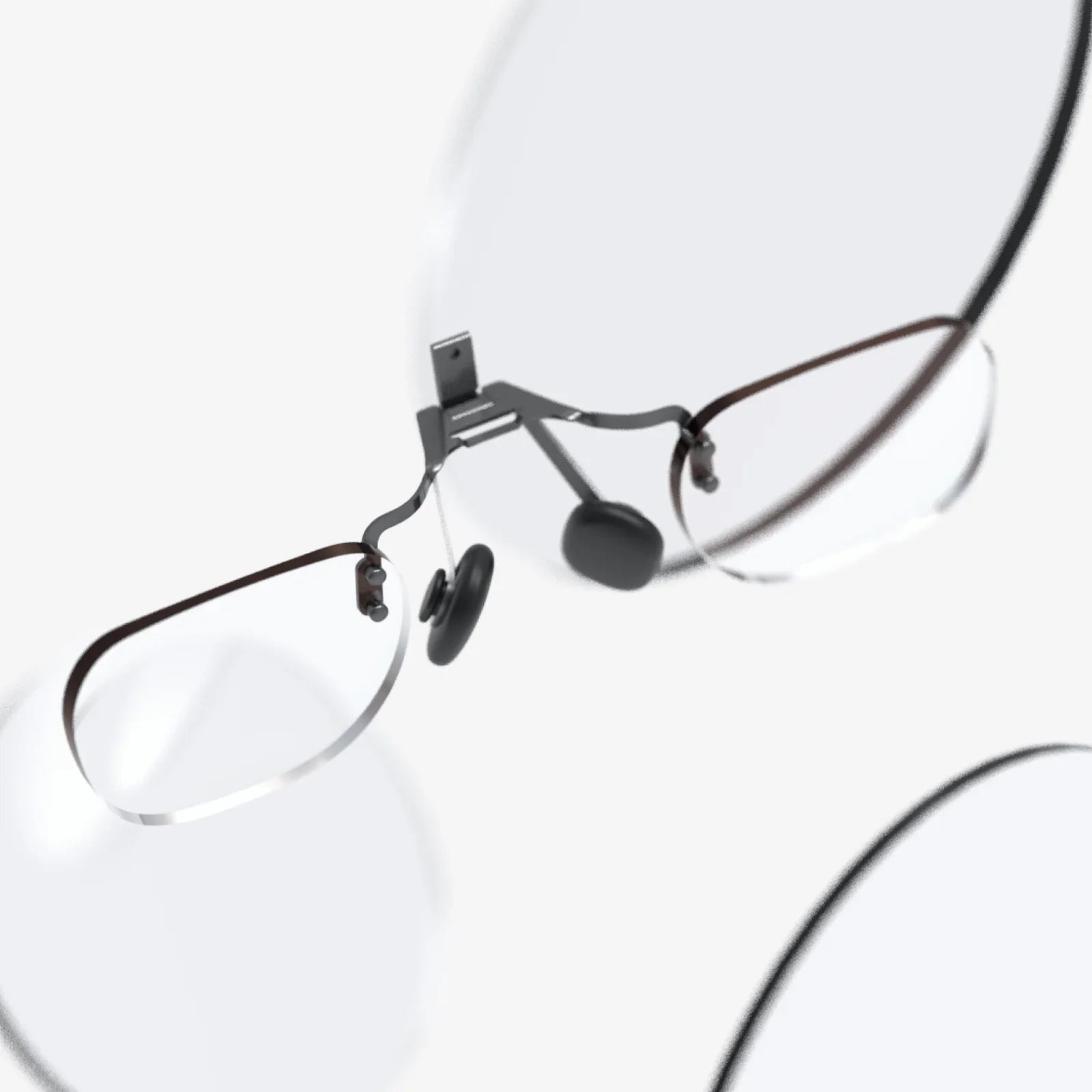
Imagine slipping on a headset and being transported to a surgical operating room, a historical battlefield, or the surface of Mars—all before your morning coffee. This is no longer the realm of science fiction but the tangible, transformative power of Extended Reality (XR) in action. As the umbrella term encompassing Virtual Reality (VR), Augmented Reality (AR), and Mixed Reality (MR), XR is breaking down the barriers between the digital and the physical, creating experiences that are as immersive as they are impactful. The technology is rapidly evolving from a niche novelty into a core component of modern industry, education, and entertainment. The following examples of extended reality provide a fascinating window into a future that is already unfolding around us, demonstrating practical applications that are enhancing human capability, deepening understanding, and redefining the very nature of experience.
The Foundational Trio: VR, AR, and MR
Before diving into specific applications, it's crucial to understand the distinctions between the three core technologies under the XR umbrella. Each offers a different relationship between the user, the digital world, and the physical world.
Virtual Reality (VR): Total Immersion
Virtual Reality creates a completely computer-generated, simulated environment. By wearing a head-mounted display (HMD), users are fully immersed in a digital world that replaces their natural surroundings. This immersion is often enhanced with spatial audio and motion-tracking controllers, allowing users to interact with and navigate the virtual space as if they were truly there. The primary goal of VR is to isolate the user from the real world to create a sense of presence elsewhere.
Augmented Reality (AR): Digital Overlays on the Real World
Unlike VR, Augmented Reality does not replace the real world. Instead, it superimposes digital information—such as images, text, or 3D models—onto the user's view of their physical environment. This is most commonly experienced through smartphone and tablet cameras or through specialized smart glasses. AR enhances reality by adding a layer of useful or entertaining data, making it ideal for providing contextual information without isolating the user.
Mixed Reality (MR): The Seamless Blend
Mixed Reality is the most advanced and seamless integration of the physical and digital worlds. It goes beyond simple overlays by anchoring digital objects to the real environment, allowing for genuine interaction between the two. In an MR experience, a digital character might sit on your real-world couch, or a virtual control panel might be anchored to your actual wall. These digital objects can be occluded by real-world objects, making the illusion perfect. This requires advanced sensors and cameras to continuously map and understand the geometry of the surrounding space.
Revolutionizing Healthcare and Medicine
The healthcare sector has embraced XR technologies for their ability to improve outcomes, enhance training, and reduce risks. The examples here are saving lives and advancing medical science.
Surgical Training and Planning
One of the most powerful examples of extended reality in medicine is in surgical preparation. Medical students and seasoned surgeons alike now use VR simulations to practice complex procedures. These highly detailed virtual environments allow for rehearsal without risk to a patient. Surgeons can navigate a 3D model of a specific patient's anatomy, created from CT or MRI scans, to plan the optimal surgical approach before ever making an incision. This practice leads to shorter operation times, reduced complications, and improved patient recovery.
Pain Management and Physical Rehabilitation
VR has emerged as a groundbreaking tool for non-pharmacological pain management. For patients suffering from severe burns, phantom limb pain, or during wound care, immersive VR experiences can effectively distract the brain, significantly reducing the perception of pain. In physical rehabilitation, AR and VR games turn repetitive and often painful exercises into engaging activities. Patients recovering from a stroke or injury can perform motions to control a game, improving motivation and adherence to their therapy regimen while therapists track precise progress data.
Exposure Therapy for Mental Health
Psychologists and therapists are using controlled VR environments to treat phobias, anxiety disorders, and PTSD through exposure therapy. A patient with a fear of flying can gradually experience the sights and sounds of an airport and a virtual flight in a completely safe setting. For those with PTSD, therapists can recreate specific environments to help them process and manage their trauma in a controlled, incremental way. This controlled exposure is far more effective and accessible than imagination-based techniques.
Transforming Education and Corporate Training
XR is moving beyond textbooks and PowerPoint presentations, creating immersive learning experiences that boost retention and engagement.
Immersive Historical and Scientific Exploration
Imagine a history class where students can virtually walk through ancient Rome, witnessing the construction of the Colosseum, instead of just reading about it. Or a biology lesson where students can step inside a human cell to see the organelles at work. These VR field trips provide contextual, experiential learning that is impossible to replicate with traditional media. Complex scientific concepts, from molecular structures to astronomical phenomena, become tangible and understandable.
Hands-On Skills Training
From technical colleges to corporate boardrooms, XR is the ultimate training simulator. Automotive mechanics can learn to diagnose and repair complex engine systems through an AR overlay that identifies parts and displays instructions right on the equipment. Aerospace engineers can practice assembling and wiring intricate components in a virtual space before touching physical, million-dollar parts. This hands-on practice drastically reduces training costs, minimizes the use of physical materials, and allows trainees to make mistakes safely, which is a crucial part of the learning process.
Soft Skills and Public Speaking
VR is being used to train employees in soft skills like leadership, customer service, and public speaking. Users can practice delivering a presentation to a virtual audience that reacts in real-time, helping to build confidence and hone their skills. They can navigate difficult workplace conversations with AI-powered virtual colleagues, receiving feedback on their tone, language, and body language. This provides a safe, repeatable practice environment that builds muscle memory for real-world interactions.
Powering the Future of Manufacturing and Design
In industrial settings, XR is streamlining processes, reducing errors, and enabling incredible feats of collaboration and design.
Prototyping and Design Review
Industrial designers and architects are using MR to visualize and interact with full-scale 3D prototypes long before anything is physically built. A team of engineers can walk around a life-size virtual model of a new car engine, inspecting it from every angle and making adjustments in real-time. This collaborative design process identifies potential issues early, saving enormous amounts of time and resources. It moves the review process from 2D screens into an intuitive 3D space.
Remote Assistance and Complex Assembly
AR is a game-changer for field technicians and assembly line workers. Using smart glasses, a worker can see digital arrows and instructions overlaid directly onto a machine they are repairing, guiding them through each step. If they encounter a problem, they can livestream their view to an expert located anywhere in the world. That expert can then draw digital annotations that appear in the worker's field of view, pointing precisely to the components that need attention. This dramatically reduces downtime, eliminates travel costs for experts, and empowers less-experienced workers to perform complex tasks.
Redefining Retail, Tourism, and Entertainment
For consumers, XR is creating new, deeply engaging ways to shop, explore, and play.
Virtual Try-On and Product Visualization
The "will it fit?" dilemma of online shopping is being solved by AR. Furniture retailers allow customers to use their smartphone cameras to see how a new sofa or table will look and fit in their actual living room at true-to-life scale. Fashion brands offer virtual fitting rooms where shoppers can see how glasses, makeup, or clothes will look on them. This not only enhances consumer confidence but also reduces return rates for businesses. It brings the best of the in-store experience directly into the home.
Virtual Tourism and Cultural Preservation
XR opens up the world to those who cannot travel. Through 360-degree VR videos and interactive experiences, users can explore remote natural wonders, visit world-famous museums, or walk through heritage sites that are otherwise inaccessible or too fragile for large crowds. Furthermore, this technology is being used for digital preservation, creating high-fidelity 3D models of historical monuments threatened by climate change, war, or erosion, ensuring they can be experienced by future generations.
The Next Generation of Storytelling and Gaming
Entertainment is perhaps the most visible arena for XR. VR gaming places players directly inside the game world, making them an active participant in the narrative. But beyond games, filmmakers and artists are crafting immersive stories where the viewer is at the center of the action, able to look around and explore the environment. Concerts and live events are being live-streamed in VR, offering front-row seats to anyone with a headset, creating a powerful sense of shared social presence despite physical distance.
Challenges and The Future of XR
Despite its rapid advancement, the widespread adoption of XR faces hurdles. The cost of high-end hardware, issues of user comfort and motion sickness, the need for robust wireless connectivity, and serious concerns about data privacy and security in immersive environments are all significant challenges that developers and policymakers must address. Furthermore, creating a truly seamless and convincing MR experience requires immense computational power and sophisticated sensors.
However, the trajectory is clear. As hardware becomes lighter, more affordable, and more powerful, and as the ecosystem of applications and content continues to explode, XR will become as integrated into our daily lives as the smartphone. The future points toward lightweight glasses that can seamlessly switch between AR and VR, powered by ever-evolving AI that understands our environment and intentions. The line between the digital and the physical will continue to blur, creating a world where information, assistance, and entertainment are contextual, interactive, and layered seamlessly over our reality.
The examples of extended reality detailed here are merely the first few pages of a much larger story. We are standing at the precipice of a new computing paradigm, one that promises to change not just how we interact with machines, but how we learn, work, heal, and connect with each other and the world around us. The potential is limited only by our imagination, and the next groundbreaking application could be just one creative idea away.
Share:
Purchase VR Headset: The Ultimate Buyer's Guide to Virtual Reality
Earliest VR Headset: The Pioneering Prototypes That Predated the Digital Age