


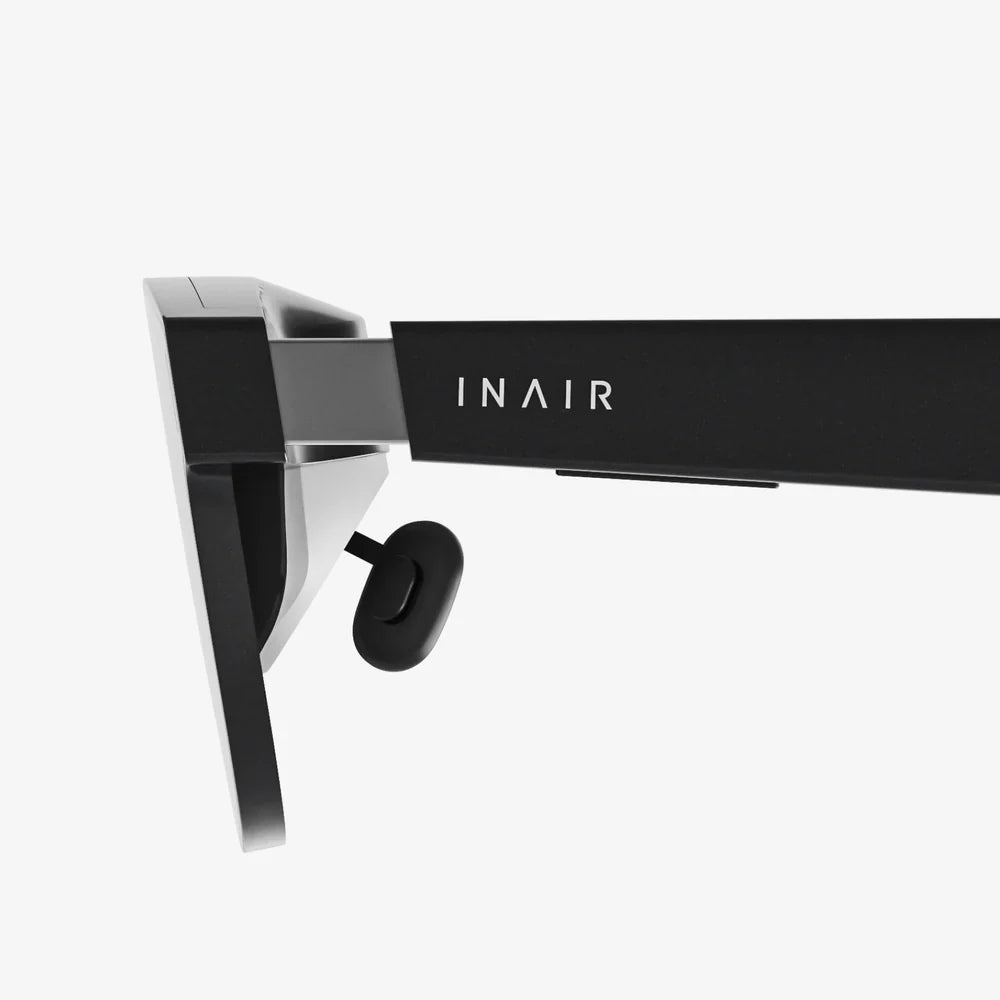
Imagine a world where digital information doesn’t live on a screen in your hand but is woven seamlessly into the fabric of your reality. Directions float on the pavement before you, the history of a landmark overlays your view of it, and a colleague’s 3D model can be manipulated mid-air during a conversation. This is the promise, and now the reality, of excellent AR glasses. We are standing at the precipice of a fundamental shift in computing, moving from a world we look down at to one we look out at. This isn't just an incremental upgrade; it's a gateway to a new dimension of human experience, blending our physical and digital lives in ways previously confined to the realms of science fiction.
The Architectural Pillars of Truly Excellent AR
What separates a gimmicky novelty from a truly excellent pair of AR glasses? It’s a sophisticated symphony of hardware and software, where every component must perform in perfect harmony to create a convincing and useful augmented reality. The magic doesn't happen by accident; it's engineered through several critical pillars.
Visual Fidelity and The Quest for the Perfect Display
The heart of the AR experience is the display system. Excellent AR glasses must solve a complex optical challenge: projecting bright, high-resolution, full-color images that appear to exist in the real world, all while remaining transparent and comfortable to wear. Several technologies are at the forefront of this effort. Waveguide displays, which use microscopic gratings to bend light from a projector into the user’s eye, allow for sleek, eyeglass-like form factors. Another approach uses microLEDs, incredibly small and efficient light sources that can offer stunning brightness and contrast. The goal is a wide field of view—akin to a large computer monitor—with high resolution to prevent a distracting "screen door effect" and enough brightness to remain visible even in direct sunlight. This visual fidelity is the first and most important step in achieving "immersion," making the digital elements feel like a natural part of the environment.
Spatial Awareness and Environmental Understanding
For digital objects to feel anchored in the real world, the glasses must understand that world with incredible precision. This is achieved through a suite of advanced sensors. Cameras, accelerometers, gyroscopes, and, crucially, depth sensors like LiDAR (Light Detection and Ranging) work together to constantly map the user’s surroundings. This process, known as simultaneous localization and mapping (SLAM), allows the device to create a real-time 3D model of the room or space. It can understand the geometry of surfaces, measure distances, and recognize objects. This environmental intelligence is what allows a virtual character to hide behind your real sofa or a navigation arrow to correctly curve around a street corner. Without this precise spatial awareness, AR content would drift, float unnaturally, or collide incorrectly with physical objects, instantly breaking the illusion.
Intuitive and Powerful Interaction Paradigms
How do you interact with a interface that has no physical buttons? Excellent AR glasses have moved beyond simple voice commands or a clumsy remote control. The most advanced systems employ a combination of interaction methods for a seamless experience. Hand tracking is paramount. Using onboard cameras, the glasses can see and understand the user’s hands with sub-millimeter accuracy, allowing for natural gestures like pinching to select, dragging to move, and expanding fingers to zoom. This creates a direct, almost magical, connection between the user and the digital content. Eye tracking adds another layer of context, enabling foveated rendering (which concentrates processing power where the user is looking) and intuitive menu navigation with just a glance. Voice assistants provide a hands-free way to issue complex commands or retrieve information. Together, these input methods create a fluid and intuitive interface that feels like a natural extension of the user’s intent.
Form Factor and All-Day Wearability
Technology that is too bulky, uncomfortable, or socially awkward to wear will never achieve mainstream adoption. The journey from head-mounted displays of the past to today’s excellent AR glasses has been a relentless pursuit of miniaturization and ergonomics. The goal is a form factor that approaches, or even matches, that of traditional eyewear. This requires squeezing powerful processors, batteries, displays, and sensor arrays into a lightweight and thermally efficient package. Advances in battery technology and power management are crucial for achieving all-day use, while stylish design is essential for social acceptance. The ideal pair of AR glasses shouldn’t scream "techie"; they should be something someone would willingly wear as part of their daily attire, because their utility far outweighs any social friction.
Transforming Industries and Redefining Work
The applications for this technology extend far beyond consumer entertainment. Excellent AR glasses are poised to revolutionize entire industries, augmenting human capability and streamlining complex workflows.
Revolutionizing Design and Manufacturing
In engineering and manufacturing, AR is transforming the entire product lifecycle. Designers can view and interact with full-scale 3D holograms of their prototypes, walking around them and making adjustments in real-time before a single physical part is ever created. On the factory floor, technicians wearing AR glasses can have assembly instructions, wiring diagrams, or safety information overlaid directly onto the machinery they are working on. This hands-free access to information drastically reduces errors, speeds up training, and improves efficiency. A remote expert can see what the on-site technician sees and annotate their field of view with arrows and notes, enabling expert guidance from anywhere in the world.
The Future of Healthcare and Medicine
The potential for excellent AR glasses in medicine is profound. Surgeons can have vital patient statistics, ultrasound data, or 3D anatomical models superimposed onto their view during a procedure, improving precision and outcomes. Medical students can practice complex surgeries on detailed holograms, and nurses can have instant access to patient records and dosage information without looking away from the patient. This technology can enhance diagnostics, medical training, and patient care by putting critical information directly in the line of sight of medical professionals.
Architecture, Construction, and Beyond
Architects and construction managers can walk through a building site and see the digital blueprint overlaid onto the unfinished structure, identifying potential clashes or verifying that construction aligns with the plan. This "see-through-walls" capability can prevent costly mistakes. The applications extend to logistics, where warehouse workers can have optimal picking routes and item information displayed, and to field service, where engineers can get visual guidance for repairing complex equipment.
The Social and Ethical Dimension of Augmented Reality
As with any transformative technology, the rise of excellent AR glasses brings a host of important social and ethical questions that society must grapple with.
Privacy in a World of Constant Sensing
AR glasses, by their very nature, are equipped with cameras and sensors that are always on, always observing the environment. This raises significant privacy concerns for both the wearer and those around them. How do we prevent unauthorized recording? How is the vast amount of visual and spatial data collected, processed, and stored? Clear ethical guidelines and robust technological safeguards—such on-device processing and clear visual indicators when recording—are essential to build trust and prevent a dystopian future of perpetual surveillance.
The Digital Divide and Accessibility
There is a risk that the benefits of this powerful technology could exacerbate existing social and economic inequalities. If AR glasses become a primary tool for work, education, and social connection, ensuring they are accessible and affordable will be critical to preventing a new "AR divide." Conversely, they also hold immense promise for accessibility, offering real-time translation for the deaf and hard of hearing, navigation for the visually impaired, and cognitive assistance for those with memory conditions.
Redefining Human Connection and Attention
Will AR glasses further isolate us, creating a personalized digital bubble that cuts us off from shared physical experiences? Or will they enhance our connections, allowing us to share experiences and collaborate in new, rich ways? The design of these platforms and the social norms that develop around their use will determine the answer. The challenge is to design for shared reality and human connection, not for isolation.
The Road Ahead: From Prototype to Paradigm Shift
The development of excellent AR glasses is a marathon, not a sprint. Current devices are impressive, but the true paradigm shift will come with the convergence of several key advancements. We need even more powerful and efficient processors, breakthroughs in battery technology, and the development of novel display systems that offer a perfect blend of field of view, resolution, and brightness. Most importantly, we need a rich and compelling ecosystem of applications and content that demonstrates the indispensable utility of this new medium. The killer app for AR might not be a single game or social media filter, but rather the seamless integration of contextual information into every facet of our daily lives.
The path forward is not merely about refining the technology itself, but about thoughtfully integrating it into the human experience. The ultimate success of excellent AR glasses won't be measured by their technical specifications alone, but by their ability to enhance our lives without diminishing our humanity. They have the potential to make us more knowledgeable, more capable, and more connected to the world and to each other. The future is not something we will merely see through a lens; it is something we will actively build and experience, together, in a world beautifully and intelligently augmented.
Share:
Manufacturing AR Glasses: The Engineering Marvel Reshaping Reality
Virtual Reality Goggles for iPhone 6s Plus: The Ultimate Guide to Mobile Immersion