


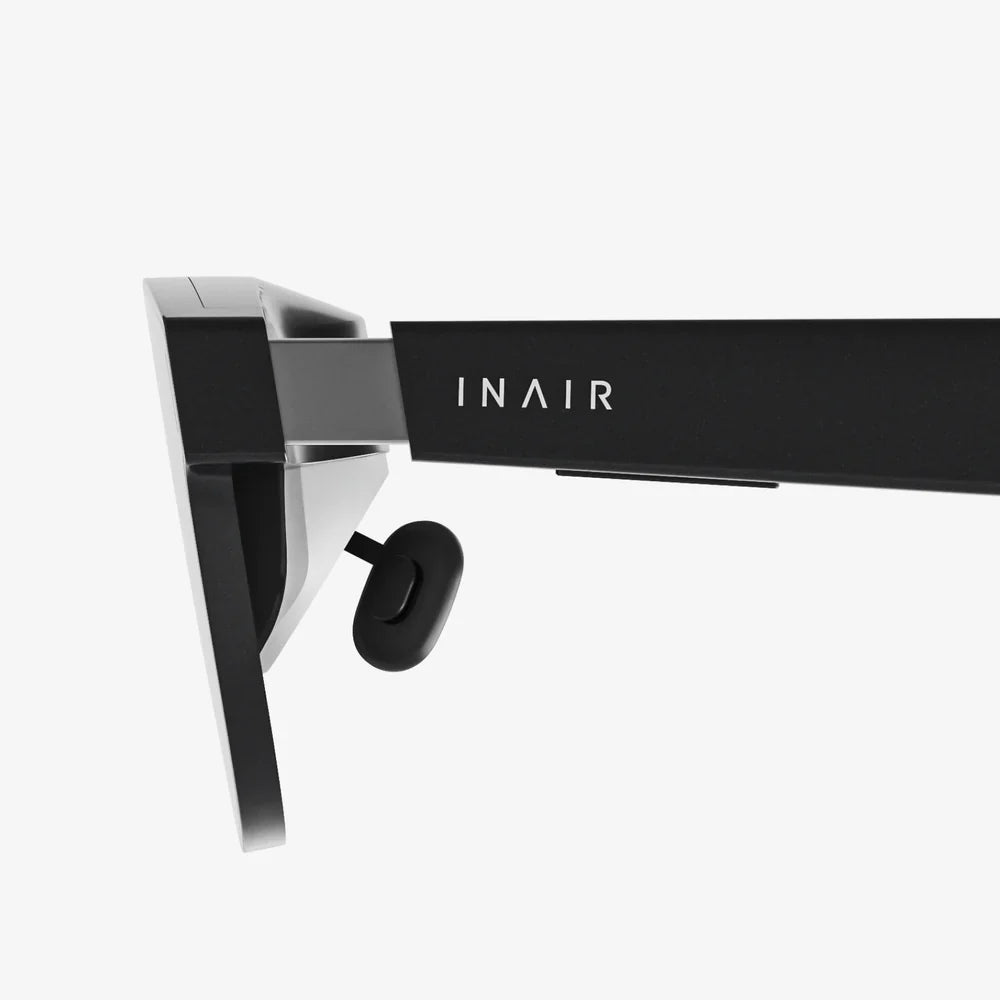
Imagine a world where digital information doesn’t live on a screen in your hand but is seamlessly woven into the very fabric of your perception. This is the promise of augmented reality glasses, a technological leap that feels less like science fiction with each passing year. The journey from a revolutionary concept to a device you can wear is a monumental feat of modern engineering, a complex ballet of precision, innovation, and scale. The act of manufacturing AR glasses is where this promise is either fulfilled or broken, a process demanding an unprecedented synthesis of the physical and the digital.
The Core Conundrum: Blending Light with Reality
At the heart of every AR glasses unit lies its optical engine, the component responsible for the magical act of superimposing digital images onto the real world. This is the single greatest challenge in manufacturing AR glasses, and several competing technologies are vying for dominance, each with its own manufacturing intricacies.
Waveguide Displays: The Leading Contender
Waveguide technology has emerged as a primary method for delivering images to the eye in a sleek, glasses-like form factor. The manufacturing process is exceptionally delicate. It begins with a flat, transparent substrate, often made of glass or specialized optical plastic. This substrate is then treated using nanoimprint lithography or other etching techniques to create microscopic grating patterns on its surface.
These patterns are precisely calculated to trap light from a micro-display source located near the temple, bounce it through the substrate via total internal reflection, and then eject it towards the user’s eye. The precision required is astronomical; imperfections measured in nanometers can cause image distortions, ghosting, or a drastic reduction in brightness and clarity. Coating these waveguides with anti-reflective and durability layers adds another layer of complexity to the manufacturing process, requiring cleanroom environments rivaling those of semiconductor fabrication plants.
Birdbath Optics: A Simpler Path
An alternative approach, often seen in earlier or more cost-conscious designs, is the "birdbath" optic. This system uses a combiner, a partially mirrored piece of glass or plastic, set at an angle in front of the eye. A micro-display projects an image upward, which is then reflected by a curved mirror (the "birdbath") onto the combiner and into the eye.
While generally easier and less expensive to manufacture than waveguides, this design often results in a bulkier form factor, as the optical path requires more physical space. It can also present challenges with external light interference and achieving a wide field of view. The manufacturing focus here is on the precise molding and aluminizing of the combiner and mirror elements to minimize optical aberrations.
Other Emerging Optical Technologies
The field is dynamic, with new approaches constantly in development. technologies like holographic optical elements (HOEs) and laser beam scanning (LBS) are pushing the boundaries. HOEs use photosensitive materials to record complex optical functions as interference patterns, potentially enabling thinner and more efficient waveguides. Manufacturing HOEs involves precise control of laser interference patterns during the recording process. LBS systems, on the other hand, use microscopic mirrors (MEMS) to raster a laser beam directly onto the retina. The manufacturing challenge shifts to the incredibly precise and reliable fabrication of these microscopic moving parts.
The Micro-Display: Painting with Pixels of Light
The optical engine is useless without a high-quality image source. The micro-display is a tiny screen, often smaller than a postage stamp, that must be incredibly bright, high-resolution, and power-efficient. Manufacturing these displays is a specialized subset of the display industry.
Several technologies are competing: Liquid Crystal on Silicon (LCoS), MicroLED, and Organic Light Emitting Diode on Silicon (OLEDoS). Each has its own manufacturing pipeline. LCoS leverages established LCD technology but on a reflective silicon backplane, requiring precise alignment of liquid crystal layers. MicroLED is seen as the holy grail for its exceptional brightness and efficiency, but manufacturing involves the mass transfer of millions of microscopic LED chips onto a silicon wafer, a process fraught with yield challenges. OLEDoS offers perfect blacks and high contrast but can struggle with peak brightness compared to its rivals. The choice of display technology directly impacts the cost, performance, battery life, and ultimately, the manufacturability of the final AR glasses product.
The Silicon Brain: Processing a Augmented World
Creating convincing AR experiences requires immense computational power. The device must understand the world in real-time—a process known as simultaneous localization and mapping (SLAM)—track the user’s eyes and gestures, render complex 3D graphics, and manage wireless connectivity, all while sipping battery power.
This necessitates a system-on-a-chip (SoC) specifically designed for AR workloads. Manufacturing these chips involves the most advanced semiconductor fabrication processes available, often at 5nm or smaller nodes. These SoCs integrate central processing units (CPUs), graphics processing units (GPUs), digital signal processors (DSPs), image signal processors (ISPs), and dedicated neural processing units (NPUs) for AI tasks. They are marvels of modern electronics manufacturing, containing billions of transistors. Furthermore, custom co-processors are often designed to handle specific AR tasks like pose prediction and scene segmentation with extreme efficiency, offloading work from the main processor to conserve precious energy.
The Form Factor: A Battle of Physics and Ergonomics
Perhaps the most obvious challenge is designing and manufacturing a device that people will actually want to wear all day. This demands a relentless pursuit of miniaturization, weight reduction, and comfort. The internal architecture is a complex 3D puzzle of stacked circuit boards, batteries, speakers, and cooling solutions, all crammed into the slim arms and frame of a pair of glasses.
Advanced materials science is critical here. Manufacturers are turning to lightweight yet strong materials like titanium, magnesium alloys, and advanced carbon fiber composites for frames. The use of flexible printed circuit boards (PCBs) allows electronics to curve around the shape of the head. Injection molding of optical-grade polymers must be flawless to avoid birefringence, which would distort the projected imagery. Heat management is another silent battle; powerful processors in a confined space generate heat that must be dissipated without making the device uncomfortable to wear, often through clever heat spreaders and passive cooling designs.
Sensing the World: The Array of Eyes and Ears
For AR glasses to interact with the environment, they need a suite of sensors. This typically includes:
- Cameras: High-resolution RGB cameras for video capture and lower-resolution global shutter cameras for tracking. Manufacturing involves calibrating multiple cameras for stereoscopic vision and depth perception.
- Depth Sensors: Time-of-flight (ToF) sensors or structured light projectors that actively map the environment in 3D. These require the precise assembly of infrared lasers and sensors.
- Inertial Measurement Units (IMUs): Accelerometers and gyroscopes that track head movement with extreme low latency. These are micro-electromechanical systems (MEMS) manufactured using semiconductor techniques.
- Microphones and Speakers: Array microphones for beamforming voice pickup and bone conduction or miniature speakers for private audio.
Sensor fusion—the process of combining all this data into a coherent understanding of the world—is a software challenge, but it starts with the hardware manufacturing achieving precise calibration and alignment of all these components.
Assembly, Calibration, and Testing: Where Precision Meets Scale
Final assembly is arguably the most delicate phase. Unlike a smartphone with a relatively rigid rectangular body, AR glasses have multiple articulating parts—nose pads, hinges, sometimes adjustable optical elements. Robots and highly skilled technicians work together to assemble these complex devices.
Every single unit must undergo rigorous calibration. This involves:
- Optical Calibration: Using automated machines to project test patterns and measure the display's alignment, color accuracy, brightness, and distortion for each eye individually, often generating a unique calibration profile burned into the device's memory.
- Sensor Calibration: Aligning the coordinate systems of all cameras and IMUs so the software has an accurate unified model of the device's position and orientation.
- Eye Tracking Calibration: For devices with this feature, a process to map the unique characteristics of a user's pupils and iris movement is essential for accurate interaction.
This calibration process is time-consuming and expensive but is non-negotiable for delivering a high-quality user experience. It is a significant bottleneck in scaling production and reducing costs.
The Future of Manufacturing: Towards Mainstream Adoption
For AR glasses to move from niche prosumer devices to mainstream consumer electronics, the manufacturing process must evolve dramatically. The future lies in:
- Increased Integration: Combining optical, sensor, and compute elements into fewer, more integrated modules to simplify assembly and improve reliability.
- New Materials: Discovering and qualifying new polymers, meta-materials, and composites that are lighter, stronger, and better for optical purposes.
- Automation and AI: Using machine vision and AI-driven robotics to automate more of the precise assembly and calibration processes, driving down costs and improving yields.
- Design for Manufacturability (DFM): A closer collaboration from the outset between optical engineers, electrical engineers, and manufacturing experts to design products that are not just revolutionary, but also practical and cost-effective to produce at scale.
The road ahead is one of refinement and innovation. The core technologies have been proven; the next decade will be about perfecting them and mastering the art of their manufacture.
The true magic of augmented reality glasses isn't just in the code that powers them or the concept that inspires them—it's in the astonishingly precise and complex way they are built. It’s in the cleanrooms where light is bent to our will, on the factory floors where microscopic components are assembled into a window to a new reality, and in the relentless pursuit of a form factor that disappears on your face, allowing the digital world to seamlessly appear before your eyes. This manufacturing journey, hidden from the end-user, is the unsung hero of the AR revolution, turning a dazzling promise into a tangible product you can hold in your hands and see through.
Share:
AR Glasses Custom Prescriptions 2025: The End of the Screen Is Near
Excellent AR Glasses Are Redefining Reality and How We Interact With It